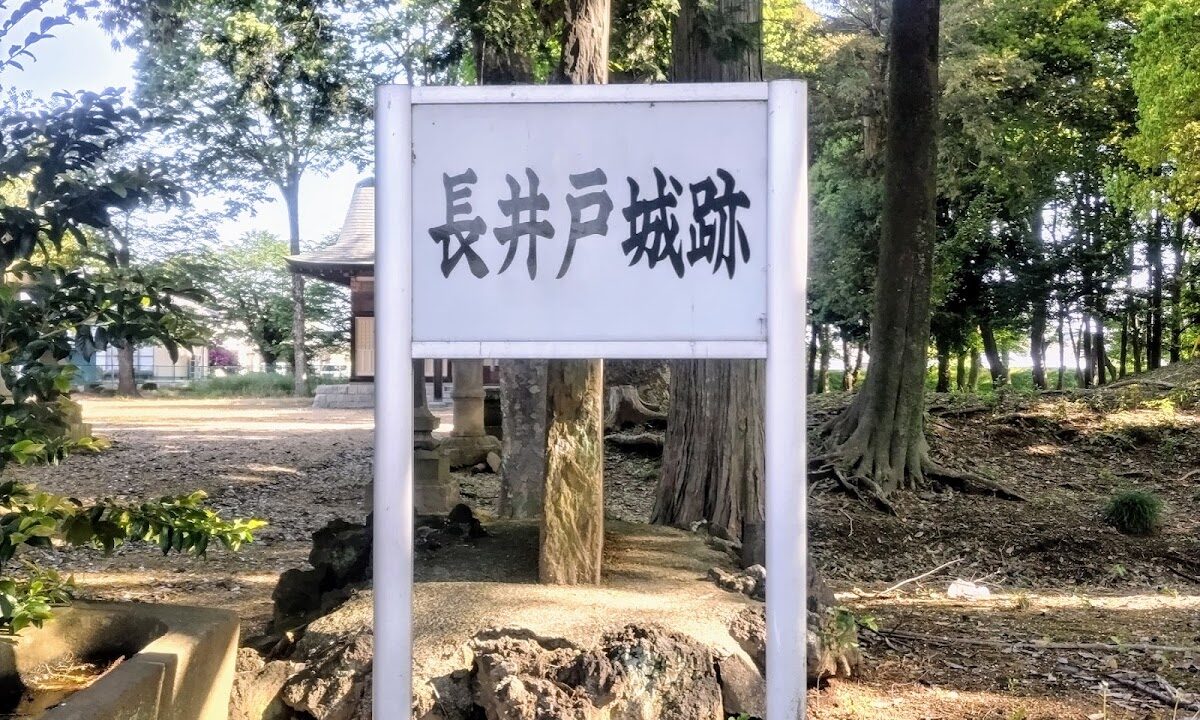
Complete Guide to Nagaido Castle (Ibaraki Prefecture): History and Remains of a Hojo Clan Relay Base in Sakai Town
What is Nagaido Castle?
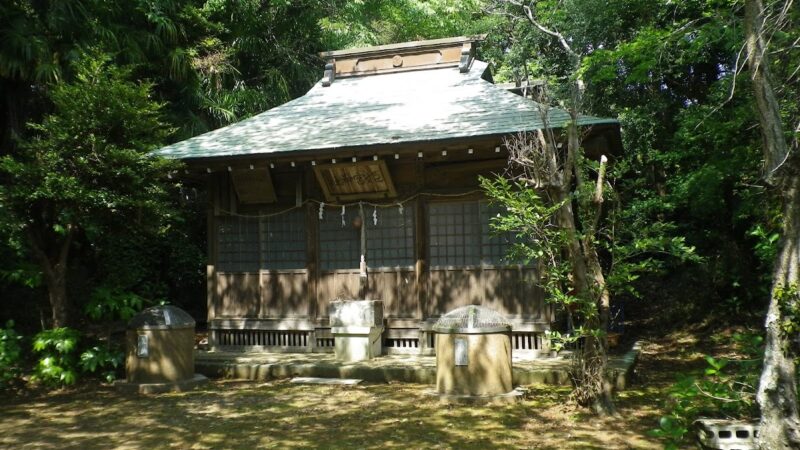
Nagaido Castle is a flatland castle from the Sengoku period located in Nagaido, Sakai Town, Sarushima District, Ibaraki Prefecture. Currently, it is the grounds of Nagaido Katori Shrine, and the earthworks and dry moats surrounding the shrine remain in good condition.
The castle was a square residence measuring approximately 100 meters north-south and 80 meters east-west, consisting of a main enclosure and a secondary enclosure. Its simple yet robust structure, surrounded by a moat and earthworks, is a typical example of a local powerful family’s castle from the Sengoku period.
History of Nagaido Castle
Background of Construction and Early History
While there are no clear records regarding the construction date or builder of Nagaido Castle, archaeological investigations have revealed some interesting facts. The discovery of earthenware artifacts such as “tile-like vessels” and “tile-type pottery” dating from the 12th to 13th centuries in the earthworks suggests that the castle’s origins may date back to the Kamakura period.
This indicates the possibility that Nagaido Castle was built by repurposing a residence that existed before the Sengoku period, and its single-enclosure, square-shaped structure supports this theory. It is thought that the residence of a local lord in the medieval period was developed into a castle as military tensions rose during the Sengoku period.
Sugaya Sakyo and Nagaido Castle in the Tenbun Era
Records indicate that during the Tenbun era (1532-1555), a samurai named Sugaya Sakyo resided as the lord of Nagaido Castle. Sugaya Sakyo belonged to the Oyama clan, a Sengoku daimyo of Shimotsuke Province (present-day Tochigi Prefecture).
According to the “Eastern Provinces Battle Chronicle,” in 1554, Oyama Tomomasa of Shimotsuke Province launched a military invasion of Shimosa Province. The Oyama clan attacked Yanagibashi Castle, then, via Shitori, attacked Inao Castle and Nagaido Castle, forcing Sugaya Sakyo to surrender. This event indicates that Nagaido Castle was an important strategic base in the border region between Shimotsuke and Shimosa Provinces.
Function as a Branch Castle of the Hojo Clan
It is believed that Nagaido Castle came under the control of the Later Hojo Clan from the Tensho era onward. In their pursuit of conquering the Kanto region, the Hojo clan established multiple bases in the border region where Shimotsuke, Shimosa, and Hitachi Provinces met.
In particular, the Hojo clan built Sakasai Castle (Bando City, Ibaraki Prefecture) as a frontline base for their advance into Shimotsuke and Hitachi, and Nagaido Castle played a complementary role. Specifically, it is thought to have functioned as a relay point between Kurihashi Castle and Koga Castle, which connected the east and west, and Sakasai Castle.
This region also benefited from a well-developed water transport system on the Tone River, occupying an important position in the network for transporting goods and transmitting information. Nagaido Castle served as both a military relay point and a crucial transportation and distribution hub in the Hojo clan’s domain management.
The Siege of Odawara and the Abandonment of the Castle
In 1590, Toyotomi Hideyoshi launched the “Siege of Odawara,” leading to the downfall of the Later Hojo clan. As a result of this battle, the Hojo clan’s network of branch castles was dismantled, and Nagaido Castle was abandoned.
After its abandonment, the castle site was transformed into a local place of worship, with the Nagaido Katori Shrine being built on the site. Ironically, this has contributed to the excellent preservation of the castle’s remains.
Structure and Layout of Nagaido Castle
Overall Layout
Nagaido Castle is a typical flatland castle, built utilizing the flat terrain. The castle’s basic structure was a square residence type, employing a solid defensive system with earthen ramparts on three sides of a square plot of land and a dry moat surrounding it.
The main enclosure is located where the main hall of the current Nagaido Katori Shrine stands, surrounded by a secondary enclosure. While the entire castle area is compact, measuring approximately 100 meters north-south and 80 meters east-west, it was a sufficient size for the residence of a local powerful family.
Features of the Earthen Ramparts
The greatest highlight of Nagaido Castle is its well-preserved earthen ramparts. Thick earthen ramparts surround the shrine’s main hall, varying in height depending on the location, but maintaining a height of over 2 meters in the best-preserved sections.
The ramparts are not simply piles of earth, but were constructed using rammed earth construction and soil compaction techniques, possessing a robustness that has withstood hundreds of years of wind and rain. Earthen ramparts remain on the north, east, and south sides, and the rampart along the eastern road, in particular, shows a high degree of continuity, making it easy to imagine its appearance in its heyday. ### Dry Moat and Earthen Bridge
A dry moat surrounds the outside of the earthen rampart. The earthen bridge and the bent dry moat, particularly on the south side, are well-preserved and highly valued as castle remains.
The dry moat is approximately 5-7 meters wide and 2-3 meters deep, a sufficient size to prevent enemy intrusion. The earthen bridge functioned as an entrance to the castle. To protect this vulnerable entrance, a bend was incorporated, allowing for attacks on enemy soldiers advancing straight ahead from the flank.
A dry moat also remains along the road on the east side; although affected by modern road construction, traces of the moat can still be seen.
Entrance and Defensive Structures
The entrance to the castle, the “koguchi,” is presumed to have been located on the south side, near the earthen bridge. Rather than a simple straight entrance, its complex structure with bends enhanced its defensive capabilities.
Furthermore, it is highly likely that fences or walls were erected on the earthen rampart, and the possibility of simple structures such as watchtowers has also been suggested. However, it lacked large-scale structures such as stone walls or a keep, maintaining its character as a practical residence for a local powerful family.
Highlights of Nagaido Castle
Remains within the Grounds of Nagaido Katori Shrine
Currently, the Nagaido Castle site is within the grounds of Nagaido Katori Shrine. Because the castle remains can be viewed in conjunction with a visit to the shrine, it is easily accessible not only to history enthusiasts but also to general tourists.
Walking around the main shrine building, you can experience the impressive scale of the earthen ramparts surrounding it. The rampart behind the main building (north side) is particularly well-preserved, making it a valuable relic that allows you to truly understand how a castle was defended during the Sengoku period.
Southern Earthen Bridge and Dry Moat
The southern earthen bridge and the bent dry moat are the most impressive remains of Nagaido Castle. The earthen bridge functioned as the main entrance to the castle, with deep dry moats dug on either side.
Looking up from the bottom of the dry moat, the combined height of the earthworks and the depth of the moat reveal a considerable defensive strength. Furthermore, the bends in the moat change direction, constantly exposing the flanks of attackers, creating a structure advantageous to the defenders.
Eastern Earthworks and Dry Moat
A modern road runs along the eastern side, but traces of the earthworks and dry moat remain along the road. Viewed from the road, the continuous extension of the earthworks is clearly visible, allowing for a visual understanding of the castle’s outer perimeter.
Although some parts have been altered by road construction, sufficient remains are still present to estimate the castle’s original scale, making it a valuable observation point for castle researchers and enthusiasts.
Information Signs and Explanation Boards
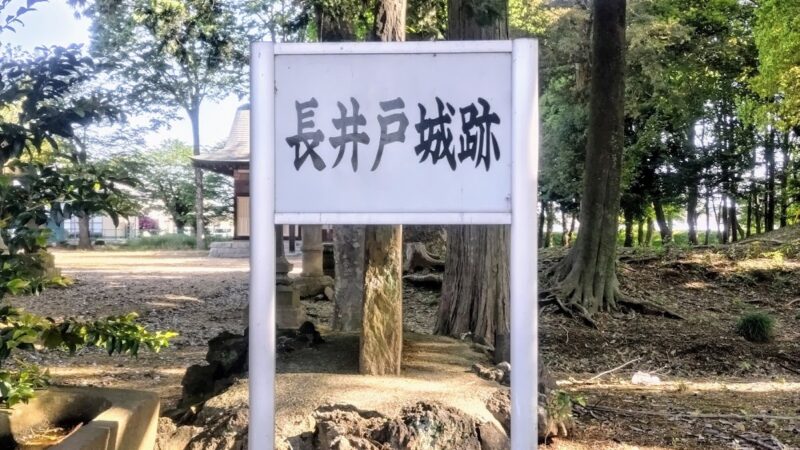
Information signs and explanation boards, installed by the Sakai Town Board of Education, are located within the shrine grounds. These contain basic information about the history and structure of Nagaido Castle, designed to help first-time visitors understand the castle’s overview.
The information board includes a map of the castle grounds, allowing visitors to understand the relationship between their current location and the ruins while exploring.
Access to Nagaido Castle
Location
Address: 992-2 Nagaido, Sakai-machi, Sarushima-gun, Ibaraki Prefecture (Nagaido Katori Shrine)
Access by Car
It is approximately 10 minutes from the Ken-O Expressway “Sakai-Koga Interchange.” After exiting the interchange, proceed towards National Route 354 and follow the signs to reach the castle.
Nagaido Katori Shrine has parking space for visitors, but it is small, so it is recommended to check in advance if you are visiting in a large vehicle or group.
Access by Public Transportation
The nearest stations are Tobu Nikko Line “Minami-Kurihashi Station” or JR Utsunomiya Line/Tobu Nikko Line “Kurihashi Station,” but both stations are a considerable distance away, making access by public transportation alone difficult. Using a taxi or rental bicycle is a more practical option.
Points to Note When Visiting
Nagaido Katori Shrine is an active shrine and a place of worship for the local community. Please observe the following points when visiting:
- Observe proper etiquette for worship and act quietly.
- Prioritize shrine festivals and events if they are taking place.
- When climbing on earthworks or dry moats, be careful not to damage the remains.
- Always take your trash with you.
- Respect the boundaries of private property.
Related Historical Sites in the Surrounding Area
Sakasai Castle Ruins (Bando City, Ibaraki Prefecture)
Located approximately 15 kilometers northwest of Nagaido Castle, Sakasai Castle was an important castle built by the Hojo clan as a frontline base for their advance into Shimotsuke and Hitachi provinces. Nagaido Castle functioned as a relay point, and Sakasai Castle was one of the final destinations.
The Sakasai Castle Ruins have been developed as “Sakasai Castle Ruins Park,” where visitors can see the reconstructed turret gate, earthworks, and dry moats. Visiting Nagaido Castle in conjunction with Sekiyado Castle will provide a deeper understanding of the Hojo clan’s castle network.
Sekiyado Castle (Noda City, Chiba Prefecture)
Located approximately 10 kilometers southeast, Sekiyado Castle is a strategic waterway point at the confluence of the Tone River and Edo River. It functioned as an important base from the Sengoku period to the Edo period, and is now maintained as the Sekiyado Castle Museum.
Understanding the strategic importance of the area where Nagaido Castle is located requires an understanding of Sekiyado Castle’s role as a vital waterway.
Koga Castle (Koga City, Ibaraki Prefecture)
Located approximately 8 kilometers northeast, Koga Castle was an important base in Shimosa Province from the medieval to the early modern period. During the Sengoku period, it served as the headquarters of the Koga Shogunate, and under the Hojo clan’s rule, it functioned as an important branch castle.
On the relay route from Nagaido Castle to Sakasai Castle, Koga Castle played a crucial role in east-west communication.
Historical Significance of Nagaido Castle
Role as a Border Region Hub
The most important historical significance of Nagaido Castle lies in its role as a hub in the border region where the three provinces of Shimotsuke, Shimosa, and Hitachi meet. During the Sengoku period (Warring States period), this region was the front line where multiple forces vied for supremacy.
Powerful daimyo in the surrounding area, such as the Oyama, Hojo, and Satake clans, vied for control of this region, and Nagaido Castle became the stage for these battles. The incident in 1554 (Tenbun 23), when Sugaya Sakyo surrendered to the Oyama clan, symbolizes the strategic importance of this region.
Position in the Hojo Clan’s Territorial Management
After coming under the control of the Hojo clan, Nagaido Castle was not merely a military base, but played a crucial role in the administration of the territory. It functioned as a relay point for information transmission, material transport, and military mobilization on the east-west communication route connecting Kurihashi Castle, Koga Castle, and Sakasai Castle.
It was the existence of such relay points that allowed the Hojo clan to efficiently govern their vast territory. Nagaido Castle provides a valuable example for understanding the territorial control system of Sengoku-period daimyo.
A Typical Example of a Local Clan’s Castle
The structure of Nagaido Castle is important as a typical example of a castle built by a local clan during the Sengoku period. Unlike early modern castles with large stone walls and keeps, it had a simple structure based on earthworks and dry moats, yet possessed practical defensive capabilities.
Furthermore, its development process, originating from a residence in the Kamakura period and being remodeled as a castle during the Sengoku period, is a good example of the changes in castles during the transition from the medieval to the early modern period.
Preservation and Utilization of Nagaido Castle
Current Status and Preservation Condition
Nagaido Castle ruins are one of the castle ruins in Ibaraki Prefecture with relatively well-preserved remains. The fact that it has been protected as part of the grounds of Nagaido Katori Shrine has greatly contributed to the preservation of the remains.
The earthworks and dry moats, in particular, retain much of their appearance from the Sengoku period, making them highly valuable as material for castle research and historical education. However, some parts are affected by weathering and vegetation, requiring continuous preservation and management.
Potential for Future Use
Sakai Town is working on utilizing local historical and cultural resources, including the Nagaido Castle ruins. The following uses are expected in the future:
- Improving information provision to visitors through the enhancement of explanatory signs and guideposts
- Appropriate maintenance and management of the remains and vegetation management
- Utilization as a resource for local history learning and tourism
- Development of historical tourism routes in conjunction with related historical sites in the surrounding area
- Restoration and public display of the castle’s appearance using digital technology
Summary
Nagaido Castle is a Sengoku period flatland castle remaining in Sakai Town, Sarushima District, Ibaraki Prefecture, and is a historically important castle site that may have origins in the Kamakura period. During the Tenbun era, Sugaya Sakyo resided there as the lord, and later it functioned as a branch castle of the Hojo clan, serving as a relay point between Shimotsuke, Shimosa, and Hitachi provinces.
Although abandoned after the Siege of Odawara in 1590, the castle still retains well-preserved earthworks and dry moats within the grounds of the Nagaido Katori Shrine, conveying the appearance of a castle belonging to a local powerful family during the Sengoku period.
With easy access, just about 10 minutes from the Sakai-Koga Interchange on the Ken-O Expressway, and numerous related historical sites such as Sakasai Castle, Sekiyado Castle, and Koga Castle nearby, it is a valuable place to learn about the Hojo clan’s territorial management during the Sengoku period and the history of the border region.
Nagaido Castle is a historical site worth visiting not only for castle enthusiasts but for anyone interested in history. Why not reflect on the lives of the Sengoku samurai hundreds of years ago in the tranquil grounds of the shrine?