History and Highlights of Hitachi-Oyama Castle (Ibaraki Prefecture) | A Thorough Explanation of the Satake Clan’s Castle Ruins
What is Hitachi-Oyama Castle?
Hitachi-Oyama Castle is a medieval castle site located in Awayama, Shirosato-machi, Higashiibaraki-gun, Ibaraki Prefecture. Built on an isolated hill approximately 30 meters high on the west bank of the Naka River, it functioned as an important base for the Satake clan in Hitachi Province.
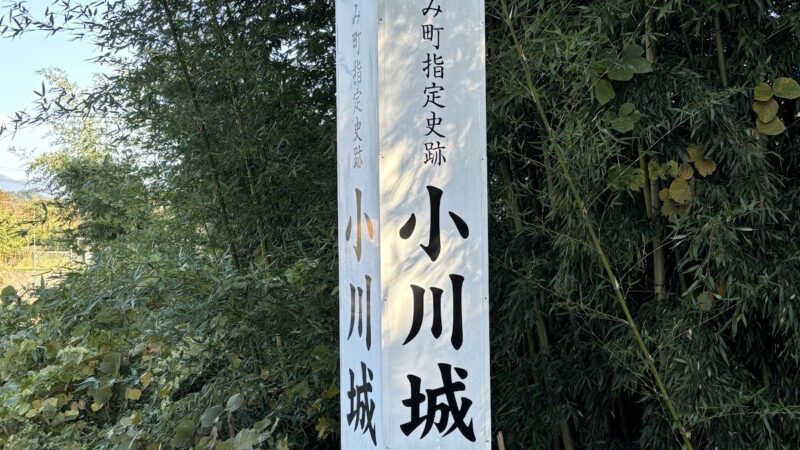
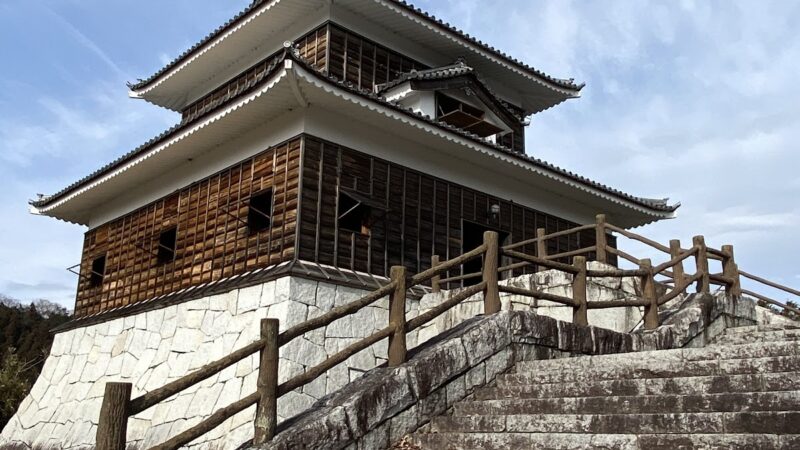
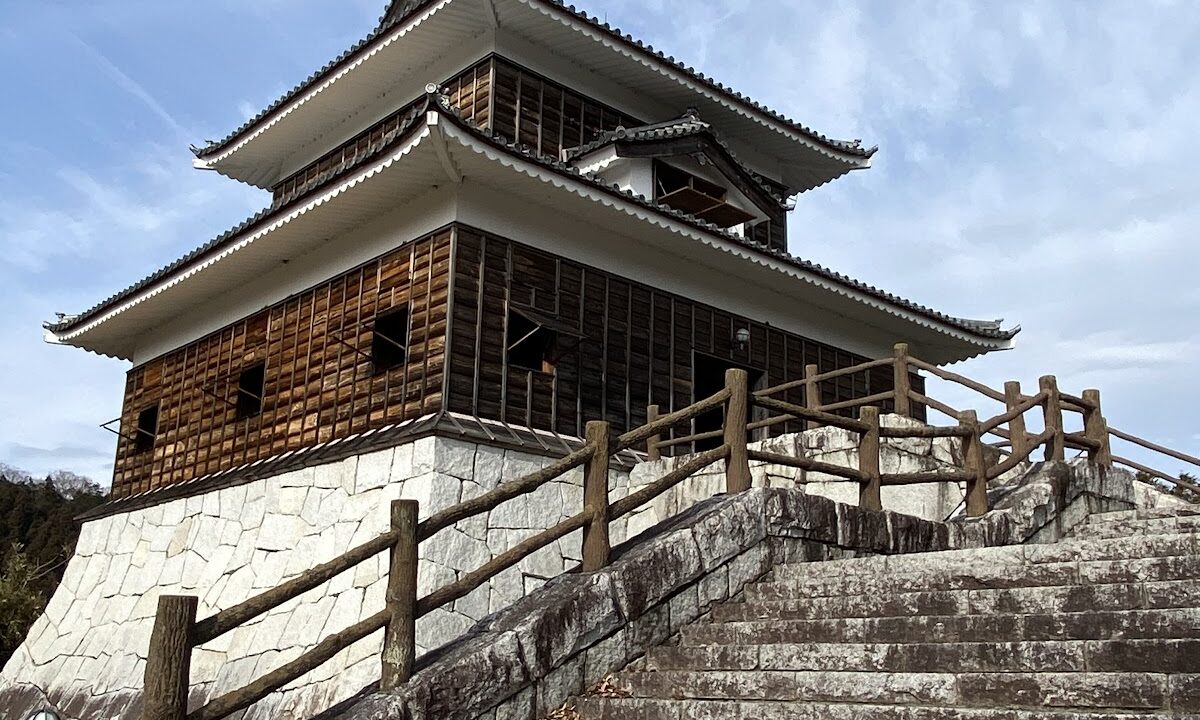
Currently, a castle-like building (Hotel Oyama-jo) stands on the mountaintop of the castle ruins, but the medieval remains are also well-preserved, making it a valuable historical site for understanding the history of castles in Ibaraki Prefecture. It is also designated as a historical site by Shirosato-machi and is protected as a regional historical heritage.
History of Hitachi-Oyama Castle
Construction History and Early Period
There are several theories regarding the founding of Hitachi-Oyama Castle. According to the oldest records, the castle was built in 1132 by Suzuki Goro Takasato, a retainer of the Hitachi Daijo clan. This period coincided with the late Heian period, a time when the Daijo clan was expanding its power in Hitachi Province.
Later, records indicate that the castle was renovated in 1362 by Oyama Yoshitaka. This renovation is believed to have significantly improved the castle’s functionality as a medieval fortress.
As the Oyama Clan’s Residence
The Oyama clan was a branch of the Satake clan that wielded considerable power in northern Hitachi Province. The Oyama clan’s origins are traced back to Yoshitaka, son of Satake Yoshiatsu, the 9th head of the Satake clan, who adopted the name Oyama Goro. Yoshitaka ruled the Oyama area, adopted the name Oyama, and made Hitachi Oyama Castle his residence.
As a powerful branch of the Satake clan, the Oyama clan played a crucial role in the control of northern Hitachi Province. Located in the strategically important Nakagawa River basin, Oyama Castle was a strategically important base both militarily and economically.
The Oyama clan resided in this castle for generations, governing the surrounding area. The castle town developed into a center of the region, with residences for their retainers and a town center.
History leading to the castle’s abandonment
In 1595 (Bunroku 4), Hitachi Oyama Castle was abandoned. That year, the Satake clan implemented a large-scale territorial reorganization within their domain. As a result of this reorganization, Oyama Yoshinori, the lord of the castle at the time, was transferred to Odaka Castle (present-day Hitachiomiya City).
This territorial reorganization was part of the Satake clan’s policy to strengthen their unified control over Hitachi Province. By relocating various branch families, they aimed for more efficient management of their territory. With Oyama Yoshinori’s transfer, Hitachi Oyama Castle ceased to serve its purpose and was abandoned.
After the castle was abandoned, the site gradually returned to nature, but the medieval remains were preserved in relatively good condition.
Structure and Remains of Hitachi-Oyama Castle
Location and Layout
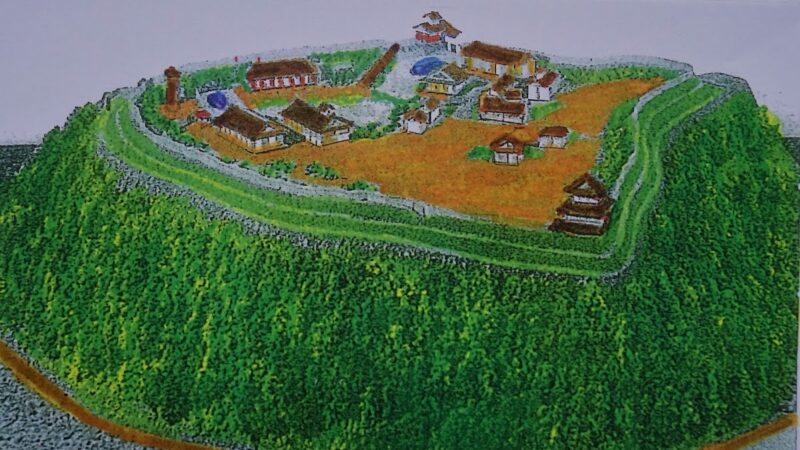
Hitachi-Oyama Castle was built on an isolated hill on the west bank of the Naka River. This hill, approximately 46 meters above sea level and 30 meters above ground level, has a long, narrow shape running north-south, making it a relatively unusual location for a castle in Ibaraki Prefecture.
The layout, which took advantage of the isolated hill’s topography, offered significant defensive advantages. Its high vantage point allowed for early detection of approaching enemies, and the terrain was difficult for attackers to climb.
Arrangement of Enclosures (Kuruwa)
Multiple enclosures (kuruma) can be identified at the castle site. The structure, with the main enclosure at the center and the enclosures arranged in a stepped fashion, is typical of medieval mountain castles. Each enclosure was demarcated by earthen ramparts, enhancing its defensive capabilities.
The main enclosure is located at the highest point of the hill, and it is presumed that the lord’s residence and important facilities were located here. While a castle-like building now stands, the surrounding area retains the original topography.
Moats and Earthworks
Moats and earthworks can be seen as defensive structures of the castle. By utilizing the hilly terrain and strategically placing moats, the castle’s defensive capabilities were enhanced. It is believed that particularly elaborate measures were taken around the koguchi (castle entrance) to prevent enemy intrusion.
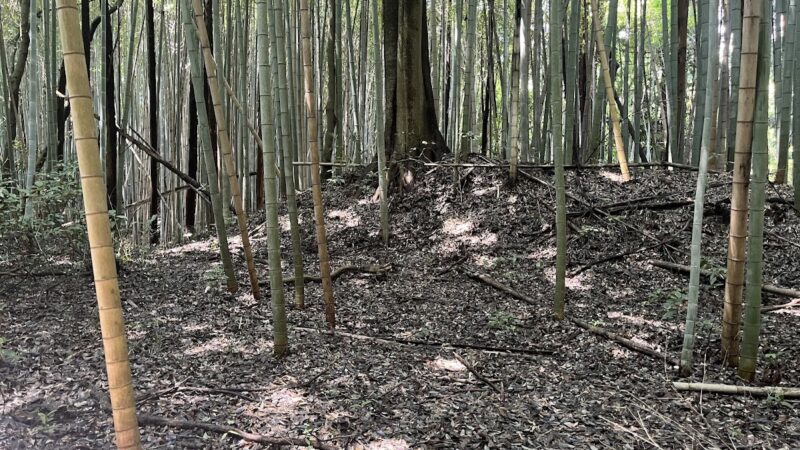
The earthworks served to demarcate the enclosures and also acted as defensive walls. Some of the earthworks remain clearly visible today, providing clues to the scale of the castle at the time.
Current Situation
Currently, a castle-like Hotel Oyama Castle stands on the mountaintop, significantly altering the landscape of the castle ruins. However, medieval remains are still present around the building and on the slopes, allowing for careful observation to imagine the castle’s appearance at the time.
From the castle ruins, you can enjoy a panoramic view of the Nakagawa River basin, giving you a real sense of its importance as a strategic point for monitoring transportation routes.
Highlights of Hitachi-Oyama Castle
View from the Castle Ruins
One of the greatest highlights of Hitachi-Oyama Castle is the view from the castle ruins. You can see the flow of the Nakagawa River and the surrounding rural landscape, and imagining the medieval castle lords gazing upon this same view evokes a sense of historical romance.
Especially on clear days, you can see far into the distance, making it clear that this castle was ideally located for monitoring and governing the surrounding area.
Medieval Remains
Around the castle tower-like building, traces of terraces, earthworks, and moats remain. These remains are valuable resources for understanding the structure of medieval castles.
In particular, the arrangement of the enclosures and the shape of the earthworks reveal the castle’s defensive strategy. For castle enthusiasts, this is a valuable place to experience the castle’s layout by actually walking around and examining the topography.
Historical Background
Hitachi-Ōyama Castle is an important historical site for understanding the history of the Satake clan. It provides clues to how the Ōyama clan, a branch of the Satake clan, managed their territory and governed the region while maintaining relations with the main family.
It was also the stage for the historical event of the territorial reorganization in 1595 (Bunroku 4), making it an interesting place for understanding the domain management of daimyo families from the late Sengoku period to the early Edo period.
Hitachi-Ōyama Castle is an important historical site for understanding the history of the Satake clan. ## Access and Visiting Information
Location
Address: Tateyama, Awayama, Shirosato-machi, Higashiibaraki-gun, Ibaraki Prefecture
Transportation Access
Access by Car:
- Approximately 30 minutes from Mito IC on the Joban Expressway
- Approximately 35 minutes from Mito Minami IC on the Kita-Kanto Expressway
- Parking: Parking is available at Hotel Oyama-jo
Access by Public Transportation:
- Approximately 20 minutes by taxi from Hitachi-Omiya Station on the JR Suigun Line
- Public transportation access is limited, so visiting by car is recommended.
Notes for Visitors
- Estimated Visiting Time: Approximately 15-30 minutes
- As there is a castle-like building (hotel) on the mountaintop, please be considerate of the facility’s operations during your visit.
- When observing the remains, please be careful not to trespass on private property or facility grounds.
- We recommend wearing comfortable shoes.
- Photography is permitted, but please be considerate of the facilities and surrounding residents.
Nearby Tourist Attractions
Tourist Facilities in Shirosato Town:
- Shirosato Town Comprehensive Outdoor Activity Center “Fureai no Sato”
- Hororu no Yu (Day-trip Hot Spring Facility)
- Fujiigawa Dam
Nearby Castle Ruins:
- Hitachi-Butare Castle (approx. 6.3km)
- Hitachi-Takagaki Castle (approx. 4.9km)
- Hitachi-Higashino Castle (approx. 5.0km)
Visiting these castle ruins together allows for an efficient tour of the medieval castles of northern Hitachi Province.
Relationship between Hitachi-Oyama Castle and the Satake Clan
The Satake Clan’s Rule System
The Satake clan is known as a leading Sengoku daimyo of Hitachi Province. The Satake clan established a decentralized rule system by deploying family members throughout the country. The Oyama clan was one of the important branches within this system.
The Satake clan’s system of rule, while centered on the main family, granted a certain degree of autonomy to its branch families. The Oyama clan, too, was entrusted with governing the surrounding region, with Oyama Castle as their base.
Territorial Reorganization in the Bunroku Era
The territorial reorganization of 1595 (Bunroku 4) was a major event that significantly altered the Satake clan’s rule over their territory. This reorganization shifted from a previously decentralized system to a more centralized one.
The transfer of Oyama Yoshinori to Odaka Castle was part of this policy, and the abandonment of Hitachi Oyama Castle can be seen as a symbolic event marking a turning point in the Satake clan’s territorial management.
Attractions of Visiting Hitachi Oyama Castle
Value for History Enthusiasts
Hitachi Oyama Castle is a valuable historical site where one can learn about the structure of medieval castles. It is also an important place for understanding the history of the Satake clan and the territorial management of daimyo families during the transition from the Sengoku period to the Edo period.
Many castle ruins remain in Ibaraki Prefecture, but Oyama Castle is one of the most indispensable historical sites for understanding the history of the Satake clan.
Understanding Local History
Hitachi Oyama Castle is an important historical site for understanding the history of Shirosato Town and the surrounding areas. It allows for a multifaceted understanding of the region’s history, including the history of the castle town that developed around it and the transportation history of the Nakagawa River basin.
Fusion of Nature and History
Located in the rich natural environment of the Nakagawa River basin, Hitachi Oyama Castle is a place where you can enjoy historical exploration and nature walks simultaneously. You can reflect on medieval history while enjoying the scenery of the four seasons.
Research and Preservation of Hitachi Oyama Castle
Value as a Historical Site
Hitachi Oyama Castle is designated as a historical site of Shirosato Town and is recognized as an important historical heritage of the region. Because the remains of the medieval castle are relatively well-preserved, it is also a valuable historical site from an academic perspective.
Future Challenges
Due to the presence of buildings on the mountaintop, there are limitations to fully understanding the remains and conducting detailed investigations. However, the surrounding remains are well-preserved, and new discoveries are expected through future research.
As a regional historical heritage site, it is important to pass it on to future generations while striking a balance between appropriate preservation and utilization.
Summary
Hitachi-Oyama Castle is a valuable medieval castle site remaining in Shirosato Town, Ibaraki Prefecture. It served as the residence of the Oyama clan, a branch of the Satake clan, for generations, and functioned as an important base protecting a strategic point in the Nakagawa River basin.
With a history spanning approximately 460 years, from its construction in 1132 to its abandonment in 1595, this castle is an indispensable historical site for understanding the medieval history of Hitachi Province. The remaining remains, such as baileys and moats, convey the appearance of the castle at that time.
Standing on the hill overlooking the Nakagawa River, one can relive the view seen by the medieval castle lords. When visiting Ibaraki Prefecture, be sure to visit Hitachi-Oyama Castle and experience the history of the Satake clan and the charm of a medieval castle.
While the time to visit the castle ruins is short, about 15 to 30 minutes, you can enjoy a more fulfilling historical exploration by visiting other nearby castle ruins and tourist facilities as well. Hitachi-Oyama Castle, where you can experience the history of Hitachi Province, is a historical site well worth visiting for history enthusiasts.