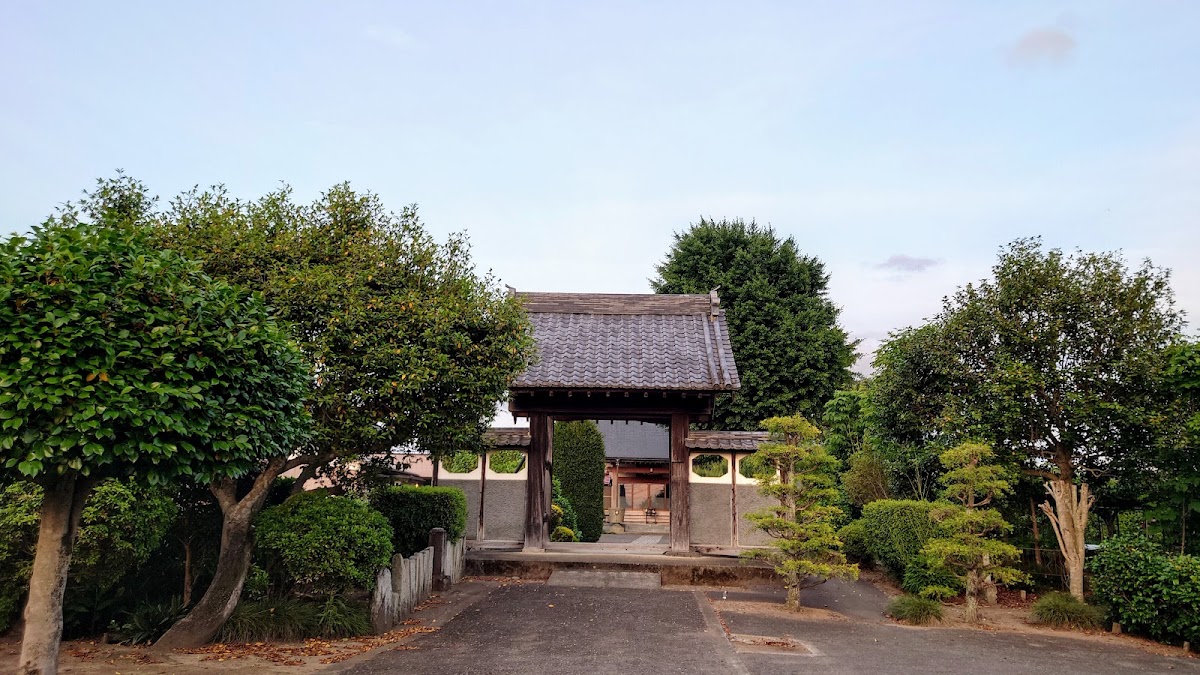
Ebigashima Castle (Chikusei City, Ibaraki Prefecture) Complete Guide | A Thorough Explanation of History and Remains from Construction to Abandonment
Basic Information on Ebigashima Castle
Ebigashima Castle was a Japanese castle located in Matsubara, Chikusei City, Ibaraki Prefecture. Although its name is “Ebigashima,” it was actually built in the adjacent Matsubara district, not the Ebigashima district where the Chikusei City Hall Akeno Branch is located.
Location and Former Province
- Location: Matsubara, Chikusei City, Ibaraki Prefecture (formerly Matsubara, Akeno Town)
- Former Province: Hitachi Province
- Current Place Name: Area centered around Jōnouchi
Classification and Structure
- Classification: Flatland Castle
- Structure: Flatland castle type
- Size: Approximately 300 meters east-west, approximately 400 meters north-south
- Keep Structure: None (As it is a medieval castle, there is no keep)
Builder and Year of Construction
- Builder: Yuki Shigetomo
- Year of Construction: Kanshō 2 (1461)
- First Lord: Ebihara Terutomo (son of Yuki Shigetomo, Ōnin 1, 1467)
- Year of Abandonment: Estimated to be during the Keicho era (around 1596-1615)
Remains and Designated Cultural Properties
- Existing Remains: Earthworks, dry moats, lookout mound remains, horse training ground remains
- Designated Cultural Properties: None (None designated by the city, prefecture, or national government)
- Reconstructed Structures: None
Explanation of Ebigashima Castle
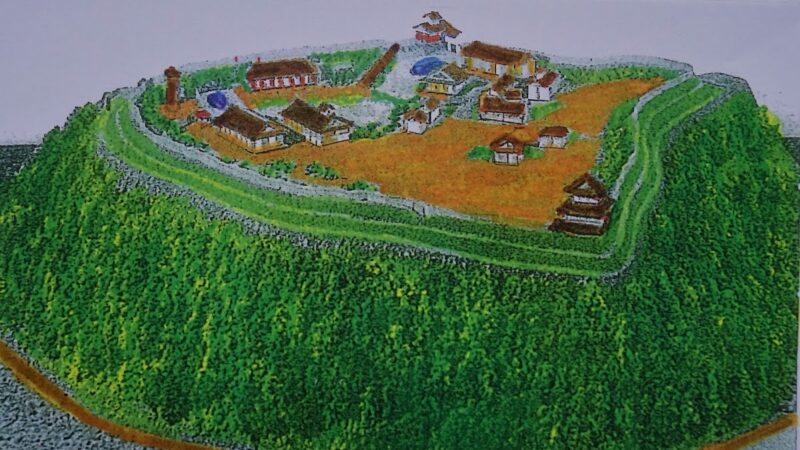
Ebigashima Castle is a medieval flatland castle built on a slightly elevated area on the left bank of the Okawa River (currently part of the Kokaigawa River system). It was once a defensive fortress that utilized the terrain surrounded by low-lying wetlands. The entire area encompassing the current Higashimatsubara and Nishimatsubara districts constitutes the castle site. The Hiranuma marsh to the south, Nishinuma marsh to the west, and Fukada rice paddies to the northeast served as natural defensive lines.
Built on flat land, the castle served as an important strategic point in southwestern Hitachi Province during the Sengoku period, becoming the stage for fierce battles between powerful daimyo such as the Yuki, Oda, and Satake clans.
History of Ebigashima Castle
Construction and the Yuki Clan Era
Ebigashima Castle was built in 1461 (Kansho 2) by Yuki Naritomo. Yuki Naritomo was a powerful member of the Yuki clan, and it is believed he built the castle to solidify his control over the region.
In 1467 (Ounin 1), Ebihara Terutomo, son of Yuki Naritomo, became the first lord of the castle. Although a member of the Yuki clan, Ebihara Terutomo adopted the surname “Ebihara,” becoming the ancestor of the Ebigashima clan (Ebihara clan). From this point onward, Ebigashima Castle functioned as the residence of the Ebihara clan.
The Struggle Between the Yuki and Oda Clans
During the Sengoku period (Warring States period), Ebigashima Castle became the subject of fierce competition between the Yuki and Oda clans. Oda Ujiharu, who controlled southern Hitachi Province, sought to expand his power northward, putting pressure on the Yuki clan’s territory, including Ebigashima Castle.
Oda Ujiharu launched numerous attacks on Ebigashima Castle, even temporarily capturing it at times. During this period, the castle’s lord changed frequently, resulting in an unstable situation where Yuki and Oda clan generals alternately controlled the castle.
Intervention and Control of the Satake Clan
In 1569 (Eiroku 12), Satake Yoshishige, a powerful daimyo in northern Hitachi Province, attacked Ebigashima Castle. This attack had a strategic purpose: to prevent the Hojo clan’s advance into northern Kanto.
Satake Yoshishige, with the cooperation of Ota Sukemasa (Ota Sanrakusai) of Katano Castle, Kajio Masakage of Kakioka Castle, Makabe Ujimoto of Makabe Castle, and Tagaya Shigemichi of Tagaya Castle, captured Ebigashima Castle. This battle brought Ebigashima Castle under the control of the Satake clan.
The Satake clan’s rule was part of their efforts to establish hegemony in Hitachi Province, and Ebigashima Castle became an important southern base for the Satake clan.
The Road to Abandonment
It is believed that Ebigashima Castle was abandoned during the Keicho era (1596-1615). The direct cause of its abandonment is thought to be the transfer of Satake Yoshinobu to Akita in 1602 (Keicho 7).
In the Edo period, this region came under the control of domains such as the Shimotsuma Domain, but Ebigashima Castle was never used as a military base, and its function as a castle was completely lost.
Ebigashima Castle’s Layout and Defensive System
Castle Structure
Ebigashima Castle was a flatland castle measuring approximately 300 meters east-west and 400 meters north-south. Although built on flat terrain, its defensive system cleverly utilized the surrounding natural features.
The central part of the castle is believed to be the present-day Jōnouchi area, where the main enclosure (honmaru) was located. Earthen ramparts and dry moats surrounded the main enclosure, and multiple baileys (kuruwa) were arranged around it.
Defense Utilizing Natural Terrain
The most distinctive feature of Ebigashima Castle is its use of the surrounding low-lying wetlands as a defensive line:
- South Side: A flat marsh stretched out, making attacks from the south difficult.
- West Side: The western marsh acted as a natural moat.
- Northeast Side: Deep rice paddies (wet fields) stretched out, hindering the deployment of large armies.
These natural terrain features suggest that Ebigashima Castle, despite being a flatland castle, possessed high defensive capabilities.
Lookout Mounds and Horse Training Ground
A lookout mound was constructed within the castle grounds and used for monitoring the surrounding area. While high-altitude observation was difficult due to the flatland location, it is presumed that the lookout mounds ensured visibility.
Furthermore, the remains of a horse training ground have been confirmed, indicating that cavalry training took place within the castle. This is evidence that military training facilities were established within the castle grounds, typical of a Sengoku period castle.
Existing Remains and Points of Interest
Remains Around Shin-Zenkoji Temple
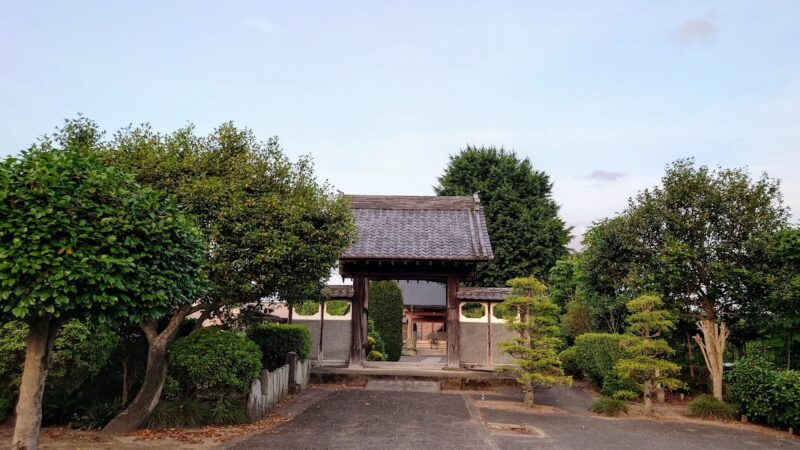
Currently, the remains of Ebigashima Castle are located around Shin-Zenkoji Temple in Matsubara, Chikusei City, Ibaraki Prefecture. In particular, traces of earthworks and dry moats can be seen from the west side of the cemetery to the east side of the main hall.
Earthworks: Some earthworks remain along the grounds of Shin-Zenkoji Temple. They are about 1-2 meters high and, although weathered, retain their shape as castle earthworks.
Dry Moats: Traces of dry moats remain along the earthworks. While much is now filled in, the location of the moats can be estimated from the topography.
Moat Traces and Settlements
Even outside of Shin-Zenkoji Temple, traces of moats remain as topographical features. Although these areas are now settlements and farmland, subtle differences in elevation and the arrangement of waterways allow for the identification of the former castle’s outline.
The place name “Jōnouchi” (字城乃内) clearly indicates that this area was within the castle grounds, suggesting that it was the central part of the castle.
Preservation by the Chikusei City Board of Education
The Chikusei City Board of Education recognizes the historical value of the Ebigashima Castle ruins and is working to preserve the remains. However, since it has not been designated as a designated cultural property, there are concerns about the disappearance of the remains due to development, etc.
Changes in the Lords of Ebigashima Castle
Ebigashima Castle saw many changes in its lords throughout its history. The main lords of the castle, listed chronologically, are as follows:
- Ebihara Terutomo (1467-): Son of Yuki Naritomo, ancestor of the Ebigashima clan
- Successive Ebihara Clan Lords: Descendants of Ebihara Terutomo inherited the position of castle lord.
- Warriors under the Oda Clan: After the castle’s capture by Oda Ujiharu, a retainer of the Oda clan became the castle lord.
- Warriors under the Yuki Clan: After the castle’s recapture by the Yuki clan, it once again came under Yuki clan control.
- Warriors under the Satake Clan (from 1569 onwards): After the castle’s capture by Satake Yoshishige, a retainer of the Satake clan became the castle lord.
Thus, throughout the Sengoku period, Ebigashima Castle was a “castle fought over,” a symbolic representation of the power struggles in southwestern Hitachi Province.
Ebigashima Castle and the Surrounding Castle Network
The Yuki Clan’s Castle Network
Ebigashima Castle was one of the castle networks built by the Yuki clan in southwestern Hitachi Province. The Yuki clan, based at Yuki Castle (Yuki City), established multiple branch castles to protect their territory, and Ebigashima Castle played a crucial role in this network.
Borderline with the Oda Clan
From the perspective of Oda Castle (Tsukuba City), the Oda clan’s base, Ebigashima Castle was strategically located for northward expansion. The reason the Oda clan persistently targeted Ebigashima Castle was its strategic importance: controlling the castle would secure an entry route into the Yuki clan’s territory.
The Satake Clan’s Southward Expansion Strategy
For the Satake clan, capturing Ebigashima Castle was a crucial step towards unifying Hitachi Province. Ebigashima Castle was an indispensable base for preventing the Hojo clan’s expansion into northern Kanto and strengthening their influence in southern Hitachi Province.
Access and Visiting Information
Location
Matsubara, Chikusei City, Ibaraki Prefecture (near Shin-Zenkoji Temple)
Transportation Access
By Train:
- Approximately 15 minutes by car from JR Mito Line “Shimodate Station”
- Approximately 15 minutes by car from Kanto Railway Joso Line “Shimodate Station”
By Car:
- Approximately 40 minutes from Joban Expressway “Yawara IC”
- Approximately 15 minutes from Kita-Kanto Expressway “Sakuragawa-Chikusei IC”
Parking
There is parking space for visitors at Shin-Zenkoji Temple, but there is no dedicated parking lot for castle ruins visitors. Please be considerate of the temple when visiting.
Points to Note When Visiting
- Many of the remains are located within the grounds of Shin-Zenkoji Temple and on surrounding private land.
- Please be considerate of local residents and temple staff when visiting.
- There are few clear signs or explanatory plaques, so it is recommended to check the locations in advance.
- Please obtain permission from the owner before entering farmland or residential areas.
Information on Spots Around Ebigashima Castle
Shin-Zenkoji Temple
Shin-Zenkoji Temple, where the remains of Ebigashima Castle are located, is a Jodo sect temple. You can visit the temple in conjunction with your castle site visit. The temple grounds contain many old gravestones, allowing you to experience the history of this region.
Chikusei City Akeno Branch Office
The Chikusei City Hall Akeno Branch Office, located in the Ebigashima area, may have access to local historical materials. Inquiring in advance may allow you to view materials related to Ebigashima Castle.
Shimodate Castle Ruins
Shimodate Castle Ruins, located in the center of Chikusei City, is a castle from the same period as Ebigashima Castle. Shimodate Castle is known as the residence of the Mizutani clan and is now maintained as Shimodate Castle Ruins Park.
Yuki Castle Ruins (Yuki City)
Yuki Castle Ruins, the base of the Yuki clan who built Ebigashima Castle, are about a 30-minute drive away. Visiting Yuki Castle Ruins is recommended for understanding the history of the Yuki clan.
Historical Significance of Ebigashima Castle
A Castle Symbolizing Hitachi Province in the Sengoku Period
Ebigashima Castle is a castle that symbolizes the complex power relationships in Hitachi Province during the Sengoku period. The history of repeated struggles between three powerful daimyo—the Yuki, Oda, and Satake clans—shows that Hitachi Province at that time was in a state of “warring states” without a unified ruler.
Defensive Techniques of a Flatland Castle
Ebigashima Castle, while a flatland castle built on flat terrain, had a defensive system that cleverly utilized the surrounding low-lying wetlands. This defensive technique is typical of medieval castles in the Kanto Plain and is an important case study in castle research.
Center of Regional Control
Ebigashima Castle was not merely a military base, but also the administrative and economic center of the region. A settlement formed below the castle, and the lord of the castle functioned as the ruler of the area. The current layout of the Matsubara district settlement shows remnants of the castle town from that time.
Summary
Ebigashima Castle is a medieval flatland castle built in Matsubara, Chikusei City, Ibaraki Prefecture, in 1461 by Yuki Naritomo. In 1467, Ebihara Terutomo, son of Yuki Naritomo, became the first lord of the castle, and it functioned as the residence of the Ebigashima clan (Ebihara clan).
During the Sengoku period, fierce battles were fought between the Yuki clan and the Oda clan, making it a “castle of constant struggle” with many changes in lords. In 1569, Satake Yoshishige, along with Ota Sukemasa, Kajio Masakage, Makabe Ujimoto, and Tagaya Shigemichi, captured the castle, and it subsequently came under the control of the Satake clan.
After being abandoned during the Keicho era, the castle lost its function as a fortress, but remains such as earthworks and dry moats still exist around Shin-Zenkoji Temple. Measuring approximately 300 meters east-west and 400 meters north-south, it is a historically valuable example of a flatland castle that utilized the surrounding low-lying wetlands of Hiranuma, Nishinuma, and Fukada as a defensive line.
The history of Ebigashima Castle is a valuable example illustrating the complex power dynamics in Hitachi Province during the Sengoku period and the development of defensive techniques in flatland castles, making it an important castle site for understanding the medieval history of Ibaraki Prefecture.