Complete Guide to Odaka Castle (Fukushima Prefecture): The History and Highlights of the Soma Clan’s 270-Year Residence
Odaka Castle is a hilltop castle located in Odaka Ward, Minamisoma City, Fukushima Prefecture. It is an important historical site that served as the residence of the Soma clan for approximately 270 years. Also known as “Koubaisan Ukifune Castle,” it is protected as a Fukushima Prefecture designated historical site. From the Nanboku-cho period through the Sengoku period to the early Edo period, it played a crucial role in the history of the Tohoku region as the Soma clan’s base.
Basic Information on Odaka Castle
Odaka Castle was a castle located at 13 Odaka-Kojo, Odaka Ward, Minamisoma City, Fukushima Prefecture. In the old provincial name, it was located in Odaka, Namegata District, Mutsu Province, and was built as a hilltop castle utilizing the Odaka River as a natural moat.
Common Name/Alternate Name
Odaka Castle has the elegant alternative name “Koubaisan Ukifune Castle.” The name is said to have originated from the appearance of the castle on the hill, which resembles a boat floating on the Odaka River. Another theory suggests the name Kōbai-yama (Red Plum Mountain) comes from the fact that red plum trees were planted within the castle grounds.
Location and Geographical Characteristics
Location: 13 Odaka-Kojō, Odaka-ku, Minamisoma City, Fukushima Prefecture
Former Province: Odaka, Namegata District, Mutsu Province
Classification/Structure: Hilltop Castle
Keep Structure: No keep (Medieval Castle)
Odaka Castle is a hilltop castle built on a hill approximately 10 meters above sea level. It utilizes the Odaka River as an outer moat and features a layout that skillfully takes advantage of the natural terrain. It possesses a typical structure for a medieval castle in the Tohoku region, and lacked a symbolic structure like a keep, which is characteristic of early modern castles.
History of Odaka Castle
Construction and the Entry of the Soma Clan
Odaka Castle was built in 1326 by Soma Shigetane. The Soma clan was a prestigious samurai family that had existed since the Kamakura period, and was a branch of the Chiba clan that had expanded from Shimosa Province to Mutsu Province. Soma Shigetane brought the entire Namegata District under his control and used Odaka Castle as his base to expand the Soma clan’s power.
Battles During the Nanboku-cho Period
During the Nanboku-cho period, Odaka Castle became the stage for fierce battles. Because the Soma clan belonged to the Northern Court (Ashikaga faction), they were repeatedly attacked by the forces of Kitabatake Akiie, the governor of Mutsu Province and a supporter of the Southern Court. The Soma clan utilized the Odaka River as an outer moat and continued to resist fiercely from their strong defensive positions on the hilltop.
Kitabatake Akiie, as a close confidant of Emperor Go-Daigo, sought to expand the Southern Court’s influence in the Tohoku region, but the Soma clan of Odaka Castle stubbornly resisted as part of the Northern Court’s side. It is believed that the castle’s defenses were significantly strengthened during the battles of this period.
Conflict with the Date Clan during the Sengoku Period
With the arrival of the Sengoku period, Odaka Castle became the center of fierce conflict between the Soma and Date clans. Particularly after the Tenbun Rebellion (1542-1548), intense battles raged between the Soma clan, who sought to expand their power by taking advantage of the Date clan’s internal strife, and the Date clan, who tried to prevent this.
During the reigns of Date Terumune and his son, Date Masamune, the conflict between the two clans intensified further. Date Masamune repeatedly attempted to attack Odaka Castle, but the Soma clan fiercely resisted from their base. The Soma clan repelled the Date clan’s attacks by utilizing the castle’s strong defenses and their knowledge of the local geography.
Temporary Fall and Recapture
During the chaos of the Sengoku period, Odaka Castle was temporarily occupied by the Date clan’s forces. However, the Soma clan tenaciously resisted and eventually succeeded in recapturing Odaka Castle. This recapture demonstrated the Soma clan’s military capabilities and the support of the local residents.
Temporary Relocation to Ushigoe Castle
In the later Sengoku period, the Soma clan temporarily used Ushigoe Castle as their residence. While Ushigoe Castle was considered to have a better defensive position than Odaka Castle, Odaka Castle ultimately returned to function as the Soma clan’s main base.
Relocation to Nakamura Castle and Abandonment of Odaka Castle
In 1611 (Keicho 16), the 16th head of the clan, Soma Yoshitane, decided to relocate his residence to Nakamura Castle (present-day Soma City). As a result, Odaka Castle, which had served as the Soma clan’s residence for approximately 270 years, was abandoned.
The relocation to Nakamura Castle is thought to be a result of the Edo Shogunate’s reorganization of daimyo (feudal lords) and the need for a location more suitable for managing larger territories. Odaka Castle had strong characteristics of a medieval mountain castle, and it’s likely that it had become too small for a modern daimyo’s residence.
Remains and Highlights of Odaka Castle
The current Odaka Castle site retains important remains that demonstrate the characteristics of a medieval castle in excellent condition.
Enclosures (Kuruwa)
Odaka Castle had multiple enclosures (kuruma). The group of enclosures, arranged in stages around the main enclosure, formed a clever layout designed to prevent enemy intrusion. Each enclosure utilized the difference in elevation, maximizing defensive efficiency.
Earthworks
Earthworks remain throughout the castle grounds, conveying the appearance of the defensive facilities at the time. The earthworks were built surrounding the enclosures, preventing enemy intrusion and also functioning as attack bases from within the castle. Some of the earthworks reach several meters in height, demonstrating the advanced defensive techniques of medieval castles.
Dry Moats
A distinctive feature of Odaka Castle is its dry moats. These dry moats, which do not hold water, separated the baileys and hindered enemy movement. The dry moats were artificially excavated while utilizing the natural terrain, making them valuable relics that showcase the castle-building techniques of the Sengoku period.
Odaka Shrine
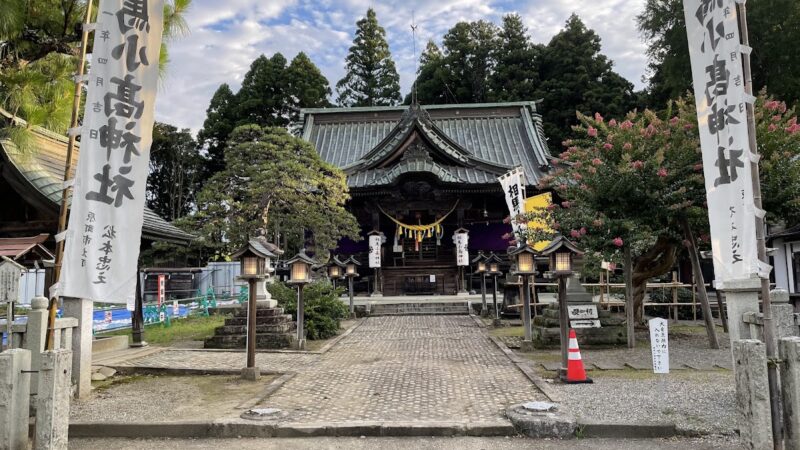
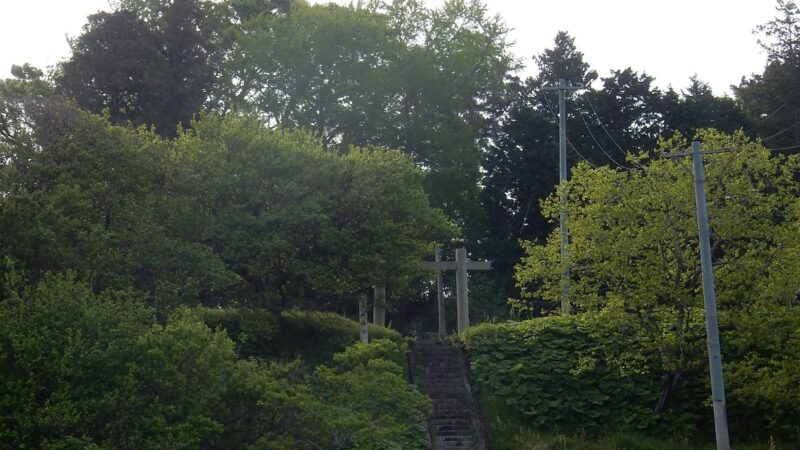
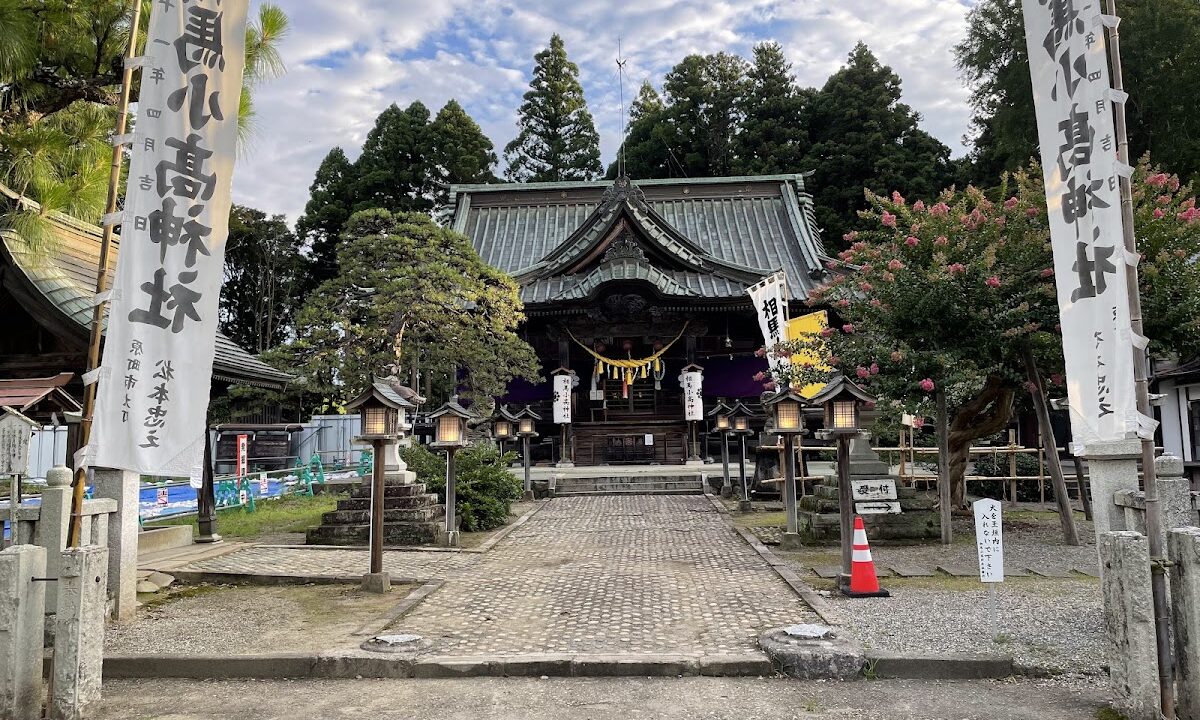
Currently, Odaka Shrine stands on the site of Odaka Castle. The castle ruins, now part of the shrine grounds, are carefully preserved by local residents, maintaining the historical landscape. Visiting Odaka Shrine allows you to feel the atmosphere of the castle ruins and reflect on history.
About the Main Lords: The Soma Clan
The Soma clan, the main lords of Odaka Castle, were a prestigious samurai family that continued from the late Heian period. The Soma clan traces its ancestry to Soma Moritsune, the second son of Chiba Tsunetane, and was based in Soma District, Shimosa Province (present-day northern Chiba Prefecture).
During the Kamakura period, the Soma clan distinguished themselves by serving Minamoto no Yoritomo, and gained the position of jitō (land steward) in Namekata District, Mutsu Province, expanding into the Tohoku region. From the time of Soma Shigetane, who built Odaka Castle, the Soma clan ruled this area for approximately 270 years.
The Soma clan survived the turmoil of the Nanboku-chō period and the conflicts with the Date clan during the Sengoku period, and continued as the Soma Nakamura Domain until the end of the Edo period and the Meiji Restoration, making them a rare daimyo family. Odaka Castle was a crucial base that played a central role in their long history.
Access Information
Access by Public Transportation
JR Jōban Line
Approximately 15 minutes on foot from Odaka Station
Odaka Station is the central station of Odaka Ward, Minamisoma City. To reach the Odaka Castle ruins, head northwest from the station.
Access by Car
Joban Expressway
Approximately 15 minutes from Minamisoma IC
Exit the Joban Expressway at Minamisoma IC and head towards Odaka via National Route 6.
Parking
There is some parking space around Odaka Shrine, but parking for large vehicles is difficult. Please be considerate of local residents when visiting.
Points to Note When Visiting
Odaka Castle Ruins are a Fukushima Prefecture designated historical site, but part of it is within the grounds of Odaka Shrine and can be freely visited. However, please note the following:
- Observe proper shrine etiquette
- Do not damage the ruins
- Always take your trash with you
- Avoid trespassing on private property
- Be careful as the ground can be slippery in rainy weather
Information on Nearby Spots to Odaka Castle
Soma Nakamura Castle
Nakamura Castle (Soma City), where the Soma clan relocated from Odaka Castle, is approximately 30 minutes away by car. The site is now maintained as the Nakamura Castle Ruins, and there is a facility where you can learn about the history of the Soma clan. Visiting it in conjunction with Odaka Castle will give you a deeper understanding of the Soma clan’s history.
Minamisoma City Museum
This museum allows you to learn about the history and culture of Minamisoma City, and also has exhibits related to Odaka Castle and the Soma clan. Visiting it before visiting the castle ruins will give you a deeper understanding.
Odaka River
The Odaka River, which was used as the outer moat of Odaka Castle, still flows around the castle ruins today. A stroll along the river will give you a real sense of the castle’s location at the time.
Odaka Castle Cultural Property Designation
The Odaka Castle Ruins are protected as a Fukushima Prefecture designated historical site. The castle remains from the medieval to early modern period are well-preserved, making it an important historical site for studying the history of castles in the Tohoku region.
With its designation as a prefectural historical site, the remains are preserved and properly managed, ensuring that this valuable historical heritage is protected for future generations.
The Historical Role of Odaka Castle
Odaka Castle was not merely a military base, but functioned as the political, economic, and cultural center of the Soma clan. Its continued use as a residence for approximately 270 years demonstrates its excellent location as a base for regional governance.
The history of Odaka Castle, which survived the turbulent times of the Nanboku-cho period and the warring states period, is an indispensable element in understanding the medieval history of the Tohoku region. In particular, as the base of the Soma clan, which fiercely resisted Date Masamune, the most powerful warlord in Tohoku during the Sengoku period, and maintained its independence, Odaka Castle holds significant historical importance.
Odaka Castle and Regional Reconstruction After the Earthquake
Following the 2011 Great East Japan Earthquake and the Fukushima Daiichi nuclear power plant accident, the Odaka district was designated an evacuation zone. After the evacuation order was lifted in 2016, preservation activities for the Odaka Castle ruins resumed along with the reconstruction of the region.
The Odaka Castle ruins have become a symbol of the region’s historical identity and a symbol of reconstruction. Thanks to ongoing preservation efforts by local residents and initiatives to pass on history to future generations, Odaka Castle is not only a legacy of the past but also a symbol of hope for the region’s future.
Summary
Odaka Castle (Koubaiyama Ukifune Castle) is a hilltop castle located in Odaka Ward, Minamisoma City, Fukushima Prefecture. It is a historically significant castle that served as the residence of the Soma clan for approximately 270 years. From its construction in 1326 to its abandonment in 1611, it was the stage for fierce battles with the Kitabatake clan during the Nanboku-cho period and with the Date clan during the Sengoku period.
Even today, the remains of the castle, such as the baileys, earthworks, and dry moats, are well-preserved and protected as a Fukushima Prefecture designated historical site. The castle ruins, where Odaka Shrine now stands, are a valuable place that conveys the history and culture of the region.
It is easily accessible, approximately a 15-minute walk from Odaka Station on the JR Joban Line and approximately a 15-minute drive from the Minamisoma Interchange on the Joban Expressway. By visiting Soma Nakamura Castle and other surrounding spots, you can gain a deeper understanding of the long history of the Soma clan and the medieval history of the Tohoku region.