Tanadare Castle (Kazo City, Saitama Prefecture) Complete Guide | History, Ruins, and Access Information
Tanadare Castle, located in Kamitaneashi, Kisai-cho, Kazo City, Saitama Prefecture, holds a historically significant position as one of the medieval castles in Musashi Province. Also known as “Tanadari Castle,” this flatland castle is now maintained as Tanadare Castle Ruins Park, a valuable historical site that conveys the history of the region. This article provides a detailed explanation of Tanadare Castle, from its historical background to its current state.
Basic Information on Tanadare Castle
Tanadare Castle is a medieval castle located around 450-1 Kamitaneashi, Kisai-cho, Kazo City, Saitama Prefecture. It belonged to the former Musashi Province and is classified as a flatland castle.
Location: Kamitanadare, Kisai-cho, Kazo City, Saitama Prefecture (Tanadare Castle Ruins Park)
Alternate Name: Tanadare Castle
Castle Structure: Flatland Castle
Builder: Sasaki Clan
Construction Date: Around 1455 (Kōshō 1)
Main Lords: Sasaki Clan, Oda Clan
Current Status: Remains have disappeared, developed as a castle ruins park
The place name is pronounced “Kamitanadare,” a unique place name deeply rooted in the region.
History of Tanadare Castle
Construction History and the Sasaki Clan
There are various theories regarding the construction date of Tanadare Castle, but the most plausible theory is that it was built around 1455 (Kōshō 1) by the Sasaki clan, who served Ashikaga Shigeuji, the Koga Shogun. The purpose of its construction was to strengthen the defenses of the region as a subsidiary castle of the nearby Shobu Castle.
In the mid-15th century, the Kanto region was a time of conflict between the Kamakura Shogun and the Kanto Kanrei Uesugi clan, and the rise of the Koga Shogun Ashikaga Shigeuji. It is believed that the Sasaki clan followed Ashikaga Shigeuji and built Tanedare Castle as part of their expansion of power in northern Musashi Province.
Tanade Castle had a close relationship with Shobu Castle; it functioned as an outpost of Shobu Castle, and the two castles worked together to maintain regional control. This arrangement is typical of the castle network of the time, demonstrating a strategic structure where the main castle and subsidiary castles complemented each other.
The Era of Oda Akiie
With the arrival of the Sengoku period, Oda Oi-no-kami Akiie, a member of the Oda clan, a prominent family of Hitachi Province, became the lord of Tanedare Castle. Oda Akiie is also known as the lord of Kisai Castle and was one of the important Sengoku period warlords in this region.
Around 1532, Oda Akiie moved his residence to Kisai Castle. According to one theory, Akiie adopted the son of Narita Chikayasu, the lord of Oshi Castle, and placed his adopted son, Ietoki, at Kisai Castle while he himself retired to Tanedare Castle. It is presumed that the circumstances of this relocation and retirement were influenced by the political situation and succession issues of the time.
One reason Oda Akiie chose Tanedare Castle as his retirement castle is its relatively quiet environment, despite being close to the major base of Kisai Castle. It is believed that he remained at Tanedare Castle after retirement, maintaining political influence and supporting his successor.
Changes after the Sengoku Period
Regarding the detailed history of Tanedare Castle from the mid-16th century onward, many points remain unclear due to the limited historical records. With the end of the Sengoku period, it is presumed that Tanedare Castle, like many small and medium-sized castles, lost its military function.
In the Edo period, its function as a castle was completely lost, and the surrounding area was developed into farmland. Therefore, almost no clear remains have disappeared, making it difficult to discern the former castle’s form from the topography.
Structure and Layout of Tanedare Castle
Characteristics as a Flatland Castle
Tanadedare Castle is classified as a flatland castle. Located in the lowlands of northern Musashi Province, it was built on flat terrain, unlike mountain castles that utilized natural elevation differences. Flatland castles are characterized by the use of surrounding waterways and moats as defensive structures, and Tanedare Castle is thought to have had this typical structure.
Scope of the Castle Area
The current Tanedare Castle Ruins Park represents only a small part of the former castle area. Analysis of the topography and old maps suggests that the actual castle site extended significantly eastward from the park’s location.
On the south side of the park, a small U-shaped ditch, believed to be the remains of a moat, remains between the park and the neighboring house. It has been suggested that this may be a trace of a former defensive structure. However, due to alterations in the modern living environment, it cannot be definitively identified as a valid historical remains.
Current Status of Remains
Unfortunately, the clear remains of Tanedare Castle have almost completely disappeared. It is impossible to identify castle remains such as earthworks, moats, or baileys. This is due to significant topographical changes caused by years of agricultural and residential development.
In the nearby cemetery, there are relatively well-preserved stone steles, which are attracting attention as valuable stone artifacts that convey medieval history. While it is unclear whether these steles are directly related to the era of Tanedare Castle, they are important cultural assets that tell the story of the medieval history of this region.
Current Status of Tanedare Castle Ruins Park
Park Development Status
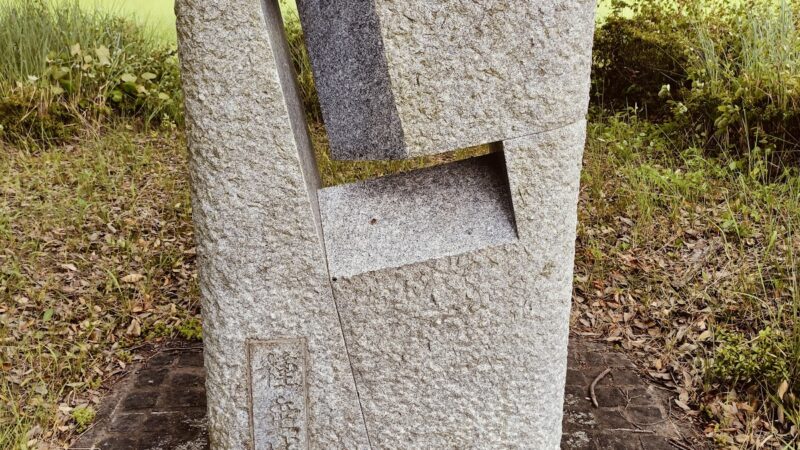
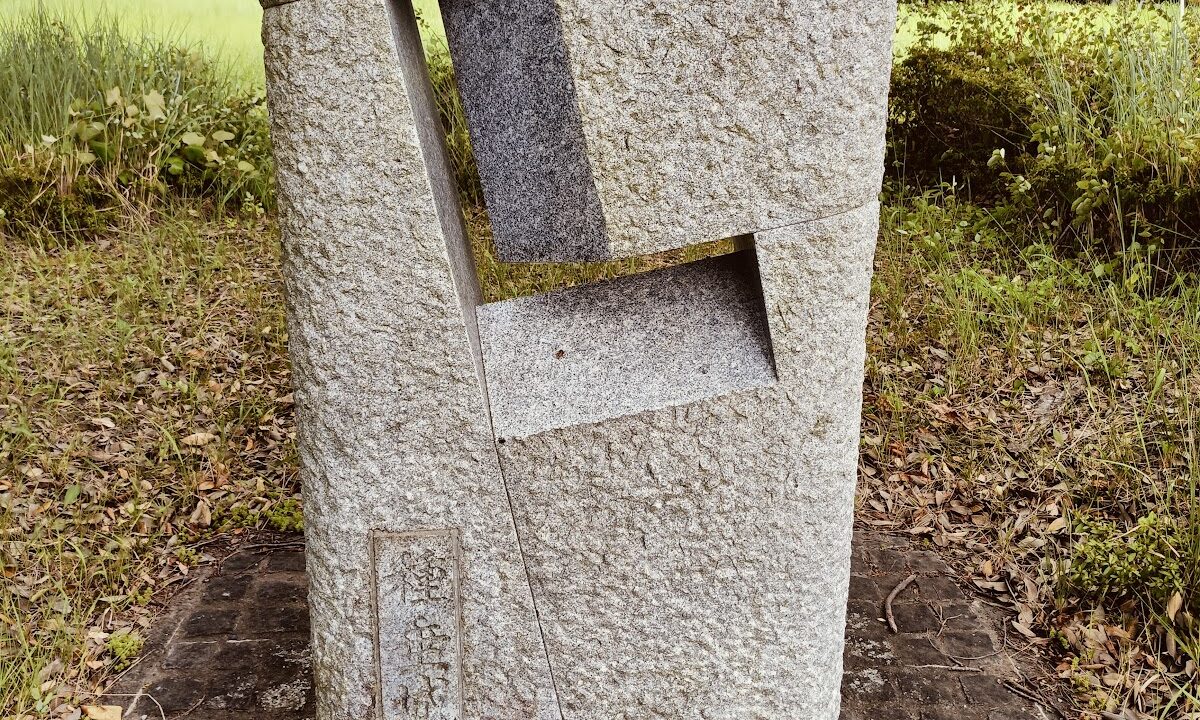
The site of Tanedare Castle is currently developed as Tanedare Castle Ruins Park (Taneda Castle Ruins Park). Within the park, there are explanatory signs and a stone monument indicating the site of the castle, conveying the history of Tanedare Castle to visitors.
The park itself is small, and since no remains are left, it may not be of much interest to anyone other than castle enthusiasts. However, it is a popular spot for local residents to learn about the region’s history and for leisurely strolls.
Explanatory Signs and Stone Monument
The explanatory signs in the park describe the history of Tanedare Castle, its builder, and the changes in its lords. By reading these signs, visitors can understand the basic history of Tanedare Castle.
The stone monument is erected as a symbol of the Tanedare Castle site, serving to pass on to future generations the fact that this place was once a castle.
Surrounding Environment
The area surrounding Tanedare Castle Park is a quiet environment with a mix of residential areas and farmland. The area estimated to have been the former castle grounds is now being developed into residential and agricultural land, making it difficult to perceive any traces of the medieval period.
However, this peaceful landscape can also be seen as a testament to the accumulation of history from the turmoil of the Sengoku period to the present day.
Access and Visiting Information
Access by Public Transportation
Tanedare Castle Ruins Park can be accessed by public transportation.
Nearest Station: JR Takasaki Line, Kōnosu Station
Bus: Take the Asahi Bus from the east exit of Kōnosu Station
Bus Stop: Kamitanadare Bus Stop
Walk Time from Bus Stop: Approximately 5 minutes
Since bus service is limited, it is recommended to check the timetable in advance. The route from the bus stop to the park is relatively easy to follow, but if it’s your first visit, it’s a good idea to use a map app.
Access by Car
Access by car is also possible.
Nearest Interchange: Tohoku Expressway, Kazo IC or Kuki IC
Travel Time: Approximately 15-20 minutes from the interchange
Parking Information
There is no dedicated parking lot at Tanedare Castle Ruins Park. Using public transportation is recommended. If you must visit by car, please be careful not to inconvenience local residents and use nearby paid parking lots or avoid street parking.
Estimated Visit Time
The estimated visit time to Tanedare Castle Ruins Park is approximately 15-20 minutes. Because the park is small and no remains are left, you can complete your visit quickly by reading the explanatory signs and checking the stone monuments.
Points to Note When Visiting
- The park is always open, but please be mindful of noise as it is adjacent to a residential area.
- No remains of the castle exist, so topographical observations are not possible.
- The main points of interest are the explanatory signs and stone monuments.
- In the summer, there may be many mosquitoes and other insects, so insect repellent is recommended.
- There are no facilities such as toilets or vending machines.
Tanedare Castle and the Surrounding Castle Network
Relationship with Shobu Castle
Understanding Tanedare Castle is essential to understanding its relationship with Shobu Castle. Tanedare Castle is believed to have been built as a branch castle of Shobu Castle, and the two castles had a close cooperative relationship.
Shobu Castle is located approximately 5 km northwest of Tanedare Castle and functioned as the base of the Sasaki clan. Tanedare Castle is thought to have played a role in extending Shobu Castle’s defensive line to the southeast, forming a network of bases for regional control.
Relationship with Kisai Castle
Even after Oda Akiie moved his residence to Kisai Castle, Tanedare Castle continued to function as his retirement castle. Kisai Castle is located approximately 3 km northeast of Tanedare Castle and developed into a larger fortress.
One reason Akiie maintained Tanedare Castle as his retirement castle while Kisai Castle was his main base is thought to be the proximity of the two castles, which facilitated communication between them.
Castles of Northern Musashi Province
Many castles were built in northern Musashi Province, where Tanedare Castle is located, from the medieval period to the Sengoku period. These castles, such as Oshi Castle, Kisai Castle, Shobu Castle, and Hanyu Castle, influenced each other and shaped the regional political and military situation.
Tanedare Castle can be positioned as a small to medium-sized subsidiary castle within this network of castles, playing a role at the periphery of regional control.
Significance of Visiting Tanadare Castle
As a Place for Historical Learning
Although no remains of the castle itself remain, Tanadare Castle Ruins Park is a valuable place to learn about the history of the region. Through the explanatory signs, you can learn about the history of northern Musashi Province from the medieval period to the Sengoku period, and particularly trace the footsteps of powerful local warlords such as the Sasaki clan and Oda Akiie.
As Part of a Castle Tour
For castle enthusiasts visiting castles in Saitama Prefecture, Tanadare Castle is a historical site worth adding to your list. While small in scale and without many remains, visiting it along with other castles such as Shobu Castle and Kisai Castle allows for a comprehensive understanding of the castle network in this region.
Experiencing Local History and Culture
By strolling around Tanadare Castle Ruins Park, you can imagine the history of the medieval and Sengoku periods that lies dormant beneath the peaceful modern landscape. The unique sound of the place name “Tanadare” also evokes a sense of the depth of this land’s history.
Current Status and Challenges of Tanedare Castle Research
Limitations of Historical Sources
Historical sources concerning Tanedare Castle are limited, leaving many questions unanswered regarding its construction date, changes in lords, and the castle’s structure. In particular, there are almost no records of the detailed history during the Sasaki clan’s rule or of lords other than Oda Akiie.
The Need for Archaeological Investigation
Given the near-extinction of the remains, archaeological approaches such as excavation are crucial for understanding the true nature of Tanedare Castle. However, with ongoing residential development, conducting large-scale excavations is currently difficult.
Future opportunities for small-scale trial excavations or emergency surveys related to development could potentially yield new insights.
Contribution to Regional History Research
Research on Tanedare Castle is significant not only for understanding the history of the castle itself, but also for elucidating the medieval and Sengoku period history of northern Musashi Province, particularly the relationship between the Koga Shogunate and the samurai groups of the Kanto region, and the activities of the Oda clan. Further research is anticipated.
Recommended Visit Plans for Tanedare Castle
Solo Visit Plan
If you are only visiting Tanedare Castle Ruins Park, take a bus from Kōnosu Station, get off at the Kami-Taneashi bus stop, and it’s about a 5-minute walk from there. Allow 15-20 minutes for your visit to the park; take your time to read the information boards and enjoy the surrounding atmosphere.
Combined Visit Plan with Surrounding Castles
When visiting Tanedare Castle, we recommend visiting the surrounding castles as well.
Recommended Route Example:
- Kisai Castle (Kazo City) – The residence of Oda Akiie
- Tanedare Castle (Kazo City) – Akiie’s retirement castle
- Shōbu Castle (Kuki City) – The main castle of Tanedare Castle
Visiting these castles in one day will give you a comprehensive understanding of the castle network and historical flow in this region. However, travel by public transport is time-consuming, so visiting by car is more efficient.
In conjunction with local historical sites
Around Tanedare Castle, there are many other historical sites. Visiting them in conjunction with local temples, shrines, and old townscapes will allow you to experience the region’s history and culture more deeply.
Summary
Tanedare Castle (Kazo City, Saitama Prefecture) is a valuable historical site that tells the history of the medieval and Sengoku periods in northern Musashi Province. Built by the Sasaki clan as a branch castle of Shobu Castle, and later functioning as a retirement castle for Oda Akiie, this castle, although no remains exist today, has been developed as Tanedare Castle Ruins Park, preserving the region’s history.
Visitors can learn about the history of Tanedare Castle through the explanatory signs and stone monuments within the park. Although small in scale and requiring little time for a visit, visiting it in conjunction with surrounding castles such as Shobu Castle and Kisai Castle will allow you to gain a deeper understanding of the region’s castle network and the history of the Sengoku period.
Tanedare Castle Ruins Park, accessible by bus from Kōnosu Station, is a must-visit spot as part of a tour of castles and explores local history in Saitama Prefecture. Imagine the history of Musashi Province amidst the quiet residential landscape of today, and feel the romance of the medieval and Sengoku periods.