Hanazaki Castle (Saitama Prefecture) Complete Guide | History, Highlights, and Access Information
Located in Hanazaki, Kazo City, Saitama Prefecture, Hanazaki Castle is a flatland castle built during the Sengoku period as a branch castle of Kurihara Castle. Currently, it is maintained as “Hanazaki Castle Mountain Park,” and the remains of beautiful moats and earthworks are preserved. This castle is full of charm, including its connection to Uesugi Kenshin’s campaigns in the Kanto region and its pristine moats maintained by spring water. This article provides detailed information useful for your visit, from the history of Hanazaki Castle to its highlights and access methods.
History of Hanazaki Castle
Construction and Lords
Hanazaki Castle is believed to have been built by the Hosogaya clan during the Sengoku period. This castle, positioned as a branch castle of Kurihara Castle (present-day Kuki City), played an important role in the power struggle between the Hojo and Uesugi clans in the Kanto region.
The Hosogaya clan were local lords with power in northern Musashi Province, and Hanazaki Castle functioned as a defensive base in this region. The castle’s location near the old Tone River provided excellent advantages in terms of both water transport and defense.
Uesugi Kenshin’s Kanto Campaign and Hanazaki Castle
The most important event in the history of Hanazaki Castle was Uesugi Kenshin’s (then known as Nagao Kagetora) campaign into the Kanto region in 1561 (Eiroku 4). In April of that year, Kenshin invaded Kanto to attack Hojo Ujiyasu at Odawara Castle.
After the siege of Odawara Castle, records show that in August, Kido Tadaaki, the lord of Hanyu Castle who sided with Uesugi, attacked Hanazaki Castle. This attack was part of Uesugi Kenshin’s expansion of power in Kanto. Kido Tadaaki was a senior retainer of Uesugi Kenshin and played a crucial role in military operations in the Kanto region.
During this period, numerous castles, including Hanyu Castle, Kisai Castle, Tanedare Castle, Tozaki Castle, and Shobu Castle, were scattered around Hanasaki Castle, making this region the front line where the Hojo and Uesugi clans were evenly matched. The attack on Hanasaki Castle is thought to have been a strategic move to strengthen the Uesugi’s influence in the area.
From the Late Sengoku Period to the Castle’s Abandonment
There are few detailed records regarding the fate of Hanasaki Castle after Uesugi Kenshin’s invasion of the Kanto region, leaving many aspects unclear. However, it is presumed that, like many small and medium-sized castles, Hanasaki Castle lost its military role with the end of the Sengoku period and eventually fell into disuse.
In the Edo period, this region became a direct territory of the shogunate and a territory of hatamoto (direct retainers of the shogun), ushering in an era of peace. The castle ruins were used for farmland and residential areas, and gradually its appearance as a castle disappeared.
Hanazaki Castle’s Layout and Structure
Characteristics as a Flatland Castle
Hanazaki Castle is classified as a flatland castle. A flatland castle is a castle built on flat land, and unlike mountain castles or hill castles, it cannot utilize the natural elevation differences of the terrain for defense. Therefore, artificial defensive structures such as moats and earthworks play a crucial role in flatland castles.
Hanazaki Castle is located on a slightly elevated area near the old Tone River, and the surrounding low-lying wetlands could be used as a natural moat. This geographical condition enhanced its defensive capabilities as a flatland castle.
Castle Area
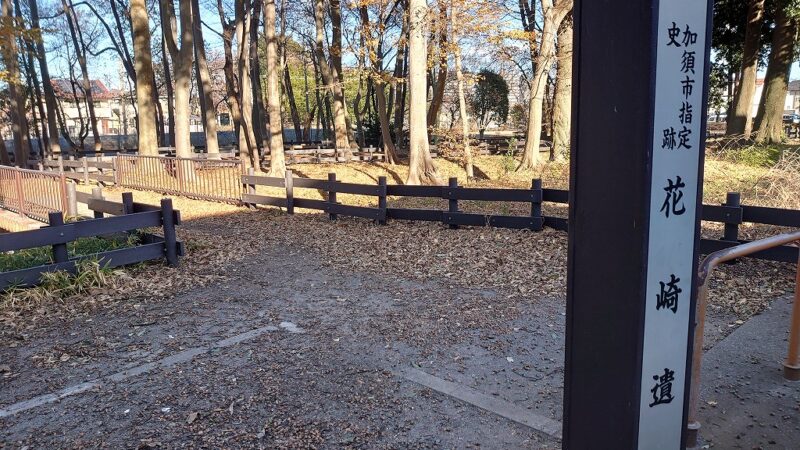
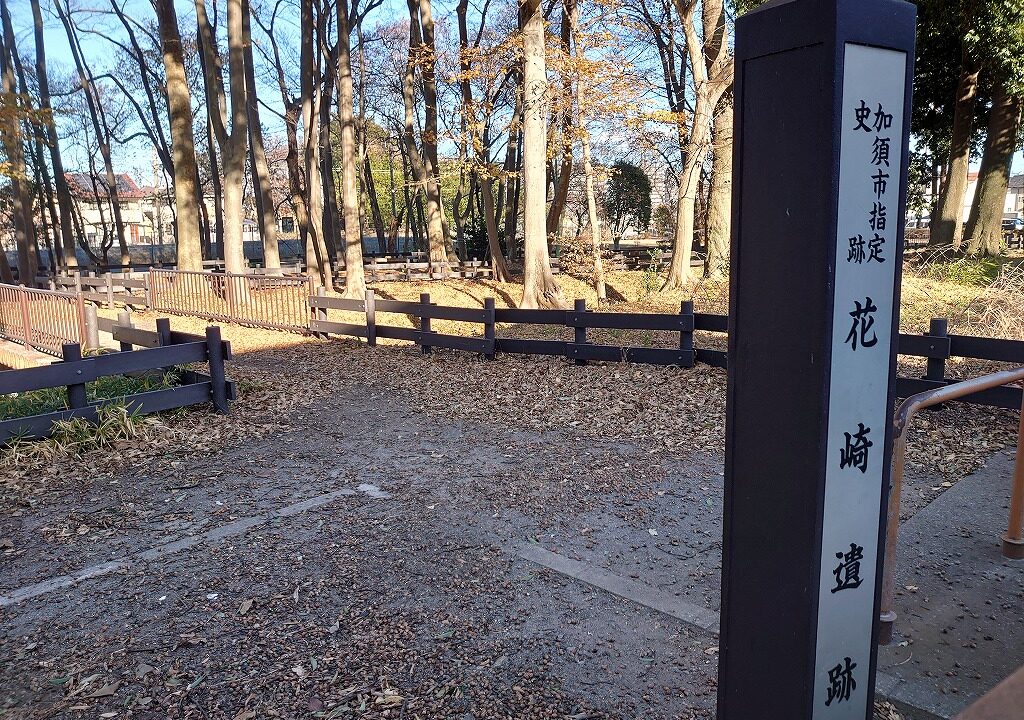
Currently, the remains of Hanazaki Castle are mainly divided into two areas. One is the main keep area, which is maintained as “Hanazaki Castle Mountain Park,” and the other is “Castle Ruins Park,” located north of the Tobu Isesaki Line tracks.
It is believed that there was a barbican in the area of Castle Ruins Park. A umadashi is a defensive structure built in front of a castle gate. It protected the gate from enemy attacks and also served as a gathering point for friendly troops before deployment. The presence of this umadashi indicates that Hanasaki Castle incorporated castle construction techniques from the Sengoku period (Warring States period).
While the overall size of the castle was standard for a subsidiary castle, it is believed that an effective defensive system was constructed through the skillful placement of moats and earthworks.
Arrangement of Moats and Earthworks
The core of Hanasaki Castle’s defensive system was the moat and earthworks. The moat, which still remains today, maintains its clean water through spring water, evoking its original appearance. The moat not only held water but also played a crucial role in hindering enemy approaches and maintaining visibility from within the castle.
The earthworks were built inside the moat and functioned as castle walls. It is presumed that fences and walls were built on top of the earthworks, and these combined to form a strong defensive line.
Highlights of Hanasaki Castle
The Moat of Hanasaki Castle Park
The greatest highlight of Hanasaki Castle is the beautiful moat remaining in Hanasaki Castle Park. This moat is supplied with water from a spring, ensuring consistently clean water. Trees surround the moat, allowing visitors to enjoy the scenery of each season.
Especially in spring, the cherry blossoms bloom, and their reflection on the water is a breathtaking sight. In summer, the greenery deepens, and in autumn, the autumn leaves color the moat. In winter, the moat, enveloped in silence, quietly tells the story of the castle’s history.
The moat is quite impressive for a subsidiary castle, measuring approximately 10 meters in width. Its depth and shape reveal the high level of castle-building technology of the time.
Remains of Earthworks and Dry Moats
Within Hanasaki Castle Park, remains of earthworks and dry moats can also be found, in addition to the moat. The earthen ramparts are about 2-3 meters high and are still clearly visible today. Walking along the top of the ramparts allows you to experience the scale and structure of the castle at that time.
The dry moats are moats that do not hold water and were mainly constructed to partition the interior of the castle. The presence of dry moats indicates that the castle was divided into multiple sections, showing that it was a structure that could be defended in stages in the event of an attack.
These remains retain many characteristics of castle architecture from the Sengoku period and are a valuable point of interest for castle enthusiasts.
Remains of the Horse Enclosure at the Castle Ruins Park
At the castle ruins park located north of the Tobu Isesaki Line tracks, there remains a place where a horse enclosure is believed to have stood. Currently, it is a park, and there are few clear traces of the remains, but by carefully observing the topography, it is possible to infer the structure at that time.
The horse enclosure was a key element in the defense of the castle gate, and its placement can also provide clues to which direction the castle’s front faced. When visiting the castle ruins park, paying attention to the surrounding topography and road layout will allow you to understand the castle’s structure more deeply.
Surrounding Landscape and Historical Environment
The area around Hanasaki Castle ruins is now residential and farmland, but elements that retain the atmosphere of the time can still be seen, such as the flow of the old Tone River and the undulations of the terrain. Looking around from the castle ruins, you can understand the strategic significance of why the castle was built in this location.
Furthermore, the name Hanasaki itself has an interesting origin. One theory is that it was called “Hanasaki” or “Hanasaki-saki” because the plateau in the center of the area juts out into the old Tone River, while another theory is that it became “Hanasaki” because of the beautiful flowers that bloom there throughout the seasons. Both theories are deeply connected to the natural environment of the region.
Access to Hanasaki Castle
Access by Train
If using public transportation, the nearest station to Hanasaki Castle is Hanasaki Station on the Tobu Isesaki Line.
Walking Access from Hanasaki Station on the Tobu Isesaki Line
- From Hanasaki Station to Hanasaki Castle Park: Approximately 10-15 minutes on foot
- Hanasaki Station Location: 157, Hasuda, Hanasaki, Kazo City, Saitama Prefecture
Hanasaki Station is a station on the Tobu Isesaki Line, station number TI 04. It is easily accessible from both Asakusa and Tatebayashi/Ota. There are educational facilities such as Heisei International University and Hanasaki Tokuei High School near the station, and many students can be seen around.
The path from the station to the castle ruins is relatively flat and passes through a residential area. There are guide signs along the way, so even first-time visitors are unlikely to get lost.
Access by Car and Parking
If visiting by car, the nearest interchanges are the Kazo Interchange or Kuki Interchange on the Tohoku Expressway.
Access from Major Roads
- From Tohoku Expressway, Kazo IC: Approximately 15 minutes
- From Tohoku Expressway, Kuki IC: Approximately 20 minutes
- Accessible from National Route 125
Hanazaki Castle Park has a dedicated parking lot, but it is not very large. It may get crowded on holidays and during cherry blossom season, so consider using public transportation.
Location of Hanazaki Castle Ruins
- 2-24-6 Hanazaki, Kazo City, Saitama Prefecture 347-0032 (Hanazaki Castle Park)
- 2 Hanazaki Kita, Kazo City, Saitama Prefecture (Castle Ruins Park)
Notes for Visitors
Hanazaki Castle Ruins is maintained as a park, so you can generally visit freely. However, please note the following points.
- Opening Hours: There are no specific restrictions, but please avoid visiting at night.
- Admission Fee: Free
- Facilities: Toilets and rest facilities are available within the park.
- Weather: The ground can become slippery in rainy weather, so please wear appropriate footwear.
- Manners: The park is also a place of relaxation for local residents, so please be considerate of noise levels, etc.
Attractions around Hanasaki Castle
Related Castles
When visiting Hanasaki Castle, exploring the surrounding castle ruins will give you a deeper understanding of the Sengoku period history of this region.
Hanyu Castle (Hanyu City, Saitama Prefecture)
Hanyu Castle was the residence of Kido Tadaaki, who attacked Hanasaki Castle, and was an important castle that served as a base for Uesugi Kenshin’s campaigns in the Kanto region. It is about a 15-minute drive from Hanasaki Castle.
Kisai Castle (Kazo City, Saitama Prefecture)
Another castle ruin located in Kazo City, also known as Kisaichi Castle or Negoya Castle. Together with Hanasaki Castle, it formed part of the castle network in this region.
Tanedare Castle (Kazo City, Saitama Prefecture)
Also known as Tanetari Castle, it is located in Kami-Taneetari, Kazo City. Like Hanasaki Castle, it played a role in the regional defense system during the Sengoku period.
Kurihara Castle (Kuki City, Saitama Prefecture)
This castle is considered the main castle of Hanasaki Castle and served as a key strategic point in the region.
By visiting these castles, you can experience the castle layout and defense strategies of northern Musashi Province during the Sengoku period.
Kazo City Tourist Spots
In conjunction with your visit to Hanasaki Castle, you can also enjoy other tourist spots in Kazo City.
Kazo Mirai-kan
This facility allows you to learn about the history and culture of Kazo City, and displays local historical materials. Information on castle ruins in the city, including Hanasaki Castle, can also be obtained.
Tamashiki Shrine
Known as a famous wisteria spot, this shrine offers beautiful wisteria blossoms in May. The historic shrine buildings are also a highlight.
Around Kazo City Gymnasium
The area boasts excellent sports facilities and well-maintained parks. It’s ideal for family visits.
How to Enjoy Hanasaki Castle
Visiting as a Historical Exploration
For castle enthusiasts and history buffs, Hanasaki Castle offers an excellent opportunity to learn about the structure of a flatland castle from the Sengoku period. Researching Uesugi Kenshin’s campaigns in the Kanto region and Kido Tadaaki before your visit will deepen your understanding.
When observing the remains, pay attention to the following points:
- Width and depth of the moat, and its water source
- Height and shape of the earthworks, and construction techniques
- Arrangement and function of the dry moat
- Relationship between the castle grounds and the surrounding topography
- Location of the barbican and estimated location of the castle gate
Bringing a camera and taking photos of the remains is also recommended. Recording the castle ruins along with the scenery of each season will create valuable historical documents.
Use as a Park
Hanasaki Castle Hill Park is both a castle site and a place of relaxation for local residents. The park is equipped with benches and open spaces, making it ideal for strolls and picnics.
Spring Cherry Blossom Viewing
During cherry blossom season, the cherry blossoms blooming around the moat are beautiful, making it a popular spot for cherry blossom viewing. The reflection of the cherry blossoms on the water’s surface is exceptional, making it perfect for photography.
Summer Shade
In summer, the trees are lush and green, providing cool shade for resting. It’s a relatively comfortable environment even on hot days.
Autumn Foliage
In autumn, the park is adorned with colorful foliage, allowing visitors to enjoy a landscape where historical atmosphere and natural beauty harmonize.
Winter Tranquility
Winter sees fewer visitors, allowing for a peaceful exploration of the castle ruins. After the leaves fall, the shape of the remains becomes clearer, making it an ideal season for castle research.
Educational Use
Hanazaki Castle Ruins can also be used as an educational site for learning about local history. Visiting with children and learning about castles and warlords of the Sengoku period would be a great opportunity.
Visiting the actual ruins and imagining how the castle was defended from attack and how people lived there deepens one’s interest in history.
Resources and Information on Hanasaki Castle
Historical Materials
While detailed historical materials on Hanasaki Castle are limited, information can be obtained from the following documents and materials:
“Kazo City History”
This city history compiled by Kazo City includes descriptions of castle ruins within the city, including Hanasaki Castle. It is available for viewing at local libraries.
“Ancient Castle Sites of Saitama”
This book comprehensively introduces castle ruins in Saitama Prefecture and also includes information on Hanasaki Castle.
Historical Materials Related to Uesugi Kenshin
Historical materials related to Uesugi Kenshin’s campaigns in the Kanto region include records of the attack on Hanasaki Castle.
Online Information
Information on Hanasaki Castle can also be obtained from castle research websites and local information sites. Visitor accounts and photographs are also helpful.
Kojodan
This website compiles information on castles nationwide and includes detailed information and visitor ratings for Hanasaki Castle.
Jokaku Hourouki
This is a privately run castle introduction website providing photos and detailed information on the remains of Hanasaki Castle.
Gathering Information on-site
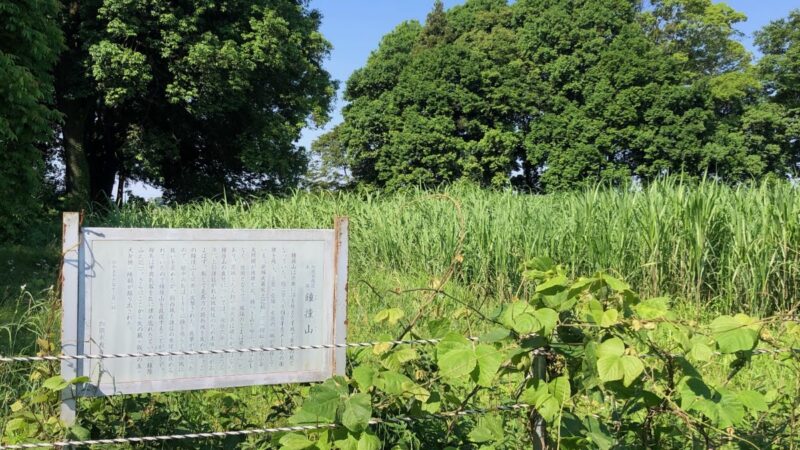
Hanasaki Castle Hill Park has information boards explaining the castle’s history. Reading these boards will help you understand the basic history and structure.
You may also be able to obtain materials about Hanasaki Castle at the Kazo City Tourist Information Center or City Hall. It’s a good idea to inquire before your visit.
Summary
Hanasaki Castle is a valuable historical site that retains many of the characteristics of a flatland castle from the Sengoku period. Its connection to the historical event of Uesugi Kenshin’s invasion of the Kanto region, and the remains such as the beautiful moat, vividly convey the history of that time to visitors.
Currently, it is maintained as Hanasaki Castle Hill Park, serving as a place of relaxation for local residents and an attractive destination for history enthusiasts and castle fans. The convenient accessibility, being within walking distance from Hanasaki Station on the Tobu Isesaki Line, also contributes to its easy visit.
While many castle ruins remain in Saitama Prefecture, Hanasaki Castle stands out for its remarkably well-preserved remains, making it an ideal place to learn about Sengoku period castle architecture. Visiting it along with nearby castles such as Hanyu Castle, Kisai Castle, and Tanedare Castle will provide a deeper understanding of the region’s Sengoku history.
Hanasaki Castle ruins, where the beauty of nature in each season blends with historical value, are a place you should definitely visit and experience its charm. The reflection of the sky in the moat, the view from atop the earthen ramparts, and the quiet time spent contemplating the Sengoku period will surely create a memorable experience.