Complete Guide to Yokoze Negoya Castle (Saitama Prefecture): A Thorough Explanation of the History and Remains of a Mountain Castle in Chichibu
What is Yokoze Negoya Castle?
Yokoze Negoya Castle is a Sengoku period mountain castle located in Negoya, Yokoze-machi, Chichibu-gun, Saitama Prefecture. It is also known as “Tsukue no Jō” and “Musashi Negoya Castle,” and was designated a Yokoze Town Historic Site on January 31, 1973.
Built at the end of a ridge extending north from Ōtsukueyama, at an altitude of approximately 370 meters (relative height approximately 100 meters), this castle is a natural stronghold surrounded by four streams: the Yokoze River, Ikegawa River, Kojimazawa, and Shirotanizawa. Locally known as “Maeyama” and “Shiroyama,” it functioned as an important military base monitoring the Chichibu Highway from Shōmaru Pass.
As a typical example of a mountain castle in Musashi Province, the remains of earthworks and dry moats are well-preserved, making it a valuable historical site for studying the castle structure of the Sengoku period.
History of Yokose Negoya Castle
Construction Date and Early History
The exact construction date of Yokose Negoya Castle is uncertain, but it is believed to have been functional around the Tenbun era (1532-1555) of the Sengoku period. This was a turbulent time when the Kanto region was the stage for the power struggle between the Hojo and Uesugi clans.
Connection with Uesugi Norimasa
A noteworthy historical fact is the legend that Uesugi Norimasa, the Kanto Kanrei (governor of the Kanto region), fled to this area and temporarily resided here. After being defeated in battle against Hojo Ujiyasu and driven out of Hirai Castle in 1552, Uesugi Norimasa is said to have fled to Echigo Province to seek refuge with Nagao Kagetora (later Uesugi Kenshin), passing through the Chichibu region along the way.
It is highly probable that Yokose Negoya Castle served as a temporary base during that time, and its location, which allowed for monitoring of the Chichibu Road, suggests that it functioned as an important relay point during the escape. This historical episode indicates that Yokose Negoya Castle was not merely the residence of a local powerful family, but was deeply involved in the political situation of the Kanto region.
Under the rule of Hojo Ujikuni
Around 1572 (Genki 3), Asami Iga-no-kami, a vassal of Hojo Ujikuni, was appointed as the lord of Negoya Castle. Hojo Ujikuni was the fourth son of Hojo Ujiyasu and a powerful warlord who ruled from northern Musashi to southern Kozuke, with Hachigata Castle (present-day Yorii-machi, Osato-gun, Saitama Prefecture) as his base.
Yokose Negoya Castle played an important role as a frontline base in the Hojo clan’s control of the Chichibu region, and as a strategic military and transportation hub connecting Hachigata Castle and the Chichibu region. After Asami Iga-no-kami, Watanabe Kanemitsu is said to have become the castle lord, suggesting that the Hojo clan had systematically managed the castle.
Toyotomi Hideyoshi’s Odawara Campaign and the Castle’s Abandonment
In 1590, when the Hojo clan was destroyed in Toyotomi Hideyoshi’s Odawara Campaign, Yokose Negoya Castle is thought to have ceased to serve its purpose. It was abandoned during the Edo period and has remained as a forest ever since. Therefore, the remains of this Sengoku period mountain castle have been preserved almost entirely intact, without being altered by later periods.
Castle Structure and Remains
Characteristics of the Layout
Yokose Negoya Castle is a typical mountain castle, employing a linear layout with multiple enclosures (kuruwa) arranged in a series along the ridge. A defensive system skillfully utilizing the terrain was constructed around the main enclosure, making it a valuable example for observing Sengoku period castle construction techniques in detail.
The castle grounds extend approximately 200 meters north-south and 150 meters east-west, utilizing the elevation difference to create a three-dimensional defensive structure. The terrain, surrounded on all sides by valleys, limited enemy incursion routes, providing advantageous conditions for the defenders.
Structure of the Main Enclosure
The main enclosure, the heart of the castle, is located at the highest point of the ridge and measures approximately 30 meters east-west and 20 meters north-south. Earthen ramparts surround the enclosure, with the northern and eastern ramparts, in particular, remaining remarkably well-preserved at a height of 1-2 meters.
From the main enclosure, one can enjoy a panoramic view of the Chichibu Mountains, including Mount Bukō, and see the road leading from Shōmaru Pass to the Chichibu Basin. This excellent view was extremely important for its military surveillance function. In winter, the majestic figure of Mount Bukō can be seen amidst the snowy landscape, creating a memorable sight for visitors.
Dry Moats and Cut Slopes
Dry moats, approximately 3-5 meters deep, were excavated on the south and north sides of the main enclosure. These moats functioned as “moats” to cut off the ridge and prevent enemy incursions. The moat on the south side, in particular, is large and clearly visible.
Cut slopes (artificially carved steep slopes) were constructed between the enclosures, forming defensive lines utilizing the difference in elevation. These cut slopes remain clearly visible today, demonstrating the advanced civil engineering techniques of the time.
Lower Enclosures and Belt Enclosures
Several lower enclosures (koshiguruma) and belt enclosures (obiguruma) are positioned around the main enclosure. These functioned as forward positions to defend the main enclosure, forming a multi-layered defensive system.
In particular, several lower enclosures are arranged in a stepped pattern on the eastern slope, showing ingenuity to make enemy ascent difficult. Although these enclosures are relatively small, they are thought to have functioned effectively as firing positions for bows and arrows and firearms.
Koguchi (Entrance)
The koguchi (entrance) to the castle is presumed to have been located on the northwest side of the main enclosure. Earthen ramparts and small enclosures were positioned around the koguchi, creating a structure designed to prevent enemy intrusion. However, due to later alterations and weathering, the detailed structure of the koguchi is unclear in some parts.
Highlights of Yokose Negoya Castle
Points to Note When Visiting Yokose Negoya Castle
The main highlights when visiting Yokose Negoya Castle are as follows:
1. Earthen Ramp of the Main Enclosure
The earthen ramparts surrounding the main enclosure are the best-preserved remains of Yokose Negoya Castle. The ramparts on the north and east sides are particularly high and remain in a state that makes it easy to imagine their appearance at the time of construction. Walking on top of the ramparts allows you to experience the castle’s defensive structure.
2. Moat
The large moat on the south side of the main enclosure is a must-see as a typical example of defensive facilities in a mountain castle. The deep and wide trenches completely severing the ridge demonstrate the advanced civil engineering techniques of the Sengoku period.
3. View from the Main Enclosure
From the main enclosure, you can enjoy a magnificent view of Mount Bukō. The panoramic view of the Chichibu Basin and surrounding mountains is crucial for understanding its military surveillance capabilities. The view is particularly stunning on clear days, making it a popular spot for photography.
4. Consecutive Enclosures
By sequentially visiting the multiple enclosures that extend from the main enclosure, you can gain a three-dimensional understanding of the mountain castle’s layout. The arrangement of each enclosure and its relationship to elevation differences reveal the ingenuity of the defensive system.
5. Integration with Natural Terrain
The location, surrounded by valleys on all sides, and the skillful use of the ridge terrain demonstrate the importance of “reading the terrain” in Sengoku period castle construction. Observing how natural terrain was militarily utilized is one of the great pleasures of castle research.
Average Visiting Time
Visiting Yokose Negoya Castle, including the ascent and descent, takes approximately 1 to 1.5 hours. If you plan to carefully observe the remains and enjoy taking photographs, it’s advisable to allow around 2 hours.
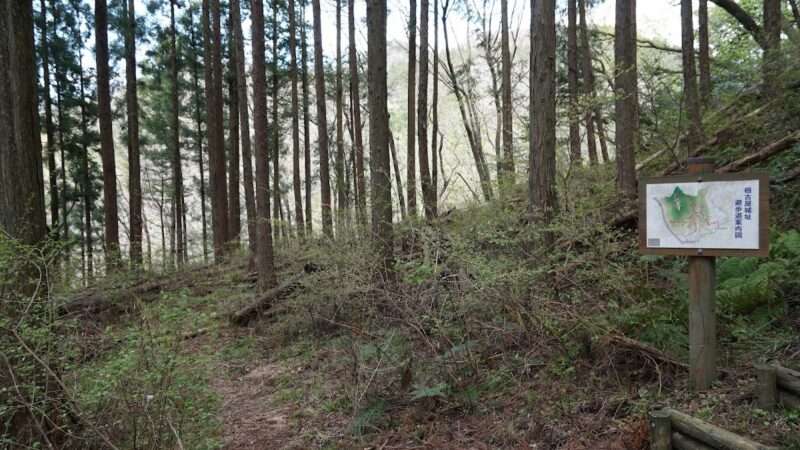
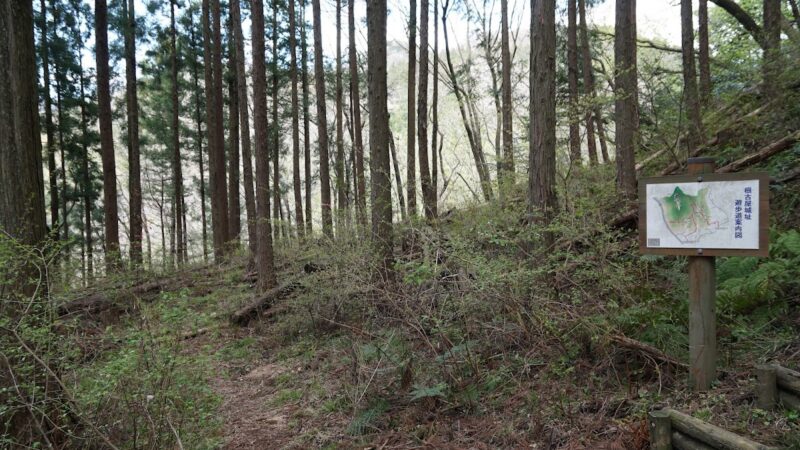
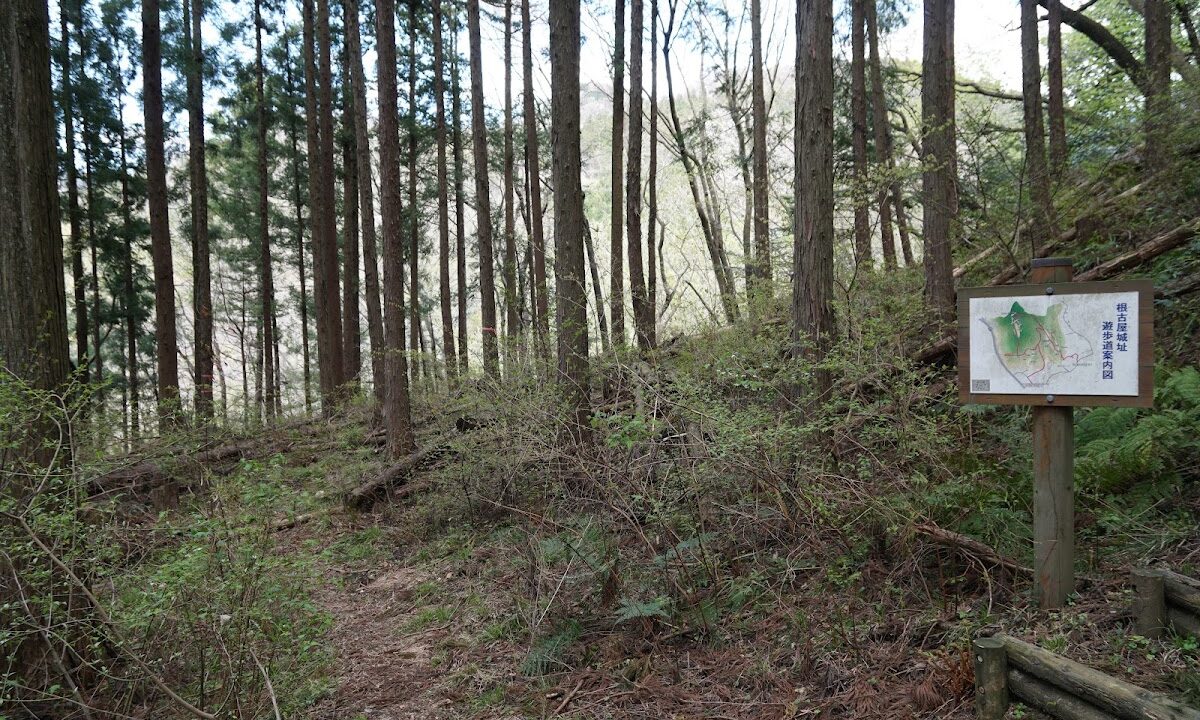
The path to the castle is an unpaved mountain trail, so comfortable shoes and clothing are essential. Particular caution is needed after rain, as the path can become slippery.
Access Methods
Location
7926, Negoya, Yokose, Yokose-machi, Chichibu-gun, Saitama Prefecture 368-0072, Japan
Access by Public Transportation
By Train
- Get off at Yokose Station on the Seibu Chichibu Line, then walk approximately 30 minutes to the castle entrance.
- From Ikebukuro Station, take the Seibu Ikebukuro Line or Seibu Chichibu Line for approximately 1.5 to 2 hours.
From Yokose Station to the castle entrance, head north through a residential area. There are signs, so you can follow them. The path from the station to the castle entrance is a gentle uphill slope.
Access by Car
Via Kan-Etsu Expressway
- Approximately 40 minutes from Hanazono IC on the Kan-Etsu Expressway via National Route 140 (Chichibu-Okan)
- It is convenient to set “Yokose Town Hall” (4612 Yokose, Yokose-machi, Chichibu-gun, Saitama Prefecture) as your destination on your car navigation system and follow the signs from there.
Parking
There is no dedicated parking lot for Yokose Negoya Castle. Avoid street parking and use paid parking lots around Yokose Station or visit by public transport. Please be considerate of local residents.
Condition of the Castle Path
From the castle entrance to the main enclosure, it is a mountain path that takes approximately 20-30 minutes to climb. The path is an unmaintained natural mountain trail with steep slopes and slippery sections. The following equipment and preparations are recommended:
- Trekking shoes or hiking boots
- Long-sleeved shirt and long pants (to prevent insect bites and abrasions from branches)
- Drinking water
- Towel
- Bear bell (for protection against wild animals)
- Work gloves (useful for gripping earthworks and rocky areas)
Points to note when visiting
Differences in conditions depending on the season
Spring (March-May)
The fresh greenery is beautiful, and it’s a relatively easy season to walk. However, the ground can be soft during the snowmelt period.
Summer (June-August)
Vegetation grows thick, and the ruins may be difficult to see. Mosquitoes and horseflies are numerous, so insect repellent is essential. Be sure to stay well-hydrated to prevent heatstroke.
Autumn (September-November)
This is the most suitable season to visit. The autumn foliage is beautiful, and the weather is mild, making it easy to walk. However, fallen leaves can make the ground slippery.
Winter (December-February)
There is a possibility of snow and ice. While the view of Mt. Bukō amidst the snowy landscape is exceptional, the risk of falling increases, requiring winter mountain equipment and experience. Winter visits are not recommended for beginners.
Safety Precautions
- Avoid visiting alone; travel in groups whenever possible.
- Check cell phone signal strength beforehand and ensure you have a means of communication in case of emergency.
- If the weather deteriorates, do not push yourself; turning back is also important.
- There is a possibility of encountering wild animals (wild boars, bears, etc.), so take precautions such as carrying a bear bell or walking while talking loudly.
- To protect the historical remains, do not unnecessarily dig up or destroy earthworks or enclosures.
Nearby Tourist Attractions
Mt. Bukō
Mt. Bukō (elevation 1,304 meters), as viewed from Yokose Negoya Castle, is known as a symbol of Chichibu. Although its shape has changed due to limestone mining, it remains a famous peak representing the Chichibu region. Hiking is possible, and from the summit, you can enjoy a panoramic view of the Kanto Plain.
Chichibu Pilgrimage
Yokoze Town is home to several temples of the Chichibu Thirty-Four Kannon Pilgrimage. In particular, Bokunji Temple (Temple No. 6) and Hochoji Temple (Temple No. 7) are within easy reach of Yokoze Negoya Castle. You can experience a culture of history and faith.
Hitsujiyama Park (Moss Phlox Hill)
Hitsujiyama Park, located in Chichibu city, is a famous spot where approximately 400,000 moss phlox plants bloom from mid-April to early May. You can enjoy Chichibu sightseeing by visiting Hitsujiyama Park in conjunction with a visit to Yokoze Negoya Castle.
Chichibu Shrine
Chichibu Shrine, known as the guardian shrine of the Chichibu region, is an ancient shrine with a history of over 2000 years. The Gongen-zukuri style shrine, rebuilt by Tokugawa Ieyasu, is designated as a tangible cultural property of Saitama Prefecture and is well worth seeing.
Nagatoro Gorge
Located about 30 minutes by car from Yokose Town, Nagatoro Gorge is a scenic spot designated as a national scenic spot and natural monument. Visitors can enjoy river rafting and strolling along the rock formations.
Evaluation of Yokose Negoya Castle
According to evaluations by castle enthusiasts, Yokose Negoya Castle has an average rating of 2.67 (out of 5 points) and has been visited by 64 people (as of 2024). Although not large in scale, the remains are well-preserved, and it is highly regarded as a suitable castle site for learning the basic structure of a mountain castle.
The following points are particularly praised:
- Clearly preserved remains such as earthworks and moats
- Superb view from the main enclosure
- Interesting historical connection with Uesugi Norimasa
- Relatively easy access (within walking distance from the station)
- Designated as a town historical site, with information boards installed
On the other hand, the following issues have also been pointed out:
- The path to the castle is undeveloped, making it difficult for beginners
- Overgrown vegetation in summer makes it difficult to see the remains
- No dedicated parking lot
- Lack of detailed layout maps and explanatory materials
Research and Preservation of Yokose Negoya Castle
Protection as a Town Historic Site
Yokose Negoya Castle was designated as a Yokose Town historical site on January 31, 1973, and is legally protected. This restricts development activities and prevents the destruction of the remains.
Information boards installed by the Yokose Town Board of Education are located on-site, providing basic information about the castle’s history and structure. However, for detailed layout maps and explanations of the remains, it is necessary to refer to specialized books and research papers.
Academic Research
Yokosenegoya Castle is introduced in literature such as “The Complete Guide to Japanese Castles,” Volume 5 (Saitama/Tokyo) and “Medieval Castle Sites in Saitama.” While archaeological excavations have been limited, surface surveys have recorded the layout and structure of the remains.
In recent years, surveys have been conducted by castle researchers and history enthusiasts, leading to the creation of detailed layout maps and documentation of the remains. These research results are important resources for re-evaluating the historical value of Yokosenegoya Castle.
Preservation Challenges
The main challenges in preserving Yokosenegoya Castle are as follows:
- Vegetation Management: Some areas of the remains are obscured by tree growth. Appropriate undergrowth clearing and thinning are necessary.
- Maintenance of Access Paths: Minimum maintenance of access paths is required to create a safe viewing environment. However, balance is crucial, as excessive restoration could damage the remains.
- Enhancement of explanatory facilities: More detailed explanatory panels and layout maps are desirable to deepen understanding on-site.
- Collaboration with the local community: Promoting preservation activities in cooperation with local residents and historical organizations is necessary.
Positioning within the Musashi Province Castle Network
Yokosenegoya Castle played an important role as part of the castle network in northern Musashi Province. Especially under the rule of the Hojo clan, it is thought to have been part of the defensive line centered around Hachigata Castle.
Related Castles in the Surrounding Area
Hachigata Castle (Yorii Town)
The base of Hojo Ujikuni. Yokosenegoya Castle is thought to have been a subsidiary castle of Hachigata Castle.
Sugiyama Castle (Arashiyama Town)
Known as a mountain castle showcasing the pinnacle of castle construction technology, it functioned concurrently with Yokosenegoya Castle.
Sugaya Castle (Arashiyama Town)
This flatland castle is believed to be the site of Hatakeyama Shigetada’s residence and was an important base for Musashi samurai.
By comparing and studying these castles with Yokose Negoya Castle, we can understand the development process and regional characteristics of castles in Musashi Province during the Sengoku period.
Summary
Yokose Negoya Castle (Yokose Town, Chichibu District, Saitama Prefecture) is a valuable historical site with well-preserved remains of a mountain castle from the Sengoku period. It has many attractions, including historical connections with Uesugi Norimasa and Hojo Ujikuni, clearly visible earthworks and moats, and a magnificent view of Mount Bukō.
Climbing the castle requires mountain hiking equipment and preparation, but it offers a valuable opportunity to learn about Sengoku period castle structures firsthand. This castle site is highly recommended for those interested in the history and culture of the Chichibu region, and for mountain castle enthusiasts.
When visiting, please be sure to take sufficient care to protect the remains and ensure safety, and observe proper etiquette. I hope that the history and remains of Yokose Negoya Castle will be passed down to future generations.