Complete Guide to Negoya Castle (Saitama Prefecture) | A Thorough Explanation of the Prefecturally Designated Historic Site in Tokorozawa City and the Mountain Castle in Yokose Town
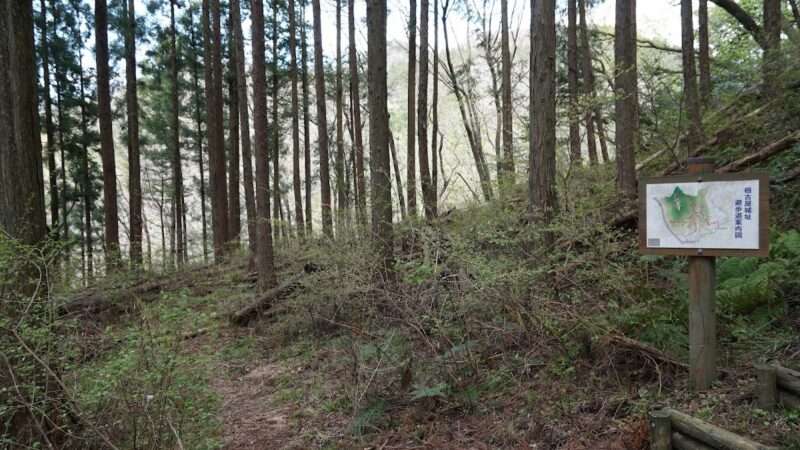
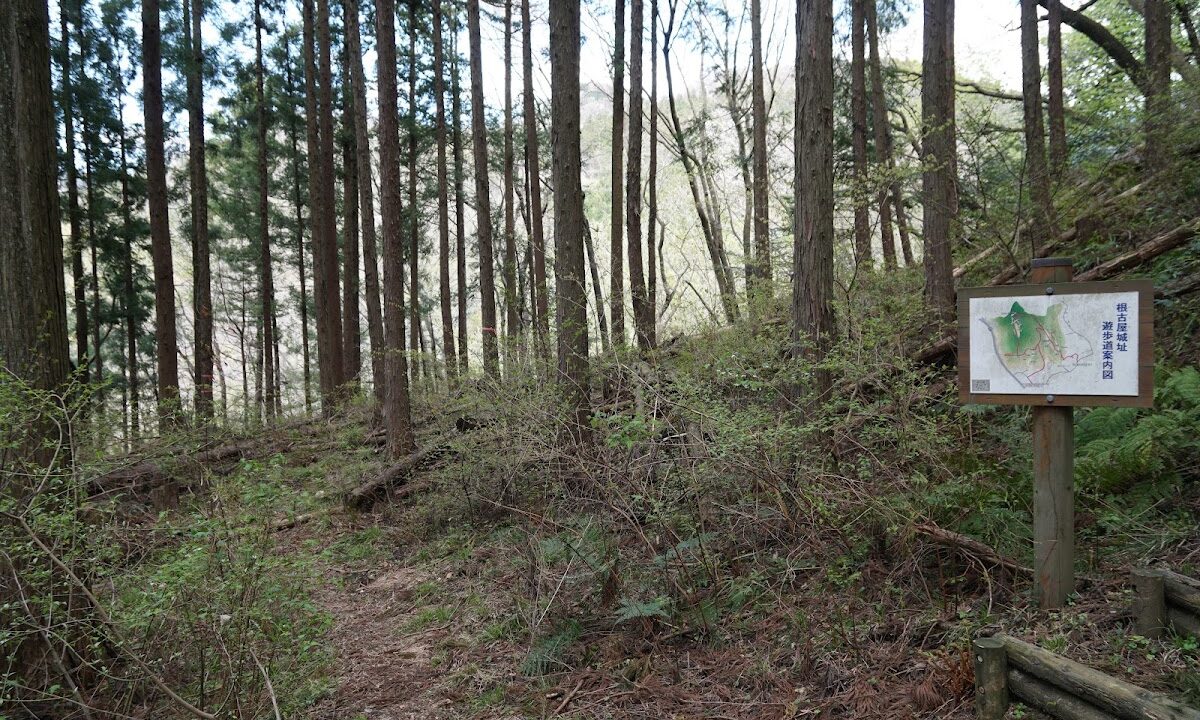
There are several castle ruins in Saitama Prefecture called “Negoya Castle.” The most well-known is the Negoya Castle in Shōrakuji, Tokorozawa City, a prefecturally designated historic site. However, there is also a mountain castle with the same name in Yokose Town, Chichibu District, and each has a different history and characteristics. This article provides a thorough explanation of these Negoya Castles in Saitama Prefecture, including their historical background, castle structure, local highlights, and access information.
What is Negoya Castle? Why are there multiple in Saitama Prefecture?
The place name “Negoya” is a medieval castle term referring to a residence or castle town established at the foot of a mountain castle. Therefore, castle ruins named Negoya Castle exist throughout Japan, and several locations have been confirmed within Saitama Prefecture.
The two main Negoya Castles discussed in this article are:
- Negoya Castle (Tokorozawa City) – Saitama Prefecture designated historical site, also known as “Ryūgaya Castle” and “Shōrakuji Castle”
- Yokose Negoya Castle (Yokose Town) – Also known as “Tsukue Castle,” town designated historical site
Each castle has a different builder and historical context, and both played important roles as bases for regional powers in western Saitama Prefecture during the Sengoku period.
History and Overview of Negoya Castle (Tokorozawa City)
Basic Information
- Location: 436, Shōrakuji, Tokorozawa City, Saitama Prefecture (including private land)
- Classification: Mountain Castle (Hill Castle)
- Builder: Yamaguchi Takatada
- Construction Period: Late Muromachi Period (Late 15th to Early 16th Century)
- Elevation: Approximately 137m (Relative Height Approximately 30m)
- Designation: Saitama Prefecture Designated Historic Site
- Other Names: Ryūya Castle, Shōrakuji Castle
- Current Status: Forest, partly submerged under Sayama Lake (Yamaguchi Reservoir)
Background of Construction and the Yamaguchi Clan
Negoya Castle was built as the residence of the Yamaguchi clan, who ruled Iruma District in Musashi Province. The Yamaguchi clan was a samurai group descended from the Murayama clan, one of the seven clans of Musashi Province, and wielded considerable influence in this region.
Yamaguchi Takatada, believed to be the castle’s builder, was a warrior active in the late Muromachi period and served the Ogigayatsu Uesugi clan. At that time, western Musashi Province was the front line of power struggles between the Ogigayatsu Uesugi, Yamanouchi Uesugi, and the Later Hojo clan, and Negoya Castle functioned as a military base for the Yamaguchi clan in this region.
Developments in the Sengoku Period and Relationship with the Hojo Clan
With the start of the Sengoku period, the Later Hojo clan, based in Odawara, expanded its power into Musashi Province. Initially, the Yamaguchi clan was subservient to the Ogigayatsu Uesugi clan, but as the Hojo clan’s pressure intensified, they gradually came under their influence.
After the Ogigayatsu Uesugi clan declined following the Battle of Kawagoe in 1546, the Yamaguchi clan chose to pledge allegiance to the Hojo clan. During this period, Negoya Castle functioned as part of the Hojo clan’s network of branch castles, playing a role in complementing major strongholds such as Hachioji Castle and Takiyama Castle.
History of the Castle’s Abandonment
In 1590, when the Later Hojo clan was destroyed in Toyotomi Hideyoshi’s siege of Odawara, the Yamaguchi clan also declined, and Negoya Castle was abandoned. Subsequently, with Tokugawa Ieyasu’s entry into the Kanto region, this area became a direct territory of the Edo shogunate and a territory of hatamoto (direct retainers of the shogun), and the castle ruins were left as forest.
In 1934, with the construction of the Yamaguchi Reservoir (present-day Sayama Lake), part of the castle ruins was submerged. Currently, the portion remaining on the northern shore of Sayama Lake is protected as a Saitama Prefecture designated historical site.
Structure and Layout of Negoya Castle (Tokorozawa City)
Basic Structure of the Castle
Negoya Castle is a typical medieval mountain castle utilizing the tip of a hill. Built on a hill approximately 137m above sea level and 30m above ground, it overlooks Lake Sayama.
The following are the main remains of the castle:
- Main Enclosure (Honmaru): The central enclosure of the castle
- Second and Third Enclosures: Multiple enclosures surrounding the main enclosure
- Earthwork: Defensive structures surrounding each enclosure
- Dry Moat: Moats and vertical moats separating the enclosures
- Tiger’s Moat: The structure serving as an entrance to the castle
Characteristics of the Defensive System
The defensive system of Negoya Castle is characterized by its clever use of the terrain. By utilizing the natural topography of the hill and combining it with artificial earthworks and dry moats, it is a structure that can effectively defend even with a small number of troops.
Particularly noteworthy is the arrangement of the earthworks around the main enclosure. The earthworks not only surrounded the enclosures but were also positioned to allow for flanking attacks, a technique known as “yokoya-gakari,” demonstrating the development of castle construction techniques during the Sengoku period.
The dry moats functioned as trenches separating the enclosures, delaying enemy advances. Some dry moats descended the slopes as vertical moats, forming a defensive line against attacks from the flanks.
Currently Visible Remains
Currently, the following remains can be observed in relatively good condition at the Negoya Castle site:
- Remaining Earthworks: Earthworks around the main enclosure remain to a height of approximately 1-2 meters.
- Dry Moats: Multiple trenches, 2-3 meters deep, can be observed.
- Flat Surfaces of Enclosures: The flat surfaces of each enclosure remain clearly visible.
- Cut Cliffs: Artificial cliffs carved into the edges of the enclosures.
However, some areas are submerged due to the construction of Sayama Lake, making it difficult to fully grasp the overall layout of the castle in its heyday. Also, caution is required when entering the site, as it includes private property.
History and Characteristics of Yokose Negoya Castle (Yokose Town)
Basic Information
- Location: Negoya, Yokose, Yokose-machi, Chichibu-gun, Saitama Prefecture
- Classification: Mountain Castle
- Construction Period: Sengoku Period (Warring States Period)
- Elevation: Approximately 370m (Relative Height Approximately 100m)
- Designation: Yokose Town Designated Historic Site
- Other Names: Tsukue Castle, Negoya Castle
- Current Status: Forest
Strategic Position in the Chichibu Region
Yokose Negoya Castle is a mountain castle located at the entrance to the Chichibu Basin, built on a strategic point overlooking the Chichibu Highway (Chichibu Road). Its rugged location, with an elevation of approximately 370m and a relative height of approximately 100m, indicates that it is a more authentic mountain castle than Negoya Castle in Tokorozawa City.
During the Sengoku period (Warring States period), the Chichibu region was a place where the powers of the Ogigayatsu Uesugi clan, the Yamanouchi Uesugi clan, and the Later Hojo clan intersected. Yokose Negoya Castle is believed to have functioned as a base for the local lords who controlled the region, and as a military facility to prevent invasions into the Chichibu Basin.
Characteristics of the Castle Structure
Yokose Negoya Castle is a mountain castle that makes maximum use of the steep mountainous terrain. Compared to Negoya Castle in Tokorozawa City, it has a larger and more complex layout.
The following are the main remains that have been identified:
- Multiple Enclosures: Enclosures extending from the mountaintop down the slope
- Large-scale Moat: A deep moat blocking the ridge
- Vertical Moat: Multiple vertical moats descending the slope
- Earthwork: Defensive earthworks surrounding each enclosure
- Stone Wall: Traces of stone wall in some areas
Of particular note is the large-scale moat that completely blocks the ridge. With a depth of over 5 meters and a width of over 10 meters, this moat was a powerful defensive structure that physically prevented enemy intrusion.
About the Alternate Name “Tsukue-no-jo”
Yokosenegoya Castle is also known by the alternative name “Tsukue-no-jo.” There are several theories about the origin of this name, but the most likely is that it was named because the castle’s shape resembles a desk. It is thought that the name originated from the fact that the flat enclosure at the mountaintop resembles the tabletop of a desk.
Highlights and Visitor Guide to Negoya Castle Ruins
Highlights of Negoya Castle, Tokorozawa City
Earthworks Surrounding the Main Enclosure
The earthworks surrounding the main enclosure are the best-preserved remains of Negoya Castle. The earthworks, 1-2 meters high, encircle the enclosure, allowing visitors to experience the defensive system of the time. Walking along the top of the earthworks allows you to imagine how the castle lord surveyed the surrounding area.
Dry Moats and Trenches
The dry moats separating the enclosures are clearly visible, 2-3 meters deep. The trench separating the main enclosure and the second enclosure is a particularly important remains for understanding the castle’s defensive structure.
View of Lake Sayama
The view of Lake Sayama from the castle ruins is breathtaking. However, considering that part of the castle ruins were lost due to the construction of this lake, it evokes mixed feelings.
Highlights of Yokose Negoya Castle
Large-Scale Moat
The greatest highlight of Yokose Negoya Castle is the large-scale moat that cuts off the ridge. Its depth of over 5 meters demonstrates the advanced castle-building techniques of the Sengoku period. Standing at the bottom of the moat, you can truly appreciate its defensive strength.
Continuous Group of Enclosures
The continuous group of enclosures extending from the mountaintop down the slope exhibits a typical structure for a mountain castle. The flat surfaces of each enclosure are well-preserved, making them easy to understand the castle’s structure at the time.
View of the Chichibu Basin
From the mountaintop, you can enjoy a panoramic view of the Chichibu Basin. This view reveals how strategically the castle was built.
Access Information
Access to Negoya Castle in Tokorozawa City
- Train: Get off at Seibu Kyujo-mae Station on the Seibu Sayama Line, approximately 30 minutes on foot.
- Car: Approximately 20 minutes from Tokorozawa IC on the Kan-Etsu Expressway; parking available around Sayama Lake.
- Caution: Some areas are private property; please be mindful of the permitted areas.
Access to Yokose Negoya Castle
- Train: Get off at Yokose Station on the Seibu Chichibu Line, approximately 40 minutes on foot + approximately 40 minutes of hiking.
- Car: Approximately 40 minutes from Hanazono IC on the Kan-Etsu Expressway via National Route 140.
- Caution: As this is a full-fledged mountain castle, hiking equipment is necessary. The hiking trail is well-maintained, but there are some steep sections.
Precautions for Visiting
- Clothing: Since both castle ruins are located in mountainous areas, long sleeves, long pants, and comfortable walking shoes are essential.
- Season: Spring to autumn is the best time. Snow and ice are possible in winter.
- Estimated Time: Negoya Castle in Tokorozawa City takes 1-2 hours, and Yokose Negoya Castle takes 2-3 hours.
- Private Property: Negoya Castle in Tokorozawa City, in particular, includes private property, so be careful of restricted areas.
- Safety Management: Yokose Negoya Castle is a full-fledged mountain castle with a relative height of 100m, so avoid going alone.
Cultural Value of Negoya Castle Ruins
Significance as a Saitama Prefecture Designated Historic Site
Negoya Castle in Tokorozawa City was designated a Saitama Prefecture Designated Historic Site in 1972. This designation indicates that the castle ruins possess high historical value in the following respects:
- Importance in Regional History: A valuable site demonstrating the activities of medieval samurai groups in western Musashi Province.
- Preservation of Remains: Remains such as earthworks and dry moats are relatively well-preserved.
- Sengoku Period Castle Structure: A typical mountain castle exhibiting Sengoku period castle construction techniques.
Academic Investigations and Research
Several academic investigations have been conducted on the Negoya Castle ruins. Excavations and surveys by the Saitama Prefectural Board of Education have accumulated knowledge regarding the castle’s structure and construction date.
Particularly important findings include:
- The evolution of the castle’s layout and construction techniques
- The estimated period of use of the castle based on excavated artifacts
- Consistency with historical documents showing the relationship between the Yamaguchi clan and the Later Hojo clan
These research results are included in “The Complete Guide to Japanese Castles” and various archaeological reports, serving as fundamental materials for medieval castle research.
Local Preservation Activities
In Tokorozawa City, efforts are underway to preserve and utilize the Negoya Castle ruins. Local history enthusiasts and cultural property protection groups are making continuous efforts to convey the value of the castle ruins to a wider audience through regular cleaning activities and guided tours.
In Yokose Town, Yokose Negoya Castle has also been designated as an important cultural property of the town, and efforts are being made to install information boards and improve hiking trails. Protection measures as a town-designated historical site ensure that the remains are passed down to future generations.
Negoya Castle from the Perspective of the Relationship Between the Yamaguchi Clan and the Later Hojo Clan
Historical Positioning of the Yamaguchi Clan
The Yamaguchi clan was a samurai group that held power in western Musashi Province from the medieval period to the Sengoku period, as a branch of the Murayama clan, one of the seven Musashi clans. Their base was in the present-day Yamaguchi district of Tokorozawa City, with several branch castles centered around Yamaguchi Castle (also known as Shorakuji Castle).
Yamaguchi Takatada served as the head of the Yamaguchi clan from the late 15th to the early 16th century. Initially, he served the Ogigayatsu Uesugi clan and is said to have fought alongside Ota Dokan and others in various battles.
Subjugation to the Hojo Clan and the Role of Negoya Castle
After the Battle of Kawagoe in 1546, with the decline of the Ogigayatsu Uesugi clan, the Yamaguchi clan submitted to the Later Hojo clan. During this period, Negoya Castle was incorporated into the Hojo clan’s network of branch castles and played the following roles:
- Branch castle of Hachioji Castle: A branch castle protecting the western side of Hachioji Castle, which was the base of Hojo Ujiteru.
- Monitoring of highways: Monitoring major highways such as the Kamakura Road and Chichibu Road.
- Center for regional control: Effectively managing the Hojo clan’s control over Iruma County.
The Hojo clan’s network of branch castles was a defensive system spread throughout the Kanto region, centered around Odawara Castle. Negoya Castle functioned as part of this vast defensive network, supporting the Hojo clan’s rule over the Kanto region.
The Siege of Odawara and the Castle’s Demolition
In 1590, when Toyotomi Hideyoshi began his siege of Odawara, the Hojo clan’s branch castles were captured one after another. Negoya Castle was no exception, and it was abandoned along with the fall of the Hojo clan.
After the castle’s abandonment, there is little historical information available about the Yamaguchi clan’s whereabouts, but it is believed that after Tokugawa Ieyasu’s entry into the Kanto region, they either returned to farming or served other daimyo.
Evaluation of Negoya Castle Ruins by Castle Enthusiasts
In the castle enthusiast community, Negoya Castle Ruins has received the following evaluations:
Negoya Castle, Tokorozawa City
- Evaluation Score: 1.67/5.0 (Evaluation by 100 Castle Lords on Kojodan)
- Average Visit Time: 1 hour 50 minutes
- Features: Relatively easy access, with clear remains of earthworks and dry moats
- Challenges: Part of the site is submerged, making it difficult to grasp the overall layout
Yokose Negoya Castle
- Evaluation Score: 2.67/5.0 (Evaluation by 100 Castle Lords on Kojodan)
- Average Visit Time: 1 hour 5 minutes
- Features: Impressive large-scale moats and continuous groups of baileys
- Challenges: It requires mountain climbing and physical stamina.
While castle enthusiasts have given positive reviews, praising the “excellent state of preservation of the remains” and stating that it’s “ideal for learning about the structure of mountain castles from the Sengoku period,” there are also calls for improvements, such as “a lack of information boards” and “difficulty in understanding without a layout map.”
Summary: The Sengoku Period as Told by Negoya Castle in Saitama Prefecture
The Negoya Castle ruins in Saitama Prefecture are a valuable historical site for understanding the regional society and castle structure of the Sengoku period. The prefecturally designated historical site in Tokorozawa City and the town-designated historical site in Yokose Town each have different characteristics, conveying the history of the lives and battles of the samurai of that time.
Negoya Castle in Tokorozawa City has a history of transitioning from a base of the local lord Yamaguchi clan to a branch castle of the Later Hojo clan, demonstrating the development of castles during the transition from the medieval to the Sengoku period. On the other hand, Yokose Negoya Castle, as a full-fledged mountain castle protecting a strategic point in the Chichibu region, exhibits a stronger military character.
Visiting these castle ruins allows you to experience local-level Sengoku period history in a way that textbooks can’t. Walking along the earthworks, peering into the dry moats, and standing on the baileys, you can feel the presence of the samurai from 500 years ago.
For castle enthusiasts and anyone interested in history, Negoya Castle ruins are a historical site well worth visiting. Be sure to visit and experience the Sengoku period in Saitama Prefecture.