Kinozaki Castle (Noda City, Chiba Prefecture) Complete Guide | History, Remains, and Access Information
Kinozaki Castle is a flatland castle located in Shimomachi, Kinozaki, Noda City, Chiba Prefecture. While few clear castle remains exist today, it is a historical castle that once played an important role as the residence of the Kōke Isshiki clan. This article provides a detailed overview of Kinozaki Castle, including its historical background, remaining structures, surrounding environment, and access methods.
Basic Information on Kinozaki Castle
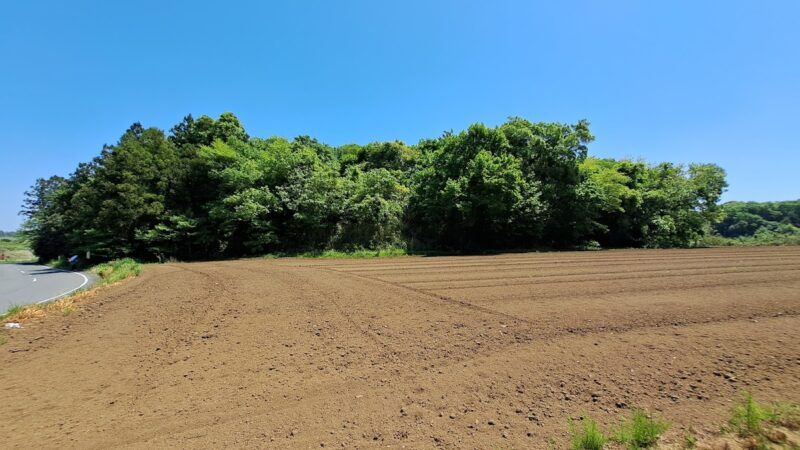
Kinozaki Castle is a flatland castle built in Shimōsa Province (present-day Noda City, Chiba Prefecture), situated on a slightly elevated area near the Tone River. The area surrounding the castle site is now a peaceful rural landscape with fields and farmlands, and the Tone River embankment visible in the distance.
Castle Data
- Location: Shimomachi, Kinozaki, Noda City, Chiba Prefecture
- Former Province: Shimosa Province
- Classification/Structure: Flatland Castle
- Builder: Isshiki Yoshinao
- Year of Construction: Around 1590 (Tensho 18)
- Main Lords: Isshiki Clan
- Remains: Traces of baileys, earthworks, and moats (water moats)
- Castle Area Size: Approximately 170-200m east-west, approximately 350-500m north-south
History of Kinozaki Castle
Background of Construction and the Isshiki Clan
There are various theories regarding the construction date of Kinozaki Castle, but it is believed to have been built around 1590 (Tensho 18) by Isshiki Yoshinao, a descendant of the Isshiki clan, a high-ranking samurai family. The Isshiki clan was a prestigious family, counted among the four most powerful families of the Muromachi Shogunate, and the fact that their descendants settled in this area reflects the political situation at the time.
The area where Kinozaki Castle was built was a strategically important transportation hub, utilizing the Tone River’s water transport, and held a crucial position in the control of northern Shimosa Province. The castle, built on a long, narrow plateau running north-south, utilized the surrounding lowlands as a natural moat.
The Siege of Odawara and Kinozaki Castle
In 1590, during Toyotomi Hideyoshi’s Siege of Odawara, Kinozaki Castle fought on the side of the Hojo clan. During this period, many castles in the Kanto region were subservient to the Hojo clan, and Kinozaki Castle was no exception.
After the Siege of Odawara and the fall of the Hojo clan, it is believed that Kinozaki Castle also ceased to serve its purpose. After Tokugawa Ieyasu’s entry into the Kanto region, this area became a direct territory of the Tokugawa clan and a territory of hatamoto (direct retainers of the Tokugawa shogunate), and it is presumed that Kinozaki Castle was abandoned.
After the Edo Period
During the Edo period, Kinozaki Castle completely lost its function as a fortress, and the castle site came to be used as farmland and residential land. This situation has remained essentially unchanged to this day.
Structure and Layout of Kinozaki Castle
Scale and Arrangement of the Castle
Kinozaki Castle was a flatland castle with a vast castle area of approximately 350-500m from north to south and 170-200m from east to west. It was built on a slightly elevated island-like area with a relative height of about 6m, utilizing the difference in elevation with the surrounding lowlands for its defensive structure.
A road runs north-south through the center of the castle area, and this road significantly divides the castle’s structure. The area beyond the T-junction to the north is presumed to be the site of the main keep, and the northernmost part of the castle site is called “Shiroyama” (Castle Mountain), which is thought to be the main enclosure.
Existing Remains
Currently, the following traces of remains remain at Kinozaki Castle:
Enclosures (Kuruwa)
It is presumed that multiple enclosures were arranged throughout the castle grounds, but due to changes in the terrain, it is now difficult to clearly distinguish the boundaries. A slight trace of a flat surface can be seen in the northern area, which is considered to be the site of the main keep.
Earthworks
In some areas within the grounds of private houses and along the boundaries of fields, earthen mounds that appear to be remnants of earthworks can be seen. However, due to later alterations, few retain their original form, and identification is difficult without specialized knowledge.
Horizontal Moats (Water Moats)
Traces of horizontal moats, which are thought to have once functioned as water moats, remain in some areas as depressions in the terrain. It has been suggested that the castle may have utilized its location near the Tone River to draw water.
Current Status of Kinozaki Castle
Current State of the Castle Site
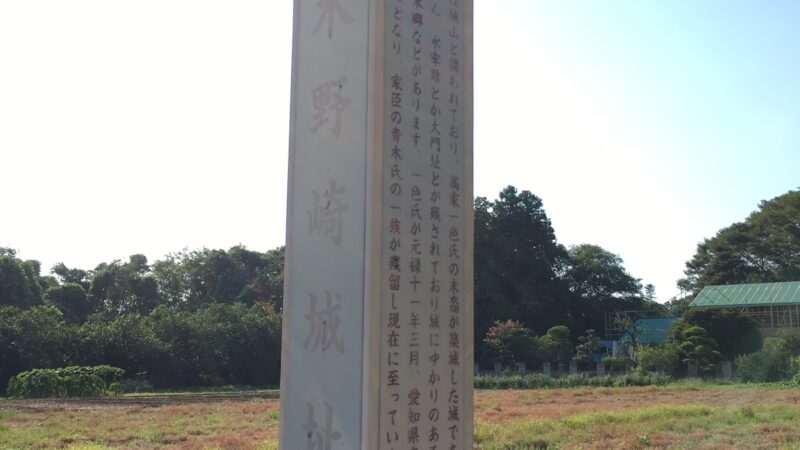
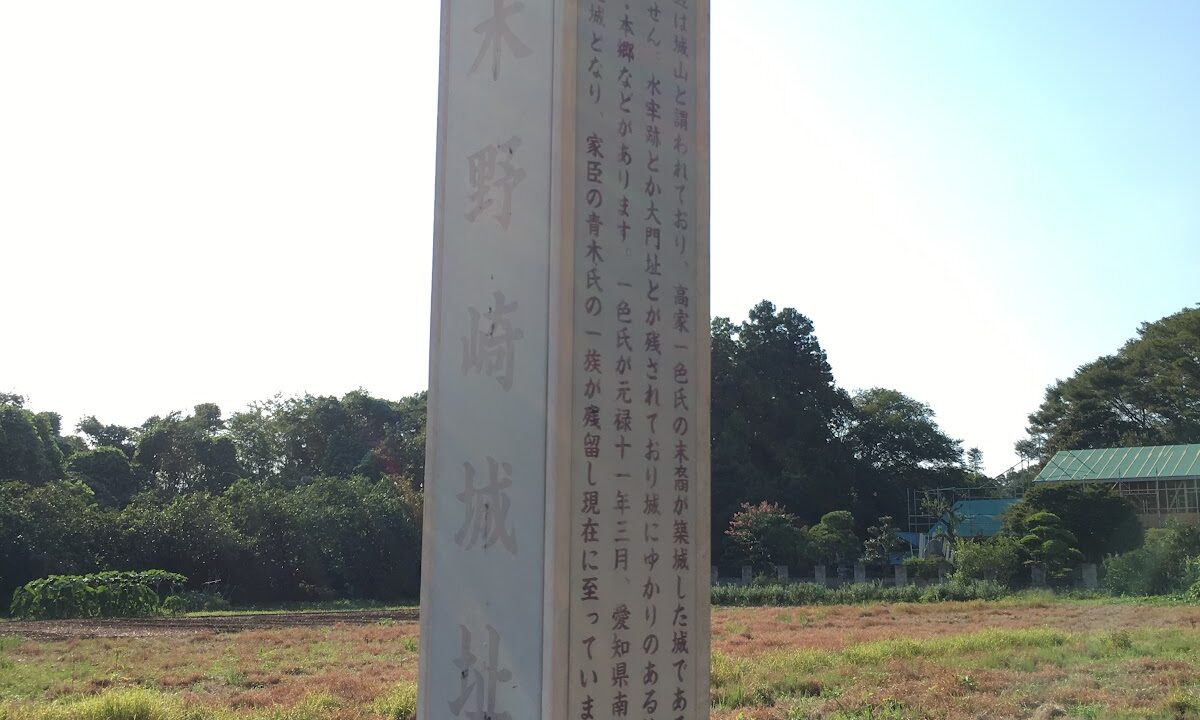
The current Kinozaki Castle site is used as residential land and farmland, and there are almost no clear traces of the castle remains. A marker post indicating the castle site has been erected, serving as one of the few landmarks indicating the existence of Kinozaki Castle.
Farmlands spread out around the castle site, creating a typical rural landscape of the Kanto Plain. The riverbed (embankment) of the Tone River is visible in the distance, giving a sense of the castle’s former strategic location for water transport.
Cultural Property Designation Status
Kinozaki Castle is not currently designated as a cultural property by the national, prefectural, or municipal government. The poor state of preservation of the remains and the large amount of private land included are thought to be reasons why cultural property designation has not progressed.
Highlights of Kinozaki Castle
Castle Site Marker
A marker indicating the castle’s existence stands at the Kinozaki Castle site. This marker is an important landmark for castle enthusiasts and a popular photo spot. From around the marker, you can see the entire castle grounds.
Observing the Surrounding Topography
Although there are few clearly visible remains, observing the slightly elevated terrain and the elevation differences with the surrounding area allows you to imagine the castle’s location and defensive structure. Looking towards the Tone River embankment, in particular, reveals its relationship to water transport.
Historical Landscape
The current rural landscape reflects the appearance of a farming village from the Edo period onward and possesses a different historical value from the castle remains. It is a place where you can feel the transition from a Sengoku period castle to a farming village of the early modern and modern eras.
Access to Kinozaki Castle
Access by Public Transportation
If you are visiting Kinozaki Castle by public transportation, the following routes are convenient:
By Train and Bus
- Get off at Noda-shi Station on the Tobu Noda Line (Tobu Urban Park Line)
- Approximately 15-20 minutes by bus or taxi from the station
- Approximately 40-50 minutes on foot
Walking Route from the Nearest Station
- Head north from Noda-shi Station and proceed to the Kinozaki area via National Route 16
- Since you will be passing through an area with a mix of residential areas and farmland, it is recommended to check a map app beforehand.
Access by Car
If you are visiting by car, the following routes are available:
From the Expressway
- Approximately 20 minutes from Nagareyama IC on the Joban Expressway
- Approximately 30 minutes from Iwatsuki IC on the Tohoku Expressway
From Local Roads
- Take National Route 16 from Noda city center towards Kinozaki area.
- Enter “Kinozaki, Noda City, Chiba Prefecture” into your car navigation system.
Parking Information
There is no dedicated parking lot at Kinozaki Castle Ruins. Since the castle ruins are located within residential areas and farmland, please avoid street parking and use the parking lots of nearby public or commercial facilities. Please be considerate of others during your visit.
Points to Note During Your Visit
Consideration for Private Property
Most of Kinozaki Castle Ruins is private property (residential land and farmland). Please note the following points when visiting:
- Do not trespass on private property.
- Limit your viewing to areas accessible from public roads, such as around the marker post.
- Be considerate of agricultural work and avoid interfering with it.
- When taking photographs, be mindful of the privacy of residents and those living in private homes.
Best Time and Season for Visiting
Kinozaki Castle Ruins is an outdoor historical site and is open to visitors year-round. However, please consider the following:
- Spring/Autumn: Mild weather, ideal for visiting.
- Summer: Strong sunlight, requiring precautions against heatstroke.
- Winter: Cold weather is necessary, but less vegetation makes it easier to observe the terrain.
- Time of Day: Daytime is the safest and easiest time to visit.
Average Visiting Time
The average visiting time for Kinozaki Castle is approximately 15-20 minutes. This mainly involves checking the marker post and observing the surrounding terrain. If you wish to observe the terrain in detail or enjoy taking photographs, allow approximately 30 minutes.
Surrounding Castles and Historical Sites
Around Kinozaki Castle, there are several other interesting castle ruins. Visiting them in conjunction with Kinozaki Castle will provide a deeper understanding of the Sengoku period history of this region.
Sekiyado Castle
Sekiyado Castle, located in Sekiyado-cho, Noda City, was a strategic point for water transport at the confluence of the Tone River and Edo River. The Sekiyado Castle Museum has been built, where you can learn about the history of this region. It is about a 20-minute drive from Kinozaki Castle.
Kanenoi Castle
Kanoi Castle, located in Higashi-Kanoi, Noda City, is another castle that existed around the same time as Kinozaki Castle. It is also a flatland castle, and although only a few remains exist today, it is important for understanding the castle network of this region.
Yamazaki Castle
Yamazaki Castle, located in Yamazaki, Noda City, is also one of the castles of Shimosa Province, similar to Kinozaki Castle. Visiting these castles will give you a real sense of the power dynamics in northern Shimosa Province during the Sengoku period.
Kinozaki Castle Evaluation and Reviews
Evaluation from Castle Enthusiasts
On castle information websites such as Kojodan, Kinozaki Castle has been evaluated by approximately 40 castle enthusiasts, with an average rating of 1.67 (out of 5). This evaluation reflects the limited state of remaining structures.
Visitor Feedback
The following are comments from people who have actually visited Kinozaki Castle:
- “I had trouble finding the marker post, but I felt the romance of history knowing that a castle once stood in this peaceful rural landscape.”
- “Although there are few clear remains, I was able to understand the castle’s location from the slightly elevated terrain.”
- “By visiting the surrounding castles together, I was able to see the Sengoku period history of this region.”
- “I could see the Tone River embankment in the distance, and I could feel the relationship with water transport.”
Positioning in Castle Research
Due to the state of remaining structures, Kinozaki Castle is rated as “D” (second lowest on a 5-point scale) in terms of its remains evaluation. However, its historical value as the residence of the Kōke Isshiki clan and its position within the castle network of the Tone River basin are recognized, making it a valuable subject for research.
Relationship between Kinozaki Castle and the Isshiki Clan
About the Kōke Isshiki Clan
The Isshiki clan was a prestigious samurai family, one of the four families that served as Samurai-dokoro Shoshi (responsible for military and police affairs) in the Muromachi Shogunate. They were based in Tango Province (present-day northern Kyoto Prefecture) and held important positions in the shogunate throughout the Muromachi period.
Isshiki Yoshinao, who built Kinozaki Castle, is believed to be a descendant of this prestigious Isshiki clan. There are various theories as to why a branch of the Isshiki clan settled in this area of Shimōsa Province, but it is thought that they were one of the Isshiki clan branches that scattered throughout the region after leaving their base during the turmoil of the Sengoku period.
The Relationship Between the Isshiki and Hojo Clans
The fact that Kinozaki Castle participated on the Hojo side during the Siege of Odawara in 1590 indicates that the Isshiki clan was under the Hojo’s control at this time. This reflects the political situation at the end of the Sengoku period, when many local lords in the Kanto region were subordinate to the Hojo clan.
Kinozaki Castle and the Tone River Waterway
The Strategic Importance of the Tone River
The area around Noda City, where Kinozaki Castle is located, was an important region that could utilize the Tone River’s waterway. The Tone River is a major river flowing through the Kanto Plain, playing a crucial role in the transportation of goods and military movements.
The riverbed (embankment) of the Tone River, visible in the distance from Kinozaki Castle, still tells the story of the close relationship between this region and the Tone River. The fields and farmlands around the castle site also benefit from the abundant water and fertile soil provided by the Tone River.
Water Transport and Castle Network
During the Sengoku period (Warring States period), many castles were built in the Tone River basin. Sekiyado Castle, Kanenoi Castle, and Kinozaki Castle, among others, were all strategically located to take advantage of the Tone River’s water transport, suggesting that these castles coordinated their control over the region.
Summary
Kinozaki Castle, located in Noda City, Chiba Prefecture, is a flatland castle from the Sengoku period, built by descendants of the Kōke Isshiki clan. While few clear remains exist today, the castle’s former appearance can be imagined from the marker post and the slightly elevated terrain.
The area surrounding the castle site is a tranquil rural landscape with fields and the Tone River embankment visible in the distance. This scenery reflects the historical transition from a Sengoku period castle to a farming village from the Edo period onward.
Visiting Kinozaki Castle requires respect for private property, but it can be observed sufficiently from the area around the marker post and the public road. The average visit time is about 15-20 minutes, and visiting it along with nearby castles such as Sekiyado Castle and Kanenoi Castle will allow you to gain a deeper understanding of the Sengoku period history of this region.
Although the remaining structures are limited, this castle holds historical value as the residence of the Kōke Isshiki clan and has interesting elements for castle history research, such as its relationship with the Tone River water transport. For castle enthusiasts, it is a historical site worth visiting in order to understand the castle network of northern Shimōsa Province.