A Thorough Explanation of the History and Remains of Kasagami Castle (Inzai City, Chiba Prefecture) | A Castle in Shimosa Province during the Sengoku Period
Kasagami Castle, located in Kasagami, Inzai City, Chiba Prefecture, was a medieval castle that played an important role in Shimosa Province during the Sengoku period. Currently, remains are preserved mainly within the grounds of Nanyoin Temple, allowing us to imagine its former appearance from earthworks and moat traces. This article provides a detailed explanation of the entire castle, including its history, lords, detailed remains, and access methods.
Overview and Location of Kasagami Castle
Basic Information
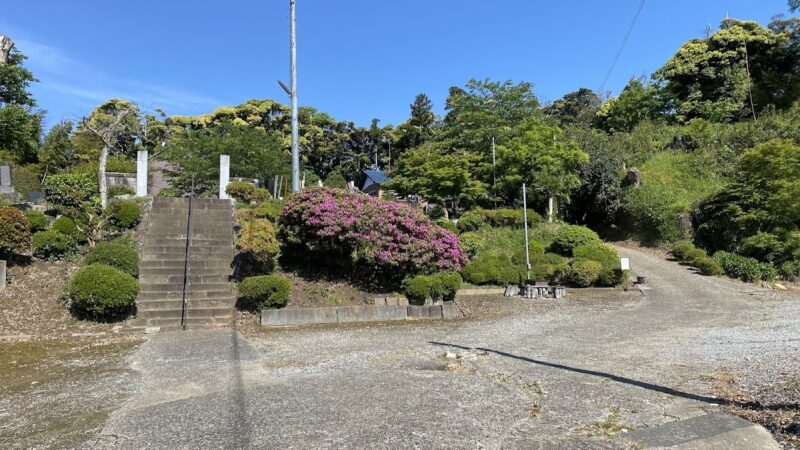
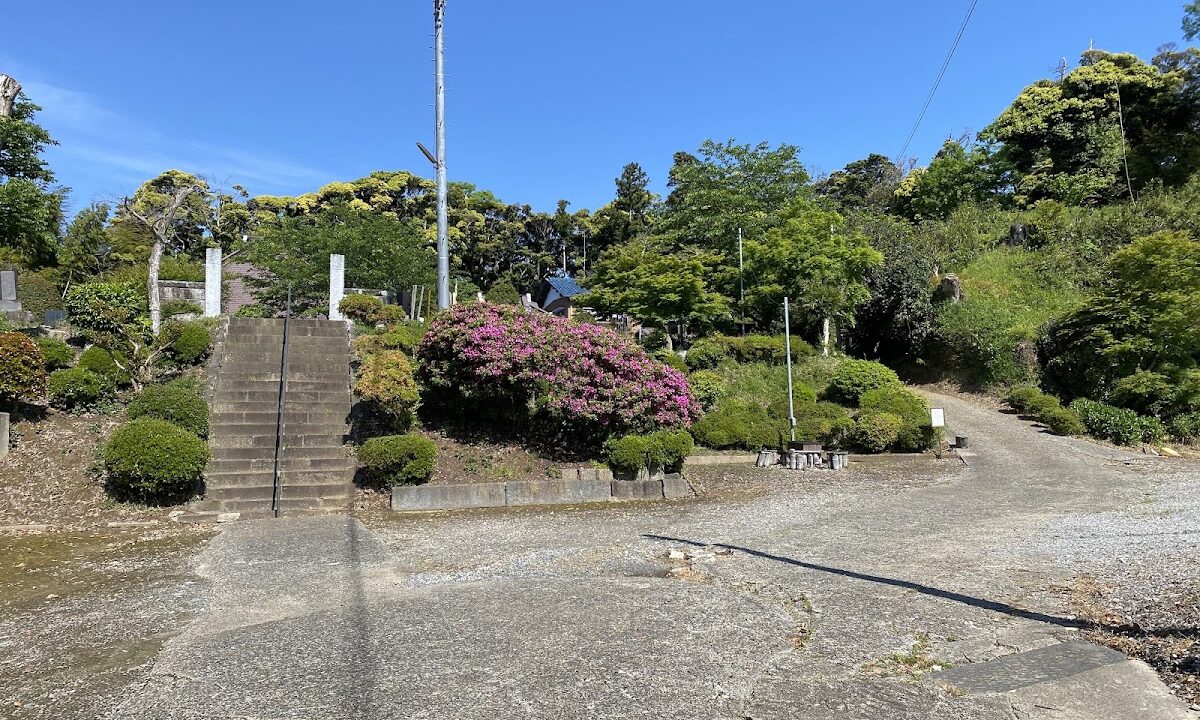
Kasagami Castle was a flatland castle (hill castle) located in Funato, Kasagami, Inzai City, Chiba Prefecture. It was built on a plateau approximately 30 meters above sea level, with a relative height of approximately 24 meters. The current grounds of Nanyoin Temple correspond to the former central part of the castle, and castle remains are scattered around the temple.
Geographical Characteristics
The Kasagami district of Inzai City, where Kasagami Castle was built, occupies a corner of the Shimosa Plateau. This plateau is a strategically important location surrounded by tributaries of the Tone River system, and held a strategically significant position during the Sengoku period (Warring States period). The construction of the castle on the edge of the plateau demonstrates a defensive system that maximized the use of the natural terrain.
Besides Kasagami Castle, several other castles exist in Inzai City, including Nakane Castle and Ryufukuji Manor, indicating the region’s importance as a medieval stronghold. While numerous castles remain in Chiba Prefecture, Kasagami Castle is indispensable for understanding the history of the Inba region.
History of Kasagami Castle
Construction Period and Background
The exact construction date of Kasagami Castle is unclear, but it is believed to have been built during the mid-to-late Sengoku period. During this period, Shimosa Province was dominated by forces centered around the Chiba clan, but it was a region constantly embroiled in conflicts with surrounding forces such as the Hojo and Satomi clans.
It is presumed that Kasagami Castle functioned as a base for regional control and a defensive structure amidst the turmoil of the Sengoku period. Its location on a plateau was ideal for early detection of enemy invasions and fortification of defenses.
Castle Lord and Governing System
Regarding the lord of Kasagami Castle, detailed records are lacking, making it impossible to say anything definitively. However, given that this region was within the Chiba clan’s sphere of influence, it is highly likely that a member or vassal of the Chiba clan was the castle lord.
The Chiba clan was a powerful samurai family based in Shimosa Province, controlling a vast territory from the Kamakura period to the Sengoku period. The area around Inzai City was also under the Chiba clan’s influence, and it is presumed that Kasagami Castle was one of the important bases supporting their governing system.
Trends in the Sengoku Period
In the later Sengoku period, Shimosa Province was greatly affected by the expansion of the Hojo clan’s power. The Hojo clan extended their influence throughout the Kanto region, and the Chiba clan gradually came under their control. Kasagami Castle may have also functioned as part of the Hojo clan’s control over the Kanto region during this period.
When the Hojo clan was destroyed in 1590 (Tensho 18) by Toyotomi Hideyoshi’s siege of Odawara, many castles in the Kanto region were abandoned. Kasagami Castle is thought to have been abandoned around the same time, after which Nanyoin Temple was built, and remains there to this day.
Remains of Kasagami Castle
Main Enclosure (Honmaru) Site
The current grounds of Nanyoin Temple are estimated to be the site of Kasagami Castle’s main enclosure (Honmaru). While the topography has been significantly altered by the construction of the temple, the size and shape of the main enclosure can be estimated to some extent from the surrounding terrain.
The main enclosure is located at the highest point of the plateau, offering an excellent vantage point overlooking the surrounding area. It is thought that the lord’s residence and important facilities were located here.
Earthworks
Traces of earthworks remain within and around the grounds of Nanyoin Temple. Earthen ramparts are earthen walls designed to prevent enemy intrusion and are a representative defensive structure of medieval castles. Parts of the earthen ramparts at Kasagami Castle, several meters high, still exist, offering insight into the castle’s defensive system at the time.
The arrangement of the earthen ramparts suggests that a defensive line surrounded the main enclosure. Furthermore, it is presumed that a moat was dug outside the ramparts, indicating a double defensive system.
Moat Remains
It is believed that Kasagami Castle had a dry moat (a moat that did not hold water). While not clearly visible today due to burial and topographical alteration, some depressions believed to be traces of the moat can be seen.
Moats were crucial to castle defense, making it difficult for enemies to approach and also serving as a source of earth for the construction of the ramparts. It is presumed that the moat at Kasagami Castle served a similar role.
Arrangement of Enclosures (Kuruwa)
It is believed that multiple enclosures (Kuruwa) were arranged around the main enclosure. A “kuruwa” (enclosure) is a section of a castle, each assigned a different function. It is presumed that soldier encampments, supply storage areas, and stables were located in each enclosure.
From the current topography, flat areas corresponding to the second and third enclosures can be identified to the north and east of the main enclosure, indicating a layered defensive system.
Preservation of the Remains
A significant portion of the remains of Kasagami Castle have been lost due to the construction of Nanyoin Temple and surrounding development. However, while many medieval castles in Chiba Prefecture have completely disappeared, the partial retention of traces of earthworks and moats is valuable.
Currently, the remains are not specifically protected, but they are maintained as part of the Nanyoin Temple grounds, ensuring a certain degree of preservation. For castle researchers and history enthusiasts, it is an important historical site for understanding medieval castles in Shimosa Province.
Kasagami Castle and Castles in Chiba Prefecture
Major Castles in Chiba Prefecture
Numerous castles existed in Chiba Prefecture. Representative examples include Sakura Castle, Otaki Castle, and Kururi Castle. These castles continued to function as fortresses into the early modern period, and remnants such as keeps and stone walls remain.
On the other hand, medieval castles like Kasagami Castle are characterized by their simple structure, primarily consisting of earthworks and moats. While lacking magnificent structures like stone walls and keeps, they are important historical sites that convey the practical appearance of castles during the Sengoku period.
Castles of Inzai City
Besides Kasagami Castle, Inzai City also has castle ruins such as Nakane Castle and Ryufukuji Manor. These are located several kilometers apart, suggesting a coordinated defense system for the region.
Nakane Castle is located approximately 3 kilometers northeast of Kasagami Castle and is also a flatland castle built on a plateau. Ryufukuji Manor is located southwest of Kasagami Castle and is known as a manor site integrated with a temple. Comprehensive research into these castles can shed light on the governing system and defense strategies of the Inzai region during the Sengoku period.
Characteristics of Castles in Shimosa Province
Castles in Shimosa Province are characterized by their clever use of the Tone River system’s rivers and plateau terrain. Kasagami Castle is a typical example, with its main enclosure positioned on the edge of a plateau, utilizing the steep slopes as natural defensive walls.
Furthermore, many castles in Shimosa Province were built by local forces, primarily the Chiba clan. Therefore, unlike the early modern castles with their large stone walls and keeps, practical and functional structures were emphasized. Kasagami Castle can be said to embody this Shimosa Province castle culture.
Relationship between Nanyoin Temple and Kasagami Castle
History of Nanyoin Temple
Nanyoin Temple is a temple built on the site of Kasagami Castle and remains a center of faith in the Kasagami area. While detailed records of its founding date and history are lacking, it is presumed to have been built sometime between the early and mid-Edo period, after the abandonment of Kasagami Castle.
Within the temple grounds, traces of earthworks and moats from the castle era remain, indicating that this was once a castle. The existence of Nanyoin Temple has helped preserve a certain degree of the remains of Kasagami Castle.
Coexistence of Castle Ruins and Temples
Across Japan, there are numerous examples of temples and shrines being built on castle sites. This is because the sacred nature of castles and their advantageous elevated locations made them suitable for temple and shrine construction.
The relationship between Kasagami Castle and Nanyoin Temple is similar; the construction of a temple on the sacred site of the castle’s main enclosure connects local faith and history. Visitors, through their temple visit, unknowingly stand on the stage of Sengoku period history.
Access and Visiting Information for Kasagami Castle
Location
Address: Funato, Kasagami, Inzai City, Chiba Prefecture (Nanyoin Temple)
The Kasagami Castle ruins are located within and around the grounds of Nanyoin Temple. The temple is open to the public, and visitors can freely explore the grounds. ### Access by Public Transportation
Access to Kasagami Castle Ruins is most convenient by private car. If using public transportation, the following routes are possible:
- Nearest Station: Hokuso Railway Hokuso Line “Inba Nihon Iryo Daigaku Station” or “Chiba New Town Chuo Station”
- From the station, take a taxi or bus (approximately 15-20 minutes)
While Inzai City has a well-developed transportation network due to the development of Chiba New Town, the Kasagami area is relatively suburban, limiting public transportation options.
Access by Car
- Higashi-Kanto Expressway: Approximately 30 minutes from “Chiba Kita IC”
- National Route 464: Head north from Chiba New Town towards the Kasagami area
There is some parking space within the grounds of Nanyoin Temple, but it is recommended to check in advance.
Notes for Visitors
Kasagami Castle Ruins are located within the grounds of Nanyoin Temple, which is still an active temple. Please observe the following points when visiting:
- Respect for the Temple: The temple grounds are a place of worship, so please observe quietly and avoid disturbing worshippers.
- Protection of Historical Structures: Please be careful not to climb on or damage historical structures such as earthworks.
- Private Property: The area surrounding the temple includes private property, so please do not enter without permission.
- Photography: When photographing temple buildings or Buddhist statues, it is advisable to obtain permission in advance.
Nearby Attractions
When visiting Kasagami Castle Ruins, we recommend also visiting other historical sites in Inzai City.
- Nakane Castle Ruins: A castle from the same period as Kasagami Castle, with better-preserved remains.
- Ryufukuji Temple: The Ryufukuji Temple site is located here, and it is known as a historical temple.
- Inzai City Inba Historical and Folk Museum: A facility where you can learn about the history and culture of Inzai City, and exhibits materials related to castles.
Research on Kasagami Castle and Future Challenges
Lack of Documentary Materials
Documentary materials concerning Kasagami Castle are extremely limited, leaving many unknowns regarding the castle’s detailed history, its lord, and its construction date. Further excavation of ancient documents and research into local history may reveal new facts.
The Need for Archaeological Excavation
No full-scale archaeological excavation has been conducted at the Kasagami Castle site. Excavation could potentially reveal the castle’s age, characteristics, and lifestyle based on unearthed artifacts. However, due to its location within the grounds of Nanyoin Temple, large-scale investigations are difficult.
Preservation and Utilization of the Remains
Currently, the remains of Kasagami Castle are not protected, but it is desirable to designate them as cultural properties of Chiba Prefecture and Inzai City and preserve them systematically. Furthermore, by installing information boards and developing viewing paths, the site can be utilized as a valuable historical resource for the region.
Contribution to Local History Research
Kasagami Castle is an important historical site for understanding the realities of regional governance in Shimosa Province during the Sengoku period. Comprehensive research, including that of surrounding castles such as Nakane Castle and Ryufukuji Manor, will provide clues to understanding the medieval history of the Inzai region.
Continued investigations and research by local historians and castle researchers will enhance the historical value of Kasagami Castle and ensure its transmission to future generations.
Summary
Kasagami Castle was a Sengoku period castle located in Inzai City, Chiba Prefecture. Currently, remnants such as earthworks and moats remain within the grounds of Nanyoin Temple. While there are few documentary sources and many aspects remain unclear, it is an important historical site as a typical example of a medieval castle in Shimosa Province and for understanding the region’s history.
While Chiba Prefecture boasts famous castles like Otaki Castle and Kururi Castle, it also has numerous medieval castles such as Kasagami Castle. These castles may lack grandeur, but they played crucial roles as practical defensive structures during the Sengoku period and as centers of regional control.
Visiting Kasagami Castle allows you to reflect on local history not found in textbooks and the lives of the people who lived during the Sengoku period. When touring castles in Chiba Prefecture, be sure to visit Kasagami Castle. The remnants of earthworks and moats remaining within the quiet temple grounds convey the turbulent times of 500 years ago.