History and Remains of Mimomi Castle (Narashino City, Chiba Prefecture) | A Thorough Explanation of the Sengoku Period Castle of the Chiba Clan
What is Mimomi Castle?
Mimomi Castle was a Japanese castle from the Sengoku period located near Mimomi Hongō, Narashino City, Chiba Prefecture. Built on a plateau southeast of the current Mimomi High School, across rice paddies, the discovery of earthworks and other remains confirms its status as a Sengoku period castle.
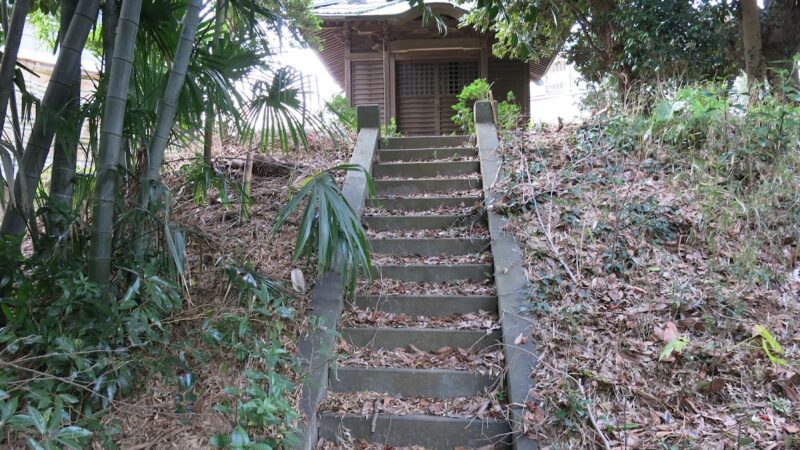
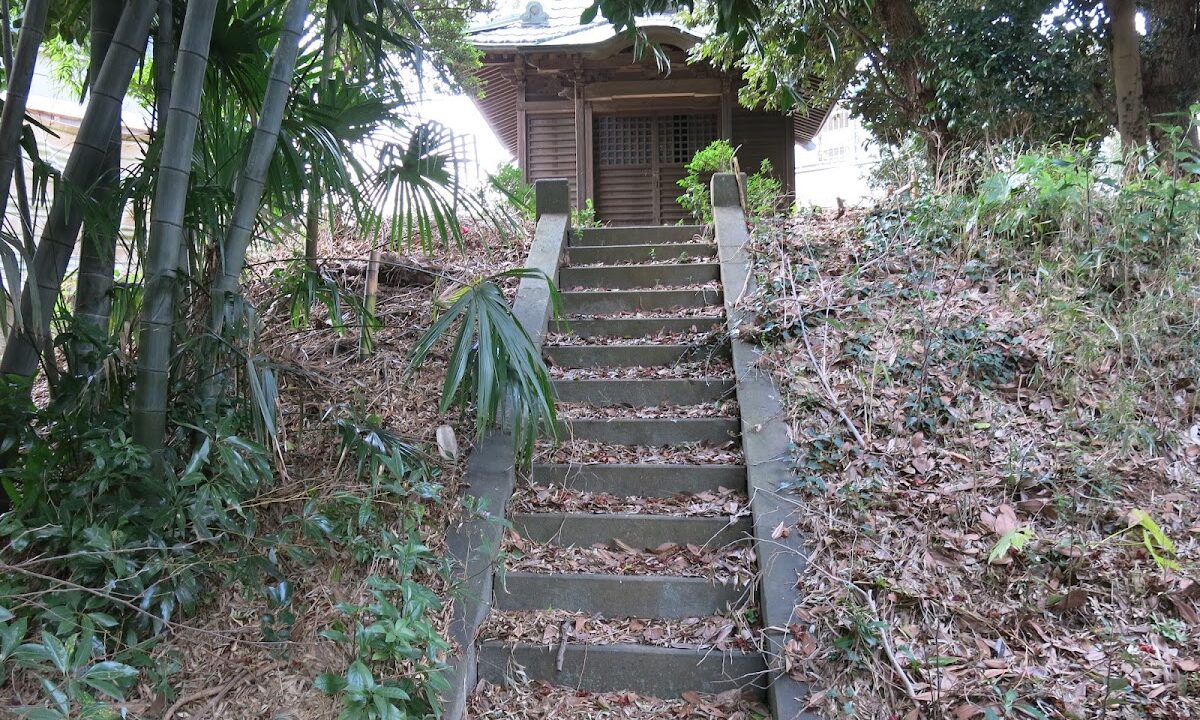
It is presumed to have been a castle associated with the Chiba clan and is thought to have functioned as one of the important bases within the Chiba clan’s sphere of influence in Shimōsa Province. Although the area is now largely residential, the Myōken Shrine stands in the northeastern part of the castle site, providing an important clue indicating a deep connection with the Chiba clan.
Historical Background of Mimomi Castle
The Chiba Clan and Their Rule of Shimōsa Province
To understand the history of Mimomi Castle, it is necessary to first understand the historical background of the Chiba clan. The Chiba clan was a powerful samurai family that wielded influence primarily in Shimosa Province from the late Heian period to the Sengoku period. Since Chiba Tsunetane’s participation in Minamoto no Yoritomo’s uprising, the clan developed into a powerful vassal of the Kamakura Shogunate.
The area around Narashino City, where Mimomi Castle is located, is close to Chiba City and Sakura City, the Chiba clan’s base, and was a core region within their sphere of influence. Numerous castles associated with the Chiba clan, such as Makari Castle, Saginuma Castle, Takane Castle, and Natsumi Castle, were built in the surrounding area, and Mimomi Castle is thought to have been part of this defensive network.
Mimomi Castle in the Sengoku Period
The detailed construction period and lord of Mimomi Castle are largely unknown due to a lack of clear historical records. However, the structural characteristics of the discovered earthworks strongly suggest that it was a castle built or improved during the Sengoku period.
The Shimosa Province during the Sengoku period was an unstable time, marked by internal conflicts within the Chiba clan and ongoing clashes with surrounding forces. Particularly in the 16th century, the Chiba clan formed an alliance with the Hojo clan and was incorporated into their sphere of influence. It is highly probable that Mimomi Castle functioned as a key fortress within the Hojo clan’s control of the Kanto region during this period.
The Siege of Odawara and the Downfall of the Chiba Clan
In 1590 (Tensho 18), Toyotomi Hideyoshi launched the Siege of Odawara. Because the Chiba clan sided with the Hojo clan at this time, they perished along with the Hojo clan. It is estimated that Mimomi Castle was abandoned around this time.
Interestingly, a legend remains at Mimomi Castle that a nun from the Chiba clan escaped through a secret passage during the Siege of Odawara. This legend is a valuable oral tradition that conveys the tense situation at the time of the castle’s fall and is passed down in the region to this day. While the existence of a secret passage has not been confirmed, the very existence of such legends suggests that Mimomi Castle was an important base for the Chiba clan.
Structure and Remains of Mimomi Castle
Location and Topography of the Castle
Mimomi Castle is a flatland castle built on a plateau. The castle site is located on a rounded plateau southeast of Mimomi High School, a prime location overlooking the surrounding lowlands. It appears to have been a defensive structure that skillfully utilized the terrain, typical of a castle from the Sengoku period.
From the top of the plateau, the valley below was clearly visible, providing a lookout point for early detection of approaching enemies. This topographical advantage is thought to be one of the reasons it was chosen as a castle site.
Discovered Earthworks and Remains
Earthworks have been discovered at the Mimomi Castle site, representing the most important physical evidence of the castle’s existence. Earthen ramparts are earthen embankments built as defensive structures for castles, preventing enemy intrusion and also functioning as attack bases from within the castle.
The characteristics of the discovered earthen ramparts indicate that this castle dates back to the Sengoku period (Warring States period). Traces of lower baileys and other structures have also been confirmed, suggesting that it was a castle of considerable size. Currently, Myoken Shrine stands on the site believed to be the main bailey, marking the former center of the castle.
Current Status of the Castle Site
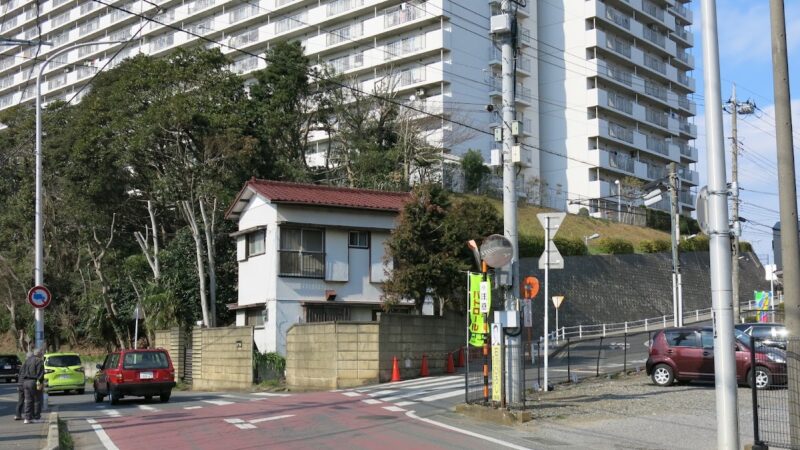
Unfortunately, the current Mimomi Castle site is undergoing residential development, and very few clear remains remain around the main bailey. Furthermore, the central part of the castle site is off-limits, making detailed investigation and viewing difficult.
The castle site is covered with trees, and many areas are overgrown with bushes. However, it is possible to look down into the valley below from the top of the earthen ramparts, allowing one to appreciate the advantageous location of the castle in its former state. Amidst the wave of urbanization, this valuable historical site, retaining traces of the Sengoku period, is expected to be preserved and utilized in the future.
Myoken Shrine and the Chiba Clan’s Faith
Myoken Faith and the Chiba Clan
The Myoken Shrine, built in the northeastern part of the Mimomi Castle ruins, is important evidence of the relationship between the castle and the Chiba clan. The Chiba clan is known for having revered Myoken Bodhisattva (Hokushin Myoken Daibosatsu) as their tutelary deity for generations.
Myoken faith is the deification of the North Star and the Big Dipper, and spread among samurai families as a faith to pray for military success and protection of their territories. The Chiba clan was particularly devout in this faith; their base in Chiba City has the Chiba Shrine (Chiba Myoken-gu), and Myoken shrines were often established at the various castles of the clan.
Myoken Shrine at Mimomi Castle
The existence of a Myoken Shrine at the Mimomi Castle ruins strongly suggests that this castle was built and operated by the Chiba clan. The presence of a shrine on what is believed to be the castle’s main enclosure suggests that the former castle center has been preserved as a place of worship.
The existence of Myoken Shrine serves not only as a religious facility but also plays a role in preserving the region’s historical memory. Even after the castle was abandoned, the land was preserved as a shrine, allowing traces of the castle site to be passed down to the present day.
Surrounding Castles Related to the Chiba Clan
Relationship with Makuwari Castle
Approximately 5 kilometers northwest of Mimomi Castle lies Makuwari Castle, an important stronghold of the Chiba clan. Located in Makuhari-cho, Hanamigawa-ku, Chiba City, Makuwari Castle was the residence of the Makuwari clan, a branch of the Chiba clan.
As the base of the powerful Makuwari clan, a branch of the Chiba clan, Makuwari Castle played a crucial role in controlling the eastern part of Shimosa Province. Mimomi Castle may have functioned as part of a defensive line connecting Makuwari Castle with Chiba Castle and Hon-Sakura Castle, the main strongholds of the Chiba clan.
Saginuma Castle, Takane Castle, Natsumi Castle
Around Mimomi Castle, there were several castles associated with the Chiba clan, including Saginuma Castle (Saginuma, Narashino City), Takane Castle (Takane-cho, Funabashi City), and Natsumi Castle (Natsumi, Funabashi City). It is believed that these castles cooperated to form a regional defense network.
In particular, a large number of small and medium-sized castles are densely concentrated in the Funabashi City area, indicating that this region was strategically important to the Chiba clan. Facing Tokyo Bay and being a key point towards Edo, this region also held an important position in the alliance with the Hojo clan.
Hon-Sakura Castle and Sakura Castle
As the Chiba clan’s base, Hon-Sakura Castle (Shisui Town and Sakura City) was the center of their power during the Sengoku period. As the Chiba clan’s main castle, Hon-Sakura Castle played a central role in the Chiba clan’s rule over Shimosa Province. Mimomi Castle is presumed to have served as a forward base from Hon-Sakura Castle towards the Tokyo Bay area.
During the Edo period, Sakura Castle was built, and the area developed as a castle town of the Sakura Domain. However, this was a castle of a new era after the fall of the Chiba clan. Understanding the differences between the Chiba clan’s castle network during the Sengoku period and the new governing system of the Edo period is important for understanding local history.
Access and Visiting Guide to Mimomi Castle
Transportation Access
The nearest station to Mimomi Castle ruins is Mimomi Station on the Keisei Main Line. Mimomi Station is served by both rapid and local trains, and is approximately 40 minutes from Keisei Ueno Station and approximately 10 minutes from Keisei Funabashi Station.
From Mimomi Station to the castle ruins is about a 15 to 20-minute walk. The most common route is to exit the south exit of the station, pass through the residential area towards Mimomi High School, and then head southeast towards the plateau. However, since this route passes through a residential area, quiet viewing is required, taking into consideration the lives of the local residents.
Precautions for Visiting
Currently, most of the Mimomi Castle ruins are privately owned, and entry is prohibited around the main keep. When visiting, please refrain from entering the restricted areas and limit your viewing to public roads, the grounds of Myoken Shrine, and other areas where entry is permitted.
Since the castle ruins are surrounded by residential areas, please be considerate of the privacy of the surrounding residents when taking photographs or visiting. Also, there are areas with dense trees and uneven footing, so we recommend choosing appropriate clothing and shoes when visiting.
Visiting Myoken Shrine
Myoken Shrine, located in the northeastern part of the castle ruins, is open to visitors. From the shrine grounds, you can feel the atmosphere of the former castle. When visiting, please observe general shrine etiquette and quietly reflect on history. The area around the shrine still retains a fair amount of trees, allowing for observation of the plateau’s topography. Searching for traces of earthworks and imagining the appearance of a Sengoku period castle will be a fascinating experience for history enthusiasts.
Historical Value and Future Challenges of Mimomi Castle
Importance in Local History
Mimomi Castle is a valuable historical site for understanding the realities of small and medium-sized castles within the Chiba clan’s sphere of influence. Unlike large castles, detailed historical records of small and medium-sized castles are scarce, making them crucial clues for understanding the activities of local samurai groups and the realities of regional society during the Sengoku period.
The presence of traces of a Sengoku period castle within the modern city of Narashino is valuable evidence of the region’s historical continuity. For local residents, it is also an important resource for understanding the historical background of their land.
Challenges of Preservation and Utilization
The biggest challenge for the Mimomi Castle site is the loss of remains due to urbanization. Much of the site has already been converted into residential areas, making it difficult to restore the castle to its former appearance. Remaining structures such as earthworks are also at risk of being lost due to development and natural erosion.
In the future, proper preservation of the remaining structures, along with the use of digital technology for record-keeping and sharing of its value through historical education for local residents, will be crucial. Cooperation among the government, researchers, and local residents is essential to passing on the history of Mimomi Castle to future generations.
Expectations for Research Progress
Many aspects of Mimomi Castle remain unclear. Details about the castle lord, construction date, specific castle structure, and circumstances of its abandonment are expected to be clarified through future archaeological investigations and historical research.
In particular, clarifying its relationship with other Chiba clan-related castles, such as the nearby Makari Castle and Saginuma Castle, is important for understanding the Chiba clan’s rule in Shimosa Province. A comprehensive study of the regional castle complex will provide a clearer picture of the realities of local communities during the Sengoku period.
History and Culture of the Mimomi Area
Origin of the Place Name Mimomi
There are several theories regarding the origin of the place name “Mimomi,” but it is generally believed to indicate that people have lived and farmed in this area since ancient times. “Momi” refers to rice grains, suggesting that this area was suitable for rice cultivation.
Rice paddies spread around the plateau where Mimomi Castle was built, making it easy to imagine that agricultural production in the castle town supported the castle’s maintenance. The relationship between the castle and the rural area is an important perspective for understanding regional society during the Sengoku period (Warring States period).
The Mimomi Area in the Modern Era
After the Meiji era, the Mimomi area developed as an agricultural region. With the opening of the Keisei Electric Railway and the establishment of Mimomi Station, residential development gradually progressed. Especially during the post-war period of rapid economic growth, it rapidly urbanized as a commuter town for Tokyo.
Currently, the Mimomi district of Narashino City is a mixed area of residential and agricultural land. With the development of educational facilities such as Mimomi High School, the area has transformed into a modern urban center. However, beneath the surface lies the history of the Sengoku period (Warring States period).
Comparison with other castles in Chiba Prefecture
Differences in Scale and Character
Chiba Prefecture has a variety of castles, from early modern castles like Otaki Castle to large-scale Sengoku period castles like Hon-Sakura Castle, and small to medium-sized castles like Mimomi Castle. Mimomi Castle is classified as a small to medium-sized castle and is thought to have functioned as the residence or branch castle of a powerful local samurai.
While large castles had multiple functions as political and economic centers, small to medium-sized castles like Mimomi Castle are likely to have been primarily focused on military functions. They probably served roles such as monitoring the surrounding area, defensive bases, and emergency refuges.
Characteristics of Chiba Clan Castles
The castles built by the Chiba clan share a common characteristic: a connection to Myoken worship. Many castles associated with the Chiba clan had Myoken shrines, which served as both a spiritual pillar for the Chiba clan and a symbol of family unity.
The Myoken Shrine at Mimomi Castle can also be positioned as part of this group of Chiba clan castles. The integration of castles and religious facilities is a characteristic cultural feature of medieval samurai groups, and the Chiba clan is a prime example.
Summary
Mimomi Castle was a Sengoku period castle located in Narashino City, Chiba Prefecture, and is an important historical site related to the Chiba clan. Although the area has been developed into a residential area and few clear remains exist, the discovered earthworks and the presence of the Myoken Shrine convey the castle’s former appearance.
Mimomi Castle, which is presumed to have been abandoned when the Chiba clan was destroyed in the Siege of Odawara in 1590, provides valuable clues to understanding the local community and the Chiba clan’s system of rule during the Sengoku period. Along with the surrounding castles of Makari Castle, Saginuma Castle, and Takane Castle, it formed part of the Chiba clan’s castle network in Shimosa Province.
While urbanization presents many challenges in preserving the castle site, it is crucial to pass on its value as a regional historical heritage to future generations. The castle site, accessible on foot from Mimomi Station, is a valuable place for history enthusiasts to experience the history of the Chiba clan during the Sengoku period.
Research into Mimomi Castle is expected to yield new discoveries through further archaeological investigations and historical document studies. The history etched into this small castle site, along with the memories of the local people, is a cultural heritage that should continue to be carefully preserved.