Yoshihashi Castle (Yachiyo City, Chiba Prefecture) Complete Guide | History, Highlights, Access, and Castle Stamp Information
What is Yoshihashi Castle?
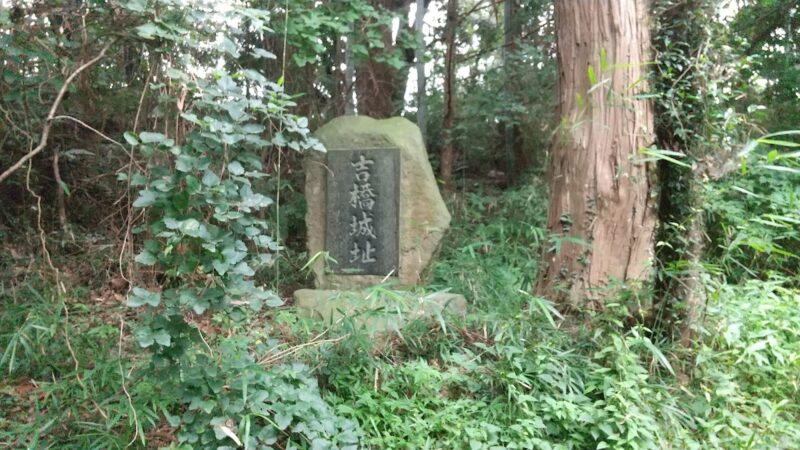
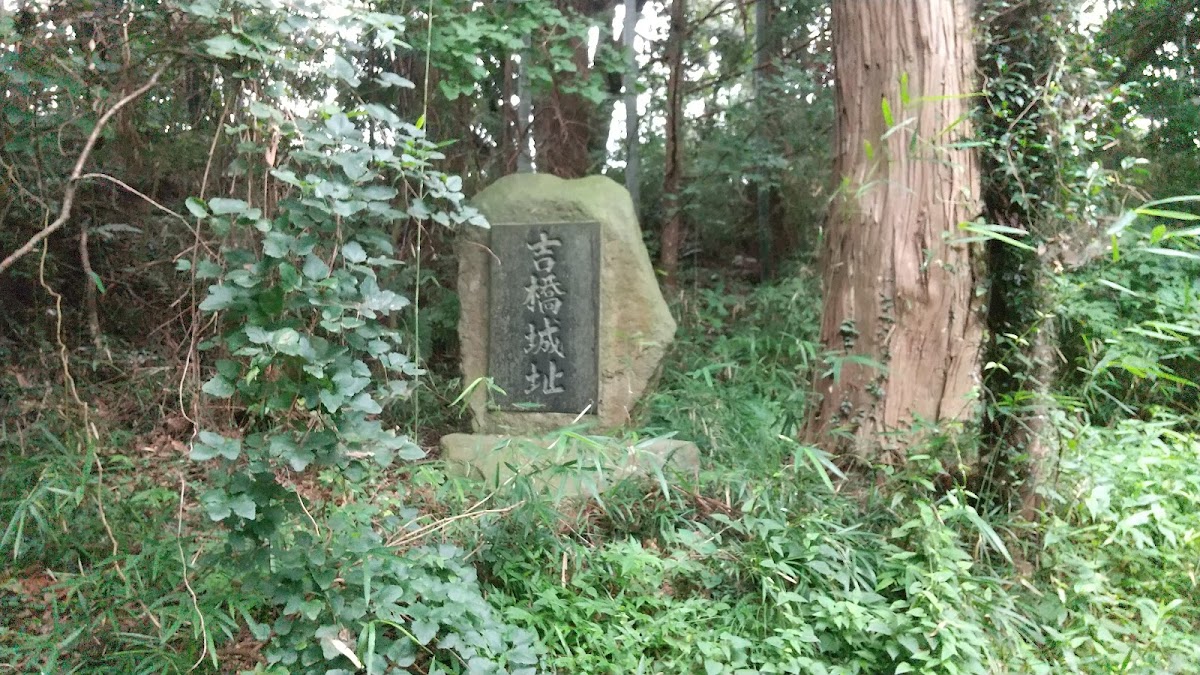
Yoshihashi Castle (Yoshihashi-jo) is a medieval castle located in Yoshihashi Hanawa, Yachiyo City, Chiba Prefecture. Known as the residence of the Yoshihashi clan, a branch of the Chiba clan of Shimosa Province, it also functioned as a base for Takagi Ise-no-kami Tanetsada during the Sengoku period. Currently, it is the grounds of Teifuku-ji Temple, creating a unique landscape where the temple and castle ruins are integrated.
Yoshihashi Castle was built on a plateau jutting out at the northeastern edge of the Yoshihashi district of Yachiyo City, bordering the Ozaki district. This location was chosen as a strategically important military point, offering a panoramic view of the surrounding area. While many medieval castles are scattered throughout Chiba Prefecture, Yoshihashi Castle is one of the most important historical sites for understanding the sphere of influence of the Chiba clan.
History of Yoshihashi Castle
Construction and the Yoshihashi Clan
While there are no clear records regarding the exact construction date of Yoshihashi Castle, it is believed to have been built by the Yoshihashi clan, a branch of the Chiba clan, during the Kamakura or Muromachi period. The Yoshihashi clan was a branch of the Chiba clan, and it is said that descendants of Chiba-no-suke Tsunetane ruled the Yoshihashi area and adopted the name Yoshihashi.
According to local histories such as the “Chiba-gunshi” (History of Chiba County), there are records indicating that Yoshihashi Tanetoshi was the lord of the castle. It is presumed that the Yoshihashi clan, as important retainers of the main Chiba clan, were entrusted with the control and defense of this region. In medieval Shimosa Province, the Chiba clan and its branches established castles and residences throughout the region, using them as bases for regional control. Yoshihashi Castle functioned as part of this system.
The Era of Takagi Ise-no-kami Tanesada
Tradition says that during the Sengoku period (Warring States period), Yoshihashi Castle became the residence of Takagi Ise-no-kami Tanesada. The Takagi clan was a powerful local family descended from the Chiba clan, and they held considerable influence in this region.
During Takagi Ise-no-kami Tanesada’s time, the Kanto region was undergoing a major transformation with the expansion of the Later Hojo clan’s power. The Hojo clan, based in Odawara, expanded their influence throughout Kanto, subjugating local powerful families. The Chiba clan gradually came under the influence of the Hojo clan, and the lord of Yoshihashi Castle, a member of the Chiba clan, could not ignore his relationship with the Hojo clan.
The Legend of the Castle’s Fall during the Tenbun Era
The most important historical event concerning Yoshihashi Castle is the legend of its fall during a battle with the Hojo clan during the Tenbun era (1532-1555). During this period, the Hojo clan was intensifying their expansion into Shimosa Province, and the castles and residences of the Chiba clan were being captured one after another.
According to tradition, Yoshihashi Castle also fell to an attack by the Hojo clan. However, there are no clear historical records regarding the specific date of the battle, the details of the fighting, or the castle’s fate afterward, so the details remain unknown. It is also unclear whether the castle was rebuilt or abandoned after its fall.
Edo Period and Beyond
In the Edo period, Yoshihashi Castle was completely abandoned, and Teifuku-ji Temple was built on the castle site. Teifuku-ji Temple is a Soto Zen Buddhist temple, and its main hall is built on the site of the castle’s second enclosure. While the exact founding date and history of the temple are unknown, the construction of temples on castle sites is a common practice throughout Japan.
To this day, the Yoshihashi Castle site has been maintained as the grounds of Teifuku-ji Temple. For the local people, it has been a place cherished more as a temple than as a castle site. In recent years, research into medieval castles in Chiba Prefecture has advanced, and Yoshihashi Castle has been re-evaluated as an important historical site.
Structure and Layout of Yoshihashi Castle
Overall Structure
Yoshihashi Castle is a flatland castle that skillfully utilizes the topography of a plateau. The castle’s structure is relatively simple, consisting of two main enclosures. The enclosure on the south side, where the current Teifuku-ji Temple stands, is the second enclosure, and the main enclosure was located to the north of it.
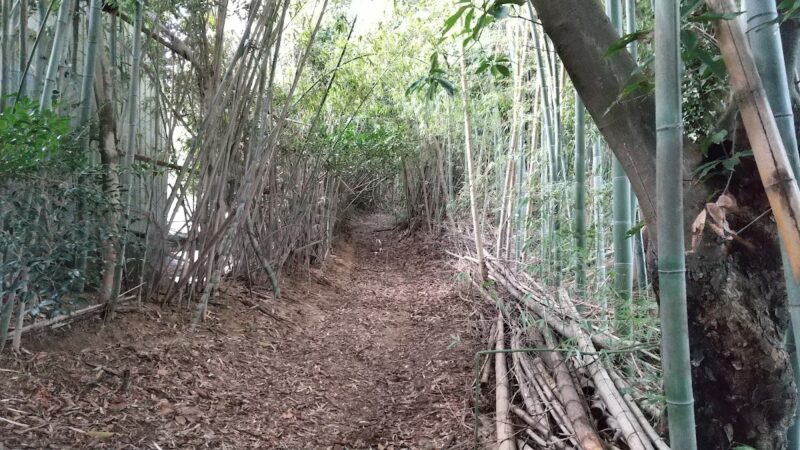
Between the two enclosures is an artificial cut called a “kiridoshi,” which functioned as a moat. This cutoshi is still used as a road today, preserving traces of the castle’s defensive facilities. The edge of the plateau is a natural cliff, which is also thought to have been used as a defensive line.
Main Enclosure (Main Citadel)
The main enclosure is the central part of the castle, and it is presumed that the lord’s residence and important facilities were located there. It is located on the north side and is separated from the second enclosure by the cutoshi. Currently, the area is residential and farmland, making it difficult to identify clear remains. However, the extent of the enclosure can be estimated from the elevation changes and elevation differences in the terrain.
The main enclosure was not very large, and is thought to be about the size of a small residence. This suggests that Yoshihashi Castle functioned more as a base for regional control than as a large military base.
Second Enclosure (within the grounds of Teifuku-ji Temple)
The second enclosure is the area where the current Teifuku-ji Temple stands, located south of the main enclosure. Because it has been developed as temple grounds, most of the castle-era remains have been lost, but the shape and size of the enclosure retain traces of its original appearance.
Walking around the Teifuku-ji Temple parking lot and grounds, one can get a sense of how the flat area on the plateau was used as an enclosure of the castle. The layout of the temple buildings may also, to some extent, follow the topography of the castle era.
Cut-through (Moat)
The cut-through separating the main enclosure and the second enclosure is one of the most clearly identifiable remains of Yoshihashi Castle. Although currently used as a road, observation of the cliffs on both sides reveals traces of artificial excavation.
This cut served as a moat, an important defensive structure preventing enemy intrusion. In medieval castles, moats dividing plateaus were a common defensive technique, and it is believed that Yoshihashi Castle also utilized them effectively.
Utilization of Plateau Topography
The most distinctive feature of Yoshihashi Castle is its layout, which makes maximum use of the natural topography of the plateau. The edges of the plateau are steep cliffs, ensuring high defensive capabilities while minimizing the use of artificial defensive structures.
This type of topographical utilization is a common characteristic of medieval castles in Chiba Prefecture. By utilizing the complex terrain of the Shimosa Plateau, it was possible to build a strong castle with relatively little effort. Yoshihashi Castle is a good example of typical medieval castle construction techniques in this region.
Highlights of Yoshihashi Castle
Strolling through the Teifuku-ji Temple Grounds
The main highlight when visiting Yoshihashi Castle is the grounds of Teifuku-ji Temple. You can stroll around using the temple’s parking lot. Walking through the temple grounds, you can truly appreciate how the flat area on the plateau was used as a castle enclosure.
As you observe the layout of the main hall and grounds of Teifuku-ji Temple, imagine that this was once the castle’s second enclosure. You can experience a unique space where the history of a medieval castle overlaps with the tranquil atmosphere of the temple.
Observing the Cut-Through
The road leading north from Teifuku-ji Temple is the cut-through, which was formerly a moat. Looking up on both sides of the road, you can see traces of artificial excavation of the plateau. This cut-through is the most clearly identifiable remains of Yoshihashi Castle and a must-see for castle enthusiasts.
When passing through the cut-through, observe the height and width of the cliffs on both sides and consider its function as a defensive structure. You can learn firsthand how medieval castles utilized the terrain to enhance their defensive capabilities.
Exploring the Main Enclosure Site
The area north of the cut-through is the site of the main enclosure. While some areas are now private property and require caution when entering, it is possible to observe the topography from the road. Try to estimate the extent of the castle’s enclosures from the elevation changes and elevation differences of the plateau.
From the main enclosure site, you can overlook the surrounding terrain. You can understand the strategic importance of the castle’s location from the actual landscape.
Topography of the Plateau Edge
Walking around Yoshihashi Castle, you can see that the edge of the plateau is a steep cliff. This natural cliff functioned as the castle’s defensive line. Walking around the castle provides a comprehensive understanding of the medieval castle’s defensive system utilizing the terrain.
Photography Tips
For photography at Yoshihashi Castle, the main gate and main hall of Teifuku-ji Temple, the cut-through road, and the plateau cliff face are key subjects. The cut-through road, in particular, is a point where you can clearly photograph the castle remains.
Many visitors take photos in the area from the grounds of Teifuku-ji Temple to the cut-through road. The scenery within the temple grounds, which changes with the seasons, is also appealing.
Access Information
Location
Address: Yoshihashi Hanawa, Yachiyo City, Chiba Prefecture
Yoshihashi Castle Ruins (Teifuku-ji Temple) is located in the Yoshihashi district of Yachiyo City. Situated in a residential area, it is a temple beloved by local residents.
Access by Public Transportation
Using the Toyo Rapid Railway:
- Get off at “Yachiyo-Chuo Station” on the Toyo Rapid Railway
- Approximately 30 minutes on foot from the station
- Alternatively, take the community bus for approximately 10 minutes, get off at the “Yoshihashi” bus stop, and walk for approximately 5 minutes.
Using the Keisei Electric Railway:
- Get off at “Katsutadai Station” on the Keisei Main Line
- Approximately 15 minutes by bus or taxi from the station
Access by public transportation is somewhat inconvenient, so we recommend planning your trip with ample time.
Access by Car
From the Higashi-Kanto Expressway:
- Approximately 20 minutes from Chiba-Kita Interchange via National Route 16.
From National Route 16:
- Accessible via prefectural roads from the Yachiyo city area.
Parking: Parking is available at Teifuku-ji Temple (for visitors). However, please note that parking may be unavailable during temple events.
Precautions During Visits
- Consideration for the Temple: Teifuku-ji Temple is an active temple. Please be considerate of other visitors and observe quietly.
- Entry onto Private Property: Part of the main enclosure site is private property. Please do not enter without permission.
- Visiting Time: We recommend visiting during daylight hours. The average visit time is 15-30 minutes.
- Clothing: There are areas with unstable footing, such as the edge of the plateau. We recommend wearing comfortable shoes for your visit.
- Photography: When taking photographs on the temple grounds, please be considerate of other visitors and the head priest.
Castle Stamp Information
Initiatives of the Chiba Castle Preservation and Utilization Association
The castle stamp for Yoshihashi Castle is issued by the Chiba Castle Preservation and Utilization Association. This association actively promotes medieval castles in Chiba Prefecture and utilizes them as local historical resources. In April 2023, they achieved the milestone of issuing castle stamps for 100 castles within Chiba Prefecture.
Many medieval castles are scattered throughout Chiba Prefecture, but many lack clear remains or are located on private land, making access difficult. Issuing castle stamps provides an opportunity to raise awareness of these forgotten castles and rediscover local history.
How to Obtain the Castle Stamp
The castle stamp for Yoshihashi Castle can be obtained in the following ways:
- Designated Sales Locations in Yachiyo City: Available at tourist information centers and affiliated facilities within the city.
- Castle Stamp Retailers in Chiba Prefecture: Available at sales locations throughout Chiba Prefecture designated by the Chiba Castle Preservation and Utilization Association.
- Mail Order Available: The Chiba Castle Preservation and Utilization Association also distributes castle stamps by mail.
For specific sales locations and the latest information, we recommend checking the official website of the Chiba Castle Preservation and Utilization Association.
How to Enjoy Collecting Castle Stamps
Collecting castle stamps from Chiba Prefecture allows you to enjoy a journey through the prefecture’s medieval castles. Around Yoshihashi Castle, there are numerous castle ruins related to the Chiba clan, such as Yonemoto Castle, Shimada Castle, and Takatsu-kan.
By visiting these castles and fortresses while collecting castle stamps, you can gain a comprehensive understanding of the Chiba clan’s sphere of influence and their regional control in medieval Shimosa Province. The castle stamps are postcard-sized and can be obtained without a special reception, making them easy to collect.
Nearby Castles and Tourist Spots
Castles and Fortresses in Yachiyo City
Yonemoto Castle: A medieval castle located in Yonemoto, Yachiyo City. It is believed to have been the residence of the Yonemoto clan, a branch of the Chiba clan. It is approximately 3km from Yoshihashi Castle and can be visited together.
Shimada Castle: A castle located in Shimada, Yachiyo City. This castle is also related to the Chiba clan and, like Yoshihashi Castle, was built on a plateau.
Takatsu Manor: The remains of a manor located in Takatsu, Yachiyo City. Although a small manor site, it functioned as a base for regional control during the medieval period.
Gongen-yama Fort: The remains of a fort located in Kayada, Yachiyo City. It was a small defensive structure, and it is presumed to have been connected to surrounding castles and fortifications.
Tourist Spots in Yachiyo City
Yachiyo Furusato Station: A facility introducing the history and culture of Yachiyo City. Information on castle ruins in the city can also be obtained.
Murakami Ryokuchi Park: A park rich in nature, perfect for walks and picnics. It can be used as a rest stop between castle and fortification tours.
Michi-no-Eki Yachiyo: A roadside station where you can purchase Yachiyo City’s specialty products and local agricultural products. You can enjoy the local food culture.
Major Castles in the Surrounding Area
Sakura Castle: A modern castle located in Sakura City. A famous castle from the Edo period, the National Museum of Japanese History is adjacent. It is about a 30-minute drive from Yoshihashi Castle.
Hon-Sakura Castle: Located in Shisui Town, this was the base of the Chiba clan. A designated National Historic Site, it’s an important medieval castle and a must-see for anyone wanting to learn about the Chiba clan’s history.
Usui Castle: A medieval castle located in Usui, Sakura City. Known as a strong fortress that repelled attacks by Uesugi Kenshin.
Yoshihashi Castle’s Evaluation and Reviews
Castle Enthusiast Evaluation
On castle information websites such as Kojodan, Yoshihashi Castle has an average rating of around 3.00 and an average visit time of around 15 minutes. This reflects the limited state of preservation of the remains, but on the other hand, its historical value as a castle of the Chiba clan is highly regarded.
Visitor Notes on the Castle (Comments on Highlights)
The following comments have been received from people who have actually visited Yoshihashi Castle:
- “I used the parking lot of Teifuku-ji Temple to take a stroll. The cut-through moat is clearly visible.”
- “Although the remains are limited, the layout that utilized the plateau’s topography is clearly evident.”
- “I was able to stroll around the castle ruins at a leisurely pace in the quiet temple grounds.”
- “Visiting it together with the surrounding castles helps to understand the sphere of influence of the Chiba clan.”
Position in Historical Research
Yoshihashi Castle is an important historical site for studying the distribution of power among the Chiba clan and the Hojo clan’s expansion into Shimosa during the Sengoku period. Although there are few clear historical records, local legends and topographical features provide clues to understanding the reality of medieval castles.
More than 1,000 castle ruins have been identified in Chiba Prefecture, but many of them, like Yoshihashi Castle, do not have clear remains. However, these small castles and fortifications actually demonstrate how local communities in the Middle Ages supported their respective areas, making them of significant importance in regional history research.
Model Course for Visiting Yoshihashi Castle
Half-Day Course (Focusing on Yoshihashi Castle)
- Arrival at Teifuku-ji Temple and Parking (10 minutes)
- Use the temple’s parking lot
- Check the information board within the temple grounds
- Stroll through the Second Enclosure (within the Teifuku-ji Temple grounds) (10 minutes)
- Experience the vastness of the enclosure while walking through the temple grounds
- Observe the topography of the plateau
- Observation of the Cut-Through (Moat) (10 minutes)
- Confirm the moat used as a road
- Observe the cliff faces on both sides
- Exploring the Area Around the Main Enclosure (10 minutes)
- Observe the topography from the road
- Enjoy the surrounding scenery
- Stroll along the Edge of the Surrounding Plateau (10 minutes)
- Confirm the cliffs that served as the castle’s defensive line
- Take photographs
Full-Day Course (Visiting Surrounding Castles)
Morning:
- Visit Yoshihashi Castle (1 hour)
- Visit Yonemoto Castle (1 hour)
- Visit Shimada Castle (1 hour)
Afternoon:
- Lunch and information gathering at Yachiyo Furusato Station (1 hour)
- Visit Takatsu-kan (30 minutes)
- Visit Gongen-yama Fort (30 minutes)
- Purchase souvenirs at Michi-no-Eki Yachiyo (30 minutes)
This course allows you to efficiently visit the major medieval castles and fortifications in Yachiyo City.
2-Day Course (Tour of Chiba Clan Castles and Residences)
Day 1:
- Visit to Hon-Sakura Castle (2 hours)
- Sakura Castle and National Museum of Japanese History (3 hours)
- Visit to Usui Castle (1 hour)
Day 2:
- Visit to Yoshihashi Castle (1 hour)
- Tour of Castles and Residences in Yachiyo City (3 hours)
- Castle Stamp Collection and Sightseeing (2 hours)
This course allows you to comprehensively visit the major castles related to the Chiba clan, providing a deep understanding of the Chiba clan’s history and sphere of influence.
Future Preservation and Utilization of Yoshihashi Castle
Preservation Challenges
The Yoshihashi Castle site is currently located within the grounds of Teifuku-ji Temple and on private land, and no official protection measures as a historical site have been taken. Because clear remains are limited, there is a possibility of loss due to future development.
On the other hand, important remains such as cut-throughs can still be clearly identified, making them a valuable resource for conveying the history of the region. It is hoped that interest in preservation will increase among local residents and researchers.
Utilization as a Local Resource
The issuance of castle stamps by the Chiba Castle Preservation and Utilization Association is an important initiative to utilize Yoshihashi Castle as a local historical resource. It is hoped that the castle stamps will encourage more people to visit Yoshihashi Castle and become interested in local history.
In Yachiyo City, there are also movements to utilize castle ruins scattered throughout the city as tourist resources. Yoshihashi Castle has the potential to play an important role in these regional development efforts.
Deepening Research
Historical research on Yoshihashi Castle is still insufficient. Excavation of ancient documents and archaeological surveys may reveal the detailed history and structure of the castle.
In particular, the discovery of specific historical materials regarding the legend of the castle’s fall during the Tenbun era is awaited. Furthermore, there is still considerable room for research regarding its relationship with surrounding castles and its position within the power structure of the Chiba clan.
Summary
Yoshihashi Castle is a medieval castle located in Yachiyo City, Chiba Prefecture. It is known as the residence of the Yoshihashi clan, a branch of the Chiba clan, and Takagi Ise-no-kami Tanetsada. Currently, the site is within the grounds of Teifuku-ji Temple. The main remains are the grounds of the second bailey, the main bailey, and the cut-through (moat) separating them.
There is a legend that the castle fell during a battle with the Hojo clan during the Tenbun era, making it a historical site that conveys a part of the power struggle in Shimosa Province during the Sengoku period. While clear remains are limited, its historical value is highly regarded as a typical example of a medieval castle utilizing the topography of a plateau.
It is accessible by a 30-minute walk or by car from Yachiyo-Chuo Station on the Toyo Rapid Railway. A visit takes approximately 15-30 minutes. You can use the Teifuku-ji Temple parking lot and explore the temple grounds and the cut-through.
You can also obtain a castle stamp issued by the Chiba Castle Preservation and Utilization Association, making it worthwhile to visit as part of a tour of medieval castles in Chiba Prefecture. Nearby, there are several other castle ruins related to the Chiba clan, such as Yonemoto Castle and Shimada Castle. Visiting these together will provide a deeper understanding of the realities of regional governance in Shimosa Province during the medieval period.
While Yoshihashi Castle doesn’t have any flashy remains, it is an important historical site that quietly conveys the history of the region. It’s a place that those interested in the medieval history of Chiba Prefecture or those who enjoy visiting castles should definitely visit.