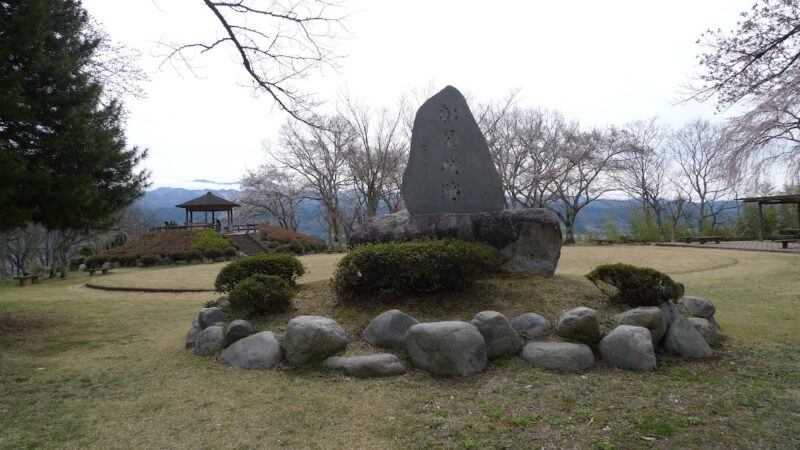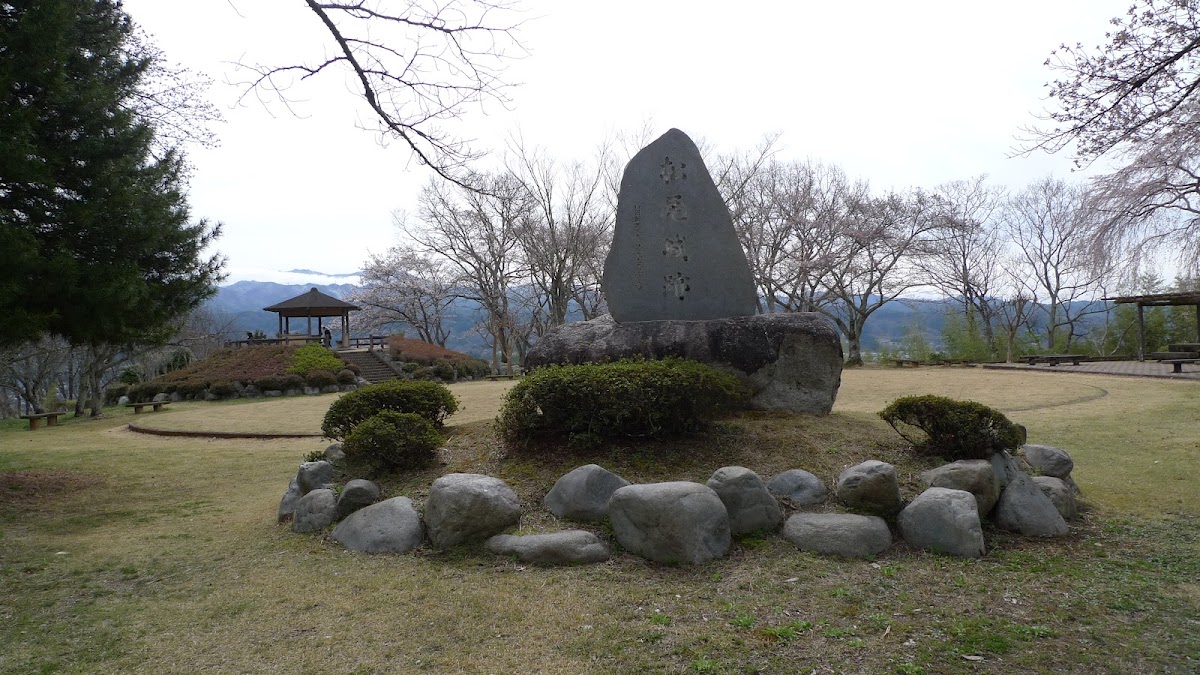
Matsuo Castle (Sammu City, Chiba Prefecture) Complete Guide | The Last Castle Built in Japan: A Complete Overview and Highlights
Located in Matsuo-cho, Sammu City, Chiba Prefecture, Matsuo Castle is an extremely rare castle built during the turbulent Meiji Restoration. Known as “Japan’s last castle built,” this castle features a unique structure called a sanryokaku (three-sided fort) incorporating Western-style bastion fortification techniques. Construction began in 1869 (Meiji 2) by Ota Sukeyoshi, a descendant of Ota Dokan. This article comprehensively explains the entirety of Matsuo Castle, with its unique history, from its historical background to existing remains and access methods.
What is Matsuo Castle? | The Background of Japan’s Last Castle Built
Matsuo Castle, also known as “Ota Castle,” is an extremely rare castle built after the Meiji Restoration. In 1869 (Meiji 2), following the return of the feudal domains to the Emperor, construction of the castle began when Ota Sukeyoshi, the lord of the Kakegawa Domain in Totomi Province, was transferred to Kazusa Province.
Historical Background of the Castle’s Construction
Ota Sukeyoshi was the 15th-generation descendant of Ota Dokan. During the turbulent period of the Meiji Restoration, the Ota family, former lords of the Kakegawa Domain, were granted 10,000 koku of land in Musha and Yamabe districts of Kazusa Province as their new territory. Upon this transfer, Ota Sukeyoshi chose present-day Matsuo-cho, Sanmu City, as the location for his new domain office and began construction of the castle.
The construction site was named “Kikyogaoka,” derived from the bellflower crest, the family crest of the Ota family. The place name “Matsuo” was chosen in reference to Matsuo Pond and Matsuo Kuruwa (enclosure) of the former Kakegawa Castle. The domain office and governor’s residence were completed in November of the same year, and the domain governor moved into the castle in 1870 (Meiji 3).
However, with the abolition of the feudal domains and establishment of prefectures in 1871 (Meiji 4), the castle ceased to function before its completion. The history of Matsuo Castle came to an end after a short period of only two years.
Structure of the Three-Star Fortress | Introduction of Western Fortification Techniques
The most distinctive feature of Matsuo Castle is its three-star fortress structure, which employs Western-style bastion fortification techniques. This is a type of star-shaped fortress, similar to Goryokaku in Hakodate and Tatsuoka Castle (Goryokaku) in Nagano Prefecture.
Characteristics of Bastion Fortresses
A bastion fortress is a construction method where the castle walls project in a star shape. This technique, developed in Europe, reduces blind spots against artillery attacks and enhances defensive capabilities. Matsuo Castle was designed as a “three-star fortress” with three bastions.
While Hakodate’s Goryokaku and Tatsuoka Castle have five bastions, Matsuo Castle is unique in that it has three bastions. Another distinctive feature of Matsuo Castle is the separate location of the domain office and the governor’s residence. The domain office was located on the site of the current Matsuo Driving School, and the governor’s residence was located on the site of the current Yamabu Municipal Matsuo Junior High School.
Castle Scale and Layout
Matsuo Castle was relatively compact in scale, but it was designed as a facility with modern administrative functions. The plan was to enhance defenses with earthworks and moats while arranging buildings for conducting domain administration.
Samurai residences were also located in the castle town, and the remains of these residences were confirmed in a 1994 excavation. These remains provide valuable clues to the lifestyle of samurai in the early Meiji period.
Existing Remains and Points of Interest
Although Matsuo Castle was never completed, several remains still exist, making it a historical site worth visiting. ### Earthworks around Matsuo Driving School
The best-preserved remains are the earthworks remaining within and around the grounds of Matsuo Driving School. These earthworks form part of a bastion-style structure and are valuable relics that convey the castle-building techniques of the time.
The driving school grounds are the site of the former feudal domain’s administrative office, and parts of the earthworks remain along the outer perimeter of the driving school. While the height varies depending on the location, it is a valuable place where you can directly see the castle-building techniques of the early Meiji period.
Shiomizaka Slope and Parapet
South of the grounds of Matsuo Junior High School in Sanmu City, there is a cliff, and a slope named “Shiomizaka” remains. This name is thought to originate from the fact that the sea of Kujukuri Beach was once visible from this location.
Furthermore, the remains of a parapet can be found along this cliff. A parapet is a low wall built for defense and is an important component of a bastion-style castle. The fact that the junior high school’s grounds are situated on a cliff face speaks volumes about the castle’s location at the time.
Archaeological Excavations Revealed Remains
Excavations conducted in 1994 uncovered numerous remains of samurai residences and earthworks in the castle town. These findings clarified the overall structure of Matsuo Castle and the surrounding town.
The unearthed artifacts include everyday items and building materials from the early Meiji period, confirming that a domain government was operating in this area for a short period of only two years.
Access and Visiting Guide
This section provides detailed access information and points of interest for visiting the Matsuo Castle ruins.
Access by Public Transportation
From JR Sobu Main Line “Matsuo Station”
- Approximately 20 minutes on foot to Matsuo Driving School (former site of the feudal domain’s administrative office)
- Approximately 25 minutes on foot to Sanmu City Matsuo Junior High School (former site of the governor’s residence)
The path from the station to the castle ruins is relatively flat, and there are guide panels along the way, so even first-time visitors can arrive without getting lost.
Access by Car
From Narita IC on the Higashi-Kanto Expressway
- Approximately 30 minutes via National Route 296
- Parking available at Matsuo Driving School (within limits that do not interfere with the driving school’s operations)
Travel Time from Major Cities in Chiba Prefecture
- From Chiba City: Approximately 50 minutes
- From Narita City: Approximately 25 minutes
- From Choshi City: Approximately 40 minutes
Points to Note During Your Visit
Matsuo Driving School is an active driving school, so please be considerate and avoid disrupting lessons during your visit. The earthwork remains can be seen from the perimeter of the driving school. Contacting the driving school in advance may allow for a more detailed tour.
Matsuo Junior High School in Sanmu City is also an active school facility, so please avoid entering during class hours. It is best to observe Shiomizaka and the topography from the perimeter. Visiting during holidays or long vacations will allow for a more relaxed visit.
Historical Significance of Matsuo Castle
Matsuo Castle holds a special place in the history of Japanese castles as “Japan’s last castle to be built.”
Uniqueness of Construction During the Meiji Restoration
The fact that a new castle was built during the transition to a modern nation-state, following the end of the Edo period’s samurai government, is extremely unusual. While many castles were destined to be demolished by the Castle Abolition Order (1873), Matsuo Castle was, conversely, newly constructed.
This was a phenomenon unique to the transitional period after the return of the feudal domains to the emperor, when former daimyo (feudal lords) still managed to govern their domains as governors. Ota Sukeyoshi envisioned Matsuo Castle as a facility with modern administrative functions, but he could not resist the tide of the times, and his dream was shattered by the abolition of the feudal domains and establishment of prefectures.
Fusion of Western Technology and Japanese Tradition
Another important significance of Matsuo Castle lies in its incorporation of Western castle-building techniques. After opening its borders, Japan rapidly absorbed Western technology, and the latest technique, the bastion system, was introduced in castle architecture.
Following Goryokaku in Hakodate (completed in 1866) and Tatsuoka Castle (completed in 1867), Matsuo Castle is the third bastion-style fortress, making it an important example of the adoption of Western-style fortification techniques in Japan. However, because it was never completed, its practicality could not be verified.
Nearby Tourist Attractions and Related Historical Sites
When visiting Matsuo Castle, we recommend also visiting other castles in Chiba Prefecture and tourist attractions around Sanmu City.
Major Castles in Chiba Prefecture
Sakura Castle (Sakura City)
- Approximately 40 minutes by car from Matsuo Castle
- A famous castle from the Edo period, now maintained as Sakura Castle Ruins Park
- Well-preserved remains such as earthworks and dry moats
Hon-Sakura Castle (Shisui Town)
- Approximately 45 minutes by car from Matsuo Castle
- A medieval castle that flourished as the residence of the Chiba clan
- A nationally designated historical site, with archaeological excavations underway
Otaki Castle (Otaki Town)
- Approximately 1 hour by car from Matsuo Castle
- A modern castle built by Honda Tadakatsu
- The keep has been restored and is open to the public as a museum
Attractions around Sanmu City
Kujukuri Beach
- Approximately 15 minutes by car from Matsuo Castle
- A sandy beach approximately 66 km long
- A scenic spot that was once viewed from Shiomizaka
Kofun Group of Shibayama Town
- Approximately 20 minutes by car from Matsuo Castle
- Numerous ancient burial mounds are scattered throughout Shibayama Town
- Learn about history at the Shibayama Town Shibayama Burial Mound & Haniwa Museum
Naritasan Shinshoji Temple (Narita City)
- Approximately 30 minutes by car from Matsuo Castle
- One of the three major Fudo temples in the Kanto region
- A famous temple visited by approximately 10 million people annually
The Genealogy of Matsuo Castle and Ota Dokan
Ota Sukeyoshi, who built Matsuo Castle, was a descendant of Ota Dokan, a famous general of the Muromachi period. Understanding this genealogy will provide a deeper understanding of the historical background of Matsuo Castle.
Ota Dokan and His Achievements
Ota Dokan (1432-1486) was a samurai of the late Muromachi period, known for building Edo Castle. He was active in the Kanto region as a retainer of the Ogigayatsu Uesugi family and gained fame as a general skilled in both military and literary arts.
The descendants of Dokan continued as a daimyo family throughout the Edo period, becoming the lords of the Kakegawa Domain in Totomi Province. Ota Sukeyoshi was the last lord of this domain, and at the turning point of the Meiji Restoration, he attempted to build a new castle, just like his ancestors.
From Kakegawa to Matsuo
The Ota family ruled Totomi Province as the lords of the Kakegawa Domain for approximately 200 years. Following the Meiji Restoration and the return of the domains to the emperor, Ota Sukeyoshi was ordered to relocate to Kazusa Province. This relocation was part of the Meiji government’s reorganization of various domains.
To establish his domain’s administration in this new land, Ota Sukeyoshi decided to build Matsuo Castle. His efforts to build the castle, including incorporating the name of Kakegawa Castle into the new castle town, show his deep affection for his hometown.
The Short History of the Matsuo Domain
The Matsuo Domain (also known as the Shibayama Domain), with Matsuo Castle as its administrative center, existed for an extremely short period of only two years.
The Reality of Domain Administration
In November 1869 (Meiji 2), the domain office and governor’s residence were completed, and the following year, 1870 (Meiji 3), Ota Sukeyoshi entered the castle as the domain governor. The domain’s rice yield was 10,000 koku, making it a small domain, but attempts were made to establish a modern administrative system.
Samurai residences were located in the castle town, where the domain’s retainers lived. Archaeological excavations have revealed traces of the lives of the samurai at that time.
The Abolition of Domains and the Fate of the Castle
In July 1871 (Meiji 4), the Meiji government implemented the abolition of domains and the establishment of prefectures. This resulted in the abolition of all domains throughout the country and the establishment of prefectures. The Matsuo Domain was no exception, being abolished after only two years and integrated into Matsuo Prefecture, then Kisarazu Prefecture, and finally Chiba Prefecture.
Construction work on the castle was halted due to the abolition of domains and was never completed. Subsequently, the castle buildings were demolished, and the land was sold to private individuals. The current Matsuo Driving School and Matsuo Junior High School are the result of this subsequent land use.
Preservation and Utilization of Matsuo Castle Ruins
Currently, Matsuo Castle Ruins are recognized as an important historical heritage site in Sanmu City.
Preservation Status and Challenges
The earthworks remaining on the grounds of Matsuo Driving School are located within a private facility, making the balance between preservation and utilization a challenge. Efforts are needed to convey the value of the historical heritage to future generations without hindering the operation of the driving school.
The same applies to the grounds of Sanmu City Matsuo Junior High School; it is necessary to preserve its value as a historical site while maintaining its function as an educational facility.
Information Panels and Information Dissemination
Information panels have been installed at the site, explaining the history and structure of Matsuo Castle. Information dissemination by Sanmu City and local history enthusiasts is also underway, aiming to increase awareness of Matsuo Castle, which has the unique history of being “the last castle built in Japan.”
Future Prospects
Further investigation, preservation, and utilization of the Matsuo Castle ruins are anticipated. Continued excavation may reveal previously unexplained aspects. Furthermore, its use as a tourist resource is being considered, with efforts underway to attract more history enthusiasts as part of a Chiba Prefecture castle tour.
Summary | The Spirit of the Meiji Restoration as Told by Matsuo Castle
Matsuo Castle in Sammu City, Chiba Prefecture, is a castle with unique historical value as “Japan’s last castle to be built.” Construction began in 1869 by Ota Sukeyoshi, and while it featured a distinctive three-layered fortress structure employing Western-style bastion construction techniques, it disappeared from the historical stage without being completed due to the abolition of the feudal domains in 1871.
Even today, valuable remains such as the earthworks around the Matsuo Driving School and the Shiomizaka slope and parapet south of Sammu City Matsuo Junior High School remain. These ruins are invaluable historical relics that convey the spirit of the turbulent Meiji Restoration, a transitional period from a traditional samurai government to a modern nation.
Easily accessible on foot from JR Matsuo Station, visiting Matsuo Castle along with other castles in Chiba Prefecture, such as Sakura Castle, Hon-Sakura Castle, and Otaki Castle, allows you to experience the diverse history of castles in Chiba Prefecture. The history of the Matsuo Domain, which existed for only two short periods, tells the story of people’s lives at a turning point in history, and will surely evoke deep emotions in visitors.
Matsuo Castle, the remnants of the dream of the descendants of Ota Dokan to build a new castle in the Meiji era. Visiting its ruins will be a valuable experience that touches upon the final chapter of Japanese castle history.