A Thorough Explanation of the History and Remains of Shibahara Castle (Abiko City, Chiba Prefecture) | The Complete Picture of Nakatoge Castle
What is Shibahara Castle?
Shibahara Castle is a medieval castle located in Nakatoge, Abiko City, Chiba Prefecture. Also known as Nakatoge Castle or Shibahara Castle, it is known as a flatland castle built on a river terrace on the south bank of the Tone River.
Currently, part of the castle site is maintained as the “Old Tone Park Nature Observation Forest,” and remains such as dry moats and earthworks can be seen from the walking paths. Although the castle is small in scale, it is a valuable historical site that conveys the typical form of a medieval castle in Shimosa Province, attracting attention from castle enthusiasts and history lovers.
Location and Geographical Characteristics of Shibahara Castle
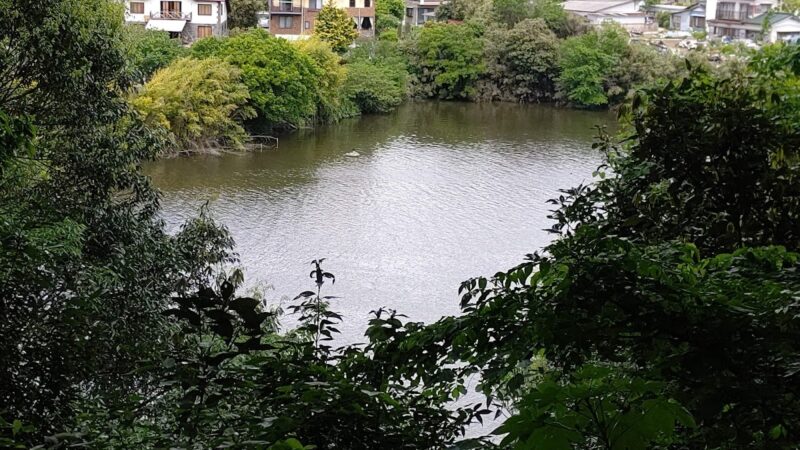
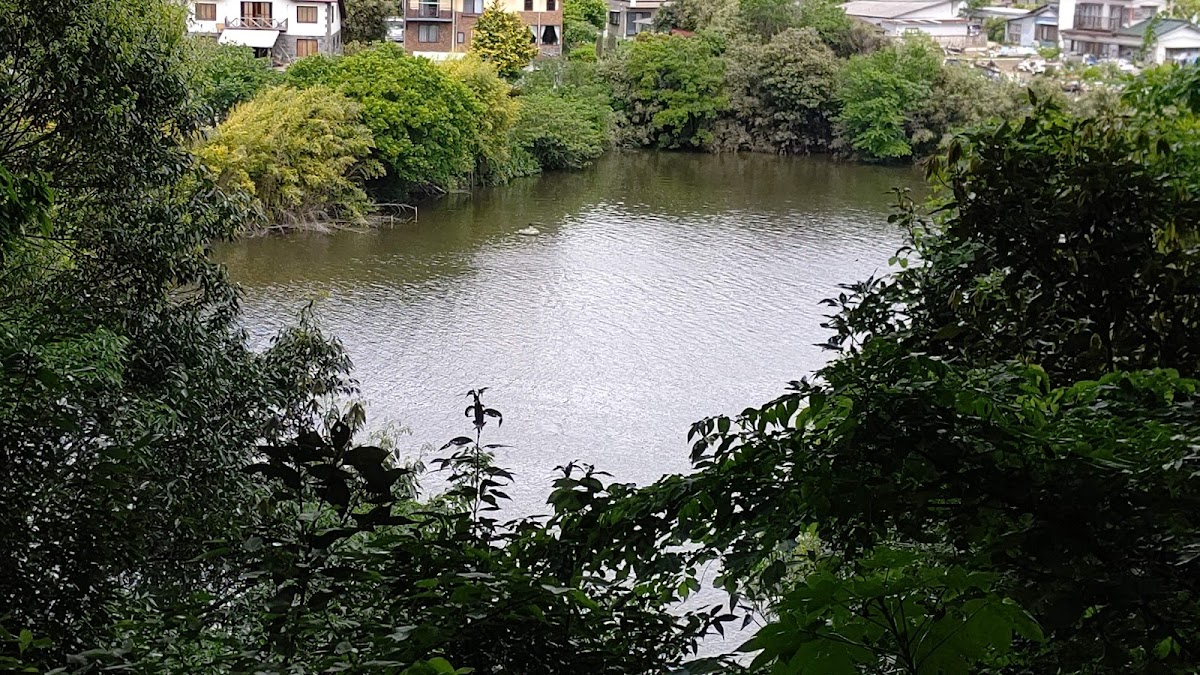
Shibahara Castle was located on the south bank of the Old Tone River, which existed before the Tone River diversion project, that is, the river known as the Hitachi River (or Hirokawa) in the Middle Ages. To the north of the castle lies the ancient Tone Marsh, suggesting a strategic location controlling a key waterway.
The terrain, utilizing the elevation difference of the river terraces, functioned as a natural stronghold, enhancing the castle’s defensive capabilities. The surrounding area retains the place name “Negoya,” a typical place name indicating the residence of the castle lord or retainers, confirming the existence of a castle settlement in this location.
History of Shibahara Castle
Origin of the Castle and the Legend of Taira no Masakado
There are various theories regarding the construction period and builder of Shibahara Castle, and nothing definitive is known. One local legend attributes its construction to the Heian period warrior Taira no Masakado, but this lacks historical evidence and is considered likely a later fabrication.
Taira no Masakado left many legends throughout the Kanto region, and it is not uncommon for legends of him to be associated with castle ruins and historical sites throughout the area. In the case of Shibahara Castle, it is thought that the name of Masakado was associated with it to indicate the historical importance and antiquity of the region.
The Era of the Local Lord, the Shibahara Clan
The prevailing theory is that the actual construction of the castle was carried out by the local lord, the Shibahara clan (Shibahara family). It is presumed that the Shibahara clan, as a powerful regional figure in Shimosa Province, established their influence in this area.
From the early to mid-medieval period, this region is thought to have been under the influence of the Chiba and Soma clans, and it is believed that the Shibahara clan exercised regional control within the context of their relationships with these powerful clans. However, detailed historical records regarding the Shibahara clan’s lineage and activities are scarce, and much remains shrouded in mystery.
The Sengoku Period and the Kawamura Clan’s Residence
During the Sengoku period, Shibahara Castle became the residence of the Kawamura clan. The Kawamura clan served as vassals of the Koga Kubo Ashikaga clan and contributed to maintaining the Ashikaga clan’s power in northern Shimosa Province.
The Koga Kubo was a branch of the Ashikaga clan that ruled the Kanto region from the Muromachi period to the Sengoku period, and their base was Koga (present-day Koga City, Ibaraki Prefecture). The Kawamura clan, as important retainers of the Koga Kubo, are believed to have played a crucial role in monitoring the transportation routes of the Tone River system and defending their territory.
Subjugation to the Hojo Clan
In the late Sengoku period, as the balance of power in the Kanto region changed dramatically, the Kawamura clan became vassals of the Later Hojo Clan (Odawara Hojo clan). After the Eiroku era (1558-1570), when the Hojo clan seized hegemony in Kanto under Hojo Ujiyasu and Ujimasa, the influence of the Koga Kubo relatively declined, and many warlords of Shimosa Province submitted to the Hojo clan.
The Kawamura clan was also incorporated into the Hojo clan’s vassal group within this trend, and Shibahara Castle became part of the Hojo clan’s network of branch castles. Shibahara Castle, strategically located on the south bank of the Tone River, was a strategically important base for the Hojo clan.
Fall and Abandonment in 1590
In 1590, when Toyotomi Hideyoshi launched the Odawara Campaign, Shibahara Castle was caught in the flames of war. Hideyoshi’s forces conquered Hojo castles throughout the Kanto region, and Shibahara Castle was attacked by forces led by Asano Nagamasa and Kimura Hitachi-no-suke.
Asano Nagamasa was a well-known general and a senior retainer of the Toyotomi regime, participating in the sieges of castles throughout the Kanto region during the Odawara Campaign. It is said that Shibahara Castle surrendered without fierce resistance, and it is believed that the castle lord, the Kawamura clan, surrendered.
After the fall of the Odawara Hojo clan, the Kanto region became the territory of Tokugawa Ieyasu, and Shibahara Castle, having fulfilled its role, was abandoned. Subsequently, the castle site became farmland and forest, gradually returning to nature over many years.
Shibahara Castle’s Layout and Structure
Basic Structure of the Castle
Shibahara Castle was a flatland castle built on a river terrace plateau, consisting of multiple enclosures (kuruma). Based on the remains that can be confirmed today, it is thought to have had a linear layout with the main enclosure at the center, surrounded by the second and third enclosures.
The castle’s size is estimated to be approximately 200 meters east-west and 150 meters north-south, a standard size for a local lord’s castle during the Sengoku period. The entire castle area is now forest and residential land, making it difficult to grasp its full original layout, but the basic structure of the castle can be deciphered from the partially remaining remains.
Main Enclosure and Second Enclosure
The main enclosure, the center of the castle, is presumed to have been located at the highest point. From the main enclosure, it was possible to overlook the surrounding area, allowing for monitoring of the old Tone Marsh and the Tone River.
To the east of the main enclosure was the second enclosure, separated by a dry moat. This dry moat remains remarkably well-preserved, measuring approximately 3-4 meters deep and 5-6 meters wide. Earthen ramparts were built on both sides of the moat, clearly demonstrating its function as a defensive structure.
Remains of Earthen Ramp and Dry Moat
The greatest highlight of Shibahara Castle is the remains of the earthen rampart and dry moat on the east side. These remains are well-preserved within the area developed as the Furukone Park Nature Observation Forest.
The earthen rampart is approximately 2-3 meters high and 5-6 meters wide at its base, and is thought to have surrounded the enclosure. While only a portion of the rampart is visible today, it may have surrounded the entire enclosure in its heyday.
The dry moat exhibits a V-shaped or box-shaped form, typical of castles from the Sengoku period. Although parts of the moat bottom are currently filled with fallen leaves and sediment, the cross-sectional shape is clearly observable. ### Bamboo Groves and Current Status
Much of the castle site is covered in bamboo groves, making detailed investigations of the remains difficult. Bamboo groves are a common type of vegetation found at castle sites, often forming as castle ruins return to nature after human intervention ceases.
Within the bamboo groves, there are a few places where flat surfaces or steps can be observed, which may be traces of baileys or lower baileys. However, detailed observation is difficult due to the dense bamboo growth, and further maintenance and investigation are needed.
Shibahara Castle Highlights and Visitor Guide
Furukone Park Nature Observation Forest
The most reliable way to visit Shibahara Castle is to head to Furukone Park Nature Observation Forest. This park is a nature park developed by Abiko City, and part of the castle site is included within the park area.
Walking trails are maintained within the park, allowing visitors to enjoy forest bathing while exploring the castle site. The remains of the dry moats and earthworks are located along the walking paths, and information boards are also installed, making it easy for first-time visitors to find the remains.
Information Boards and Signs
Within the Furukone Park Nature Observation Forest, there is an information board explaining the castle site under the name “Nakatoge Castle.” The board provides a concise explanation of the castle’s history and structure, aiding visitors in their understanding.
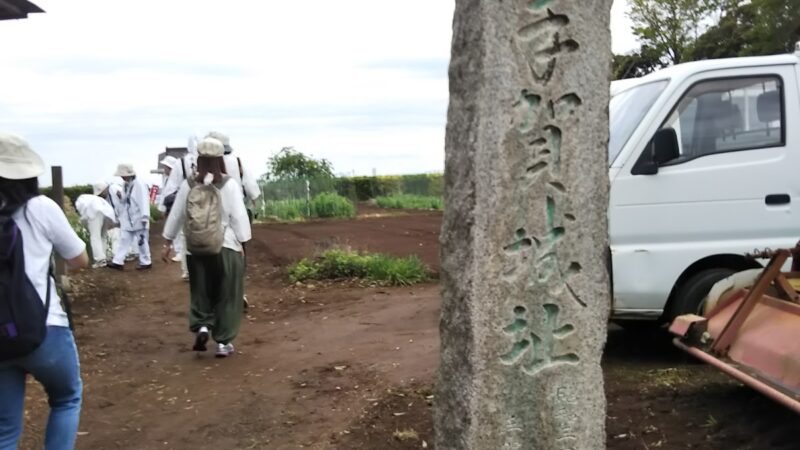
Also, approximately 150 meters west of the park, there is a sign indicating “Shibahara Castle →,” showing the route to the castle site. By following these signs, you can reach the castle site without getting lost.
Points to Consider When Checking the Remains
When visiting the castle site, paying attention to the following points will help you understand the remains more deeply.
- Eastern Dry Moat: The most clearly preserved structure, allowing you to appreciate its depth and width.
- Cross-section of the Earthwork: You can observe the way the earth was piled up and its height.
- Flat Surface of the Enclosure: A small flat area remaining within the bamboo grove.
- Steps and Cut Slopes: Traces of artificially carved slopes.
- Surrounding Topography: Elevation differences of river terraces and their use for defense.
Notes for Visitors
When visiting Shibahara Castle Ruins, please note the following:
- Clothing: Since areas outside the walking paths are bamboo groves and woodlands, long sleeves, long pants, and comfortable walking shoes are recommended.
- Season: In summer, there are many mosquitoes and insects, so insect repellent is necessary. Visiting from autumn to spring is ideal.
- Time: Allow approximately 15-30 minutes for a visit to the castle ruins.
- Weather: Caution is advised as the ground can be slippery during and after rain.
- Manners: Please observe nature conservation rules within the park and strictly refrain from collecting plants or damaging the ruins.
Access Information
Location
Address: Nakatoge, Abiko City, Chiba Prefecture
Access by Public Transportation
Train:
- Get off at Abiko Station on the JR Joban Line or Narita Line.
- Approximately 30-40 minutes on foot from the north exit of Abiko Station.
- Alternatively, take the Bando Bus bound for Kohoku Station South Exit from the north exit of Abiko Station, get off at the Nakatoge bus stop, and walk for approximately 5 minutes.
Distance from Nearest Station: Approximately 2.5 kilometers from Abiko Station.
Access by Car
Joban Expressway:
- Approximately 15 minutes from Kashiwa Interchange
- Take National Route 6 towards Abiko city center
Parking: There is no dedicated parking lot at Furukone Park Nature Observation Forest. You will need to use nearby public parking lots or available street parking spaces. We recommend checking the latest parking information on the Abiko City official website before your visit.
Nearby Facilities
- Abiko City Bird Museum: Approximately 15 minutes on foot. A museum where you can learn about the nature and birds of Lake Teganuma.
- Teganuma Park: Approximately 20 minutes on foot. A vast park along Lake Teganuma.
- Former Murakawa Villa (Sugimura Sojinkan Memorial Museum): Approximately 25 minutes on foot. A villa building from the Taisho period is open to the public.
Nearby Castles and Related Historical Sites
Major Castles of Shimosa Province
Several castles representative of Shimosa Province are scattered around Shibahara Castle.
Fusa Castle (Fusa, Abiko City): A castle built on a strategic point along the Tone River, approximately 5 kilometers from Shibahara Castle.
Kiuchi Castle (Ki, Abiko City): A castle where a branch of the Soma clan resided, approximately 3 kilometers from Shibahara Castle.
Hon-Sakura Castle (Shisui Town/Sakura City): A large-scale castle known as the base of the Chiba clan.
Usui Castle (Sakura City): Famous as a strong fortress that repelled attacks by Uesugi Kenshin.
Sakasai Castle (Bando City, Ibaraki Prefecture): A base for the Later Hojo clan’s control of northern Kanto.
Visiting these castles together will allow you to gain a deeper understanding of the castle network and power dynamics in Shimosa Province during the Sengoku period.
History of the Old Tone River
Understanding Shibahara Castle requires knowledge of the Old Tone River (Old Tone Marsh). While the current Tone River’s course was significantly altered by the Tone River Diversion Project in the early Edo period, it flowed through this region during the medieval period.
The Old Tone River functioned as a major artery for water transport, supporting the movement of goods and people. Shibahara Castle was strategically located to monitor and control this waterway, making it an economically and militarily important base.
Currently, the former course of the Old Tone River remains as the Old Tone Marsh, and the place name “Old Tone” can be found in various locations around it. These place names are valuable historical traces that convey the former appearance of the Tone River.
Historical Evaluation of Shibahara Castle
Position in Castle History
While Shibahara Castle does not rival famous castles in terms of scale or recognition, it is an important historical site for understanding the regional governance and castle system of medieval Shimosa Province.
It possesses a typical scale and structure for a local lord’s residence, and its layout, which skillfully utilizes the river terrace topography, is a good example of Sengoku period castle construction techniques. Furthermore, the actions of the Kawamura clan, who changed their allegiance from the Koga Kubo to the Hojo clan, reflect the complex political situation in the Kanto region during the Sengoku period.
Preservation Status of the Ruins
The ruins of Shibahara Castle were fortunate to be preserved as a nature park, escaping development. The dry moats and earthworks remain clearly visible, allowing visitors to see the ruins firsthand and imagine their former appearance.
However, due to the overgrowth of bamboo and deterioration over time, some parts of the ruins are becoming unclear. It is hoped that with proper preservation, management, and maintenance in the future, the castle site will become a place where more people can visit and learn about history.
Significance in Local History
In the history of Abiko City, Shibahara Castle symbolizes the local community of the medieval period. The castle site contains a wealth of historical information, including the formation of a settlement centered around the castle, the surviving place name Negoya, and its relationship with the old Tone River.
Shibahara Castle can also play an important role as a resource for local history education and tourism. It is hoped that the castle site will be utilized as a place where citizens and visitors can learn about local history and deepen their understanding of their hometown.
Current Status and Challenges of Shibahara Castle Research
Limitations of Historical Sources
Historical sources concerning Shibahara Castle are extremely limited, making it difficult to unravel the castle’s detailed history. Even basic matters such as the builder, construction date, lineage of the lords, and changes in the castle’s history cannot be definitively stated.
While new insights may be gained through future excavations of ancient documents and archaeological investigations, currently, we can only rely on inferences from tradition and the history of the surrounding area.
The Need for Archaeological Investigations
No full-scale archaeological excavations have been conducted at the Shibahara Castle site. Excavations could reveal the castle’s structure, period of use, and unearthed artifacts, potentially shedding light on aspects of the castle that cannot be learned from written sources alone.
In particular, the layout of buildings within the enclosure, the location of the castle gates, and the construction methods of earthworks and moats are information that can only be revealed through excavations. Further academic research is expected in the future.
Collaboration with the Local Community
Collaboration among local residents, government officials, and researchers is essential for the preservation and utilization of castle ruins. Abiko City preserves a portion of the castle ruins as the Furukone Park Nature Observation Forest, but further development and improved guidance would deepen visitors’ understanding.
Collaboration with local history enthusiasts and castle researchers is needed to rediscover the value of the castle ruins and pass it on to future generations.
Summary
Shibahara Castle (Nakatoge Castle) is a valuable historical heritage site, a medieval castle remaining in Abiko City, Chiba Prefecture. The castle’s history, beginning with the legend of Taira no Masakado and passed down through the Shibahara and Kawamura clans, tells the story of the turmoil of the medieval and Sengoku periods in Shimosa Province.
The remaining dry moats and earthworks convey the castle’s construction techniques and defensive philosophies of the time, evoking a sense of historical romance for visitors. The castle ruins, developed as the Furukone Park Nature Observation Forest, are a space where nature and history harmonize, and are cherished by many people. When you visit Abiko City, be sure to stop by the Shibahara Castle ruins. Standing on the plateau overlooking the Tone River, you can feel the presence of the people who lived during the Sengoku period. Though small in scale, the history of this castle, which undeniably existed in this place, will transport you to the world of the Middle Ages.