Iinuma Castle (Choshi City, Chiba Prefecture) Complete Guide | History of the Kaijo Clan’s Branch Castle and Details of the Current Remains
Within the grounds of Enpuku-ji Temple, also known as Iinuma Kannon, in Choshi City, Chiba Prefecture, stood a medieval castle called Iinuma Castle. This castle was built by the Kaijo clan, a branch family of the Chiba clan, and functioned as an important branch castle in Shimosa Province. This article comprehensively covers the detailed history of Iinuma Castle, the lineage of the Kaijo clan who built it, the current state of the remains, access methods, and nearby attractions, providing useful information for castle enthusiasts and history fans.
Basic Information on Iinuma Castle
Iinuma Castle was a flatland castle located in Iinuma-cho, Choshi City, Chiba Prefecture. Currently, it is located within the grounds of Enpuku-ji Temple (also written as Enpuku-ji), famous as Iinuma Kannon, and almost all of the castle’s remains have disappeared.
Castle Data
- Common Name/Alternate Name: None in particular
- Location: Iinuma-cho, Choshi City, Chiba Prefecture (Iinuma Kannon/Enpuku-ji Temple)
- Former Province: Shimosa Province
- Classification/Structure: Flatland Castle
- Keep Structure: None (No keep was built)
- Builder: Kaijo Clan
- Year of Construction: Unknown (Estimated to be Muromachi period)
- Main Renovator: No records
- Main Lord: Kaijo Clan
- Year of Abandonment: Around Bunmei 11 (1479)
- Remains: Vanished
- Designated Cultural Property: None
Iinuma Castle was located on a hill, controlling a strategically important transportation point near the mouth of the Tone River. It is believed to have played an important role in the defense and governance of the Choshi region as a branch castle of Nakajima Castle, the base of the Kaijo clan.
History of Iinuma Castle
Relationship between the Kaijo and Chiba Clans
The Kaijo clan, the builders of Iinuma Castle, were a branch family of the Chiba clan, a prominent family of the Boso Peninsula. The Chiba clan was a powerful samurai family that held sway primarily in Shimosa Province from the late Heian period to the Sengoku period, and their family members dispersed throughout the Boso Peninsula, governing various regions.
The Kaijo clan, as a branch of the Chiba clan, was based in Kaijo County around Choshi, and their residence was Nakajima Castle for generations. Iinuma Castle is presumed to have functioned as a subsidiary castle of Nakajima Castle, serving as a defensive base in the Tone River estuary and a monitoring base for maritime traffic.
Background and Period of Construction
The exact date of Iinuma Castle’s construction is not clearly stated in historical records, but it is believed to have been built by the Kaijo clan around the mid-Muromachi period. At that time, Shimosa Province was the stage for a power struggle between the Koga Kubo and the Kanto Kanrei Uesugi clan, and local powerful families were struggling to survive amidst a complex political situation.
The Kaijo clan often acted in concert with the Chiba main family, and Iinuma Castle played a part in the Kaijo clan’s castle network centered around Nakajima Castle. Given its geographical location in Choshi, it is presumed to have also played a role in managing maritime transport and fishing rights, as well as preparing for threats from the Pacific Ocean.
The Fall of Iinuma Castle in Bunmei 11 (1479)
The most important event in the history of Iinuma Castle was its fall in Bunmei 11 (1479). In that year, fierce fighting continued in the Kanto region between the Koga Kubo, Ashikaga Shigeuji, and the two Uesugi clans, the Ogigayatsu Uesugi and the Yamanouchi Uesugi.
Kaijo Moritane, lord of Nakajima Castle, sided with the Koga Kubo along with Chiba Takatane and went to support Usui Castle (present-day Sakura City, Chiba Prefecture). This action angered both Uesugi forces, and the Kaijo clan’s territory came under attack.
It is said that Iinuma Castle fell after being attacked by the forces of both Uesugi clans. While detailed records of the battle are not available, it is believed that this fall significantly weakened the Kaijo clan’s power.
Iinuma Castle After its Fall
The fate of Iinuma Castle after its fall is unclear. One theory suggests it was abandoned and never rebuilt, disappearing from historical records.
As the Sengoku period progressed, the Choshi region, like other parts of the Kanto region, was affected by war, but there are no records of Iinuma Castle being used as a military base again. In the Edo period, Enpuku-ji Temple, known as Iinuma Kannon, was established on the site, and the castle ruins were completely transformed into temple grounds.
More About the Kaijo Clan
Origins and Genealogy of the Kaijo Clan
The Kaijo clan is widely believed to have originated from Higashi Taneyori, the sixth son of Chiba Tsunetane. Chiba Tsunetane was a warrior who gained vast territories, primarily in Shimosa Province, for his support of Minamoto no Yoritomo’s uprising. His descendants dispersed throughout the Boso Peninsula, establishing their own independent power bases.
The Kaijo clan was based in Kaijo County (present-day Choshi City area) and adopted the place name “Kaijo” as their surname. They traditionally resided at Nakajima Castle and held a position of control over maritime transport and fishing around Choshi.
Scope of the Kaijo Clan’s Influence
The Kaijo clan’s sphere of influence was primarily the Tone River estuary area, centered around present-day Choshi City. This region, facing the Pacific Ocean, was a crucial transportation hub where Tone River water transport and maritime transport intersected, making it an important base both economically and militarily.
The Kaijo clan is believed to have used Nakajima Castle as their main base and controlled their territory by establishing several branch castles and residences in addition to Iinuma Castle. Several castle and residence sites related to the Kaijo clan are said to exist within Choshi City, with names such as Kaijo Residence, Takagami Residence, and Miyahara Residence remaining.
Relationship with the Chiba Main Family
As a branch family of the Chiba clan, the Kaijo clan was always closely involved with the activities of the main family. Their support for Usui Castle in Bunmei 11 (1479) is thought to have been in response to a request from Chiba Takatane.
However, this loyalty ultimately provoked attacks from both sides of the Uesugi clan, leading to the tragic fall of Iinuma Castle. This episode illustrates the harshness of the lord-vassal relationship in medieval samurai society and the unstable political situation of the Sengoku period.
Current Status of Iinuma Castle Site
Current Status as Enpuku-ji Temple Grounds
Currently, the Iinuma Castle site is part of the grounds of Enpuku-ji Temple, also known as Iinuma Kannon. Enpuku-ji Temple is an ancient temple that attracts many worshippers as the 27th temple on the Bandō Thirty-Three Kannon Pilgrimage. The temple grounds feature a magnificent main hall, Niomon gate, and five-story pagoda.
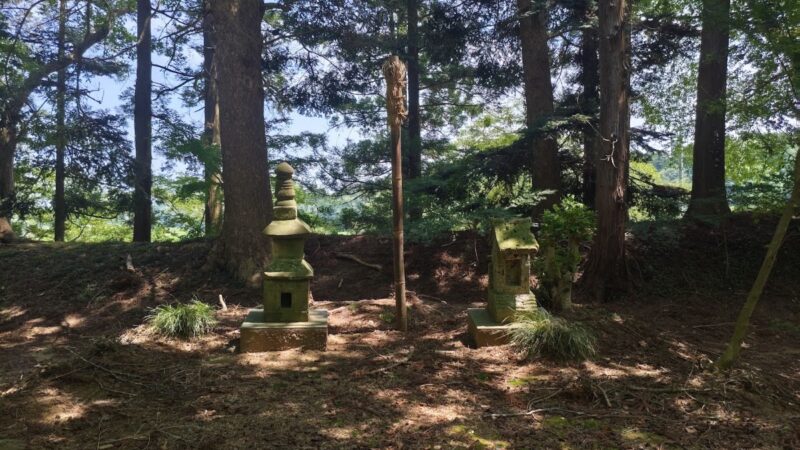
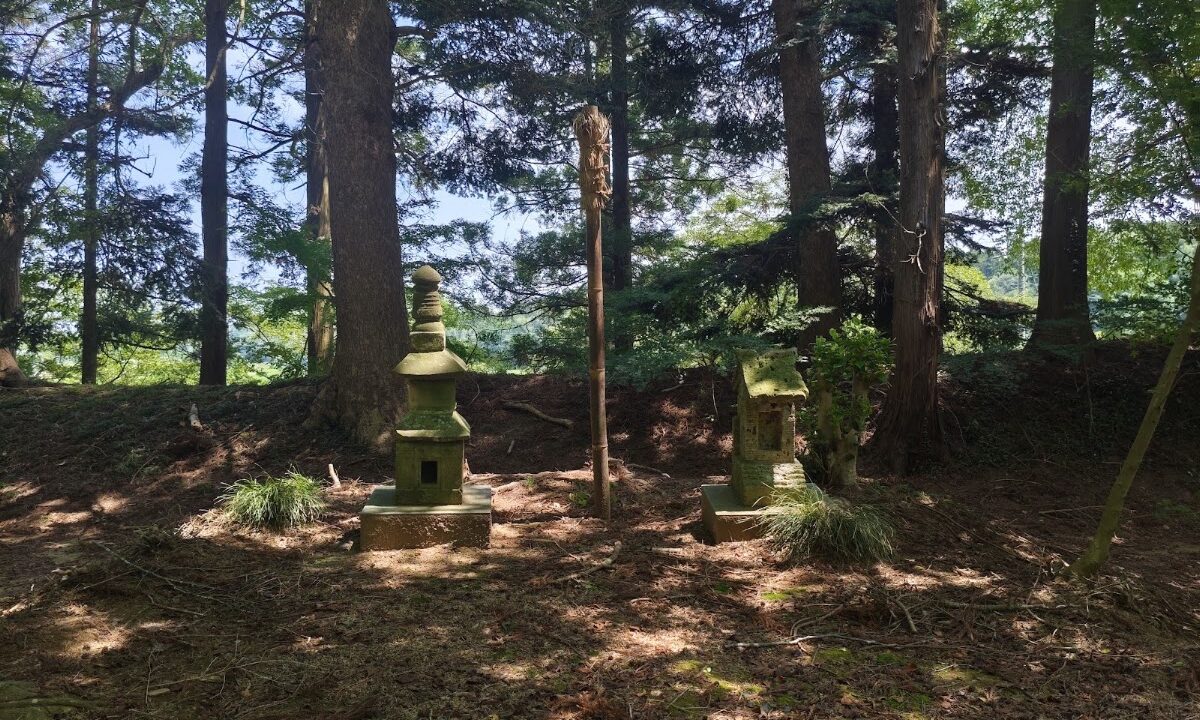
Unfortunately, the remains of the castle have almost completely disappeared, and traces of earthworks or moats cannot be found. Due to the development of the temple and surrounding residential areas, the appearance of a medieval castle has been lost.
Deciphering the Castle’s Form from the Topography
Although the remains have disappeared, it is possible to infer the castle’s location from the local topography. Enpuku-ji Temple is located on slightly higher ground than the surrounding area, suggesting that the former Iinuma Castle was built taking advantage of this topographical advantage.
Its proximity to the Tone River estuary and its location overlooking the Pacific Ocean undoubtedly made it a suitable location for monitoring maritime traffic and gathering information. Although it was a flatland castle, it is presumed that defensive structures utilizing slight elevation differences were strategically placed.
Choshi Great Buddha and Five-Storied Pagoda
While not directly related to Iinuma Castle, the Choshi Great Buddha and the Five-Storied Pagoda are notable sights within the grounds of Enpuku-ji Temple. The Choshi Great Buddha is a large Buddha statue enshrined in front of the main hall, and together with the Five-Storied Pagoda, it serves as a symbol of the temple grounds.
Although no castle remains are visible, these structures contribute to the historical atmosphere of the temple grounds, allowing visitors to imagine the former presence of a castle on this site.
Access Information
Access by Train
The most convenient way to reach Iinuma Castle Ruins (Enpuku-ji Temple) is by using the Choshi Electric Railway.
- Approximately 5 minutes on foot from Choshi Electric Railway Kannon Station
- Approximately 20 minutes on foot from JR Choshi Station, or transfer to the Choshi Electric Railway and get off at Kannon Station.
Choshi Electric Railway Kannon Station is the closest station to Enpuku-ji Temple, and the station name includes the character for “Kannon” (Goddess of Mercy). There are well-maintained signs from the station to the temple, so you can arrive without getting lost.
While it’s within walking distance from JR Choshi Station, it’s a bit of a distance, so if you’re short on time, we recommend using the Choshi Electric Railway. There’s also a tourist information center near Choshi Station where you can get maps and information about the surrounding area.
Access by Car and Parking
If you’re visiting by car, Enpuku-ji Temple has a parking lot for visitors. However, the parking lot on the temple grounds is adjacent to the temple’s monthly parking lot, so please carefully check the signs before parking.
- Approximately 40 minutes from the Sawara-Katori Interchange on the Higashi-Kanto Expressway
- Via National Route 126 to Choshi city center
Since Choshi City is located at the easternmost tip of Chiba Prefecture, it’s advisable to allow about two hours of travel time from the Tokyo area.
Points to Note When Visiting
Enpuku-ji Temple is an active temple and attracts many visitors. When visiting the castle ruins, please be considerate and avoid disturbing other visitors. Also, since renovation work may be carried out on structures such as the Niomon Gate, it is recommended to check the latest information before visiting.
Nearby Castles and Points of Interest
Nakajima Castle
If you visit Iinuma Castle, be sure to also visit the Nakajima Castle ruins, the main castle of the Kaijo clan. Nakajima Castle is located in Nakajima-cho, Choshi City, and played a more important role than Iinuma Castle as the ancestral residence of the Kaijo clan.
Although Nakajima Castle now has very few remains, it is an essential historical site for understanding the history of the Kaijo clan. Visiting Iinuma Castle and Nakajima Castle together will give you a more comprehensive understanding of the Kaijo clan’s territorial control.
Other Castle Sites in Choshi City
Besides Iinuma Castle, several other medieval castle sites are known to exist in Choshi City.
- Kaijo Clan Residence: A site believed to be the residence of the Kaijo clan
- Takagami Residence: A residence site related to the Kaijo clan
- Miyahara Residence: A residence site in Choshi City
- Morito Castle: A castle site in Choshi City
Many of these sites have lost their remains, but they are valuable historical sites that show the activities of medieval samurai groups in the Choshi region. Those who enjoy visiting castles will find it enjoyable to explore these sites with a map in hand.
Choshi Tourist Spots
When visiting the Iinuma Castle site, you can also enjoy other tourist spots in Choshi City.
- Inubosaki Lighthouse: The easternmost lighthouse in the Kanto region, offering spectacular views of the Pacific Ocean.
- Byobu-ga-ura: A scenic spot with cliffs 40-50 meters high stretching for approximately 10 kilometers.
- Choshi Port Tower: An observation facility offering panoramic views of the Tone River estuary and the Pacific Ocean.
- Choshi Electric Railway: A popular local railway line, with shops selling the famous “nure senbei” (moist rice crackers) along the route.
- Yamasa Soy Sauce Factory: A facility where you can learn about soy sauce brewing, a traditional industry of Choshi.
Choshi is also rich in seafood, and you can enjoy dishes made with fresh fish and shellfish. Enjoy Choshi’s nature and food culture along with visiting the castle ruins.
Significance of Visiting Iinuma Castle
The Value of Vanished Castle Ruins
Iinuma Castle’s remains have completely disappeared, and at first glance, it may seem to have little value as a place to visit. However, castle ruins without remaining structures also hold important historical significance.
Visiting castle ruins allows you to understand the historical background and geographical characteristics of the area. In the case of Iinuma Castle, you can learn about the importance of its location at the mouth of the Tone River, the existence of the local powerful clan, the Kaijo clan, and a part of the complex Sengoku period history of the Kanto region.
Opportunity to Learn Local History
Learning the history of Iinuma Castle leads to a deeper understanding of the history of the Choshi region. While present-day Choshi City is a port town known for fishing and soy sauce brewing, in the Middle Ages it was ruled by the samurai clan, the Kaijo clan, and survived while being caught up in the political situation of the Kanto region.
Knowing the history of a region deepens your understanding of the land, making tourism and visits more meaningful. Iinuma Castle ruins can be considered a valuable historical site as an entry point to such regional history learning.
Perspective of Castle Research
From the perspective of castle research, vanished castles like Iinuma Castle are also important. This is because studying not only famous existing castles but also small local castles reveals the overall picture of Japanese castle culture.
Iinuma Castle was a flatland castle, lacking a grand structure like a keep, but it functioned as a practical fortress for managing local affairs. The accumulation of such “unassuming” castle ruins reveals the realities of local governance during the Sengoku period.
Summary
Iinuma Castle in Choshi City, Chiba Prefecture, is a medieval flatland castle built by the Kaijo clan, a branch of the Chiba clan. It served as a subsidiary castle of Nakajima Castle, defending the Tone River estuary, but fell in 1479 after an attack by both Uesugi forces.
Currently, the site is the grounds of Enpuku-ji Temple, famous for Iinuma Kannon. While the castle’s remains have disappeared, its historical location and the traces of the Kaijo clan can still be felt. It’s easily accessible, about a 5-minute walk from Kannon Station on the Choshi Electric Railway, making it a convenient visit as part of a Choshi sightseeing trip.
Visiting the Iinuma Castle ruins offers more than just a chance to see a castle; it’s a valuable opportunity to learn about the medieval history of the Choshi region, the history of the local powerful clan Kaijo, and the complex Sengoku period history of the Kanto region. Visiting it along with nearby Nakajima Castle and other historical sites in Choshi will provide a deeper understanding of history.
Whether you’re a castle enthusiast, interested in history, or planning a trip to Choshi, be sure to visit the Iinuma Castle ruins. Even though no remains are left, the history of medieval samurai is undeniably etched there.