Terasaki Castle (Sakura City, Chiba Prefecture) Complete Guide | History, Highlights, and Access Information
What is Terasaki Castle?
Terasaki Castle was a medieval hilltop castle located in Terasaki, Sakura City, Chiba Prefecture. Currently, the castle ruins are located within the grounds of Mitsuzoin Temple and its surroundings. It is a historically valuable castle site that served as an important base for the Chiba clan.
While Sakura City has several famous castles, including Hon-Sakura Castle and Sakura Castle, Terasaki Castle played a strategically important role as a branch castle within the Chiba clan’s sphere of influence. Even today, remnants such as earthworks and moats remain, making it an unmissable spot for castle enthusiasts and history buffs.
History of Terasaki Castle
Background and Period of Construction
There are various theories regarding the construction period of Terasaki Castle, but it is generally believed to have been built by the Chiba clan during the late Muromachi period to the Sengoku period. The Chiba clan was a powerful samurai family that ruled Shimōsa Province. As they expanded their power northeastward from their base at Chiba Castle (present-day Chiba City), they established several branch castles in this region.
Terasaki Castle is located on a plateau on the southern shore of Lake Inba and functioned as a strategic base controlling a key waterway. Several other important castles, such as Hon-Sakura Castle and Usui Castle, are scattered in the surrounding area, and it is presumed that these castles, in conjunction with Terasaki Castle, supported the Chiba clan’s system of territorial control.
The Chiba Clan and Terasaki Castle
The Chiba clan was a prominent family that maintained its power primarily in Shimōsa Province from the late Heian period to the Sengoku period. Especially during the Sengoku period, they established a strong system of control over the Bōsō region with Hon-Sakura Castle as their base.
Although Terasaki Castle is not officially recognized as a castle in the “Detailed Distribution Survey Report of Medieval and Early Modern Castle Sites in Chiba Prefecture,” it is considered certain to be a castle site based on local traditions and topographical features. Historical records indicate that it was temporarily used, particularly during the time of Chiba Suketane, suggesting it played a role in the Chiba clan’s network of branch castles.
Trends during the Sengoku Period
During the Sengoku period, the Chiba clan maintained complex diplomatic relations with the Hojo, Satomi, and Kanto Kanrei Uesugi clans. Especially during the Eiroku era (1558-1570), this region was potentially engulfed in conflict during Uesugi Kenshin’s invasion of the Kanto region.
Near Terasaki Castle, there are other castles associated with the legend of “Kenshin’s One-Night Castle,” indicating the high level of military tension in this area. Battle records from surrounding castles, such as the fierce battle at Usui Castle, suggest that Terasaki Castle functioned as part of the Chiba clan’s defensive line.
The Abandoned Castle and its Present State
The exact time when Terasaki Castle was abandoned is unclear, but it is presumed to have lost its function around 1590, when the Chiba clan was destroyed during Toyotomi Hideyoshi’s siege of Odawara. Afterward, Mitsuzoin Temple was built on the castle site, and it continues to be used as temple grounds to this day.
Structure and Layout of Terasaki Castle
Topographical Characteristics
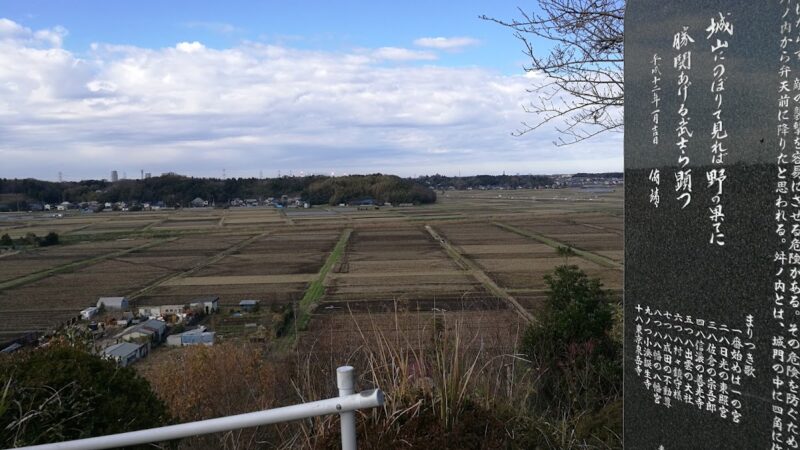
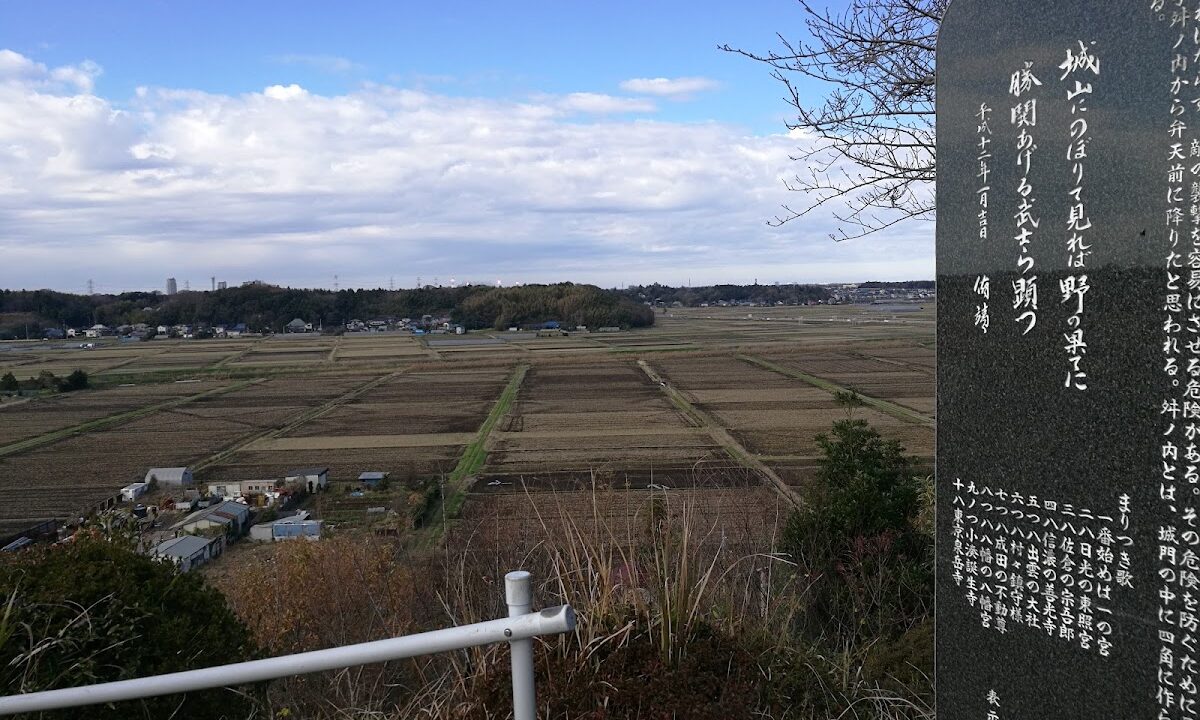
Terasaki Castle is a flatland castle built on a plateau approximately 25 meters above sea level on the southern shore of Lake Inba. The northern side of the plateau faces lowlands, forming a natural stronghold. Its layout is characterized by its utilization of this topographical advantage.
The castle area is thought to have extended approximately 200 meters east-west and 150 meters north-south, centered around Mitsuzoin Temple. The arrangement of defensive facilities utilizing the edge of the plateau is typical of medieval castles.
Major Remains
The main remains that can be confirmed today are as follows:
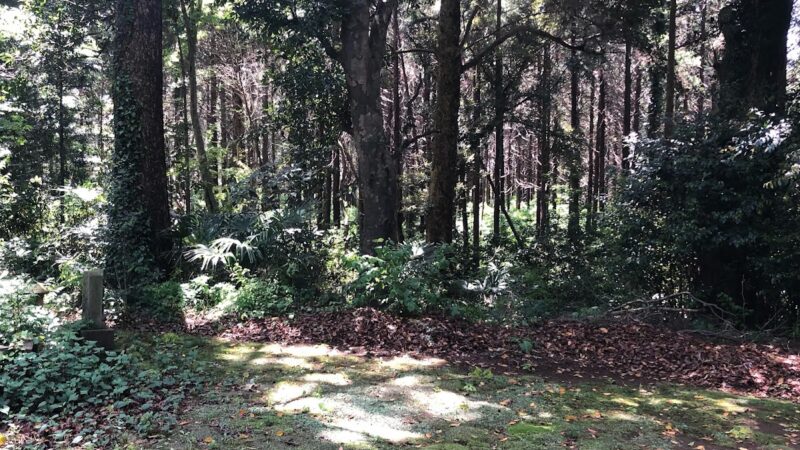
Earthworks: Traces of earthworks remain around the perimeter of the Mitsuzoin temple grounds. Clear elevations are particularly noticeable on the east and south sides of the temple, and are thought to be remnants of earthworks serving as castle defenses. While currently only 1-2 meters high, it is presumed that they were built higher in the past.
Moats/Dry Moats: Traces of moats separating the plateau can be confirmed through topographical observation. Many parts are now obscured due to burial and alteration, but the elevation changes and depressions suggest the existence of defensive structures in the past.
Enclosures (Kuruwa): The area around the main hall of Mitsuzoin temple is thought to be the main enclosure (honmaru). It is possible that second and third enclosures were located around it, but clear distinctions are difficult due to topographical alteration.
Characteristics of the Castle Layout
The layout of Terasaki Castle has the structure of a typical medieval flatland castle. The design philosophy clearly demonstrates the maximization of the plateau’s topography, enhancing defensive capabilities with minimal artificial modifications.
Although smaller in scale compared to the nearby Hon-Sakura Castle and Usui Castle, it possessed a structure that adequately fulfilled its function as a subsidiary castle. In particular, the northern side facing the lowlands offered high defensive advantages due to the natural terrain, while the southern side, connected to the plateau, likely achieved all-around defense through the construction of artificial moats.
Highlights of Terasaki Castle
Remains within the Mitsuzoin Temple Grounds
The greatest highlight when visiting the Terasaki Castle ruins is the castle remains within the Mitsuzoin Temple grounds. Walking along the temple’s approach, one can imagine the castle’s structure in its heyday.
The area around the main hall is presumed to be the site of the main enclosure, and the layout of the temple grounds also evokes the atmosphere of a medieval castle. Especially on the eastern and southern sides of the grounds, clearly defined earthen ramparts remain, enhancing the value of these remains as castle artifacts.
Points for Observing the Topography
When visiting the castle ruins, we recommend walking along the edge of the plateau and observing the topography. Looking up from below the plateau on the north side, you can appreciate the height of the plateau on which the castle was built and its defensive advantages.
The layout of roads and residential areas around Mitsuzoin Temple may also reflect traces of the former castle’s boundaries and moats. Walking while comparing old maps with the current topography will lead to a deeper understanding.
Views of the Surrounding Area
On clear days, you can see the lowlands to the north and the distant plateau from the castle ruins. This view helps to understand that Terasaki Castle functioned as a base for monitoring and controlling the surrounding area.
Access Information
Access by Public Transportation
By Train/Bus:
- Take the Chiba Green Bus from the South Exit of JR Sobu Line/Narita Line “Sakura Station”
- Get off at the “Osakidai 4-chome” bus stop and walk for approximately 7 minutes
- Bus journey time: Approximately 10 minutes
By Foot:
- Approximately 20 minutes on foot (approximately 1.4 km) from the South Exit of JR “Sakura Station”
- Approximately 25 minutes on foot from Keisei Main Line “Keisei Sakura Station”
Access by Car
From Major Roads:
- Approximately 15 minutes from the Higashi-Kanto Expressway “Sakura IC”
- Accessible via National Route 296
Parking:
Mitsuzoin Temple has its own parking lot, but it may not be available during temple events. It is recommended to check before visiting. There are few coin-operated parking lots in the surrounding area, so using public transportation is convenient.
Address and Location Information
Location: 1-3-1 Terasaki Kita, Sakura City, Chiba Prefecture (Mitsuzoin Temple)
Viewing on a Map: Searching for “Mitsuzoin Sakura City” on your car navigation system or smartphone map app will display the exact location.
Notes for Visitors
Visiting Etiquette
Since the Terasaki Castle ruins are within the grounds of Mitsuzoin Temple, it is necessary to observe proper temple etiquette when visiting. It is considered polite to complete your prayers at the main hall before viewing the ruins.
Estimated Visiting Time
Allow 30 minutes to 1 hour to visit the castle ruins. If you wish to carefully observe the terrain or take photographs, it is recommended to allocate 1 hour or more.
Clothing and Items to Bring
- Comfortable walking shoes (sneakers, etc.)
- Hat and drinking water in summer
- Warm clothing in winter
- Camera (for photographing the ruins)
- Notebook and writing utensils (for recording)
Regarding Photography
Photography is generally permitted within the temple grounds, but photography inside the main hall and religious facilities should be avoided. Please check with temple staff if you have any questions.
Nearby Castles and Tourist Spots
Hon-Sakura Castle (approx. 5km)
Known as the base of the Chiba clan, Hon-Sakura Castle is located approximately 5km northeast of Terasaki Castle. It is being developed as a nationally designated historical site, and large earthworks and dry moats remain in good condition. Visiting both Terasaki Castle and Hon-Sakura Castle will provide a deeper understanding of the Chiba clan’s castle system.
Sakura Castle (approx. 4km)
Built during the Edo period, Sakura Castle is located approximately 4km southwest of Terasaki Castle. Currently, the site is maintained as Sakura Castle Ruins Park, and the National Museum of Japanese History is also located there. By comparing the medieval Terasaki Castle with the early modern Sakura Castle, you can learn about the development process of castles.
Usui Castle (approx. 7km)
Usui Castle, known for repelling an attack by Uesugi Kenshin, is located approximately 7km northwest of Terasaki Castle. Built on a plateau overlooking Lake Inba, it is a castle of high historical value as the site of fierce battles during the Sengoku period.
Tourist Facilities in Sakura City
National Museum of Japanese History: This is one of the largest museums in Japan where you can comprehensively learn about Japanese history and folklore. It also has exhibits on medieval castles and the lives of samurai, which are helpful in understanding the historical background of Terasaki Castle.
Samurai Residences: Samurai residences of the Sakura Domain are preserved and open to the public, offering a glimpse into the lives of samurai during the Edo period.
Background Knowledge for Enjoying Terasaki Castle
History of the Chiba Clan
Understanding the Chiba clan more deeply will clarify the historical significance of Terasaki Castle. The Chiba clan was a prestigious family descended from the Kanmu Taira clan, maintaining power primarily in Shimosa Province from the late Heian period to the Sengoku period.
Chiba Tsunetane supported Minamoto no Yoritomo’s uprising and made a significant contribution to the establishment of the Kamakura Shogunate. For this achievement, he was appointed governor of Shimosa Province, and thereafter, the Chiba clan developed into a powerful samurai family in the Boso region.
During the Sengoku period, they used Hon-Sakura Castle as their base and controlled their territory by placing numerous branch castles around it. Terasaki Castle also functioned as part of this branch castle network.
Characteristics of Medieval Castles
To understand medieval hilltop castles like Terasaki Castle, it is useful to know the basic characteristics of medieval castles.
Unlike early modern castles with stone walls and keeps, medieval castles primarily used earthworks and moats as defensive structures. The design philosophy is characterized by its skillful utilization of natural terrain, achieving maximum defensive effectiveness with minimal artificial modification.
Furthermore, many medieval castles functioned more as defensive strongholds during wartime than as residential facilities during peacetime. It was common for lords to reside in their residences at the foot of the mountain during peacetime and to fortify themselves in the mountaintop castle only during wartime.
Archaeological Excavations and Research Status
While no large-scale archaeological excavations have been conducted on Terasaki Castle, its existence and general outline have been revealed through surface observations and research on historical documents.
Although not officially included in the Chiba Prefectural Board of Education’s “Detailed Distribution Survey Report of Medieval and Early Modern Castle Sites in Chiba Prefecture,” local researchers have established its reputation as a castle site. Further detailed surveys and excavations could potentially yield more information.
Evaluation and Appeal of Terasaki Castle
Evaluation from Castle Enthusiasts
On castle information websites such as Kojodan, Terasaki Castle is ranked second in Sakura City and among the top castles in Chiba Prefecture. The average visitor time is approximately 30 minutes, making it a popular and easily accessible medieval castle.
Regarding the preservation of the remains, although it has undergone extensive alterations, the earthworks and topographical features allow visitors to imagine its original appearance, which is highly regarded. In particular, the fact that the remains are located within the grounds of the Mitsuzoin temple makes it easily accessible and appealing to casual visitors.
Historical Value
Terasaki Castle holds significant historical value in understanding the Chiba clan’s system of rule. It played a key role in the network of branch castles centered around Hon-Sakura Castle and functioned as a control base for the southern shore region of Lake Inba.
Furthermore, it is valuable as a clue to understanding the political and military situation in the Boso region during the Sengoku period. Exploring the connections between historical events that took place in this region, such as Uesugi Kenshin’s invasion of the Kanto region and the conflict between the Hojo and Satomi clans, allows for a broader understanding of Sengoku period history.
Regional Significance
As a historical heritage site of Sakura City, Terasaki Castle ruins contribute to the formation of the region’s identity. The historical landscape, integrated with Mitsuzoin Temple, serves as a familiar witness to history for local residents and a source of local pride.
In recent years, with the growing interest in castle tourism and historical tourism, attention is also being drawn to small and medium-sized castles rooted in local communities, such as Terasaki Castle. By incorporating it into castle tours that combine it with Hon-Sakura Castle and Sakura Castle, its value as a tourist resource for Sakura City is also increasing.
How to Record Your Visit
Photography Tips
When visiting Terasaki Castle Ruins, taking photos at the following points will be useful for recording your visit:
- Mitsuzoin Temple Gate: As a record of your visit to the castle ruins
- Remaining Earthworks: As photographic evidence of the remains
- Elevation Differences of the Plateau: As a record of the topographical features
- Surrounding Views: For understanding the location and environment
- Information Boards and Leaflets: As a record of historical information
Posting to Castle Recording Websites
Posting your visit records to castle recording websites such as Kojodan allows you to record your own experiences and share information with other castle enthusiasts. Recording photos, visit date and time, viewing time, and impressions will be useful for later review.
Creating Field Notes
Taking notes on things you noticed, questions you had, and topographical features at the site will be helpful for research and study after returning home. Sketches and simple survey records are also good ways to deepen your understanding of castles.
Summary
Terasaki Castle, located in Sakura City, Chiba Prefecture, was a medieval hilltop castle that played an important role as a branch castle of the Chiba clan. Although it is now part of the grounds of Mitsuzoin Temple, the earthworks and terrain still offer glimpses into the castle’s original structure.
Visiting Terasaki Castle along with other nearby castles such as Hon-Sakura Castle and Sakura Castle will provide a deeper understanding of the Chiba clan’s castle system and the history of the Boso region during the Sengoku period. Its convenient location, approximately a 20-minute walk from JR Sakura Station, is also a major draw, making it an easily accessible medieval castle and a recommended spot for castle enthusiasts and history buffs.
Since the remains are located within the grounds of Mitsuzoin Temple, it is important to observe proper temple etiquette while visiting. A 30-minute to 1-hour visit will allow you to fully appreciate the charm of this medieval castle.