Kugeta Castle Ruins (Chikusei City, Ibaraki Prefecture): The Charm of a Sengoku Period Fortress and Historical Site Built by the Mizutani Clan
What is Kugeta Castle?
Kugeta Castle is a Sengoku period hilltop castle located in Shiroyama, Higuchi, Chikusei City, Ibaraki Prefecture. Also known as “Kamikan” or “Motokan,” it is currently preserved as an Ibaraki Prefecture designated historical site. Located approximately 5 kilometers north of Shimodate, in an area bordering Mooka City (formerly Ninomiya Town), Tochigi Prefecture, it once boasted a vast scale, including the plateau of Ninomiya Town.
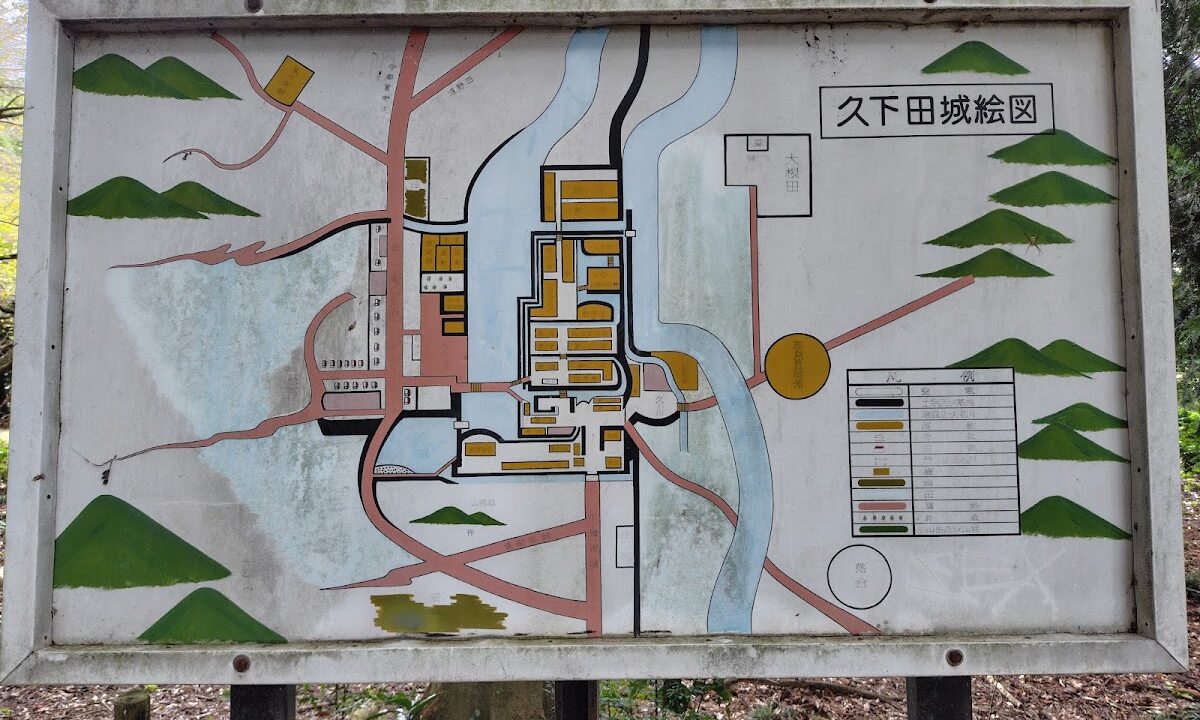
The current castle ruins are situated on Sannodai, bordered by the Mooka Railway to the west and the former Gogyo River to the east. Sengoku period remains such as earthworks and dry moats remain in excellent condition. This castle was an important branch castle built by the Mizutani clan, lords of Shimodate Castle, to defend against the Utsunomiya clan to the north, and functioned as a strategic stronghold in the border region between Hitachi Province and Shimotsuke Province.
History and Background of Kugeda Castle
Legends of the Heian Period and Fujiwara no Hidesato
Regarding the origins of Kugeda Castle, there is a legend that it was the Upper Castle, one of three forts (Upper Castle, Middle Castle, and Lower Castle) built by Fujiwara no Hidesato during the Tenkei era (938-948) to suppress Taira no Masakado. According to this legend, during the Jōhei-Tengyō Rebellion, Fujiwara no Hidesato built three forts along the Gogyō River to oppose Taira no Masakado, using them as strategic bases.
It is said that the Upper Castle later became Kugeda Castle, the Middle Castle was renovated by the Isa clan and became Isa Castle, and the Lower Castle became Shimodate Castle, the base of the Mizutani clan. However, this legend lacks historical evidence, and it has been suggested that it may be a later fabrication.
Castle Construction in the Sengoku Period and Mizutani Masamura (Banryusai)
Based on reliable historical records, the history of Kugeda Castle begins in 1545. In that year, Mizutani Masamura, the 6th head of the Mizutani family and lord of Shimotsuma Castle, constructed the castle in preparation for an attack by the Utsunomiya clan to the north. Masamura, also known as Banryusai, was a warrior who positioned Kugeda Castle as a subsidiary castle of Shimotsuma Castle.
At that time, the conflict between the Yuki/Mizutani clan and the Utsunomiya clan was deepening, and the region from northern Hitachi Province to southern Shimotsuke Province was in a state of tension. The Mizutani clan, as a senior retainer of the Yuki clan, was expanding its power, but it needed to protect the border region with the powerful Utsunomiya clan to the north. Kugeda Castle was built precisely as the front line of this border defense.
The Relationship Between the Mizutani and Yuki Clans
The Mizutani clan originally governed the Shimodate region as vassals of the Yuki clan. Throughout the Sengoku period, while serving the Yuki clan, the Mizutani clan gradually built their own independent power. The construction of Kugeda Castle is believed to have been carried out with the Yuki clan’s approval and is positioned as part of the Yuki clan’s northern defense strategy.
Mizutani Masamura is known as a warrior with excellent castle-building skills and strategic vision, and the layout of Kugeda Castle reflects the latest castle-building techniques of the time. Conflict with the Utsunomiya clan continued intermittently, and Kugeda Castle may have been subjected to battle several times, but detailed battle records do not remain.
Changes After the Edo Period
With the end of the Sengoku period and the beginning of the Edo period, Kugeda Castle lost its military role and was abandoned. The Mizutani clan ruled Shimodate until the early Edo period, but were subsequently transferred, and the Shimodate region came under the control of other daimyo.
Although the castle ruins were later used for farmland and settlements, fortunately, the main remains were preserved without being destroyed. Currently, it is protected as a designated historical site of Ibaraki Prefecture and is recognized as a valuable historical heritage of the region.
Structure and Layout of Kugeda Castle
Location and Topography
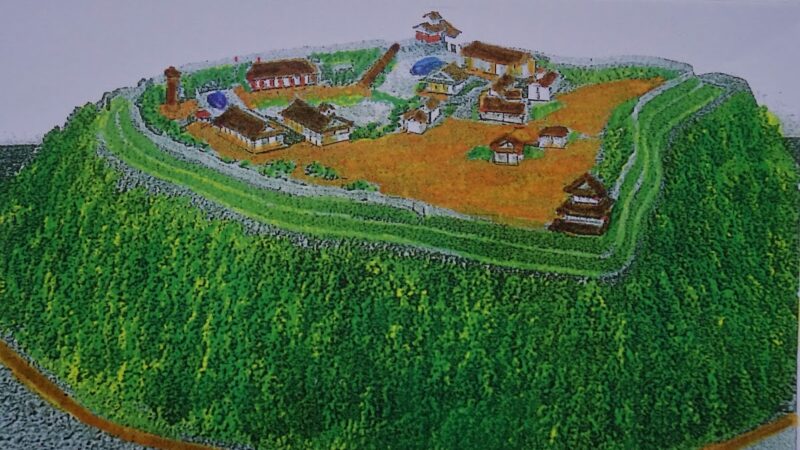
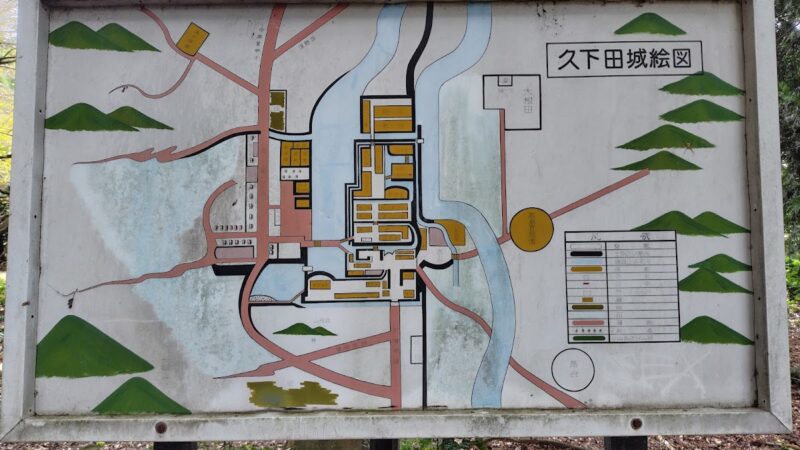
Kugeda Castle is a flatland castle built on a long, narrow plateau on the west bank of the Gogyo River. With a relative height of approximately 8 meters, it has a form similar to a flatland castle, but its defensive design cleverly utilizes the elevation difference of the plateau. The western side is now a low-lying area where the Mooka Railway runs, and it is thought that in the past, it formed a natural defensive line as a wetland and rice paddy.
The eastern side is the former Gogyo River, which also served as a natural moat. The layout, utilizing the long, narrow plateau running north-south, has a concentric structure with multiple enclosures connected together.
Details of the Remains
The current Kugeda Castle ruins retain relatively well-preserved remains from the Sengoku period. Particularly noteworthy remains are as follows: Earthworks: Earthworks approximately 2-3 meters high remain around the castle, and the earthworks around the main enclosure are particularly well-preserved. The cross-section of the earthworks reveals careful construction using the rammed earth technique.
Dry Moats: Dry moats, approximately 3-5 meters deep, are located between the enclosures. While partially filled in, their function as defensive structures in the past can be imagined. The bottom of the moats exhibits a V-shaped pattern in some sections, demonstrating the characteristics of castle construction techniques from the Sengoku period.
Enclosures: A series of interconnected enclosures can be observed, centered around the main enclosure. Each enclosure is demarcated by earthworks and moats, forming a tiered defensive line. The main enclosure is estimated to be approximately 50 meters east-west and 80 meters north-south.
Gate Enclosures: Traces of gate entrances to the castle remain in some areas, and the structure of staggered gate entrances can be seen in some places. This is a technique used to prevent enemy incursions, a technology unique to castles of the Sengoku period (Warring States period).
Characteristics of Castle Construction Techniques
The layout of Kugeda Castle exhibits characteristics of castle construction techniques in the Kanto region during the mid-16th century. It maximizes the use of the plateau’s topography, achieving multiple layers of defense with earthworks and moats, demonstrating the high level of Mizutani Masamura’s castle construction skills.
In particular, the method of arranging multiple enclosures by dividing the long, narrow plateau north-south is a design that efficiently utilizes the limited terrain. Furthermore, by utilizing the natural topography to the east and west (rivers and lowlands) as defensive lines, the structure allows for effective defense even with a small number of troops.
Archaeological Materials and Excavations
While extensive archaeological excavations have been conducted at the Kugeda Castle site, several important archaeological materials have been identified through surface observations and partial investigations.
Fragments of pottery and porcelain from the Sengoku period have been collected around the castle site, providing evidence of daily life during the period when the castle was functioning. In particular, fragments of pottery such as earthenware plates (kawarake), Tokoname ware, and Seto-Mino ware have been unearthed, offering insights into daily life and rituals within the castle.
Fragments of iron products and nails have also been discovered, suggesting the existence of buildings. However, no remains of stone walls or foundation stones have been confirmed, leading to the assumption that the buildings were primarily post-and-beam structures.
Further detailed excavations may provide more information about the castle’s structure and function. New insights are particularly expected regarding the arrangement of building remains, the use of internal divisions, and methods of water supply.
Kugeda Castle and Surrounding Castles
Relationship with Shimodate Castle
Kugeda Castle was built as a subsidiary castle of Shimodate Castle. Shimodate Castle was the base of the Mizutani clan and was located in the present-day center of Chikusei City. Kugeda Castle was located approximately 5 kilometers north of Shimodate Castle and functioned as a frontline defensive base against invasions from the north.
It is believed that a close communication system was established between the two castles. If enemy movements were detected at Kugeda Castle, the information would have been immediately relayed to Shimodate Castle, and a system for deploying the main force would have been in place. Such a network of subsidiary castles played a crucial role in territorial control during the Sengoku period.
Relationship with Isa Castle (Nakadate)
Isa Castle is considered to be the Nakadate castle in the legend of Fujiwara no Hidesato’s three castles, and was located near Kannonji Temple in Nakadate, Chikusei City. It was situated midway between Kugeda Castle (Kamidate) and Shimodate Castle (Shimodate), with the three castles lined up along the Gogyo River.
Isa Castle is known as the residence of the Isa clan and was ruled by a samurai group separate from the Mizutani clan. However, it is possible that it came under the influence of the Mizutani clan during the Sengoku period, suggesting that the three castles cooperated in regional defense.
Confrontation with the Utsunomiya Clan’s Fortresses
Kugeda Castle faced the Utsunomiya clan, a powerful daimyo of Shimotsuke Province (present-day Tochigi Prefecture) who controlled a vast territory. The Utsunomiya clan’s sphere of influence extended to just north of Kugeda Castle, creating a constant state of tension in the border region between the two forces.
The Utsunomiya clan also had several castles strategically located near the border, maintaining a military balance between the two powers. Kugeda Castle functioned as a crucial base for maintaining this balance.
Current Kugeda Castle Ruins and Visitor Information
Access Methods
There are several ways to access the Kugeda Castle ruins:
Public Transportation: Approximately 15 minutes on foot from Kugeda Station on the Mooka Railway. Head northeast from the station, passing through a residential area to reach the castle ruins.
By Car:
- Approximately 50 minutes from the Tohoku Expressway, Tochigi IC
- Approximately 30 minutes from the Kita-Kanto Expressway, Mooka IC
- Approximately 20 minutes from the Kita-Kanto Expressway, Sakuragawa-Chikusei IC
There is no dedicated parking lot at the castle ruins, so we recommend using public transportation. If you visit by car, you will need to use the parking lots of nearby public facilities or the parking spaces around Mooka Railway Kugeda Station. However, please absolutely avoid parking on narrow roads within residential areas, as this will inconvenience local residents.
Points to Note During Your Visit
The estimated time required to visit Kugeda Castle Ruins is approximately 30 minutes to 1 hour. Keeping the following points in mind will help you understand the castle’s structure more deeply.
Observation of Earthworks and Moats: The earthworks around the main enclosure are well-preserved, allowing you to appreciate the castle-building techniques of the Sengoku period. Observe the height and width of the earthworks and the depth of the moats.
Arrangement of Enclosures: By observing how the multiple enclosures are arranged, you can understand the castle’s defensive structure. Viewing the entire site from a high vantage point clearly reveals the characteristics of the castle’s layout.
Utilization of Topography: Examine the area towards the Gogyo River to the east and the lowlands to the west, and imagine how the natural terrain was utilized for defense.
Surrounding Landscape: From the castle ruins, you can enjoy a panoramic view of the surrounding rural landscape, giving you a sense of the excellent visibility of the time. Looking north towards Tochigi Prefecture, you can imagine how the castle was used to monitor the territory of the Utsunomiya clan.
Preservation Status and Challenges
While the Kugeda Castle ruins are protected as a designated historical site of Ibaraki Prefecture, parts of the site are used for residential areas and farmland, making complete preservation difficult. Nevertheless, the main remains are relatively well-preserved, and it is considered the castle with the most clearly preserved castle remains among the three castles (Kamikan, Nakakan, and Shimokan).
Future challenges include detailed surveying of the remains, clarification of the castle’s true nature through archaeological excavations, and the development of an appropriate preservation and management plan. The development of explanatory signs and information facilities for visitors is also desired.
Historical Significance of Kugeda Castle
Border Defense in the Sengoku Period
Kugeda Castle played a crucial role as a defensive stronghold in the border region between Hitachi Province and Shimotsuke Province during the Sengoku period. This region was located at the boundary between the Yuki/Mizutani clan’s power and the Utsunomiya clan’s power, and was a symbolic representation of the balance of power between the two forces.
Fortresses in border regions served not only as military facilities but also held political significance, marking the boundaries of territorial control. The existence of Kugeda Castle clearly indicated the northern limit of the Mizutani clan’s territory.
Expansion of the Mizutani Clan’s Power
The construction of Kugeda Castle was a significant event demonstrating the Mizutani clan’s growth from a senior retainer of the Yuki clan to a powerful Sengoku daimyo (feudal lord) with its own independent influence. Their ability to build branch castles and expand their territory demonstrated their strength as a Sengoku daimyo and symbolizes the Mizutani clan’s political and military growth.
Mizutani Masamura (Banryusai) is believed to have been not only an excellent military commander but also a skilled administrator of his territory. The construction of Kugeda Castle likely served not only military needs but also political purposes, such as strengthening the control of the domain.
Place in Local History
Kugeda Castle is an indispensable historical site for understanding the history of Chikusei City and the surrounding areas. Through this castle, we can learn about the state of local communities during the Sengoku period, the movements of samurai groups, and the realities of domain control.
Furthermore, the legend of Fujiwara no Hidesato’s three castles is an important story related to the formation of the region’s identity. Although its historical accuracy is questionable, it is a valuable cultural heritage that shows how the local people perceived and passed down their history.
Kugeda Castle as a Cultural Property of Chikusei City
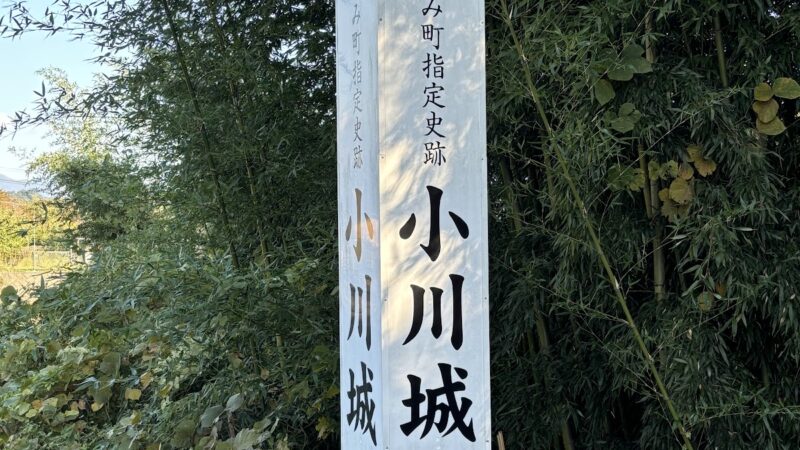
The Kugeda Castle ruins were designated as an Ibaraki Prefecture Historic Site on March 24, 1972. As one of the representative historical heritage sites of Chikusei City (formerly Shimodate City), it is utilized for local history education and as a tourist resource.
In addition to Kugeda Castle, Chikusei City has numerous other historical sites related to the Mizutani clan and associated samurai groups, including the ruins of Shimodate Castle (a city-designated historical site) and Isa Castle (a prefectural-designated historical site). Understanding these historical sites comprehensively allows for a deeper understanding of the local history of the Sengoku period.
The city’s Board of Education is committed to the protection and utilization of cultural properties, and is properly managing and disseminating information about the Kugeda Castle ruins. For those interested in local history, the Kugeda Castle ruins serve as a valuable learning site.
Summary
Kugeda Castle was a flatland castle built in 1545 by Mizutani Masamura (Banryusai) during the Sengoku period. It served as an important defensive base against the Utsunomiya clan to the north, acting as a branch castle of Shimodate Castle. Currently, it is protected as a prefectural-designated historical site, and its remains, such as earthworks and dry moats, are well-preserved.
Located approximately 15 minutes on foot from Kugeda Station on the Mooka Railway, this historical site is relatively easy to access and well worth a visit for anyone interested in castles from the Sengoku period. Visiting it along with the nearby Shimodate Castle ruins and Isa Castle ruins will provide a deeper understanding of the Mizutani clan’s rule and the regional history of the Sengoku period.
Kugeda Castle ruins are a valuable historical site that demonstrates the realities of border defense during the Sengoku period and are an indispensable cultural asset for understanding the history of western Ibaraki Prefecture. It is hoped that this regional historical heritage will continue to be appropriately preserved and enjoyed by many people.