Obara Castle (Kasama City, Ibaraki Prefecture) Complete Guide | History, Highlights, and Access Information
Obara Castle, located in Obara, Kasama City, Ibaraki Prefecture, is a flatland castle that existed from the medieval period to the Sengoku period. It is currently protected as a city-designated cultural property, and the Oshiro Inari Shrine stands on the site of the main keep. This article provides a comprehensive explanation of Obara Castle, including its historical background, its relationship with the Satomi clan (the castle’s builders), details of the existing remains, and useful access information for visitors.
Overview and Basic Information of Obara Castle
Obara Castle is a flatland castle located almost in the center of the Obara district of Kasama City, Ibaraki Prefecture. It is located approximately 2 km northeast of Tomobe Station, and its current address is Obara, Kasama City, Ibaraki Prefecture (postal code: 309-1701).
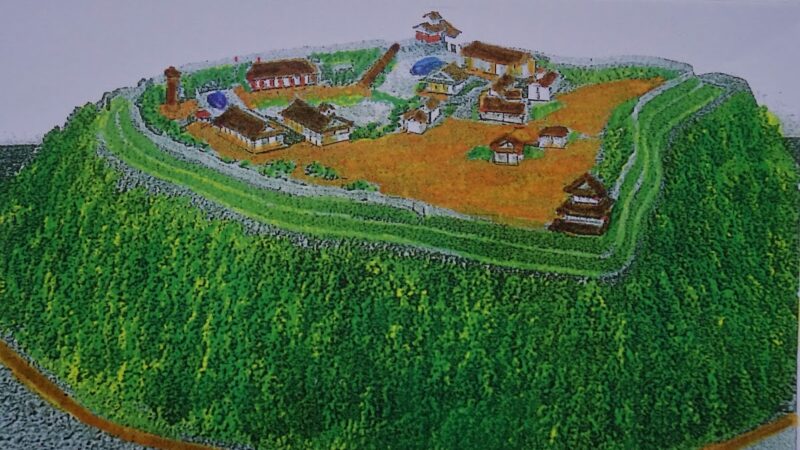
Classified as a flatland castle, it primarily consists of earthen ramparts. While a moat once existed, it was filled in in 1991. Currently, the site of the main keep is the grounds of the Oshiro Inari Shrine, and the structure surrounded by a moat and earthen ramparts can still be seen.
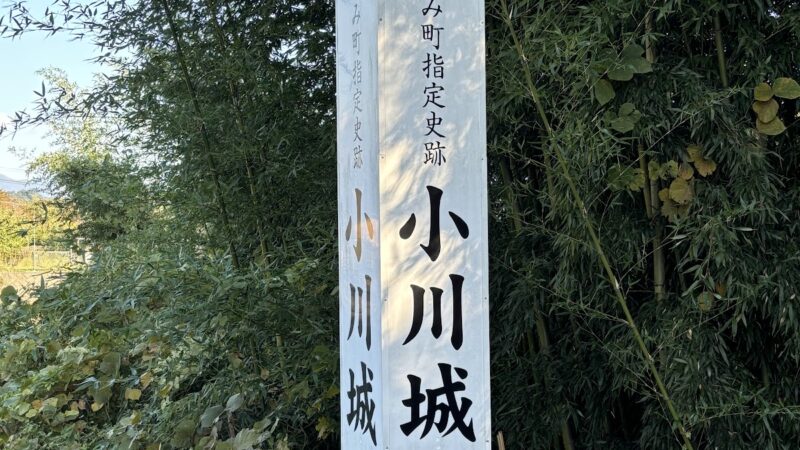
It is registered as a designated cultural property of Kasama City under the name “Obara Castle Main Keep Site” and is carefully preserved as a local historical heritage.
History of Obara Castle and Background of its Construction
Relationship between the Satomi Clan and Obara Castle
There are several theories regarding the construction of Obara Castle, but the most widely accepted theory is that it was built by Satomi Shichiro Yoshitoshi, a relative of the Awa Satomi clan.
According to historical records, Satomi Iemoto, the jitō (land steward) of Tazuna-go (present-day Takahagi City), was granted land in Naka-Nishi District by Ashikaga Mochiuji, the Kamakura Shogun, and built Obara Castle. It is said that he then entrusted the administration of the Obara region to his younger brother, Mitsutoshi.
The Satomi clan was a samurai family based on the Boso Peninsula, and it is known that their family extended their influence to Hitachi Province (present-day Ibaraki Prefecture). Obara Castle is thought to have functioned as a base for the Satomi clan to govern Naka-Nishi District.
Obara Castle in the Sengoku Period
During the Sengoku period, the Satake clan expanded its power in Hitachi Province. The Satomi clan continued to control the region from Obara Castle, but in 1591 (Tensho 19), they were finally destroyed by the Satake clan.
During this period, the Satake clan was working to unify Hitachi Province, and it is thought that Obara Castle was captured in the process. With the fall of the Satomi clan, Obara Castle was abandoned and ceased to function as a military base.
Changes After Abandonment
After its abandonment, the site of Obara Castle changed over many years to its current form. The Oshiro Inari Shrine was built on the site of the main keep, and it now functions as a place of worship for the local community.
While some remnants of the castle, such as earthworks and moats, remained, they were gradually lost due to modernization. The filling in of the moat in 1991 (Heisei 3) was a particularly significant event that drastically altered the castle’s landscape. However, important remains such as earthworks can still be seen today, allowing us to imagine the castle’s former appearance.
Structure and Layout of Ohara Castle
Characteristics as a Flatland Castle
Ohara Castle is classified as a flatland castle. A flatland castle is a castle built on flat land. Unlike mountain castles or hill castles, it is difficult to utilize natural terrain for defense, and instead, it features the development of artificial defensive structures such as moats and earthworks.
Ohara Castle was no exception, and its defenses were strengthened by moats and earthworks. Because of its location on flat land, it was easily able to function as a center for daily governance and economic activity, and it is presumed to have also served as a lord’s residence.
Current Status of the Main Enclosure Site
Currently, the Ohara Castle Inari Shrine stands on the site of the main enclosure of Ohara Castle. The shrine grounds almost perfectly coincide with the area of the main keep, and you can see the structure surrounded by earthen ramparts.
The main keep was the central part of the castle, where the lord’s residence and important buildings were located. By walking around the current shrine grounds, you can experience the scale and layout of the main keep at that time.
Remains of Earthen Ramparts
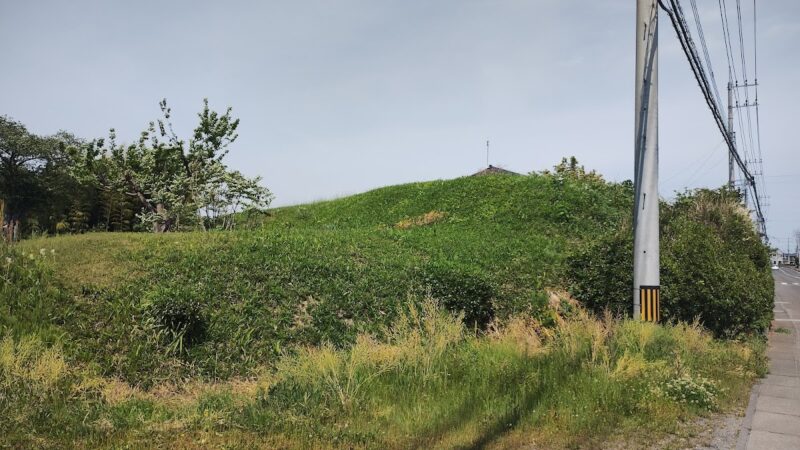
The most important surviving remains of Ohara Castle are the earthen ramparts. These were defensive structures built by piling up earth, preventing enemy intrusion and also serving to shield the castle from outside views.
The earthen ramparts remaining around the Ohara Inari Shrine, although lower in height than they once were, are still clearly visible. The shape and arrangement of the ramparts allow us to understand the castle’s defensive structure. For castle enthusiasts and history buffs, these ramparts are one of the biggest highlights of visiting Ohara Castle.
Former Moat
Until 1991 (Heisei 3), a moat remained at Ohara Castle. A moat, a water-filled ditch surrounding a castle, was a crucial defensive structure that made it difficult for enemies to approach.
Unfortunately, it has now been filled in, and its original form can no longer be seen. However, old photographs and records preserve images of the moat, revealing that the former Ohara Castle retained a more complete form as a fortress.
The filling in of moats is often done for development or safety reasons, and Ohara Castle was no exception. Today, imagining where the moat once stood while exploring the castle ruins is one of the pleasures for visitors.
Ohara Castle Highlights and Castle Notes
Oshiro Inari Shrine
Oshiro Inari Shrine, located on the site of the former Ohara Castle’s main keep, is a central spot for visitors to the castle ruins. While the shrine itself was built after the castle was abandoned, it serves as an important landmark clearly indicating the location of the main keep.
The shrine grounds have a quiet and peaceful atmosphere, attracting the faith of local people. Visitors can enjoy exploring the castle ruins in conjunction with their visit to the shrine, experiencing a unique space where history and faith are intertwined.
Observation Points for the Earthworks
Walking around the Oshiro Inari Shrine, you can observe the remains of the earthworks from multiple angles. In particular, behind and to the sides of the shrine, there are places where you can truly appreciate the height and width of the earthworks.
When observing the earthworks, understanding them from a defensive perspective—not just their shape, but also how they are arranged and from which directions attacks were anticipated—will deepen your understanding. When taking photographs, it’s a good idea to choose angles that show the three-dimensional structure of the earthworks.
Experiencing the Atmosphere of the Castle Ruins
Ohara Castle Ruins, lacking large-scale tourism development, boasts a quiet and peaceful atmosphere. The surrounding area consists of residential areas and farmland, with the castle ruins nestled in a tranquil rural landscape.
On weekdays, when there are fewer visitors, you can quietly contemplate the remnants of the Sengoku period. Using maps or smartphone map apps to imagine the former castle grounds is another way to enjoy the experience.
Value as a City-Designated Cultural Property
The Ohara Castle main keep ruins, designated as a cultural property of Kasama City, are a valuable heritage site that conveys the history of the region. Information boards and explanatory signs are sometimes installed, allowing visitors to obtain information about the castle’s history and structure.
The designation as a cultural property indicates that these castle ruins have historical and academic value. When visiting, please be careful not to damage the remains and be mindful of preserving them for future generations.
Access Information and Visiting Guide
Location and Map
Address: 309-1701 Ohara, Kasama City, Ibaraki Prefecture
The Ohara Castle ruins are located in the central part of the Ohara district of Kasama City. You can find the location by searching for “Oshiro Inari Shrine” or “Ohara, Kasama City, Ibaraki Prefecture” on a map app or car navigation system. Since the surrounding area is residential, please be considerate of the local residents when visiting.
Access by Public Transportation
Nearest Station: JR Mito Line, Tomobe Station
Ohara Castle Ruins are approximately 2km northeast of Tomobe Station. Walking takes about 25-30 minutes. A taxi from the station takes about 5-10 minutes.
If using the bus, there is a bus route circulating within Kasama City from Tomobe Station, but the number of services is limited, so it is recommended to check the timetable in advance.
Access by Car
Access by car is the most convenient.
Joban Expressway: Approximately 10 minutes from Tomobe IC
Kita-Kanto Expressway: Approximately 10 minutes from Tomobe IC
After exiting the Tomobe IC, proceed towards National Route 355 and head towards the Ohara area. For car navigation, it is recommended to enter “Oshiro Inari Shrine” or the address “Ohara, Kasama City, Ibaraki Prefecture”.
Regarding parking, while some shrines have dedicated parking spaces, they are small, so please be careful not to park on the street. Please park in a location that does not inconvenience local residents.
Notes for Visitors
- Visiting Hours: The castle ruins are outdoors and generally open 24 hours a day, but visiting the Oshiro Inari Shrine is recommended during the daytime.
- Fees: Visiting is free. There are no entrance or viewing fees.
- Attire: When walking around the earthworks, some areas may be uneven, so comfortable shoes are recommended.
- Photography: Photography is permitted, but please remember that this is a sacred place and observe proper etiquette when taking pictures.
- Season: Visits are possible throughout the year, but spring and autumn, with their pleasant weather, are especially recommended. Remember to take insect repellent in the summer and warm clothing in the winter.
Estimated Time Required
For a visit to the Ohara Castle ruins, allow approximately 30 minutes to 1 hour. If you plan to carefully observe the earthworks or take photographs, it is recommended to allow a little more time.
Other Castles and Tourist Spots in Kasama City
Kasama Castle
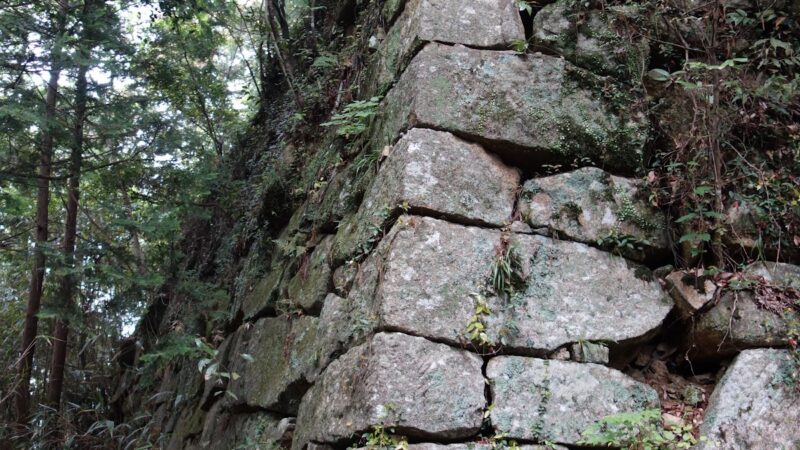
Kasama Castle is the representative castle of Kasama City. Built on the summit of Mt. Sabayama, it is a mountain castle with remnants such as stone walls and a castle tower base. It has a contrasting mountain castle structure to Ohara Castle, and visiting both allows you to understand the diversity of castles.
Kasama Castle is not selected as one of Japan’s Top 100 Castles, but it is selected as one of the Continued Top 100 Castles of Japan, making it a must-see spot for castle enthusiasts.
Kasama Inari Shrine
Kasama Inari Shrine, one of Japan’s three major Inari shrines, is a representative tourist spot in Kasama City. Many worshippers visit throughout the year, and it is especially crowded during the New Year’s visit period.
In conjunction with your visit to Obara Castle, a visit to Kasama Inari Shrine is also highly recommended. The town in front of the shrine has many restaurants and souvenir shops, where you can enjoy local products such as Kasama ware.
Kasama Art Forest Park
Kasama City is also known as a pottery town, famous for its “Kasama ware.” Kasama Art Forest Park houses facilities such as the Ibaraki Prefectural Ceramic Art Museum and Kasama Craft Hill, where you can enjoy pottery making experiences and art appreciation.
Combining historical exploration with time to experience art and culture is one of the attractions of visiting Kasama City.
Surrounding Castles
Besides Obara Castle, many other castle ruins remain in Ibaraki Prefecture. Visiting castles with unique characteristics, such as Mito Castle, Tsuchiura Castle, and Yuki Castle, will allow you to gain a deeper understanding of Ibaraki Prefecture’s Sengoku period history.
For those who enjoy visiting castles, planning a route that efficiently visits multiple castles in the prefecture using Kasama City as a base is a good idea.
Historical Significance and Modern Value of Ohara Castle
Position in Local History
Ohara Castle is an important historical site that conveys the state of regional rule in Hitachi Province from the medieval period to the Sengoku period. It provides concrete evidence of the Satomi clan, a family based on the Boso Peninsula, extending their influence to Hitachi Province, and the process of its eventual unification by the Satake clan.
Although not a large-scale castle, it is an indispensable presence for understanding the region’s history and is carefully preserved as a historical heritage of Kasama City.
Value in Castle Research
Small to medium-sized local castles like Ohara Castle provide important data for understanding the realities of regional rule during the Sengoku period. By studying the castle structure at the local lord level, which differs from the large-scale castles of daimyo (feudal lords), we can gain a more multifaceted understanding of the social structure and military technology of the time.
The existence of remains such as earthworks is valuable material for researchers. Further excavations and research may reveal even more detailed information.
Potential as a Tourism Resource
Currently, the Ohara Castle ruins are not a large-scale tourist destination, but this is precisely why they maintain a quiet and peaceful atmosphere. This “untouched charm” is an attractive element for castle enthusiasts and history lovers.
By combining it with the overall tourism resources of Kasama City, the value of the Ohara Castle ruins could be further enhanced as part of a tourist route that allows visitors to enjoy history, culture, and art comprehensively.
Visit Records and Information Sharing
How to Record Castle Visits
When visiting Ohara Castle, we recommend taking photos and videos to record your experience. Elements that may change over time, such as the shape of the earthworks and the appearance of the shrine, are particularly valuable to record.
Taking notes on the date and time of visit, weather, and details of the observed remains will be helpful when reviewing later. Sharing information on social media and blogs can also lead to interaction with other castle enthusiasts.
Online Information Search
Information about Ohara Castle can also be searched online. Castle information websites such as “Kojodan” allow you to see evaluations and photos from people who have actually visited the castle. Checking information on these websites before your visit will make your experience more fulfilling.
You can also find the location of Ohara Castle and Oshiro Inari Shrine using map services such as Google Maps, and you can get a feel for the surrounding area beforehand using Street View.
Interacting with the Local Community
The area around Ohara Castle ruins is a residential area where local residents live. When visiting, please be considerate and avoid causing any disturbance with noise or parking.
If you have the opportunity to interact with local residents, you may be able to hear about local legends related to the castle ruins and stories of the past. Respecting local history is an important courtesy for visitors.
Summary: The Charm and Value of Visiting Ohara Castle
Located in Ohara, Kasama City, Ibaraki Prefecture, Ohara Castle is a valuable heritage site that conveys the history of the region as a medieval castle associated with the Satomi clan. The existing earthworks and Oshiro Inari Shrine on the site of the main keep are important elements that allow us to imagine the appearance of the castle in its heyday.
While not a large-scale tourist destination, Obara Castle is a worthwhile spot for castle enthusiasts and history buffs, offering a tranquil environment to reflect on history. Its proximity to Tomobe Station and relatively easy access make it a recommended visit in conjunction with other tourist spots in Kasama City.
Visiting the Obara Castle ruins will deepen your understanding of the realities of regional control during the Sengoku period and the structure of castles. As part of your historical exploration of Ibaraki Prefecture, be sure to visit Obara Castle. Protected as a city-designated cultural property, this castle site is a valuable place to experience the region’s history and culture.
Combining historical value with modern appeal, Obara Castle is a must-visit spot when visiting Kasama City. See the remains of the earthworks firsthand, reflect on the battles between the Satomi and Satake clans, and feel the spirit of the Sengoku period.