Complete Guide to Wada Castle (Iida City) | A Thorough Explanation of the Toyama Clan’s Base and the Highlights of the Toyama Local History Museum
Located in Wada, Minami-Shinano, Iida City, Nagano Prefecture, Wada Castle is a mountain castle that played an important role as the base of the Toyama clan, who ruled the Toyama region during the Sengoku period. Currently, the Toyama Local History Museum stands on the castle site, where visitors can see valuable materials related to the Toyama Shimotsuki Festival, a nationally designated Important Intangible Folk Cultural Property, and exhibits that convey the history of the Toyama Valley. This article provides a detailed explanation of everything from the history of Wada Castle to its current highlights and access methods.
The History of Wada Castle and the Footprints of the Toyama Clan
The Construction of Wada Castle and Toyama Kagehiro
Wada Castle is a mountain castle built by Toyama Kagehiro during the Sengoku period. The Toyama clan were local lords who ruled the Toyama region in southern Shinano Province (the area centered around the present-day Minami-Shinano district of Iida City), and they built their power with Wada Castle as their base.
Toyama Kagehiro is known as a warlord who displayed skillful diplomacy during the turbulent Sengoku period. The castle’s location was strategically important, situated on a hill overlooking the town of Wada, a post town on the Akiba Road, controlling a crucial transportation hub.
Subordination to and Activities under Takeda Shingen
In the mid-16th century, when Takeda Shingen of Kai Province intensified his invasion of Shinano Province, Toyama Kagehiro chose to submit to the Takeda clan. In Takeda Shingen’s administration of Shinano, the Toyama clan was positioned as an important base of operations in southern Shinano, and Kagehiro distinguished himself in various battles as a member of the Takeda army.
As a subordinate of the Takeda clan, Toyama Kagehiro participated in the administration and military operations within Shinano, contributing to the stabilization of the Toyama region. During this period, Wada Castle is believed to have functioned as an important fortress in the Takeda clan’s control of southern Shinano.
Subordination to Tokugawa Ieyasu and the Transformation of the Toyama Clan
In 1582 (Tensho 10), when the Takeda clan fell, the Toyama clan was forced to seek a new lord. During this period of turmoil, the Toyama clan decided to submit to Tokugawa Ieyasu. In the process of consolidating his control over the former Takeda territories of Kai and Shinano, Tokugawa Ieyasu solidified his rule by incorporating powerful local lords like the Toyama clan.
The Toyama clan continued to govern the Toyama region under Tokugawa Ieyasu’s command, and their base was Wada Castle until the early Edo period. However, the Toyama clan’s position under the Tokugawa regime was not always stable.
Family Dispute, Dispossession, and Castle Abandonment
During the Genna era (1615-1624), a family dispute arose within the Toyama clan. This internal conflict reached the ears of the shogunate, and ultimately, the Toyama clan suffered the harsh punishment of dispossession (confiscation of their territory).
This confiscation of the domain led to the abandonment of Wada Castle. Its role as the base of the Toyama clan, which had continued since the Sengoku period, came to an end. After the castle’s abandonment, Ryuenji Temple, the Toyama clan’s ancestral temple, was relocated to the site.
Disasters and Transformations of the Castle Site during the Kyoho Era
A decisive event for the remains of Wada Castle was the great earthquake that occurred during the Kyoho era (1716-1736). This earthquake triggered massive landslides that struck the Wada Castle site, burying much of the remaining castle structure.
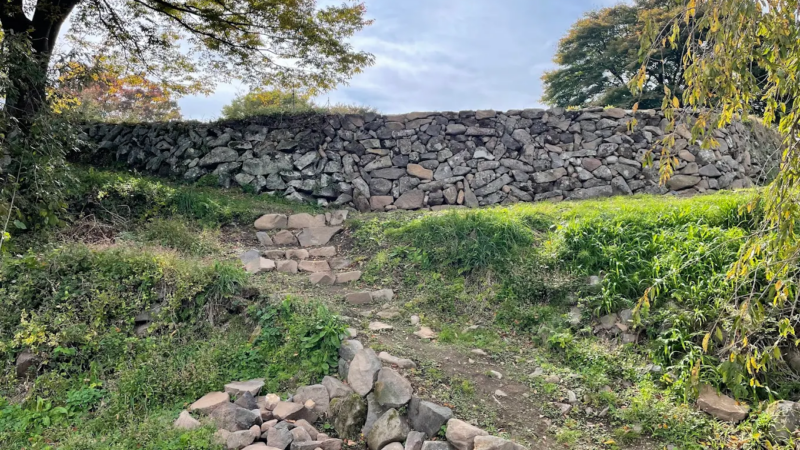
Due to this natural disaster, castle structures such as stone walls and moats were buried underground, making it difficult to clearly identify the remains today. This is a characteristic of Wada Castle and also a challenge in castle research.
Highlights of the Toyama Local History Museum (Wada Castle Site)
The Toyama Local History Museum as a Castle-Style Building
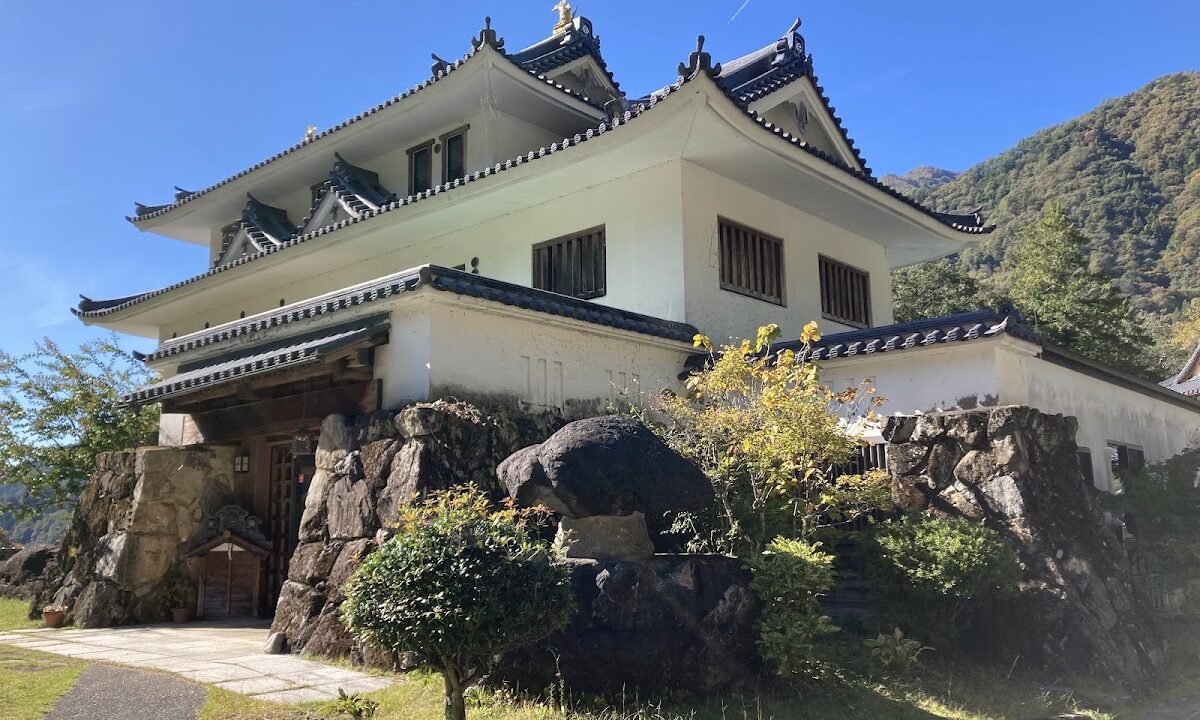
Currently, the Toyama Local History Museum, a castle-style building, stands on the site of the former Wada Castle. This building is operated as an affiliated facility of the Iida City Museum of Art and plays an important role in conveying the history and culture of the Toyama Valley.
Although the building itself was constructed in modern times, its design evokes the atmosphere of the castle site, and its location overlooking the town of Wada, a post town on the Akiba Highway, allows visitors to truly appreciate the strategic importance of the former Wada Castle.
Toyama Shimotsuki Festival Exhibition
The greatest highlight of the Toyama Local History Museum is the exhibition on the “Toyama Shimotsuki Festival,” a nationally designated Important Intangible Folk Cultural Property. The Shimotsuki Festival is a traditional Yudate Kagura (hot water purification ritual) that has been passed down in the Toyama region for centuries, and is a traditional event held every December at shrines in each district.
The museum displays various masks used in the Shimotsuki Festival, their intricate craftsmanship and unique expressions captivating visitors. These masks are valuable historical artifacts that tell the story of the history and cultural value of this Shinto ritual, also known as the Toyama Festival.
Historical Materials of Toyama Valley
In addition to exhibits related to the Shimotsuki Festival, the Toyama Local History Museum also displays materials related to the general history of the Toyama Valley. A wide range of themes are covered, including the history of the Toyama clan, the development of Wada as a post town on the Akiba Road, and the lifestyle and culture of the mountain village.
In particular, materials and historical documents related to the Toyama clan are important sources of information for understanding the history of Wada Castle. Visitors can also receive helpful explanations from the museum staff, leading to a deeper understanding.
Ryuenji Temple and the Toyama Clan’s Family Temple
The Toyama Clan’s Family Temple
Part of the Wada Castle ruins is now the grounds of Ryuenji Temple, the family temple of the Toyama clan. This temple was moved to its current location after the abandonment of Wada Castle, and it houses the ancestral tombs of the Toyama clan.
Visiting Ryuenji Temple allows you to feel closer to the history of the Toyama clan. The quiet temple grounds are filled with an atmosphere that evokes the presence of the warlords who once ruled this land.
Coexistence of Castle Ruins and Temple
The situation where the Wada Castle ruins are now the grounds of Ryuenji Temple is a common pattern in the history of Japanese castles. The reuse of castle ruins as temple or shrine grounds after their abandonment has preserved the historical continuity of the land.
The existence of Ryuenji Temple is an important element in conveying the history of Wada Castle to the present day, and visiting it in conjunction with the Toyama Local History Museum allows for a more comprehensive understanding of Wada Castle’s history.
Culture and Characteristics of Toyama Village
Wada, a Post Town on the Akiba Road
Wada, where Wada Castle is located, has a history of flourishing as an important post town on the Akiba Road. The Akiba Kaido (Akiba Road) developed as a pilgrimage route to Akiba Shrine in Enshu (Shizuoka Prefecture), playing an important role as a transportation route connecting Shinano and Enshu.
The townscape of Wada retains traces of its past as a post town, and visitors to the Toyama Local History Museum can also enjoy the surrounding road scenery.
Toyama Village’s Game Meat Culture
Toyama Village is also known for its unique game meat culture. Dishes using lamb (mutton and lamb) in particular, known as “Toyama Jingisukan,” are a local specialty and popular with visitors.
This food culture, unique to a mountainous region, reflects the history and natural environment of Toyama Village, and we recommend experiencing this local food culture when visiting Wada Castle.
National Important Intangible Folk Cultural Property: Shimotsuki Festival
The aforementioned Shimotsuki Festival is a representative cultural property of Toyama Village. This Shinto ritual, held in December, is a complex festival centered around the Yudate Kagura (hot water purification dance), and is valued as a precious folk event that preserves ancient forms of belief.
After viewing the Shimotsuki Festival exhibit at the Toyama Local History Museum, visiting during the actual festival period will provide a deeper understanding of the culture.
How to Access Wada Castle
Access by Public Transportation
Using the JR Iida Line
- Nearest Station: JR Iida Line “Hiraoka Station”
- Approximately 30 minutes by car from Hiraoka Station to Toyama Local History Museum
- Public transportation from the station is limited, so taxi or rental car is recommended.
Using Local Buses
- There are local buses from Iida city center towards Minami-Shinano, but the number of buses is limited, so it is necessary to check the timetable in advance.
Access by Car
Via the Chuo Expressway
- Approximately 60 minutes from Iida IC via National Route 151 and National Route 152
- It is easy to find using the “Toyama-go” roadside station as a landmark.
Points to Note
- The road to Toyama-go passes through mountainous areas, so there are many curves and narrow sections.
- In winter, there is a possibility of snow and ice, so it is recommended to use studless tires and carry snow chains.
- The road from Michi-no-Eki Toyama-go towards Takane Castle is particularly narrow, so please drive carefully.
Parking Information
Toyama Local History Museum has its own parking lot. It is free to use, but space is limited, so please consider using nearby public parking lots during busy times.
Toyama Local History Museum Visitor Information
Opening Hours and Closing Days
- Opening Hours: 9:30 AM – 4:30 PM (Last entry at 4:00 PM)
- Closing Days: Mondays (or the following day if Monday is a public holiday), New Year holidays
- Please check official information before visiting, as opening hours may change depending on the season and events.
Admission Fee
The admission fee for Toyama Local History Museum is relatively reasonable. Detailed fees can be found on the Iida City Museum of Art’s official website.
- There are various admission rates, including general admission, student rates, and group rates.
- Combined tickets with other cultural facilities in Iida City may also be available.
Estimated Visiting Time
The standard visiting time for the Toyama Local History Museum is approximately 30 minutes to 1 hour. If you wish to carefully examine the exhibits or listen to staff explanations, it is recommended to allow 1 hour or more.
If you plan to visit the entire Wada Castle ruins, including Ryuenji Temple, it is recommended to allocate an additional 30 minutes.
Nearby Tourist Attractions
Takane Castle
Takane Castle, located within driving distance of Wada Castle, is a mountain castle that functioned as a branch castle of the Toyama clan. Visiting both Wada Castle and Takane Castle together will help you understand the Toyama clan’s castle network.
However, the road to Takane Castle is narrow, so careful driving is necessary.
Michi-no-Eki Toyama-go
This roadside station serves as a base for sightseeing in the Toyama-go area. Local specialties and information are available, and there are also plenty of dining facilities. You can also enjoy local cuisine such as Toyama Jingisukan (a type of lamb dish).
Shrines Holding the Shimotsuki Festival in Toyama Village
The shrines holding the Shimotsuki Festival in December are scattered throughout the various settlements of Toyama Village. Each area, such as Kamimachi, Nakago, and Shimoguri, holds its own unique festival.
Best Season to Visit Wada Castle
Spring to Autumn (April-November)
To enjoy the nature of Toyama Village, spring to autumn is recommended. The scenery is particularly beautiful in May with its fresh greenery and in October-November with its autumn leaves, and the view from the Wada Castle ruins is magnificent.
Winter (December)
December, when the Shimotsuki Festival is held, is the time to experience the culture of Toyama Village most deeply. After viewing the exhibits at the Toyama Local History Museum, you can gain a deeper understanding by observing the actual festival. However, caution is needed regarding snow and icy roads.
Recommended Points for Castle Enthusiasts
The Few Remains and the Depth of History
Wada Castle lost much of its remains due to a landslide during the Kyoho era, so those expecting clear castle structures such as stone walls and moats may find it disappointing. However, its historical importance as the base of the Toyama clan, a powerful local family, is high, making it a valuable example for understanding the realities of regional governance during the Sengoku period.
Learning at the Toyama Local History Museum
Although there are few castle remains, the exhibits and explanations at the Toyama Local History Museum allow you to learn in detail about the history of Wada Castle and the footsteps of the Toyama clan. When taking notes on the castle, you should pay attention to the following points:
- The strategic importance of its location overlooking the Akiba Road
- The Toyama clan’s diplomatic strategy of subordination to the Takeda and Tokugawa clans
- The outcome of their downfall due to internal family disputes
- The relationship with their family temple
Connections with Surrounding Castles
Several other castles existed in the Toyama region besides Wada Castle. Visiting the Toyama clan’s castles, including its subsidiary castles such as Takane Castle, allows for a comprehensive understanding of their territorial control system.
Historical Background of Toyama Village
Geographical Characteristics
Toyama Village is located in the mountainous region of southern Nagano Prefecture, separated from the city of Iida by mountains. This geographical isolation contributed to the formation of its unique cultural sphere.
While it enjoys milder winters than the city, snowfall is heavy, and transportation is not always convenient. This environment fostered unique cultural elements such as the Shimotsuki Festival.
Genealogy of the Toyama Clan
The Toyama clan was a family that served as local lords in Shinano Province from the medieval period to the Sengoku period. Based at Wada Castle, the Toyama clan established a network of surrounding mountain castles and solidified their regional control.
Despite their efforts to maintain their territory amidst powerful relationships with the Takeda and Tokugawa clans, they ultimately faced confiscation of their domain due to internal family disputes.
Wada Castle and Cultural Properties of Iida City
Collaboration with Iida City Museum of Art
The Toyama Local History Museum is positioned as an affiliated facility of the Iida City Museum of Art, playing a part in the protection and utilization of cultural properties throughout Iida City. Iida City also has other historical sites, such as the Iida Castle ruins, and visiting these together will allow for a broader understanding of the history of the Minami-Shinano region.
Preservation and Transmission of Local Culture
The Toyama Local History Museum is not merely a tourist facility, but also serves as an educational institution for passing on the region’s history and culture to future generations. It is an important presence for the region, serving as a base for preserving materials related to the Shimotsuki Festival and for historical research on the Toyama Valley.
Summary: The Charm of Wada Castle and the Significance of Visiting
Wada Castle, located in Minami-Shinano Wada, Iida City, Nagano Prefecture, is a castle site of significant historical value as the base of the Toyama clan, a regional lord, despite its limited remaining structures. At the current Toyama Local History Museum, you can learn about the history of the Toyama Valley and materials related to the Shimotsuki Festival, a nationally designated Important Intangible Folk Cultural Property, deepening your understanding not only of castle history but also of folk culture.
Located overlooking the post town of the Akiba Kaido road, surrounded by Ryuenji Temple, the Toyama clan’s ancestral temple, and the unique culture and nature of Toyama-go, a visit to the Wada Castle ruins offers a valuable opportunity to experience both the realities of local governance during the Sengoku period and the unique culture nurtured in this mountainous region.
While access may be somewhat difficult, the tranquil atmosphere and cultural richness of Toyama-go, preserved precisely because of this, will leave a deep impression on visitors. When touring castles and exploring cultural properties in Nagano Prefecture, be sure to add Wada Castle and the Toyama Local History Museum to your itinerary.