Takita Castle (Minamiboso City, Chiba Prefecture) Complete Guide | A Thorough Explanation of the Satomi Clan and the Setting of Nanso Satomi Hakkenden
Takita Castle, located in Minamiboso City, Chiba Prefecture, is an important mountain castle associated with the Satomi clan, who ruled Awa Province during the Sengoku period. This castle was not only the site of the “Tenbun Rebellion,” an internal conflict within the Satomi clan, but is also known as the model for the castle of Satomi Yoshizane in the Edo period best-selling novel, “Nanso Satomi Hakkenden.” This article comprehensively explains everything you need to know before visiting Takita Castle, from its history and structure to its highlights and access methods.
History of Takita Castle and the Satomi Clan
Construction and Early History of Takita Castle
The exact construction date of Takita Castle is not clearly stated in historical records, but it functioned as an important base for the Satomi clan, a powerful daimyo who ruled Awa Province from the late Muromachi period to the Sengoku period. The castle is built on a hill approximately 140 meters above sea level in the middle reaches of the Hirakuri River near Kamitakita and Shimotakita in Minamiboso City. It was designed as a mountain castle, skillfully utilizing the natural terrain.
Historical records indicate that Isshiki Kuro, the brother-in-law of Satomi Yoshitoyo, served as the lord of Takita Castle. It is believed that the Isshiki clan, as important retainers of the Satomi clan, were entrusted with governing this region. The area around Takita Castle was a region with strong support for Satomi Yoshitoyo, making it an important base for supporting his power.
The Tenbun Rebellion and the Fall of Takita Castle
The most important event in the history of Takita Castle is the “Tenbun Rebellion,” which occurred in 1533. This was a power struggle within the Satomi clan, a conflict between Satomi Yoshitoyo and Satomi Yoshitaka.
Takita Castle, the last stronghold of the Yoshitoyo faction, came under fierce attack from the Yoshitaka faction. According to historical sources such as the “Kaigen Sozu Ki,” Takita Castle fell in September of Tenbun 2 (1533) after a fierce battle. The Isshiki clan, defended by Yoshitoyo’s brother-in-law, put up a desperate resistance, but ultimately the castle was captured by Yoshitaka’s faction, resulting in the Isshiki clan’s defeat.
This civil war forced Satomi Yoshitoyo to be driven out of Awa Province, and Satomi Yoshitaka seized power as the head of the Satomi clan. This Tenbun civil war marked a crucial turning point in the Satomi clan’s development as a Sengoku daimyo (feudal lord).
Takita Castle After its Fall
There are differing opinions among historians regarding what happened to Takita Castle after its fall. One theory suggests it was abandoned immediately after its fall, while another record indicates that Satomi Yoshitaka himself used Takita Castle as his base of operations until around Tenbun 6 (1537).
The “Kaigen Sozu Ki” (Records of Kaigen Sozu) states that Yoshitaka resided in a castle on a mountain west of Kami-Takita Negoya in Takita Castle, suggesting that it likely continued to function as an important base for the Satomi clan for some time after the civil war. It is presumed that as Yoshitaka moved his base to Kururi Castle and Inamura Castle, Takita Castle gradually ceased to play a significant role.
Nansō Satomi Hakkenden and Takita Castle
Takita Castle as the Setting of the Story
Takita Castle plays a crucial role as the starting point of the long-running historical fantasy novel “Nansō Satomi Hakkenden,” written by Takizawa Bakin in the late Edo period. This epic work, spanning 98 volumes and 106 books, is one of the greatest works in Japanese literary history, completed over 28 years.
In the story, Takita Castle is depicted as the residence of Satomi Yoshizane. While modeled after the real-life Takita Castle, it was reconstructed as a fictional world through Bakin’s creative work. The story begins at this castle with the legend of Princess Fusehime, daughter of Satomi Yoshizane, and her beloved dog, Yatsufusa, and develops into the tale of the Eight Dog Warriors.
The Legend of Princess Fusehime and Yatsufusa
The story of Nansō Satomi Hakkenden begins with the tragic tale of Princess Fusehime and Yatsufusa at Takita Castle. When Lord Satomi Yoshizane was attacked by enemies, his dog Yatsufusa beheaded an enemy general. Due to a promise made jokingly, Princess Fusehime and Yatsufusa were to take refuge in Toyama.
Princess Fusehime lived in the mountains with Yatsufusa, leading a pure life while devoted to Buddhism, but was shot by her father’s retainer due to a misunderstanding. At that moment, eight beads representing “benevolence, righteousness, propriety, wisdom, loyalty, trustworthiness, filial piety, and fraternity” scattered from Princess Fusehime’s prayer beads, which is said to be the catalyst for the birth of the Eight Dog Warriors.
At the current site of Takita Castle, a statue of “Fushihime Yatsufusa Soaring to Heaven” stands, allowing visitors to commemorate this story. This statue symbolizes the historical space deeply intertwined with literary works.
The Satomi Clan: “Fiction” and “Reality”
One of the attractions of visiting Takita Castle lies in the intersection of the “fictional” world of Nansō Satomi Hakkenden and the “real” world of the Satomi clan, who actually ruled Awa Province during the Sengoku period. While Bakin based his work on the history of the real Satomi clan, he boldly added creative elements to construct a grand narrative world.
The real Satomi clan was a Sengoku daimyo who expanded their power on the Bōsō Peninsula during the Sengoku period, controlling parts of Awa and Kazusa Provinces. Their history was full of turmoil, including conflicts with the Hōjō clan, allegiance to Toyotomi Hideyoshi, and their downfall after the Battle of Sekigahara. Visiting Takita Castle allows you to explore both the “fictional” and “real” aspects of the Satomi clan.
Structure and Layout of Takita Castle
Castle Location and Topography
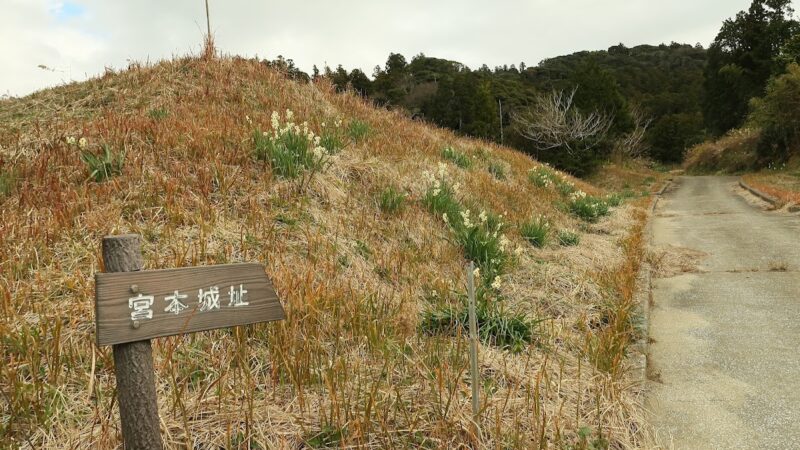
Takita Castle is a typical mountain castle built on a hill approximately 140 meters above sea level. Located in the hilly area of the middle reaches of the Hirakuri River, it was built in a strategically important location overlooking the surrounding area. Approximately 2 kilometers to the west, along the ridge, lies Miyamoto Castle, another important stronghold of the Satomi clan. It is believed that the two castles formed a interconnected castle network.
As a mountain castle, Takita Castle possesses a defensive structure that makes maximum use of the natural terrain. The steep slopes acted as natural barriers, making enemy intrusion difficult. Furthermore, by utilizing the ridge of the hill, the design allowed for efficient defense even with a small number of troops.
Main Enclosure and Hachimandai
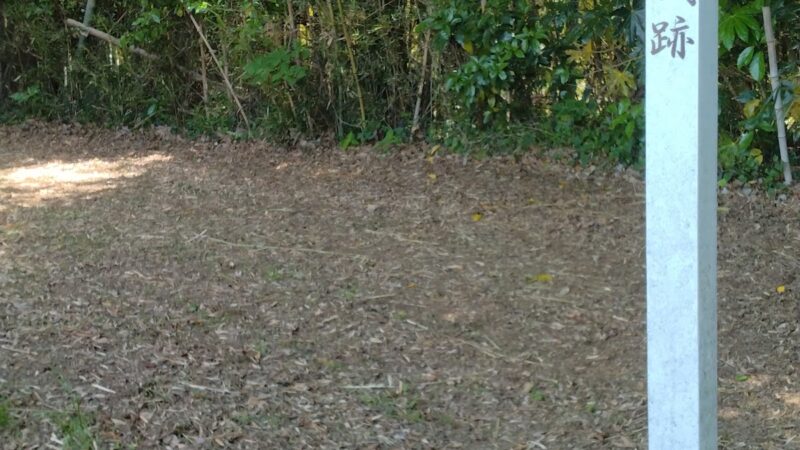
The highest point of the castle ruins is called “Hachimandai,” and this is believed to have been the main enclosure (honmaru) of Takita Castle. Hachimandai is where the central facilities of the castle were located, and it is presumed that the lord’s residence and important defensive facilities were situated there. Even today, clear flat areas remain around Yawata-dai, allowing us to confirm the structure of the castle’s enclosures (kuruwa) from that time. It is evident that multiple enclosures were arranged around the main enclosure, indicating a multi-layered defensive structure.
Enclosures and Defensive Facilities
Several flat areas are visible surrounding the main enclosure of Takita Castle. These are thought to have functioned as enclosures (kuruwa), used as troop garrisons, supply storage areas, or defensive strongholds.
The remains of moats (horikiri) have also been confirmed within the castle grounds, demonstrating a strategy to block the ridgeline and prevent enemy intrusion. Moats were important defensive structures in mountain castles, playing a role in preventing enemies from attacking along the ridge.
The remains of watchtower bases also exist, suggesting that watchtowers or defensive towers were built here. From these towers, the surrounding terrain could be monitored, allowing for early detection of enemy movements.
Negoya and the Castle Town
At the foot of Takita Castle, a mountain castle, there was a residential area called “Negoya.” Negoya was where the lord and his retainers lived during peacetime, and the settlements of Kami-Takita and Shimo-Takita fall into this category. This was a typical use of a medieval mountain castle: during wartime, the castle on the mountaintop would be occupied, and during peacetime, residents would live in Negoya at the foot of the mountain.
Even today, the place name “Negoya” remains in the Kami-Takita area, giving a glimpse into the castle town of that time. This area was an important location supporting the economic and social foundation of Takita Castle.
Highlights of Takita Castle Ruins
Status of Walking Trails
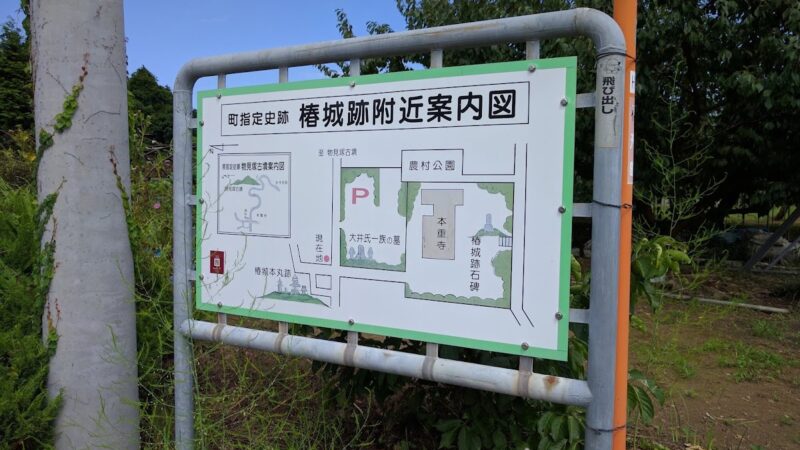
The current Takita Castle ruins are protected as a Minami-Boso City designated historical site (designated December 11, 1987), and the area around the castle ruins has been developed into walking trails. The Takita Castle Ruins walking trails are facilities designed to allow visitors to safely stroll through the castle ruins, allowing them to enjoy both history and nature. The trailhead has a parking lot and restrooms, making it easily accessible by car. The hiking course from the starting point to the final watchtower platform takes approximately 20 minutes on foot. While the path is relatively well-maintained, it is a mountain trail, so comfortable walking shoes are recommended.
Ascent Route
There are two entrances to Takita Castle: one from Kami-Takita and the other from Shimo-Takita. The route from Kami-Takita is believed to be the main approach (the main road to the front), and this is the recommended route. This route allows you to experience the formal approach to the castle in those days.
As you proceed along the trail, the elevation gradually increases, allowing you to appreciate the castle’s defensive structure. By observing the remains of baileys and moats, you can understand the structure of a medieval mountain castle. The route along the ridge also allows you to observe the relationship between the surrounding terrain and the castle.
Statue of Fushihime Yatsufusa Soaring
Near the summit, there is a statue of “Fushihime Yatsufusa Soaring.” This statue is a monument symbolizing the story of Nansō Satomi Hakkenden, depicting the scene where Princess Fusehime and Yatsufusa ascend to heaven. It’s a unique feature of Takita Castle, connecting a literary work with the actual castle ruins.
From the area around the statue, you can enjoy views of Minamibōsō and reflect on the time when the Satomi clan ruled this land. It’s also a popular spot for photography.
View from the Observation Deck
An observation deck has been installed at the castle ruins, offering panoramic views of the beautiful Minamibōsō landscape. On a clear day, you can see the surrounding mountains and plains, giving you a real sense of why Takita Castle was a strategically important location.
From the observation deck, you can also see Miyamoto Castle, located about 2 kilometers to the west, allowing you to visually understand the Satomi clan’s castle network. It’s a spot where you can enjoy the beauty of nature throughout the seasons, from the fresh greenery of spring to the vibrant autumn foliage.
Points of Interest at the Ruins
At Takita Castle Ruins, you can observe the following remains:
- Main Enclosure (Hachimandai): The central part of the castle, with a clearly defined flat area remaining.
- Enclosure Remains: Multiple flat areas surrounding the main enclosure can be identified.
- Moat: Remains of a defensive structure blocking the ridge can be seen.
- Watchtower Base Remains: The site where a watchtower or defensive tower stood.
- Earthwork: Traces of a defensive wall made of piled-up earth remain in some areas.
These remains are gradually returning to nature, but careful observation will allow you to understand the structure of the castle at that time.
How to Access Takita Castle
Access by Car
From Tokyo:
- Take the Tokyo Bay Aqua-Line to the Tateyama Expressway
- Exit at Tomiura IC and head south on National Route 127
- Head towards Miyoshi area of Minamiboso City and follow the signs to Kamitakita area
- Travel time: Approximately 2 hours from Tokyo
From Chiba City:
- Take National Route 16 to the Tateyama Expressway
- Exit at Kimitsu IC or Tomiura IC
- Travel time: Approximately 1 hour 30 minutes from Chiba City
A dedicated parking lot is available at the entrance to the Takita Castle ruins and is free of charge. Parking space is limited, so early arrival is recommended, especially on holidays.
Access by Public Transportation
If using public transportation, the nearest station is Minami-Mihara Station on the JR Uchibo Line.
From JR Minami-Mihara Station:
- Approximately 10 minutes by taxi from the station
- Approximately 3-4 kilometers on foot, about 40-50 minutes
Bus services are limited, so it’s recommended to check the timetable in advance or take a taxi. Renting a car allows you to efficiently visit other Satomi clan-related castle ruins and tourist spots in the surrounding area.
Best Time to Visit and Attire
Takita Castle Ruins are open year-round, but please note the following:
Recommended Seasons:
- Spring (March-May): Beautiful fresh greenery, mild weather, ideal for walks
- Autumn (October-November): Enjoy the autumn foliage, comfortable temperatures
- Winter (December-February): Clear air and excellent views, but warm clothing is necessary
- Summer (June-August): Lush greenery, but heat and insect protection are necessary
Clothing and Equipment:
- Comfortable trekking shoes or sneakers
- Comfortable clothing (long sleeves and long pants recommended)
- Hat and sunscreen
- Drinking water
- Insect repellent (summer)
- Rain gear (for unpredictable weather)
Please avoid sandals and high heels as you will be walking on mountain trails.
Nearby Tourist Attractions and Historical Sites Related to the Satomi Clan
Miyamoto Castle Ruins
Located approximately 2 kilometers west of Takita Castle along the ridge, Miyamoto Castle was also an important base for the Satomi clan. The two castles formed a interconnected castle network, and visiting them together provides a deeper understanding of the Satomi clan’s system of rule.
Inamura Castle Ruins
Inamura Castle, located in Tateyama City, was one of the castles where Satomi Yoshitaka had his base and holds an important position in the history of the Satomi clan. The Tateyama City Museum (located in Shiroyama Park) has extensive exhibits on the Satomi clan, and visiting it in conjunction with a visit to Takita Castle will deepen your understanding.
Kururi Castle
Kururi Castle, located in Kimitsu City, was also a castle used by the Satomi clan, and a reconstructed keep currently stands there. Historical materials of the Satomi clan can be viewed at the Kururi Castle Ruins Museum.
Nature and Culture of Minamiboso City
The Miyoshi district of Minamiboso City, where the ruins of Takita Castle are located, is an area that retains abundant nature and rural scenery. The surrounding area offers the following points of interest:
- Forest Walking Trail: A hiking trail along a forest road leading to the Takita Castle Ruins Walking Trail
- Agricultural Water Weir: An agricultural facility that tells the story of the region’s history
- Local Farm Produce Direct Sales Outlet: Fresh vegetables and fruits from Minamiboso
- Roadside Station: There are several roadside stations in Minamiboso City where you can purchase local specialties
Nanso Satomi Hakkenden Related Spots
The Minamiboso region is dotted with places associated with Nanso Satomi Hakkenden:
- Fushihime Cave: A cave in Tomiyama, Tateyama City, where Fushihime and Yatsufusa are said to have secluded themselves
- Satomi Clan’s Family Temple: There are several temples in Tateyama City associated with the Satomi clan
- Nanso Satomi Hakkenden Stone Monuments and Information Boards: These are installed in various locations
Historical Value and Preservation Activities of Takita Castle
Designation as a Cultural Property
Takita Castle Ruins were officially designated as a Minamiboso City Historic Site on December 11, 1987. This designation officially facilitated the preservation and utilization of the castle ruins.
The historic site designation restricts development of the castle ruins, ensuring that the valuable medieval castle remains are passed down to future generations. Furthermore, efforts are underway to create an environment where visitors can learn about history, including the development of walking paths and the installation of information boards.
Local Preservation Activities
The preservation of Takita Castle Ruins requires the cooperation of local residents of the Kami-Takita and Shimo-Takita districts. Through continuous activities by the local community, such as maintaining walking paths and mowing grass, the castle ruins are kept in good condition.
The Minamiboso City Tourism Association is also working to utilize mountain castles within the city, including Takita Castle, as tourist resources, and is conducting events and disseminating information such as “Touring the Castles of Minamiboso.”
History Education and Regional Development
Takita Castle Ruins are also used as a site for history education. Local schools provide opportunities for students to visit the castle ruins as part of their local history studies, learning about the region’s history.
Furthermore, due to its connection to the literary work “Nansō Satomi Hakkenden,” it attracts many literature fans and history enthusiasts, contributing to regional development. As a unique historical space where “fiction” and “reality” intersect, it possesses a charm unlike other castle ruins.
How to Enjoy Visiting Takita Castle
A Stroll Filled with Historical Romance
The greatest appeal of visiting Takita Castle is the opportunity to experience historical romance spanning two eras: the history of the Satomi clan during the Sengoku period and the literary work of the Edo period.
Walking through the castle ruins, you can imagine the fierce battles that took place during the Tenbun Civil War, or reflect on the story of Princess Fusehime and Yatsufusa from “Nansō Satomi Hakkenden,” offering an experience that goes beyond mere historical site visitation.
Hiking and Nature Observation
The Takita Castle Ruins walking trail is a course where you can enjoy both historical exploration and hiking. Climbing to the 140-meter-high mountain castle provides moderate exercise and allows you to enjoy forest bathing.
Walking while observing the plants and wild birds of each season allows you to experience the charm of Minami-Boso, where nature and history harmonize. Bringing a camera to photograph the castle ruins and surrounding scenery is also recommended.
Exploring Connections to Literary Works
Visiting after reading “Nansō Satomi Hakkenden” (The Eight Dog Heroes of Satomi) will allow you to enjoy the castle ruins more deeply. By actually visiting the setting of the story, you can feel the worldview depicted by Bakin more realistically.
Recalling famous scenes from the story in front of the statue of Princess Fusehime and Yatsufusa Shōten, or comparing the view from the observation deck with descriptions from the story, allows you to experience the connection between literature and history.
Combining with a Tour of Nearby Castle Ruins
If you have time, we recommend a “castle ruins tour” that includes not only Takita Castle but also other castle ruins related to the Satomi clan in the surrounding area. Visiting multiple castles such as Miyamoto Castle, Inamura Castle, and Kururi Castle will give you a more comprehensive understanding of the Satomi clan’s sphere of influence and strategies.
Using the information and maps provided by the Minamiboso City Tourism Association will allow you to efficiently visit multiple historical sites.
Summary: The Charm and Significance of Visiting Takita Castle
Takita Castle in Minamiboso City, Chiba Prefecture, is a unique historical site where the history of the Satomi clan during the Sengoku period intersects with the Edo period literary work “Nansō Satomi Hakkenden” (The Eight Dog Heroes of Nansō Satomi).
It was the actual battlefield where the Tenbun Rebellion, a crucial turning point for the Satomi clan, took place, and at the same time, the starting point of the grand narrative world created by Takizawa Bakin. This space where “fiction” and “reality” overlap offers visitors a multi-layered historical experience.
The remains of this mountain castle, situated at an altitude of 140 meters, are a valuable resource for learning about the structure of medieval castles, and well-maintained walking trails allow anyone to safely enjoy a historical stroll. Located amidst the rich natural beauty of Minami-Boso, Takita Castle offers a simultaneous experience of the spirit of the Sengoku period and the romance of literature, making it a recommended spot for history buffs, literature lovers, and nature enthusiasts alike.
When visiting Minami-Boso, be sure to stop by the Takita Castle ruins and experience the history of the Satomi clan and the world of the Nanso Satomi Hakkenden (The Eight Dog Heroes of Nanso). There, stories passed down through generations and the undeniable traces of history quietly await visitors.