Usui Castle (Sakura City, Chiba Prefecture) Complete Guide | History, Highlights, Access, and the Site of Uesugi Kenshin’s Defeat
Located in Sakura City, Chiba Prefecture, Usui Castle played a crucial role as a strategic point in the Shimosa region from the late Heian period to the Sengoku period. Currently, it is maintained as Usui Castle Ruins Park and is known as a scenic spot overlooking Lake Inba. This article comprehensively explains the history, highlights, access methods, and other information you should know before visiting Usui Castle.
Overview and Basic Information of Usui Castle
Usui Castle was a flatland castle located near Usui-da, Sakura City, Chiba Prefecture, and is designated as a Sakura City Historic Site. Built on a strategically advantageous location utilizing Lake Inba as a natural moat, it functioned as an important base for the Chiba clan in Shimosa Province.
Location and Geographical Characteristics
Location: Usui-da, Sakura City, Chiba Prefecture
Usui Castle was built on the tip of a plateau jutting out into Lake Inba, a natural stronghold surrounded by the lake on three sides: east, north, and west. This geographical condition made the castle difficult to attack and easy to defend, and it was known as an impregnable fortress during the Sengoku period (Warring States period).
From the castle’s location, Lake Inba can be seen in its entirety, and this view can still be enjoyed today. The plateau location is a typical layout for medieval castles and is an important historical site for understanding the castle-building techniques of the time.
History of Usui Castle
The history of Usui Castle dates back to the late Heian period, and it played a significant role in the history of the Shimosa region for approximately 500 years.
Establishment and Early History of the Usui Clan
It is said that in Eikyu 2 (1114), Tsuneyasu, the son of Taira no Tsunekane, built a residence in Usui and called himself Usui Rokuro. However, it is uncertain whether this residence was the same as the present-day Usui Castle.
The Usui clan established their power in the Shimōsa region as a branch of the Chiba clan. The Chiba clan was a prestigious family descended from the Kanmu Taira clan and was a powerful samurai family that controlled the entire Bōsō Peninsula. As a branch of this family, the Usui clan played an important role in controlling strategic points around Lake Inba.
Full-scale castle construction by Usui Okimune, the restorer of the Usui clan
It is believed that full-scale castle construction took place in the 1300s, during the time of Usui Okimune, who is considered the restorer of the Usui clan. It is thought that during this period, the residence developed into a Sengoku period castle.
Okimune expanded the Usui clan’s power and solidified their position in Shimōsa by improving the castle’s fortifications.
Ota Dokan and the Siege of Usui Castle (1476)
In 1476 (Bunmei 8), Ota Dokan, a renowned general who served the Uesugi clan, the Kanto Kanrei (governor of the Kanto region), attacked Usui Castle. At this time, the castle lord was the Hara clan, a senior retainer of the Chiba clan.
Ota Dokan is a famous general known for building Edo Castle, but he faced considerable difficulty in the siege of Usui Castle. Due to the castle’s strong defenses and the resistance of the Hara clan, it did not fall easily. This battle is recorded as an event demonstrating the high defensive strength of Usui Castle.
Uesugi Kenshin and the Battle of Usui Castle (1566)
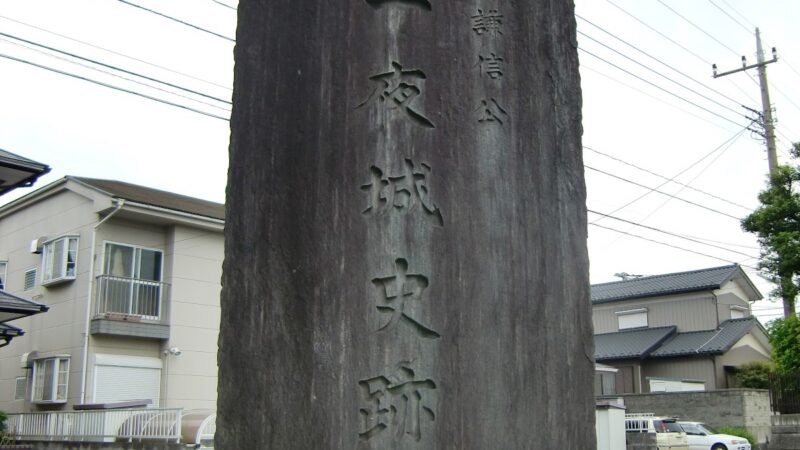
The most famous event in the history of Usui Castle is the “Battle of Usui Castle,” which took place in 1566 (Eiroku 9).
Uesugi Kenshin’s Campaigns in the Kanto Region
Uesugi Kenshin, a Sengoku period daimyo of Echigo Province (present-day Niigata Prefecture), claimed control of the Kanto region as Kanto Kanrei (governor of Kanto) and was in conflict with the Hojo clan. Kenshin repeatedly launched campaigns in Kanto, capturing castles held by the Hojo.
The Circumstances of the Siege of Usui Castle
At this time, the lord of Usui Castle was Hara Tanesada. The Hara clan belonged to the Hojo clan, and Usui Castle was an obstacle to Uesugi Kenshin’s control of Kanto.
Kenshin led a large army to besiege Usui Castle and launched an attack. Although Kenshin was known as a “god of war” and boasted invincibility in open battles, he faced unexpected difficulties in the siege of Usui Castle.
Kenshin’s Defeat
Hara Tanesada employed a skillful siege strategy, repelling Kenshin’s attack. The castle’s strong defensive structures and the natural barrier of Lake Inba proved effective, preventing the Uesugi army from capturing it.
Ultimately, Kenshin abandoned his attempt to capture Usui Castle and was forced to retreat. This defeat is recorded as one of the few defeats in Kenshin’s life. The “Battle of Usui Castle” became a prime example of Kenshin’s weakness in castle sieges.
This battle cemented Usui Castle’s place in history as an “impregnable castle that repelled Uesugi Kenshin.”
The Late Sengoku Period and the Hara Clan Era
During the late Sengoku period, the Hara clan continued to rule Usui Castle. While subordinate to the Hojo clan, the Hara clan maintained their power with Usui Castle as their base.
The Siege of Odawara and the Fall of Usui Castle (1590)
In 1590 (Tensho 18), Toyotomi Hideyoshi launched the Siege of Odawara. At this time, Usui Castle, which belonged to the Hojo clan, also became a target of attack.
Tokugawa Ieyasu’s forces attacked Usui Castle, and the Hara clan surrendered. This battle marked the end of the history of Usui Castle, which had been ruled by the Usui and Hara clans throughout the Sengoku period.
Usui Domain in the Early Edo Period
After the Siege of Odawara, Sakai Ietsugu, a vassal of the Tokugawa clan, was appointed to Usui Castle with a 30,000 koku stipend, establishing the Usui Domain. However, Sakai Ietsugu was later transferred to Takasaki in Kozuke Province, and the Usui Domain was abolished after a short period.
Subsequently, Usui Castle was abandoned and lost its function as a castle. Throughout the Edo period, the castle ruins gradually returned to nature, but remnants such as earthworks and dry moats remained.
Structure and Characteristics of Usui Castle
Usui Castle is a flatland castle utilizing a plateau jutting out into Lake Inba, and it retains many characteristics of a medieval castle.
Layout and Main Facilities
Usui Castle’s layout was a concentric, multi-bailey structure with the main bailey (Honmaru) at its center, surrounded by the second and third baileys (Ninokuruwa). The castle ruins, believed to date from the 15th century onwards, retain much of their original form, centering on the Honmaru and Ninokuruwa, along with dry moats and earthworks.
Honmaru
The Honmaru was the core of the castle, located at the highest point. The central part of the current Usui Castle Ruins Park corresponds to the Honmaru site. From the Honmaru, one could see Lake Inba, making it an ideal location for monitoring enemy movements.
Ninokuruwa
The Ninokuruwa surrounded the Honmaru. The Ninokuruwa was an important defensive facility for the Honmaru, and it is believed that many soldiers were stationed there during wartime.
Dry Moats and Earthworks
Notable defensive features of Usui Castle include its well-preserved dry moats and earthworks. As a typical example of medieval castles that did not use stone walls, the construction method involved excavating earth to create moats and then piling up the excavated earth to build earthen ramparts.
Even today, remnants of dry moats and earthen ramparts can be seen in various places within the park. The earthen ramparts around the main keep, in particular, are quite high, giving a real sense of the castle’s strong defensive capabilities at the time.
Defensive System Utilizing Lake Inba
The most distinctive feature of Usui Castle is its defensive system that utilized Lake Inba as a natural moat. Because the castle was surrounded by the lake on three sides, enemies could only attack from limited directions.
This topographical advantage was the main reason why it was able to repel attacks from famous generals such as Ota Dokan and Uesugi Kenshin. Attacks from water were also difficult, making it a truly impregnable fortress.
Highlights of Usui Castle Ruins Park
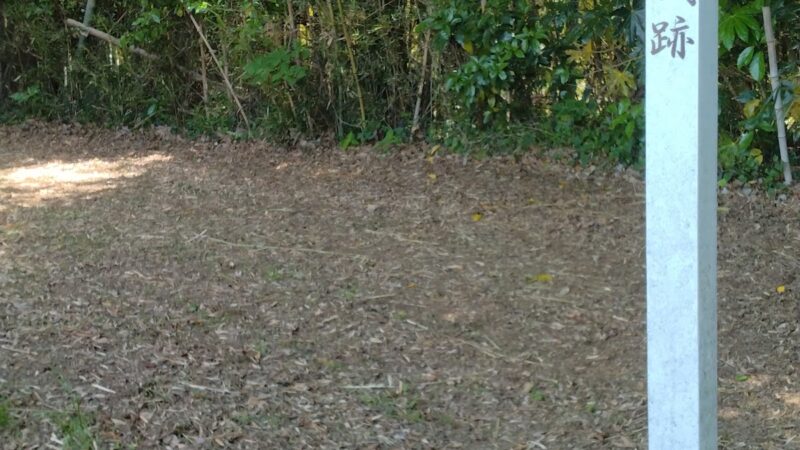
Currently, the Usui Castle ruins have been developed into Usui Castle Ruins Park, a place of relaxation for citizens. Visitors can enjoy the beautiful scenery of Lake Inba while viewing the historical remains. ### Castle Remains
Earthworks
Earthworks from the time of the castle can be seen in various locations within the park. The earthworks around the main keep are particularly well-preserved, with some sections reaching several meters in height. Climbing the earthworks allows for a more three-dimensional understanding of the castle’s defensive structure.
Dry Moat
The dry moat separating the main keep and the second keep is deep, allowing visitors to imagine its function as a defensive structure at the time. Walking along the bottom of the moat allows visitors to experience the difficulty of attacking the castle.
View of Lake Inba
One of the greatest attractions of Usui Castle Ruins Park is the panoramic view of Lake Inba. From the main keep site, a vast landscape of Lake Inba unfolds, and the view at sunset is particularly spectacular.
On clear days, Mount Tsukuba can be seen across the lake. This view is the same one the castle lords saw, allowing visitors to feel the romance of history.
Information Boards and Explanations
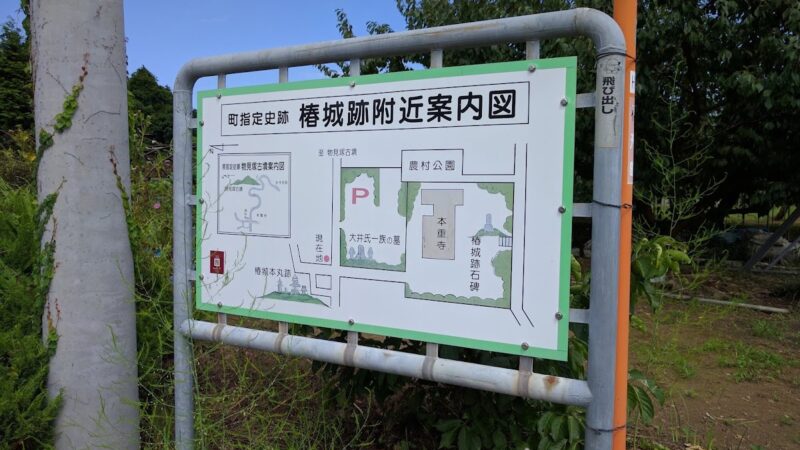
Within the park, there are information boards explaining the history and structure of Usui Castle. You can read detailed explanations about the history of Usui Castle, its battles with Uesugi Kenshin, and its structure.
Cherry Blossom Spot
Usui Castle Ruins Park is also known as a cherry blossom spot. In spring, the cherry trees in the park bloom all at once, attracting many visitors. The contrast between the castle ruins and the cherry blossoms is beautiful, making it a popular spot for photography.
Access Information
Detailed instructions on how to access Usui Castle Ruins Park are provided below.
Access by Train
Nearest Station: Keisei Usui Station, Keisei Main Line
Usui Castle Ruins Park is approximately a 20-minute walk from the north exit of Keisei Usui Station. The route from the station to the park involves walking through a residential area and up a gentle slope.
Walking Route from the Station
- Exit the north exit of Keisei Usui Station.
- Head north along the road in front of the station.
- Go through the residential area and up the hill.
- Arrive at the entrance to Usui Castle Ruins Park in approximately 20 minutes.
There are signs along the way, so you won’t get lost.
Access by Car
Usui Castle Ruins Park has a parking lot. However, some people have reported that the parking lot is difficult to find, so it is recommended to check the map in advance.
Access from Major Roads
- Approximately 15 minutes from the Higashi-Kanto Expressway “Sakura IC”
- From National Route 296 towards Usui
The parking lot is very close to the park, but some car navigation systems may not provide accurate directions, so set Usui Castle Ruins Park as your destination and pay attention to the signs along the way.
Using the Usui Tourist Information Center
The Usui Tourist Information Center is located inside “Lake Pia Usui,” a 1-minute walk from Keisei Usui Station. This section introduces the history, culture, and sightseeing spots and attractions of Sakura City.
We recommend visiting this section before your visit, as you can obtain detailed directions to Usui Castle Ruins Park and information on surrounding tourist attractions.
Visitor Guide and Points to Note
Estimated Visit Time
A visit to Usui Castle Ruins Park typically takes 30-40 minutes. If you want to carefully observe the ruins and enjoy the scenery of Lake Inbanuma, allow about an hour.
Points to Note When Visiting
Clothing and Equipment
- Wear comfortable walking shoes (especially when walking on earthworks and dry moats)
- Bring a hat, sunscreen, and drinks during the summer
- Insect repellent is recommended
Photo Opportunities
- View of Lake Inba from the main keep ruins
- Remains of earthworks and dry moats
- The contrast between cherry blossoms and the castle ruins during cherry blossom season
Recommended Time to Visit
Spring (Late March to Early April)
The cherry blossom season is when Usui Castle Ruins Park is at its most vibrant. You can enjoy the beautiful scenery of cherry blossoms, the castle ruins, and Lake Inba all in one place.
Autumn (November)
The autumn foliage season is also beautiful, and the weather is pleasant, making it ideal for a leisurely stroll through the castle ruins.
Winter (December to February)
Due to the clear air, Mount Tsukuba is often clearly visible across Lake Inbanuma.
Nearby Tourist Attractions
When visiting Usui Castle Ruins Park, we recommend also visiting nearby tourist attractions.
Sakura Castle Ruins Park
Located about 15 minutes by car from Usui Castle, Sakura Castle Ruins Park is the site of the castle of the Sakura Domain during the Edo period. While Usui Castle is a medieval castle, Sakura Castle is a modern castle, allowing for a comparison of the development of castles.
National Museum of Japanese History
The National Museum of Japanese History, located within Sakura Castle Ruins Park, is a museum that comprehensively exhibits Japanese history and culture. It is worth visiting to gain a deeper understanding of the historical context of Usui Castle.
Lake Inbanuma Cycling Road
A cycling road is maintained around Lake Inbanuma, allowing you to cycle along the lakeshore. After viewing Lake Inba from Usui Castle Ruins Park, actually running along the lakeshore allows for a deeper understanding of the castle’s location.
Cultural Value and Preservation Activities of Usui Castle
Designated Historic Site of Sakura City
Usui Castle Ruins are protected as a designated historic site of Sakura City. The remains of a medieval castle are well-preserved, making it an archaeologically and historically important site.
Value as a Regional Historical Heritage Site
Usui Castle is an indispensable part of the history of the Shimosa region. Built by the Usui clan, a branch of the Chiba clan, it was an important stage during the Sengoku period, including battles against Uesugi Kenshin.
As a regional historical heritage site, it is an important cultural asset that should be passed down to future generations.
Preservation and Utilization
Currently, Usui Castle Ruins Park is used as a place of relaxation for citizens while also preserving its historical remains. Appropriate management is carried out, balancing park development with historical site preservation.
Resources for Learning About Usui Castle
Related Books
For those who wish to learn more about Usui Castle, the following resources are available:
- Sakura City History
- Research books on medieval castles in Chiba Prefecture
- History books dealing with Uesugi Kenshin’s campaigns in the Kanto region
Online Information
The official website of Sakura City provides detailed information about Usui Castle Ruins Park. Additionally, community sites for castle enthusiasts offer visitor reviews and photos.
Evaluation of Usui Castle
Based on evaluations by castle enthusiasts, Usui Castle generally receives a rating of ★★★ (3 stars). While it lacks impressive remains such as stone walls, the earthworks and dry moats of a medieval castle are well-preserved, and its historical value is highly regarded.
In particular, the historical episode of repelling Uesugi Kenshin is a factor that attracts the interest of castle fans.
Summary
Usui Castle in Sakura City, Chiba Prefecture, is a castle that played an important role as a strategic point in the Shimosa region from the late Heian period to the Sengoku period. The castle was ruled by members of the Chiba clan, such as the Usui and Hara clans, and the “Battle of Usui Castle,” in which they repelled Uesugi Kenshin, is the most famous event in the castle’s history.
Currently, the site is maintained as Usui Castle Ruins Park, and the remains of the medieval castle, such as earthworks and dry moats, are well preserved. The view overlooking Lake Inba is magnificent, making it a place where you can enjoy historical walks and nature.
It is easily accessible, about a 20-minute walk from Keisei Usui Station, and has ample parking, making it easy to visit. Please visit Usui Castle Ruins Park, where you can experience a Sengoku period castle while feeling the history of Sakura City.
Usui Castle, though not flashy, is a valuable historical site where you can feel the spirit of the Sengoku period. Why not see for yourself the remains of this impregnable castle that even repelled the legendary warlord Uesugi Kenshin?