Ryugasaki Castle (Ibaraki Prefecture) Complete Guide: Remains and Highlights from the Toki Clan’s Residence to the Present Day
What is Ryugasaki Castle?
Ryugasaki Castle is a medieval hilltop castle located in Kojō, Ryugasaki City, Ibaraki Prefecture. Also known as Ryūgasaki Castle or Ryūgamine Castle, it functioned as an important base in southern Hitachi Province. Although currently the site of Ibaraki Prefectural Ryūgasaki Second High School, the remains, such as earthworks and dry moats, are well-preserved, making it a valuable historical site for understanding the castle structure of the Sengoku period in the Kanto region.
Ryūgasaki Castle is a hilltop castle built on a plateau approximately 20 meters high, characterized by its defensive layout that skillfully utilizes the terrain overlooking the surrounding lowlands. Among the castles in southern Ibaraki Prefecture, its remains are remarkably well-preserved, attracting attention from castle enthusiasts and history researchers.
History of Ryugasaki Castle
Construction History and the Toki Clan’s Rule
Ryugasaki Castle is believed to have been built in 1567 (Eiroku 10). It is known as the residence of Toki Tanetomo, the second son of Toki Haruhide, lord of Edosaki Castle, who built it to rule this area.
The Toki clan was a prestigious samurai family from Mino Province, and amidst the turmoil of the Sengoku period, they relocated to Hitachi Province. Toki Haruhide established Edosaki as his base and, as part of his expansion of power, placed importance on the Ryugasaki area. Originally, this area was ruled by the local Ryugasaki clan, but the Toki clan destroyed them, built a new castle, and established their rule.
Conflict with the Satake Clan
The most important event in the history of Ryugasaki Castle is the conflict with the Satake clan, a powerful daimyo family of Hitachi Province. In 1583, the forces of the Satake clan, led by Satake Yoshishige, who aimed to unify Hitachi Province, attacked Ryugasaki Castle and temporarily seized it.
However, the Toki clan did not surrender and later succeeded in recapturing the castle. This battle symbolizes the power struggle between the Satake and Toki clans in southern Hitachi Province and demonstrates Ryugasaki Castle’s strategic importance.
After the Edo Period
After Toyotomi Hideyoshi’s unification of Japan, the Kanto region came under the control of Tokugawa Ieyasu, and the political situation in Hitachi Province changed dramatically. The Toki clan’s power gradually declined, and it is believed that Ryugasaki Castle’s military role ended with the end of the Sengoku period.
During the Edo period, the castle lost its function and was abandoned. Subsequently, the castle site was used for farmland and residential areas, and from the Meiji era onward, it was used as school grounds. The current Ibaraki Prefectural Ryugasaki Second High School is built on this very castle site.
Structure and Layout of Ryugasaki Castle
Utilization of Topography as a Hilltop Castle
Ryugasaki Castle is a hilltop castle built on a plateau approximately 20 meters high. This plateau was higher than the surrounding lowlands and functioned as a natural stronghold. A low-lying wetland stretched to the north of the castle, which is thought to have served as a natural moat.
Hilltop castles, while not as steep as full-fledged mountain castles, offered superior defense compared to flatland castles and were a common castle style in the Kanto region during the Sengoku period. Ryugasaki Castle is a typical example, with a layout that makes maximum use of the terrain.
Arrangement of Earthworks and Dry Moats
The greatest highlight of Ryugasaki Castle is the earthworks and dry moats that still remain today. Clear earthworks can be seen within the grounds of Ryugasaki Second High School, particularly north of the sports field. These earthworks reach several meters in height, conveying the scale of the defensive facilities at the time.
Dry moats have also been confirmed in multiple locations, forming the castle’s defensive line. These moats have a V-shaped cross-section called a “yagenbori,” a design intended to make enemy intrusion difficult. The combination of earthworks and dry moats is a typical defensive structure for castles of the Sengoku period, clearly demonstrating the military character of Ryugasaki Castle.
Arrangement of the Enclosures
Ryugasaki Castle is presumed to have consisted of multiple enclosures (kuruwa). The main enclosure (honmaru) was at the center, surrounded by the second and third enclosures, each demarcated by earthworks and moats. The current high school buildings and grounds are built on the sites of these enclosures, allowing us to imagine the former layout from the topography.
The main enclosure is located at the highest point and is thought to have housed the lord’s residence and important facilities. The surrounding enclosures functioned as defensive and residential spaces, and were places where soldiers would be stationed in times of emergency.
Highlights of Ryugasaki Castle
Remains on the Grounds of Ryugasaki Second High School
The main remains of Ryugasaki Castle are located on the grounds of Ibaraki Prefectural Ryugasaki Second High School. While some consideration is necessary for visitors due to it being school grounds, many remains can be seen from the outside.
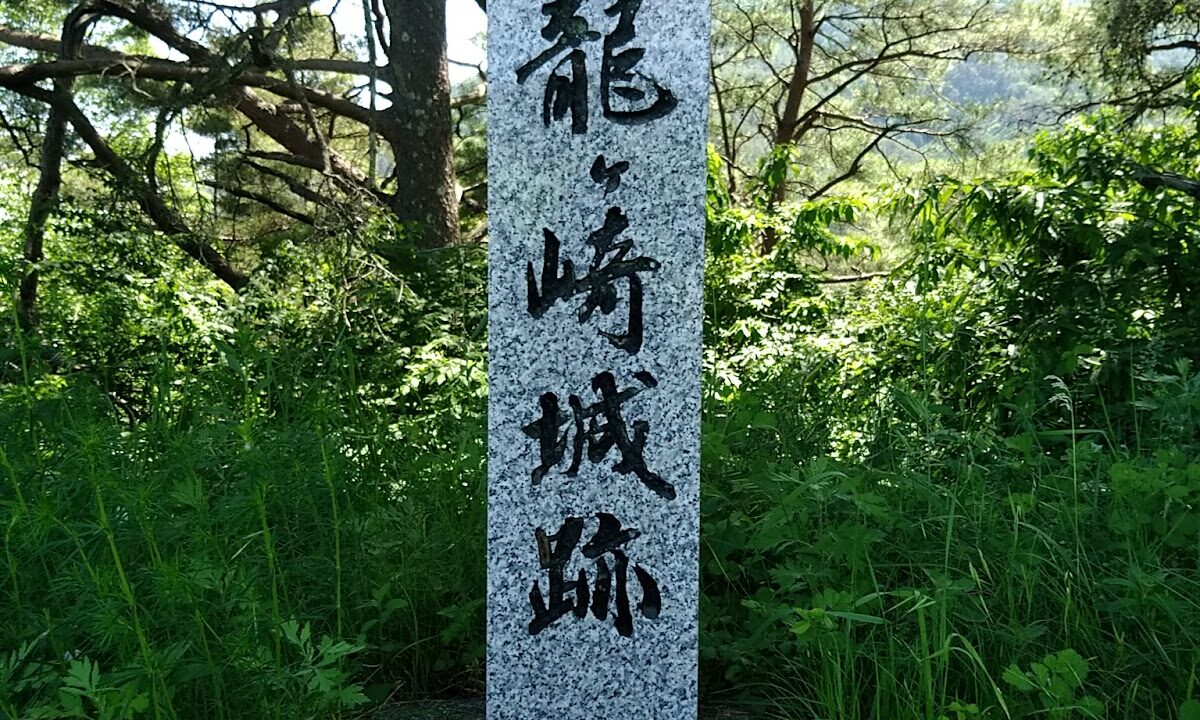
Near the high school entrance stands a stone monument titled “The History of Ryugamine,” which provides a detailed explanation of the history of Ryugasaki Castle. This monument is a valuable source of information for visitors to the castle ruins and should be the first point of interest.
The earthen rampart remaining on the north side of the grounds is one of the clearest remains. The rampart, approximately 3-4 meters high, stretches on and on, giving a sense of the scale of the castle at the time. Traces of a dry moat can also be seen outside the rampart, allowing for an understanding of the overall defensive system.
Relationship between Kashima Shrine and the Castle Ruins
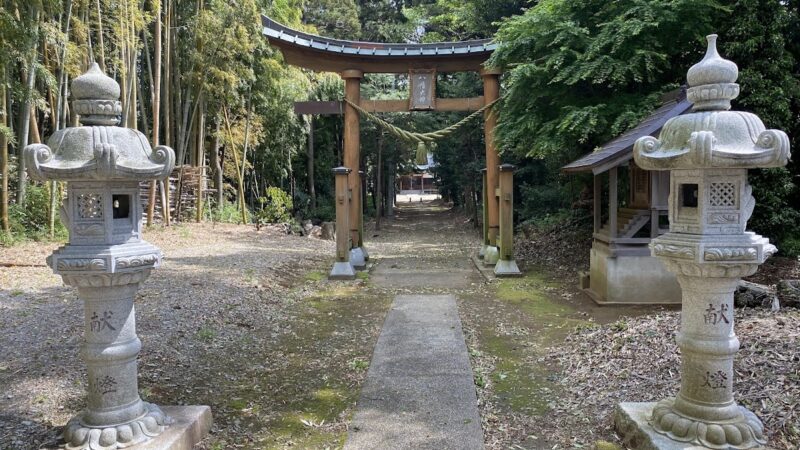
Kashima Shrine is located near the Ryugasaki Castle ruins, and its connection to the castle has been suggested. Castles during the Sengoku period often had shrines dedicated to guardian deities, and Kashima Shrine may have fulfilled this role.
Kashima Shrine enshrines Takemikazuchi-no-Okami, known as a god of war, and has strong ties to samurai families. It is believed to have functioned as a center of faith in this region when the Toki clan built Ryugasaki Castle, or even before.
Understanding Castle Structure from Surrounding Topography
When visiting the Ryugasaki Castle ruins, paying attention to the surrounding topography will provide a deeper understanding of the castle’s structure. The area north of the castle ruins is low-lying and is presumed to have been a wetland in the past. This natural terrain functioned as a natural moat, making attacks from the north difficult.
Furthermore, looking east, west, north, and south from the castle ruins, one can sense remnants of a castle town in the arrangement of surrounding settlements and roads. The concentric road layout centered on the castle and the existence of highways extending in specific directions suggest the structure of the former castle town.
Access to Ryugasaki Castle
Access by Public Transportation
To reach Ryugasaki Castle ruins by public transportation, the nearest station is JR Joban Line’s “Sanuki Station.” From Sanuki Station, transfer to the Kanto Railway Ryugasaki Line and get off at “Ryugasaki Station.” The castle ruins are approximately a 15-20 minute walk from Ryugasaki Station.
Alternatively, you can take a bus from Sanuki Station. A community bus circulates within Ryugasaki City, and you can get off at a bus stop close to the castle ruins. However, the number of buses is limited, so it is recommended to check the timetable in advance.
Access by Car
If traveling by car, the nearest interchanges are the Joban Expressway’s “Yatabe IC” or “Ushiku-Ami IC.” From either IC, it takes approximately 20-30 minutes to reach Ryugasaki Castle ruins.
Setting Ryugasaki Second High School in Kojō, Ryugasaki City, Ibaraki Prefecture as your destination will allow you to easily reach the castle using your car navigation system. However, parking is not permitted on school grounds. You will need to use nearby public parking lots or find a place to park on the street.
Notes for Visitors
Ryugasaki Castle ruins are currently located on the grounds of Ibaraki Prefectural Ryugasaki Second High School, so consideration is required when visiting. Access to the grounds may be restricted during class hours or school events.
Many remains can be seen from the outside, so it is recommended to first observe the earthworks and topography from the school’s perimeter. If you wish to conduct a detailed tour of the grounds, it is advisable to contact the school in advance and obtain permission.
Nearby Castles and Historical Spots
Nareuma Castle
Located approximately 3 kilometers northeast of Ryugasaki Castle, Nareuma Castle is another important castle in southern Hitachi Province. Nareuma Castle was also under the control of the Toki clan at one point, and a connection with Ryugasaki Castle is suspected. Although the area is now being developed into residential land, some traces of earthworks and moats remain.
Ushiku Castle
Located in Ushiku City, approximately 10 kilometers southwest of Ryugasaki Castle, are the ruins of Ushiku Castle. Ushiku Castle is known as the residence of the Okami clan and was the site of conflicts with the Satake clan. Although currently the site of Ushiku Municipal Ushiku Second Junior High School, the earthworks and dry moats remain well-preserved. Visiting both Ryugasaki Castle and Ushiku Castle provides a deeper understanding of the characteristics of castles in southern Hitachi Province.
Yashiro Castle
Within Ryugasaki City, there are also the ruins of Yashiro Castle. While smaller in scale than Ryugasaki Castle, it is an important historical site for understanding the region’s history. Yashiro Castle is thought to be the site of a local powerful family’s residence, illustrating the power structure of this region before the construction of Ryugasaki Castle.
Edosaki Castle
Edosaki Castle, the base of Toki Haruhide, the builder of Ryugasaki Castle, is located in Inashiki City (formerly Edosaki Town). Located approximately 15 kilometers northeast of Ryugasaki Castle, Edosaki Castle is an essential fortress for understanding the sphere of influence of the Toki clan. While Edosaki Castle is now the site of Tsuchiura Municipal Edosaki Junior High School and other facilities, traces of its vast grounds and complex layout remain.
History and Culture of Ryugasaki City
Overview of Ryugasaki City
Ryugasaki City is located in the southern part of Ibaraki Prefecture, approximately 45 kilometers from central Tokyo and 20 kilometers from Tsukuba Science City. It covers an area of 78.59 square kilometers, with a city area of approximately 12 kilometers east-west and 9 kilometers north-south.
With good access to central Tokyo from Sanuki Station on the Joban Line (renamed “Ryugasaki-shi Station” in 2020), it has developed as a commuter city. In recent years, it has increasingly developed as a residential city with a well-developed commercial infrastructure.
Tsukumai (揞舞) – Nationally Selected and Prefecturally Designated Intangible Folk Cultural Property
Ryugasaki City is home to a unique traditional performing art called “Tsukumai.” Tsukumai is a Shinto ritual performed annually from late July to early August at the festivals of Yasaka Shrine and Kifune Shrine. It is designated as a nationally selected intangible folk cultural property and an intangible folk cultural property designated by Ibaraki Prefecture.
This magnificent ceremony involves young men performing acrobatics without safety ropes on top of a pillar approximately 14 meters high, praying for a bountiful harvest and protection from disease. This tradition has a history of over 400 years and is a cultural asset symbolizing the identity of Ryugasaki City.
Ryugasaki City’s Tourism Resources
Besides the Ryugasaki Castle Ruins, Ryugasaki City has many other tourist resources. Ryugasaki City Forest Park is a nature-rich recreational facility equipped with a campsite, athletic facilities, and barbecue areas. This is a popular spot for families and can be visited in conjunction with a tour of the castle ruins.
Furthermore, the city boasts many historical temples and shrines, including Hannya-in Temple, Ryusen-ji Temple, and Yasaka Shrine, which attract the interest of history enthusiasts. Some of these temples and shrines were built around the same time as Ryugasaki Castle flourished, offering clues to the culture and beliefs of that era.
Current Status and Challenges of Ryugasaki Castle Research
Archaeological Excavations and Research Results
Regarding Ryugasaki Castle, only limited, full-scale archaeological excavations have been conducted to date. The main reason is the difficulty of large-scale investigations due to its location on school grounds. However, past partial investigations and topographical surveys have revealed the basic structure of the castle.
In particular, the arrangement of earthworks and dry moats can be reconstructed in considerable detail through analysis of aerial photographs and topographical maps. Furthermore, research into ancient documents is painting a more concrete historical picture of the Toki clan’s rule and their conflicts with the Satake clan.
Status of Cultural Property Designation
Currently, Ryugasaki Castle Ruins are not designated as a cultural property by Ibaraki Prefecture or Ryugasaki City. This is likely due in part to the difficulty of public access and preservation management, as the ruins are located within school grounds. However, the ruins are well-preserved and undoubtedly an important historical site for studying Sengoku period castles in the Kanto region.
Future efforts toward cultural property designation and more detailed academic research are expected. The challenge lies in considering appropriate preservation and utilization strategies for this regional historical heritage site.
Efforts toward Preservation and Utilization
The Ryugasaki City Board of Education and local history enthusiast groups are actively working to widely disseminate information about the historical value of Ryugasaki Castle Ruins. Efforts to increase public interest continue through information dissemination in the city’s newsletter and website, and the holding of history lectures.
Furthermore, Ryugasaki Second High School is also utilizing the fact that its school grounds are a historical castle site in its education. The castle ruins serve as valuable teaching material, providing students with an opportunity to learn about local history.
Recommended Itinerary for Visiting Ryugasaki Castle
Half-Day Course: Ryugasaki Castle Ruins and City Historical Sites Tour
Arrive at Ryugasaki Station in the morning and first visit the Ryugasaki Castle Ruins. Observe the earthworks and topography from the perimeter of the high school, and learn about history at the “Ryugamine no Hishi” stone monument (approximately 1 hour).
Afterward, tour historical temples and shrines in the city, such as Yasaka Shrine and Hannya-in Temple, on foot or by rental bicycle. Enjoy local cuisine at a local restaurant for lunch, and in the afternoon, learn more about the region’s history at the Ryugasaki City Historical and Folk Museum (check opening days).
Full-Day Course: Combination with Surrounding Castles
If using a car, a full-day course combining Ryugasaki Castle Ruins with surrounding castles is recommended. After visiting Ryugasaki Castle Ruins in the morning, visit Naruma Castle and Yashiro Castle, and in the afternoon, visit Ushiku Castle and Edosaki Castle.
This course allows you to experience the Sengoku period castle network in southern Hitachi Province, deepening your understanding of history by actually visiting the sites of power struggles between the Toki and Satake clans. Each castle site is expected to be visited in 30 minutes to 1 hour, and the entire tour can be completed in one day, including travel time.
Family-Friendly Course: Enjoying Castle Ruins and Nature
For families, a good plan is to briefly visit Ryugasaki Castle Ruins in the morning, then move on to Ryugasaki City Forest Park. At the forest park, you can enjoy athletics, camping, and barbecues, keeping children entertained all day long.
During the castle ruins visit, you can explain the role of earthworks and moats to children, providing an opportunity to learn about the defensive mechanisms of Sengoku period castles. Climbing the earthworks and experiencing the depth of the moats will likely spark their interest in history.
Summary: Historical Significance of Ryugasaki Castle
Ryugasaki Castle is a Sengoku period flatland castle ruin located in Kojō, Ryugasaki City, Ibaraki Prefecture. Built in 1567 by Toki Tanenori, Ryugasaki Castle served as an important base for the Toki clan in southern Hitachi Province. In 1583, it became the site of a fierce battle with the Satake clan, and although it temporarily fell into Satake hands, it was later recaptured, giving it a turbulent history.
Currently, the site is occupied by Ibaraki Prefectural Ryugasaki Second High School, but the remains, such as earthworks and dry moats, are well-preserved, making it a valuable historical site for understanding the structure of Sengoku period castles in the Kanto region. The “Ryuga-mine no Ayumi” (History of Ryuga-mine) monument and the clearly visible earthworks on the north side of the grounds are must-see points.
Visiting Ryugasaki Castle allows you to deeply learn about the Sengoku period history of southern Hitachi Province, the conflict between the Toki and Satake clans, and the local culture and traditions. Visiting nearby castles such as Naruma Castle, Ushiku Castle, Yashiro Castle, and Edosaki Castle will provide a broader perspective on understanding Hitachi Province during the Sengoku period.
When visiting southern Ibaraki Prefecture, be sure to stop by the Ryugasaki Castle ruins and stand atop the earthen ramparts to feel the atmosphere of the Sengoku period. With easy access from central Tokyo, Ryugasaki Castle is a historical spot that can be enjoyed not only by history buffs but also by families, and it is sure to continue to fascinate many people.