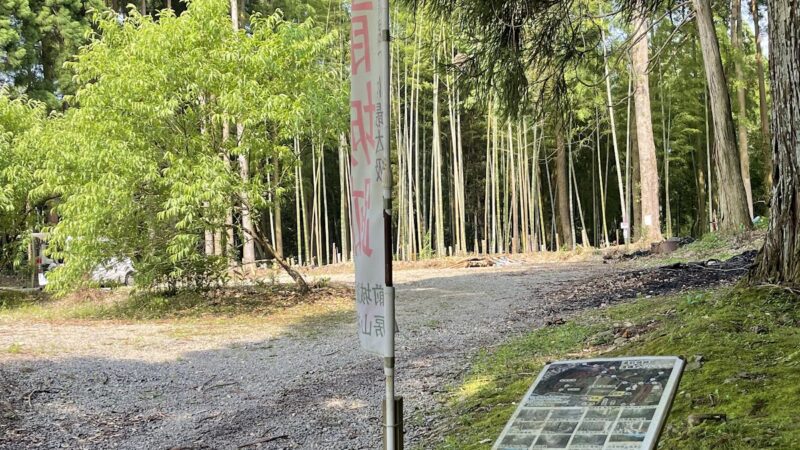
Tsumori Castle Ruins (Mashiki Town, Kumamoto Prefecture) Complete Guide | History, Highlights, and Access Information
Located in Mashiki Town, Kamimashiki District, Kumamoto Prefecture, Tsumori Castle Ruins is a mountain castle that served as the residence of Tsumori Mitsunaga, a senior retainer of the Aso clan, from the Muromachi period to the Sengoku period. Known as the site of the fierce Battle of Aso against a large army led by Shimazu Yoshihiro, it is an important historical site indispensable to understanding the medieval history of Kumamoto Prefecture. This article provides a detailed explanation of Tsumori Castle Ruins, from its historical background to the current state of the remains and access information.
Basic Information on Tsumori Castle Ruins
Tsumori Castle Ruins is a medieval mountain castle built on the end of the ridge of Kuriyama, also known as “Shiroyama,” at an altitude of approximately 120 meters, south of Tsumori Elementary School in the Shimojin district of Mashiki Town. Although not currently designated as a cultural property, it is preserved as a valuable historical site that tells the story of the region’s history.
Location: Shimojin (Tsumori area), Mashiki-machi, Kamimashiki-gun, Kumamoto Prefecture
Castle Structure: Mountain castle
Construction Period: Late 15th century (estimated)
Builder: Tsumori Mitsunaga clan
Main Lords: Successive Tsumori Mitsunaga clan, especially Mitsunaga Muneyoshi
Year of Abandonment: Around Tensho 15 (1587)
History of Tsumori Castle
Construction History and the Entry of the Tsumori Mitsunaga Clan
While there are no clear historical records regarding the construction period of Tsumori Castle, it can be estimated from the time the Tsumori Mitsunaga clan entered the area. It is believed that Mitsunaga Nakatsukasa Korezumi, a chief retainer of the Aso Omiya family, and his younger brother Korezumi entered this area sometime between Eikyo 3 (1431) and Hotoku 3 (1451) during the Muromachi period.
Tsumori Mitsunaga served as a senior retainer of the Aso clan, responsible for protecting a strategic point from the Aso Valley towards Mashiki. After taking up residence, he began construction of the castle in the late 15th century, and it is estimated that it was completed as a fortress by around the Tenmei era (1469-1486). This period marked the decline of the Muromachi Shogunate and the beginning of the Sengoku period, when powerful daimyo rose to prominence throughout the country, increasing the importance of castles as defensive strongholds.
The Mitsunaga Clan’s Rule and the Castle’s Development
The Tsumori Mitsunaga clan used this castle as their residence for generations, making it the center of governance for the Mashiki region. As a powerful family within the Aso clan’s retainers, they established a system of control over their territory. The castle’s layout, skillfully utilizing the terrain of the castle hill, is noteworthy as an example of the advanced castle-building techniques of the time.
Tsumori Castle functioned not merely as a military base, but also as the center of regional governance. It is believed that the castle town developed as a base for governing the surrounding farming villages, with the residences of the retainers located within the town.
The Battle of Aso and the Siege of Tsumori Castle
The most important event in the history of Tsumori Castle is the “Battle of Aso,” which took place in 1587. This battle was a fierce contest between the large army led by Shimazu Yoshihiro, acting on orders from Toyotomi Hideyoshi who aimed to unify Kyushu, and the Aso clan and their retainers.
The castle lord at the time, Mitsunaga Munetomo, initially chose to surrender in the face of the overwhelming Shimazu forces. However, he later rebelled to uphold his loyalty to the Aso clan and once again showed a stance of fierce resistance against the Shimazu army. This decision led to a fierce battle for Tsumori Castle.
Mitsunaga Munetomo, along with Takamori Korenao and Goshi Takashige, resisted the Shimazu army, but the castle fell to Shimazu Yoshihiro’s fierce attack. Mitsunaga Munetomo was killed in battle, and his comrades, Takamori Korenao and Goshi Takashige, also perished. This battle marked the end of the Aso War, and the Aso clan’s power greatly declined.
Mitsunaga Munetomo’s loyalty and bravery in battle left a deep impression on the local people and his story has been passed down through generations.
Tsumori Castle After its Abandonment
After the Aso War, Tsumori Castle was abandoned. During the Edo period, it came under the control of the Kumamoto Domain, and the castle ruins gradually reverted to forest. However, it continued to be remembered as “Shiroyama” (Castle Mountain) among the local residents, and its historical value has been preserved to this day.
Layout and Structure of Tsumori Castle Ruins
Topographical Features
Tsumori Castle is located at the end of the ridge of Kuriyama Mountain, at an altitude of approximately 120 meters, and was built on a strategic location overlooking the surrounding area. The castle’s layout, skillfully utilizing the mountain ridge terrain, exhibits typical characteristics of a medieval mountain castle.
The castle’s location offered a panoramic view of the Mashiki Plain and was a strategically important position for monitoring the road from the Aso area. This geographical advantage is thought to be one of the reasons why Tsumori Mitsunaga chose this location as his residence.
Existing Remains
Currently, the following remains have been identified at the Tsumori Castle site:
Kuruwa (enclosures): Traces of multiple enclosures arranged around the main enclosure remain. The original layout can be estimated from the topography.
Horikiri (dry moat): Traces of a horikiri, cut across the ridge, are visible. This was an important defensive structure to prevent enemy intrusion.
Earthworks: Traces of earthworks can be seen in some areas. They surrounded the enclosures and enhanced defensive capabilities.
Koguchi (gate): Topographical changes believed to be the site of a Koguchi, the entrance to the castle, can be observed.
However, more than 500 years have passed since its construction, and since it was not maintained after its abandonment, many of the remains are obscured by weathering and vegetation. Nevertheless, by observing the topography and referring to the information on the explanatory signs, it is possible to imagine the castle’s appearance in its heyday.
Characteristics of the Castle Layout
The layout of Tsumori Castle reflects the castle-building techniques of the late 15th century. It maximizes the use of the natural terrain of the mountain ridge, achieving maximum defensive effect with minimal civil engineering work. This is a common characteristic of medieval mountain castles and is an important example for understanding the castle-building philosophy of the time.
The structure, with the main enclosure located at the highest point and the baileys arranged in stages from there, is based on the concept of “depth defense,” which aims to prevent enemy attacks in stages. Furthermore, the arrangement utilizing the ridgeline had the advantage of allowing for efficient defense even with a small number of defending troops.
Highlights of Tsumori Castle Ruins
Information Boards and Guides
At the Tsumori Castle ruins, there are information boards installed by Mashiki Town, providing detailed information about the castle’s history and the achievements of Mitsunaga Munefumi. These boards are extremely useful for visitors to understand the historical background of Tsumori Castle.
The boards clearly explain the circumstances of the castle’s construction, the lineage of the Mitsunaga clan, and the details of the Battle of Aso, ensuring that even first-time visitors can understand the importance of Tsumori Castle.
Views and Scenery
From the castle ruins, you can enjoy a panoramic view of the Mashiki Plain, and on clear days, you can even see as far as Kumamoto City. This view truly demonstrates why Tsumori Castle was chosen as a strategically important location.
The view from near the main enclosure is particularly magnificent, allowing you to imagine the castle lord and defenders watching over their territory from this vantage point. The view towards Aso is also unobstructed, highlighting the castle’s role in monitoring the roads.
A Walking Trail Evoking Historical Romance
The path leading to the castle ruins is a mountain trail, but you can follow the traces of the original approach to the castle. Walking through the quiet environment surrounded by trees, you can feel the atmosphere of the Sengoku period (Warring States period).
When walking, pay attention to the changes in the terrain. You can discover artificially altered features such as the elevation changes of the baileys and the traces of moats. These are evidence of human activity from over 500 years ago, giving you a real sense of the weight of history.
The Surrounding Historical Environment
Around the Tsumori Castle ruins are Tsumori Elementary School and a local settlement, where people still live today. The way the castle ruins are integrated into the local community is characteristic of Japanese regional cities where history and modernity coexist.
Historical sites and legends related to the Mitsunaga clan remain in the area, and visiting them along with the castle ruins will allow you to understand Tsumori’s history more deeply.
Access Information and Map
Location and Transportation Access
Address: Shimojin (Tsumori area), Mashiki-machi, Kamimashiki-gun, Kumamoto Prefecture
Access by Car:
- Approximately 10 minutes from the Mashiki-Kumamoto Airport IC on the Kyushu Expressway
- Approximately 30 minutes from central Kumamoto City via National Route 443
- Parking: There is no dedicated parking lot, but there is street parking available around Tsumori Elementary School (consideration is needed during school events, etc.)
Access by Public Transportation:
- Approximately 40 minutes by Sanko Bus “Mashiki Line” from Kumamoto City Tram/Bus Center, get off at “Tsumori” bus stop, then approximately 10 minutes on foot
- Approximately 20 minutes by taxi from JR Hohi Main Line “Higo-Ozu Station”
Notes for Visitors
Clothing and Equipment: As the castle ruins are located in a forest, comfortable walking shoes and clothing are essential. In summer, please bring insect repellent, a hat, and drinking water.
Visiting Season: While visits are possible year-round, spring (March-May) and autumn (October-November) are the most climatically ideal. Be aware of the heat and insects during the summer months.
Estimated Time Required: Allow approximately 30 minutes to 1 hour for viewing the information boards and exploring the castle ruins.
Safety Considerations: Some mountain paths are not well-maintained, so please watch your step. Exercise particular caution during and after rain, as paths can become slippery.
Manners: As the site is adjacent to private property and school grounds, please be considerate of local residents and school personnel to avoid causing inconvenience.
History and Culture of Mashiki Town
Overview of Mashiki Town
Mashiki Town is a town of approximately 30,000 people located in the central part of Kumamoto Prefecture, east of Kumamoto City. It boasts Kumamoto Airport and has developed as a transportation hub. Historically, it flourished as a key location along the road connecting Aso and Kumamoto, and many historical legacies remain. ### The 2016 Kumamoto Earthquake and Reconstruction
The Kumamoto Earthquake in April 2016 caused immense damage to Mashiki Town, including two instances of a maximum seismic intensity of 7. The area around Tsumori Castle Ruins was also affected, but reconstruction is progressing thanks to the efforts of local residents.
During the reconstruction process following the earthquake, the importance of local history and cultural assets has been re-recognized, and efforts to pass on historical heritage like Tsumori Castle Ruins to future generations are being strengthened.
Other Historical Sites and Tourist Spots in Mashiki Town
When visiting Tsumori Castle Ruins, we recommend also visiting other historical sites and tourist spots in Mashiki Town:
Mashiki Town Cultural Center: Features exhibits on local history and culture, allowing visitors to learn about Mashiki’s history.
Shioi Nature Park: A park rich in nature, perfect for walks and picnics.
Kiyama Shrine: A historic shrine located in the heart of Mashiki Town, serving as a center of local faith.
Tsumori Castle Ruins and the Medieval History of Kumamoto Prefecture
The Aso Clan and Their Retainers
Understanding the relationship between the Aso clan and their retainers is crucial to understanding the Tsumori Castle Ruins. While serving as the chief priest of Aso Shrine, the Aso clan also operated as a powerful samurai family during the medieval period.
Tsumori Mitsunaga served as a senior retainer of the Aso clan, entrusted with governing the Mashiki area. The Aso clan’s retainers were stationed in the Aso Valley and surrounding regions, each governing their territory from their own castle. Tsumori Castle was one of their important strongholds.
Higo Province in the Sengoku Period
In the 16th century, Higo Province (present-day Kumamoto Prefecture) was in a complex political situation with multiple powers vying for power. The Kikuchi clan held power in the north, the Aso clan in the central region, and the Sagara clan in the south, each establishing their own independent system of rule.
This situation changed dramatically with Toyotomi Hideyoshi’s conquest of Kyushu. Following the Shimazu campaign in 1587, the rulers of Higo Province changed hands, first to Sasa Narimasa and then to Kato Kiyomasa, establishing a unified system of rule by early modern daimyo. The fall of Tsumori Castle was a pivotal moment in this major historical turning point.
The Role of Medieval Mountain Castles
Medieval mountain castles like Tsumori Castle played a crucial role in regional governance during the Sengoku period. They functioned not only as military bases but also as residences for feudal lords, administrative centers, and economic hubs.
While mountain castles offered excellent defense, they were inconvenient for daily life. Therefore, many castles had residences at the foot of the mountains where the lords lived during peacetime, only retreating to the mountain castle during wartime. It is highly probable that Tsumori Castle also employed a similar system of use.
Preservation and Utilization of Tsumori Castle Ruins
Current Situation and Challenges
Currently, Tsumori Castle Ruins are not designated as a cultural property, and therefore, there is no established public preservation and management system. However, local residents are voluntarily carrying out preservation activities, including the installation of explanatory signs and ongoing maintenance such as grass cutting.
Future challenges include detailed investigation of the remains, establishment of an appropriate preservation and management system, and utilization as a tourist resource. In particular, the question of how to preserve and utilize local historical resources is a major concern in the recovery process following the Kumamoto earthquake.
Local History Education
Tsumori Castle Ruins has become a familiar place for local children to learn about history. Tsumori Elementary School conducts lessons at Tsumori Castle Ruins as part of its local history curriculum, where students learn about the region’s history.
These initiatives foster a sense of attachment to the region among children and play an important role in passing on the value of historical heritage to future generations.
Potential as a Tourist Resource
While Kumamoto Prefecture has many castle historical sites, including Kumamoto Castle, medieval mountain castles like Tsumori Castle Ruins possess a unique charm. The tense atmosphere of the Sengoku period and the castle’s integration with nature are of great appeal to history enthusiasts and castle fans.
With proper maintenance and information dissemination, it has the potential to be utilized as a tourist resource for Mashiki Town. In particular, with the growing popularity of castle tours and historical tourism, interest in “hidden gems” like Tsumori Castle ruins is increasing.
Model Itinerary for Visiting Tsumori Castle Ruins
Half-Day Course (Duration: Approx. 3 Hours)
- Tsumori Castle Ruins Visit (60 minutes): Learn about the history from the information boards and stroll around the castle ruins.
- Lunch (60 minutes): Enjoy local cuisine in the center of Mashiki Town.
- Mashiki Town Cultural Center (60 minutes): Learn about the history and culture of the region.
Full-Day Course (Duration: Approx. 6 Hours)
- Tsumori Castle Ruins Visit (90 minutes): Carefully observe the remains.
- Kiyama Shrine Visit (30 minutes)
- Lunch (60 minutes)
- Shioi Nature Park Stroll (60 minutes)
- Mashiki Town Cultural Center (60 minutes)
- Tour of Surrounding Historical Sites (60 minutes)
Kumamoto Prefecture Castle Tour Course
We also recommend a course starting from Tsumori Castle Ruins and visiting other castle ruins in Kumamoto Prefecture:
- Morning: Visit Tsumori Castle Ruins
- Afternoon: Kumamoto Castle (Kumamoto City) or Uto Castle Ruins (Uto City)
This course allows you to experience the differences between medieval mountain castles and early modern castles, and gain a comprehensive understanding of Kumamoto’s castle history.
Summary
Tsumori Castle Ruins are a valuable medieval mountain castle site remaining in Mashiki Town, Kumamoto Prefecture. From the Muromachi period to the Sengoku period, it was the residence of Tsumori Mitsunaga, a senior retainer of the Aso clan. In particular, during the Battle of Aso in 1587, it was the stage for the fierce resistance of the castle lord, Mitsunaga Soho, against Shimazu Yoshihiro’s large army.
Although it is not currently designated as a cultural property, remains such as baileys and moats remain, and you can learn about its history through explanatory signs. The panoramic view of the Mashiki Plain is magnificent, and this valuable historical site allows you to feel the tense atmosphere of the Sengoku period.
It’s easily accessible, about 30 minutes by car from Kumamoto City, making it an ideal stop during your Kumamoto sightseeing. It’s recommended not only for history buffs, but also for those interested in local history and culture, and those who enjoy a walk in nature.
In Mashiki Town, which continues to recover from the 2016 Kumamoto earthquake, the Tsumori Castle ruins will undoubtedly be carefully preserved as a symbol of the region’s history and pride. When you visit Kumamoto, be sure to visit the Tsumori Castle ruins and experience the historical romance of the Sengoku period and the local culture.