
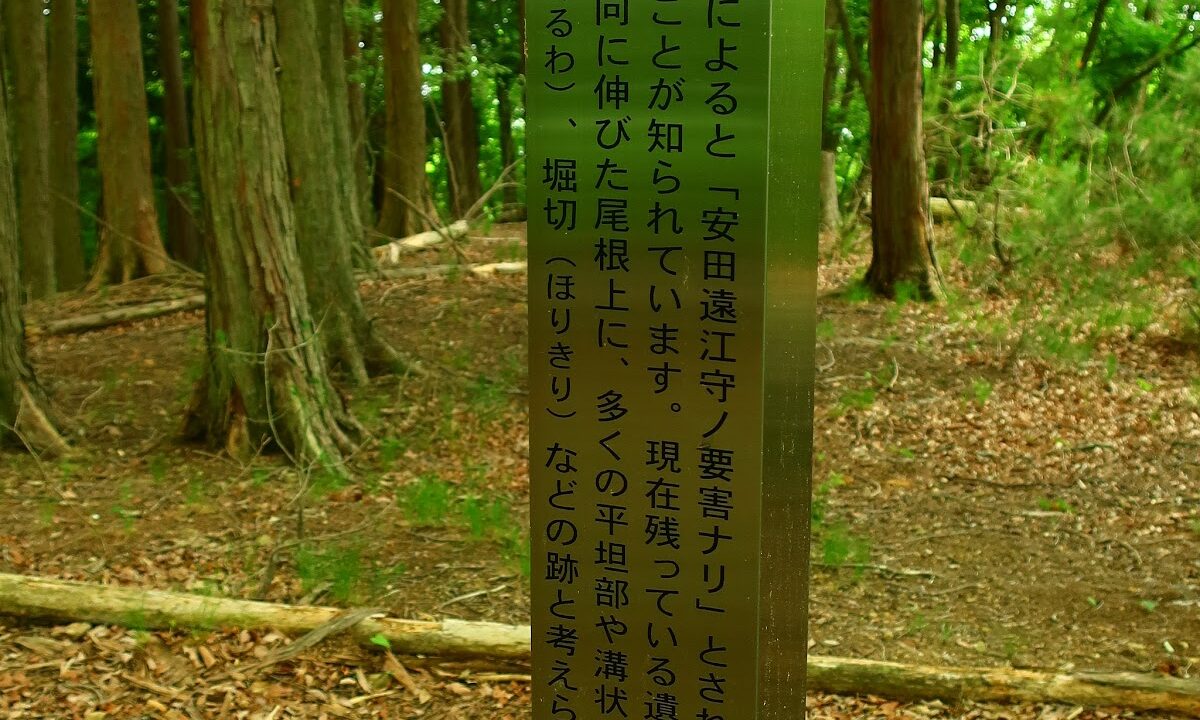
Odano Castle (Yamanashi City) | The Mountain Castle of Yasuda Yoshisada of the Kai Minamoto Clan and the Final Moments of Atobe Kageie
Located in Nishihoshita, Makioka-cho, Yamanashi City, Yamanashi Prefecture, Odano Castle is a mountain castle believed to have been built by Yasuda Yoshisada, a powerful warrior of the Kai Minamoto clan, during the late Heian period to the early Kamakura period. Built on the summit of Mount Odano, at an altitude of 882 meters (some sources say 883 meters), the castle functioned as an important military base controlling a strategic point in the eastern part of the Kofu Basin. Designated a Yamanashi City Historic Site on March 30, 1976, it still retains valuable remains, including the ruins of the main keep’s ramparts, the male and female dragon stones in the second bailey, and the Zaō Gongen shrine in the third bailey.
The History of Odano Castle and the Changes in its Lords
Yasuda Yoshisada of the Kai Minamoto Clan and the Construction of Odano Castle
Odano Castle is believed to have been built during the late Heian period to the early Kamakura period. According to the “Kai no Kuni Shi” (History of Kai Province), this castle was built as a stronghold for Yasuda Yoshisada, a powerful warrior of the Kai Minamoto clan. Yasuda Yoshisada is known as a warrior who participated in Minamoto no Yoritomo’s uprising and played an active role in the Jisho-Juei War (Genpei War).
While Yasuda Yoshisada’s base was in Yasuda-go, Koma-gun, Kai Province (present-day Nirasaki City area), it is thought that he developed Odano Castle as a defensive base in the eastern part of the Kofu Basin. Odano Mountain, situated as if jutting out into a narrow valley where the Tsuzumi River flows eastward, possessed ideal locational conditions as a natural stronghold.
Odano Castle in the Sengoku Period and the End of Atobe Kageie
Odano Castle reappears on the historical stage in the late 15th century, during the late Muromachi period. During this time, internal conflicts within the Takeda clan, the shugo (provincial governor) of Kai Province, intensified.
During the Kanshō era (1460-1466), a fierce conflict erupted between the shugo Takeda Nobumasa and the shugodai (deputy governor) Atobe Kageie. The *Ōdaiki* (a historical chronicle) contains the entry, “Atobe Ueno-no-kami committed seppuku at Odano Castle in Nishibo,” indicating that Atobe Kageie, defeated by Takeda Nobumasa in the Battle of Yūgarisawa, holed up in Odano Castle and met his end.
Atobe Kageie, a powerful retainer of the Takeda clan, wielded considerable influence, but his conflict with shugo Takeda Nobumasa deepened, ultimately leading to his suicide at Odano Castle. This event marked a turning point in strengthening the Takeda clan’s power base in Kai Province. The Harakiri Jizo statue is said to enshrine either Atobe Kageie or Yasuda Yoshisada.
Odano Castle After the Sengoku Period
There are no clear records of how Odano Castle was used after the downfall of Atobe Kageie. While it may have functioned as a regional defensive base under the control of the Takeda clan throughout the Sengoku period, it is believed to have lost its role as a major castle.
After the fall of the Takeda clan in 1582, it is presumed to have been abandoned. During the Edo period, it completely lost its function as a castle and came to be used as a local place of worship.
Layout and Remains of Odano Castle
Castle Location and Topographical Features
Odano Mountain, where Odano Castle was built, is 882 meters above sea level (some sources say 883 meters) and juts out into a narrow valley where the Tsuzumi River flows eastward. This terrain allows for easy detection of approaching enemies, making it a natural stronghold suitable for defense. The elevation difference from the foot of the mountain to the summit is approximately 250 meters, and the steep slopes enhance the castle’s defensive capabilities. Access to the castle is limited, making it an extremely difficult terrain for attackers.
Structure of the Main Bailey, Second Bailey, and Third Bailey
Main Bailey
Located at the summit of the mountain at an elevation of 882 meters, the main bailey still retains the remains of its fortifications. The main bailey was the core of the castle, and it is believed to have housed the lord’s residence and command post. Due to its mountaintop location, it offers unobstructed views of the surrounding area, making it an excellent observation point overlooking the eastern part of the Kofu Basin.
Second Bailey
The second bailey contains distinctive rock formations known as the “Male and Female Dragon Stones.” These dragon stones are objects of worship and have been carefully preserved by local people even after the castle was abandoned. The second bailey is believed to have functioned as an important defensive enclosure for the main bailey.
Third Bailey
The Third Bailey contains a shrine to Zaō Gongen and the remains of a fortification. Zaō Gongen is worshipped as the principal deity of Shugendō (mountain asceticism) and is associated with mountain worship. The presence of Zaō Gongen in the Third Bailey suggests that Odano Castle functioned not only as a military facility but also as a place of worship.
Place Names Related to the Castle at the Foot of the Mountain
Many place names related to the castle still remain around the foot of Odano Castle. These place names are valuable historical traces that convey the atmosphere of the time when the castle was in operation.
- Gosho: Presumed to be the location of the lord’s residence.
- Joka: A place name indicating the settlement at the foot of the castle.
- Baba: A place where military and horse training took place.
- Inoshiru Yashiki: The location of a retainer’s residence.
- Shinzawa Yashiki: Site of a retainer’s residence.
- Kane Yashiki: Possibly the location of a blacksmith’s shop or facilities related to weapon manufacturing.
- Okido: The location of a gate protecting the entrance to the castle town.
- Matoba: A training ground for archery.
These place names indicate that Odano Castle was not a standalone mountain castle, but rather functioned as a comprehensive castle system including the castle town that spread out at the foot of the mountain.
Access to and Climbing Odano Castle
Access by Public Transportation
When using public transportation to climb Odano Castle, the following routes are common.
By Train and Bus
Get off at Shioyama Station on the JR Chuo Main Line and take the Yamanashi Kotsu bus bound for Nishizawa Valley Entrance. After getting off at the “Kubodaira” bus stop, it’s about a 1 hour and 15 minute walk to the castle entrance. Since bus service is limited, it’s recommended to check the timetable in advance.
Using Shared Bicycles
Shared bicycles are available in front of the south exit of Shioyama Station. Using these, you can reach the vicinity of the castle entrance in about 50 minutes. The recommended route is via Prefectural Road 38 and Prefectural Road 206, using the Harakiri Jizo statue as a landmark to reach Fumonji Temple.
Access by Car
If using a private car, it’s about a 40-minute drive from the Katsunuma Interchange or Ichinomiya-Misaka Interchange on the Chuo Expressway. Use Prefectural Road 38 and Prefectural Road 206 to reach Fumonji Temple. However, parking space near the castle entrance is limited, so please be aware of this.
Precautions When Climbing the Castle
Odano Castle is a full-fledged mountain castle, and the following preparations and precautions are necessary when climbing it.
Equipment
- Hiking boots or trekking shoes
- Drinking water (at least 1 liter)
- Snacks
- Rain gear
- Map and compass (or GPS device)
- Bear bell (for wildlife deterrence)
Safety Precautions
- A fence to deter animals is installed at the entrance to the castle. Please be sure to close it after passing through.
- Avoid climbing alone; climbing in groups is recommended.
- If the weather deteriorates, do not force yourself and turn back.
- Allow approximately 3-4 hours for the round trip climb.
Historical Spots Around Odano Castle
Harakiri Jizo Statue
The Harakiri Jizo statue, located near the entrance to Odano Castle, is said to enshrine either Atobe Kageie or Yasuda Yoshisada. It has been an object of worship for a long time in the local area and is an important historical site that conveys the history of the castle to the present day.
Fumonji Temple
Fumonji Temple, a landmark at the entrance to the castle, is an ancient temple in the Odano district. While its direct connection to the castle is unclear, it has functioned as a center of faith in this region since the Middle Ages.
Other Castles in Yamanashi City
Besides Odano Castle, several other castle ruins from the Middle Ages to the Sengoku period remain in Yamanashi City. Visiting them together with Odano Castle will allow for a deeper understanding of the region’s medieval history.
The Cultural Value of Odano Castle
Preservation as a City-Designated Historic Site
The Odano Castle ruins were designated as a Yamanashi City-designated historic site on March 30, 1976. The designated name is “Odano Castle Ruins,” its location is Nishihoshimo, Makioka-cho, Yamanashi City, and it is managed by the Odano district.
The designation as a city-designated historic site aims to preserve and utilize it as an important historical site that tells the story of the region’s history. Preservation efforts for the castle ruins continue, primarily led by residents of the Odano district.
Importance in the Study of the Kai Genji Clan
Odano Castle is one of the few remaining castle structures associated with Yasuda Yoshisada, a powerful warrior of the Kai Genji clan. Yasuda Yoshisada is known as a tragic warrior who, despite his active role in the Genpei War, was ultimately suspected and executed by Minamoto no Yoritomo.
Studies on Odano Castle provide important clues to understanding Yasuda Yoshisada’s sphere of influence and military strategy. It also serves as a valuable example of how the Kai Genji clan controlled the Kofu Basin.
Witness to the Establishment of the Takeda Clan’s Power
The downfall of Atobe Kageie in the late 15th century is a crucial event in the Takeda clan’s transformation from a shugo daimyo (provincial governor) to a sengoku daimyo (warring states lord). Odano Castle, as the stage for this historical turning point, occupies an important position in the study of Sengoku period history.
The Charms and Highlights of Odano Castle
Well-Preserved Mountain Castle Remains
The greatest charm of Odano Castle lies in the remains of the main keep, second bailey, and third bailey, which remain on the mountaintop at an altitude of 882 meters. In particular, the remains of the main keep’s ramparts are valuable relics that convey the structure of a medieval mountain castle. Because it has not been developed, you can observe the topography and layout from the time of its construction in almost its original state.
The Male and Female Dragon Stones and the History of Faith
The male and female dragon stones remaining in the second bailey are one of the distinctive highlights of Odano Castle. These rocks have been cherished as objects of worship even after the castle was abandoned. It is a valuable historical site where you can experience the medieval mountain castle culture where military facilities and faith were intertwined.
The Zao Gongen Shrine and Mountain Worship
The Zao Gongen shrine enshrined in the third bailey is an interesting relic that shows the relationship between Shugendo (mountain asceticism) and castles. In medieval mountain castles, there are many examples of ascetic monks being involved in castle defense and intelligence gathering. Odano Castle may also have been a castle where mountain worship and military affairs were intertwined.
View from the Summit
From the summit, at an altitude of 882 meters, you can enjoy a panoramic view of the eastern part of the Kofu Basin. On a clear day, you can even see Mount Fuji, experiencing the scenery that the castle’s former lords must have seen. This view truly makes you understand why Odano Castle was considered such a strategically important location.
Best Season to Visit Odano Castle
Spring (April-May)
The season of fresh greenery is ideal for hiking. The temperature is mild, and the mountain trails are easy to walk. However, caution is needed regarding remaining snow and prolonged spring rains.
Autumn (October-November)
The autumn foliage season is the best time to visit Odano Castle. Climbing the mountain trails adorned with autumn colors and viewing the Kofu Basin from the summit is a truly special experience. The temperature is suitable for mountain climbing, and the rate of sunny days is high.
Summer and Winter Precautions
During summer (June to September), temperatures are high, posing a risk of heatstroke. Thunderstorms should also be avoided. During winter (December to March), snow and ice can make climbing difficult. Winter climbing requires sufficient equipment and experience.
Current Status and Challenges of Odano Castle Research
Limitations of Documentary Sources
Documentary sources concerning Odano Castle are limited, with Edo period geographical records such as the “Kai no Kuni Shi” and “Odaiki” being the main sources of information. Many aspects, such as the construction period and detailed changes in castle lords, still require further research.
Need for Archaeological Investigation
No full-scale archaeological excavations have been conducted at Odano Castle to date. Future academic investigations could potentially provide more detailed information about the castle’s structure, age, and period of use.
Balancing Preservation and Utilization
Odano Castle, designated a city-designated historical site, faces the challenge of balancing improved access with the preservation of its remains, given its mountain castle nature. Efforts are needed to ensure the safety of visitors while passing on these valuable remains to future generations.
Summary: Odano Castle Tells the History of Kai Province
Odano Castle is a valuable mountain castle that conveys the turbulent history of Kai Province, from Yasuda Yoshisada of the Kai Minamoto clan in the late Heian period to Atobe Kageie of the Sengoku period. It boasts numerous points of interest, including the remains of the main keep, second bailey, and third bailey at the 882-meter-high summit, the male and female dragon stones, and the Zaō Gongen shrine.
Place names remaining at the foot of the mountain, such as Gosho, Jōka, Baba, and Ōkido, tell the story of a medieval society centered around the castle in this area. While access by public transportation is somewhat inconvenient, it is a historical site worth visiting for history enthusiasts who want to enjoy a full-fledged mountain castle climb. Odano Castle, preserved as a designated historical site by Yamanashi City, is an important cultural asset for learning about local history and understanding the structure of medieval mountain castles. When visiting, please be sure to prepare adequately, take safety precautions, and experience the historical romance of the Kai Genji clan and the Sengoku period.

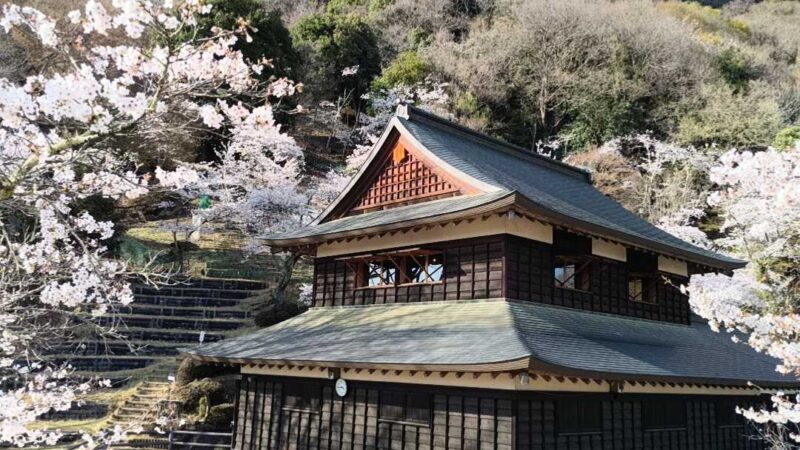
-800x450.png)
