Yogaiyama Castle, Kofu City (Yamanashi Prefecture) Complete Guide | The Birthplace of Takeda Shingen and the History of its Fortified Castle
What is Yogaiyama Castle?
Yōgaiyama Castle (Yōgaisanjō) is a Sengoku period mountain castle located in Kamisekisuiji-chō, Kofu City, Yamanashi Prefecture. Situated in Yamanashi County, Kai Province, it was an important military base that functioned as a fortified castle for Tsutsujigasaki-yakata, the residence of the Takeda clan.
Built on the slopes of Mt. Yogaiyama at an altitude of 780 meters, this castle is geographically advantageous, located in the central northern part of the Kofu Basin, at the apex of the Aikawa alluvial fan. Also known as Yogai Castle and Sekisuiyama Castle, it is currently designated as a national historic site.
Basic Information on Yogaiyama Castle
Location: Kamitsekisuiji-cho, Kofu City, Yamanashi Prefecture
Former Province: Kai Province, Yamanashi District
Classification/Structure: Mountain Castle, Renka-shiki (a type of castle with multiple enclosures)
Year of Construction: Eisho 17 (1520)
Builder: Takeda Nobutora
Main Lords: Takeda clan, Tokugawa clan
Elevation: Yogaiyama mountain summit 780m, main enclosure site 770m
Keep Structure: None (No keep exists as it is a mountain castle)
Common Names/Alternate Names: Yogai Castle, Sekisuiyama Castle, Maruyama Castle
Historic Site Designation: National Historic Site (Designated in 1955)
Continued Top 100 Japanese Castles: Selected (No. 128)
History of Yogaiyama Castle
Background of the Castle’s Construction and Founding During the Eisho Era
The construction of Yogaiyama Castle was undertaken in June of Eisho 17 (1520) by Takeda Nobutora. Nobutora had moved his residence from Kawada Castle in Isawa to Tsutsujigasaki Castle the previous year, Eisho 16 (1519), making the strengthening of the defenses of his new base an urgent necessity.
Tsutsujigasaki Castle is located on the plains of the Kofu Basin, so a fortified castle was needed for emergencies. Nobutora designated Maruyama in Sekisuiji-go, which had been the territory of Komai Masatake, as the castle site, constructing a fort and a signal fire station. This location offered a panoramic view of the Kofu Basin and possessed extremely advantageous defensive conditions.
The Birthplace of Takeda Shingen
The most important event that marks Yogaiyama Castle’s place in history is the birth of Takeda Shingen in Daiei 1 (1521). In this year, Fukushima Masanari, a general of the Imagawa clan, invaded Kai Province. At the time, Nobutora’s wife, Lady Oi, was pregnant and, to escape the fighting, left Tsutsujigasaki Manor and took refuge in Yogaiyama Castle.
In this tense situation, Lady Oi gave birth to a son at Yogaiyama Castle. This child was the future Takeda Harunobu, later known as Takeda Shingen. The fact that Takeda Shingen, hailed as the strongest warrior of the Sengoku period, was born in a military fortress is an episode that has been passed down as a symbolic representation of his life.
Yogaiyama Castle during the Takeda Shingen Era
During Shingen’s time, Yogaiyama Castle continued to serve as a fortified outpost for Tsutsujigasaki Manor. While Shingen strengthened his rule over Kai Province and focused on managing his territory, he maintained Yogaiyama Castle as an important defensive base. However, there are few records of large-scale renovations during Shingen’s time, and it is believed that the basic structure built by Nobutora was preserved.
Renovations during the Tensho Era and Takeda Katsuyori
Yōgaiyama Castle reappeared on the historical stage after the Battle of Nagashino in 1575. In this battle, the Takeda army suffered a crushing defeat at the hands of the Oda-Tokugawa allied forces, losing many important retainers. The head of the clan, Takeda Katsuyori, ordered the renovation of Yōgaiyama Castle the following year, 1576.
This renovation was a defensive measure to compensate for the decline in the Takeda clan’s military strength. Katsuyori was also proceeding with the construction of Shinpu Castle, and the renovation of Yōgaiyama Castle was positioned as part of the reconstruction of the defense network of Kai Province.
Maintenance by the Tokugawa Clan after the Fall of the Takeda Clan
In 1582, the Takeda clan was destroyed by Oda Nobunaga’s conquest of Kai Province. Afterward, Kai Province came under the control of Tokugawa Ieyasu. Following the chaotic period after the Honnō-ji Incident, the Tokugawa clan began to seriously manage Kai Province.
The Tokugawa clan recognized Yōgaiyama Castle as an important military base and maintained it while making renovations. Even into the Keichō era, Yōgaiyama Castle continued to play a part in Kofu’s defense system. It is believed that the stone walls and other remains were added during renovations during this period.
The Road to Abandonment
The abandonment of Yōgaiyama Castle was triggered by the construction of Kofu Castle under the Toyotomi regime. In 1590, Toyotomi Hideyoshi’s nephew, Hashiba Hidekatsu, entered Kofu and began the construction of Kofu Castle.
Kofu Castle was constructed on a large scale as a modern castle and became the new center of Kofu. Consequently, Yōgaiyama Castle, a medieval mountain castle, along with Tsutsujigasaki-kan, ended its military role and was abandoned. It was not reused even after the Battle of Sekigahara and remained buried in history.
Layout and Structure of Yogaiyama Castle
Overall Layout
Yogaiyama Castle is a multi-bailey mountain castle built on the slopes and summit of Mt. Yogaiyama. Multiple baileys are arranged along the ridge, centered around the main bailey (honmaru). The castle grounds extend approximately 500 meters north-south and 300 meters east-west, and it is known as a large-scale mountain castle representative of Kai Province.
The castle’s layout skillfully utilizes the natural terrain, with numerous ingenious features designed to maximize defensive capabilities. By combining steep slopes with artificial cliffs and trenches, multiple lines of defense are constructed against attackers.
Structure of the Main Bailey (Honmaru)
The main bailey is located at an altitude of approximately 770 meters and measures approximately 40 meters east-west and 30 meters north-south. From the main bailey, one can enjoy a panoramic view of the Kofu Basin and the entire city of Kofu, including Tsutsujigasaki-kan.
The main enclosure is surrounded by earthen ramparts, and the entrance (koguchi) is heavily fortified. Within the main enclosure, a flat area believed to be the remains of a building has been identified, suggesting the presence of a central facility where the lord and his retainers were stationed.
Arrangement of the Enclosures
Several enclosures (kuruma) are arranged in a stepped pattern around the main enclosure. These enclosures functioned as forward positions to defend the main enclosure.
Of particular note are the enclosures located to the north and south of the main enclosure. The northern enclosures were responsible for defending against attacks from the Kofu Basin, while the southern enclosures prevented incursions from the mountain side. Each enclosure is demarcated by moats and vertical trenches, designed to function as an independent defensive unit.
Moats and Vertical Trenches
Moats and vertical trenches play a crucial role in the defensive system of Yogaiyama Castle. Moats are dry trenches dug to cut across ridges, preventing enemy advances. Multiple trenches have been identified within the castle grounds, with particularly large trenches along the ridge leading to the main enclosure.
Vertical trenches are trenches dug vertically along slopes, making lateral movement difficult. At Yogaiyama Castle, vertical trenches are positioned on the sides of the main enclosures, a mechanism to prevent flanking attacks.
Remains of Stone Walls
Partial remains of stone walls remain at Yogaiyama Castle. These stone walls are thought to have been added during renovations by the Tokugawa clan rather than during the Takeda clan’s era.
The stone walls are found around the main enclosure and at major gates, and are constructed using the nozurazumi technique. Although small in scale, they are valuable remains that show the changes in castle construction technology from the late Sengoku period to the early modern period.
Coordination with Beacon Towers
Several beacon towers were located around Yogaiyama Castle. These signal fire stations formed a communication network that allowed for the early detection of enemy movements and the transmission of information to Tsutsujigasaki Manor and other strongholds.
In particular, a network of signal fire stations developed by the Takeda clan existed in the mountains surrounding the Kofu Basin, and Yogaiyama Castle functioned as its core.
Highlights of Yogaiyama Castle
View from the Main Enclosure
The greatest highlight of Yogaiyama Castle is the view from the main enclosure. From the main enclosure, at an altitude of 770 meters, you can see the entire Kofu Basin. On a clear day, you can even see the Southern Alps and Mount Fuji, giving you a real sense of why the Takeda clan chose this location as their stronghold.
Below, the ruins of Tsutsujigasaki Manor and the city of Kofu spread out, allowing you to imagine the Takeda clan’s territorial management during the Sengoku period. The view at sunset is especially beautiful and impresses many visitors.
Remains of Enclosures and Earthworks
The remains of enclosures and earthworks within the castle grounds are invaluable for understanding the structure of mountain castles from the Sengoku period. The earthworks around the main enclosure are well-preserved, allowing for close observation of the castle-building techniques of the time.
The arrangement and scale of each enclosure reveal that this castle was not merely an emergency refuge, but a full-fledged mountain castle designed for long-term sieges. The flat areas within the enclosures are thought to have been used for garrisoning soldiers and storing supplies.
The Impressive Moats
The moats of Yogaiyama Castle overwhelm visitors with their scale and depth. In particular, the moat along the ridge leading to the main enclosure reaches several meters in depth, demonstrating the advanced civil engineering techniques of the time.
Seeing the moats in person allows one to experience the difficult situation the attacking forces faced. These moats remain clearly visible even after nearly 500 years, making them an excellent resource for learning about the defensive systems of mountain castles.
Monument to the Birthplace of Takeda Shingen
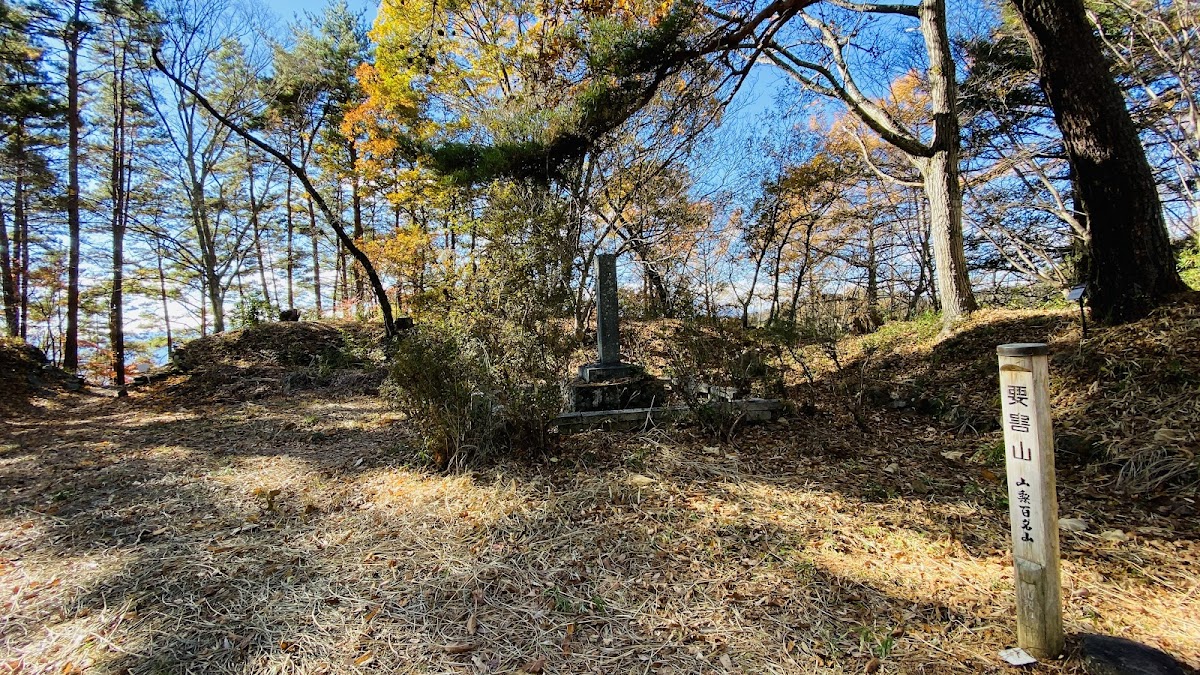
Within the castle grounds stands a stone monument marking the birthplace of Takeda Shingen. This monument indicates that Yogaiyama Castle was not merely a military facility, but a significant location in the history of the Takeda clan.
Many castle enthusiasts and fans of Takeda Shingen visit this monument to take commemorative photos. The fact that the strongest warlord of the Sengoku period was born at this mountain castle greatly enhances the historical value of Yogaiyama Castle.
Atmosphere of the Ascent Route
The ascent route to Yogaiyama Castle retains a strong atmosphere of the Sengoku period. The experience of climbing the mountain path, passing through baileys and moats one after another, is like reliving a siege battle.
While the ascent route is well-maintained, there are steep slopes and stone steps, requiring a moderate amount of exercise. This process of climbing itself is one of the charms of Yogaiyama Castle.
Information on the Continued Top 100 Japanese Castles Stamp
Yōgaiyama Castle was selected as one of the “Continued Top 100 Japanese Castles” in 2017 (No. 128). This indicates that it is a castle of high historical and cultural value, as selected by the Japan Castle Association.
Stamp Location
The stamp for the Continued Top 100 Japanese Castles is located at the following location:
Kofu City Fujimura Memorial Hall (Approximately 3 minutes walk from Kofu Station North Exit)
- Address: 2-2-1 Kitaguchi, Kofu City, Yamanashi Prefecture
- Opening Hours: 9:00 AM – 5:00 PM (Last entry at 4:30 PM)
- Closed: Mondays (or the following day if Monday is a public holiday), New Year holidays
- Admission Fee: Free
The stamp is located at the reception of the memorial hall and can be stamped anytime during opening hours. Bring your stamp book or obtain a stamp form at the memorial hall.
How to Enjoy the Stamp Rally
When enjoying the Continued Top 100 Japanese Castles Stamp Rally, we recommend actually climbing to Yogaiyama Castle before collecting the stamp. Understanding the castle’s history and structure before collecting the stamp will provide a deeper sense of satisfaction.
In addition to Yogaiyama Castle, Kofu City also has Kofu Castle (Maizuru Castle), which is also selected as one of Japan’s Top 100 Castles. Visiting both castles allows you to learn about the differences between medieval mountain castles and early modern castles.
Access
Access by Car
From Kofu-Showa IC on the Chuo Expressway
- Travel time: Approximately 20 minutes
- Take National Route 20 to Prefectural Route 31 (towards Chiyoda Lake/Sekisui-ji Temple)
- Proceed towards Sekisui-ji Onsen and reach the trailhead parking lot
Parking Information
- Yogaiyama Trailhead Parking Lot: Free, approximately 10 cars
- Address: Kami-Sekisui-ji-cho, Kofu City
- A short walk from the parking lot to the trailhead
The parking lot is small and can get crowded on holidays. We recommend visiting early in the day.
Access by Public Transportation
From JR Chuo Main Line Kofu Station
Take a Yamanashi Kotsu bus from the north exit of Kofu Station:
- Route: Bus bound for Sekisui-ji Temple
- Travel time: Approximately 30 minutes
- Bus stop to get off at: “Sekisui-ji Temple”
- Walk from the bus stop to the trailhead: Approximately 15 minutes
Notes
- Bus service is limited, so please check the timetable in advance.
- You can check the latest timetable on the Yamanashi Kotsu website.
- We recommend checking the return bus schedule as well.
By Taxi
If taking a taxi from Kofu Station:
- Travel time: Approximately 20 minutes
- Fare: Approximately 3,000 to 4,000 yen one way
Time Required from the Trailhead to the Main Keep
The time required to climb from the trailhead to the main keep is as follows:
Ascent: Approximately 40-60 minutes (may vary depending on physical condition and breaks)
Descent: Approximately 30-40 minutes
The trail is well-maintained, but due to steep slopes and stairs, appropriate hiking attire and footwear are necessary. Particular caution is needed after rain, as the trail can become slippery.
Combinations with Nearby Facilities
Sekisui-ji Onsen
- Hot spring facility near the trailhead
- Ideal for relaxing after climbing the castle
- Some inns offer day-use bathing
Takeda Shrine (Tsutsujigasaki Mansion Ruins)
- Approximately 15 minutes by car from Yogaiyama Castle
- A shrine built on the site of the Takeda clan’s residence
- Recommended to visit together with Yogaiyama Castle
Kofu Castle (Maizuru Castle Park)
- 5 minutes on foot from Kofu Station
- Selected as one of Japan’s Top 100 Castles
- Highly valuable as a representative example of early modern castles
Precautions When Climbing the Castle
Clothing and Equipment
Yogaiyama Castle is a full-fledged mountain castle, and preparation for climbing is necessary:
Recommended Clothing
- Comfortable clothing (long sleeves and long pants)
- Trekking shoes or hiking boots
- Hat (for sun protection)
- Rain gear (in case of changing weather)
Items to Bring
- Drinking water (500ml or more recommended)
- Towel
- Insect repellent spray (summer)
- Camera (for taking photos of scenery and ruins)
- Smartphone (for map apps and emergency contact)
Best time to visit the castle
Spring (March-May)
- Beautiful fresh greenery and moderate temperatures, ideal for visiting the castle
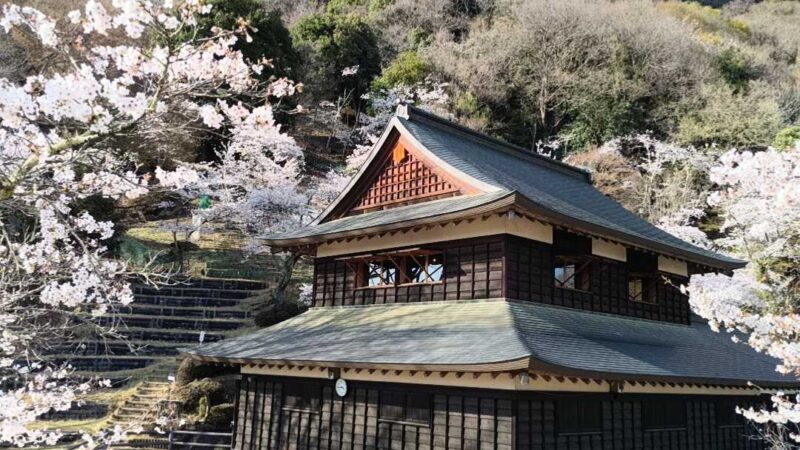
- The scenery is especially beautiful during cherry blossom season
Autumn (September-November)
- Beautiful autumn foliage and excellent views
- Comfortable temperatures, making it easy to visit the castle
Summer (June-August)
- Heat protection and hydration are essential
- Early morning visits are recommended
- Insect repellent is necessary due to the abundance of insects
Winter (December-February)
- Caution is needed due to the possibility of snow and ice
- On clear days, the air is crisp and the views are superb
- Take thorough precautions against the cold
Safety Precautions
- Avoid climbing alone; visit with others whenever possible.
- If the weather deteriorates, do not force yourself to climb and turn back.
- Do not enter areas other than the designated climbing route.
- Beware of wild animals (wild boars, bears, etc.).
- Check your cell phone signal strength beforehand.
- Be sure to descend before sunset.
Information on nearby spots around Yogaiyama Castle
Takeda Shrine (Tsutsujigasaki Mansion Ruins)
This shrine is built on the site of Tsutsujigasaki Mansion, the main castle of Yogaiyama Castle. It was the residence of three generations of the Takeda clan: Nobutora, Shingen, and Katsuyori. Currently, it is a shrine dedicated to the Takeda clan and attracts many visitors.
The moats and earthworks of the mansion ruins are well-preserved, allowing visitors to understand the structure of a medieval residence. The treasure hall displays items related to the Takeda clan.
Kai Zenkoji Temple
This temple was established by Takeda Shingen during the Battle of Kawanakajima, when he feared the destruction of Shinano Zenkoji Temple by fire and moved its principal image to this temple. The main hall, the largest wooden structure in eastern Japan, is a magnificent sight and is designated a National Important Cultural Property.
Shosenkyo Gorge
This scenic spot, considered the most beautiful gorge in Japan, is located in the northern part of Kofu City. It’s about a 30-minute drive from Yogaiyama Castle, offering stunning natural beauty. The autumn foliage is particularly spectacular.
Kofu City Historical Park (in front of the Yamanashi Prefectural Government Annex)
This park is a restored part of Kofu Castle. The stone walls and gates have been restored, allowing visitors to experience the atmosphere of a modern castle. It’s close to Kofu Station and easily accessible.
Winery Tour
The area around Kofu is one of Japan’s leading wine-producing regions. Many wineries can be found in the Katsunuma and Shioyama areas, offering tours and tastings. Recommended as a sightseeing activity after visiting Yogaiyama Castle.
Historic Site Designation and Cultural Property Value
Yogaiyama Castle as a National Historic Site
Yogaiyama Castle was designated a national historic site in 1955. This signifies the recognition of its high historical and academic value as a mountain castle from the Sengoku period.
The reasons for the designation include the following:
- It played an important role as a fortified castle of the Takeda clan.
- Its historical significance as the birthplace of Takeda Shingen.
- The structure of the Sengoku period mountain castle is well preserved.
- It is an indispensable site for understanding the medieval history of Kai Province.
Significance of Selection as one of the Continued Top 100 Japanese Castles
The selection of Yogaiyama Castle as one of the Continued Top 100 Japanese Castles in 2017 indicates a renewed appreciation of its value. The selection by the Japan Castle Association is based on a comprehensive assessment of the castle’s completeness, historical importance, and state of preservation.
The selection has increased its national recognition, attracting many castle enthusiasts. This has also contributed to the promotion of local tourism.
Efforts for Preservation and Utilization
Kofu City is actively working on the preservation and utilization of Yogaiyama Castle. Regular mowing, maintenance of the climbing paths, and installation of information boards are carried out, creating an environment where visitors can safely explore the castle ruins.
Furthermore, local volunteer groups conduct cleaning and guiding activities, raising awareness among local residents about the preservation of historical sites.
Reviews and Ratings of Yogaiyama Castle
Ratings from Castle Enthusiasts
Yogaiyama Castle is highly regarded among castle enthusiasts. The following points are particularly highly regarded:
Preservation of the Ruins
- Clearly preserved baileys, moats, and earthworks
- Ideal for learning about the structure of mountain castles during the Sengoku period
- Minimal later alterations, making it easy to imagine the castle’s original appearance
Historical Romance
- Special significance as the birthplace of Takeda Shingen
- A firsthand experience of the Takeda clan’s history
- Intriguing relationship with Tsutsujigasaki Castle
Superb Views
- Spectacular views of the Kofu Basin from the main keep
- A clear appreciation of its excellent location as a fortified castle
- An excellent spot for photography
Visitor Feedback
Here are some comments from people who have actually visited Yogaiyama Castle:
“The climb was tough, but the view from the main keep was amazing. It’s deeply moving to think that Takeda Shingen was born here.”
“I was surprised by the scale of the moat. You can really feel the high level of civil engineering technology of the Sengoku period.”
“I visited as part of my collection of stamps for the Continued Top 100 Japanese Castles. It was a wonderful mountain castle that exceeded my expectations.”
“The hiking trail is well-maintained and easy to walk. Even beginners can try it.”
“Visiting it together with Takeda Shrine gives a good understanding of the history of the Takeda clan.”
Yogaiyama Castle and Kuma Castle
Approximately 2 kilometers west of Yogaiyama Castle lies the site of a mountain castle called “Kuma Castle.” Like Yogaiyama Castle, Kuma Castle was built by the Takeda clan and is thought to have functioned as a subsidiary castle of Yogaiyama Castle.
Overview of Kuma Castle
Kuma Castle is a mountain castle built on Kuma Castle Mountain, which is approximately 800 meters above sea level. Although smaller in scale than Yogaiyama Castle, remnants such as baileys and moats remain.
Kuma Castle’s role was to defend the western side of Yogaiyama Castle and to function as a watchtower over the western part of the Kofu Basin. It is presumed that the two castles communicated using smoke signals and formed an integrated defense system.
Relationship with Yogaiyama Castle
Yogaiyama Castle and Kuma Castle were important bases in the Takeda clan’s Kofu defense network. With Tsutsujigasaki Mansion at the center, Yogaiyama Castle was positioned to the east and Kuma Castle to the west, strengthening the defense of the northern part of the Kofu Basin.
The cooperation between the two castles allowed for early detection of enemy incursions and the implementation of appropriate defensive measures. This multi-castle defense system demonstrates the skillful military strategy of the Takeda clan.
Summary
Yogaiyama Castle is a historically important mountain castle built by Takeda Nobutora and the birthplace of Takeda Shingen. Serving as a fortified outpost for Tsutsujigasaki Castle, it played a central role in the Takeda clan’s defense of Kofu.
Built on Mt. Yogaiyama at an altitude of 780 meters, this castle boasts an excellent location and robust defensive structures, making it a highly regarded example of a Sengoku period mountain castle. Its designation as a National Historic Site and one of the Continued Top 100 Japanese Castles speaks to its high historical and cultural value.
The well-preserved remains, such as baileys, moats, and earthworks, are invaluable resources for learning about Sengoku period castle construction techniques. The view of the Kofu Basin from the main keep is magnificent, impressing many visitors.
When visiting Kofu, be sure to climb Mt. Yogaiyama Castle and experience the history of the Takeda clan and the allure of a Sengoku period mountain castle. Visiting it along with Takeda Shrine and Kofu Castle will allow you to gain a deeper understanding of Kofu’s history.
References
For more detailed information about Yogaiyama Castle, please refer to the following sources:
- *Kai no Kuni Shi* (Held by Yamanashi Prefectural Library)
- *Takeda-shi Nenpu* (Compiled by the Yamanashi Prefectural History Compilation Committee)
- *Nihon Jōkaku Taikei Vol. 8 Nagano/Yamanashi* (Shin Jinbutsu Ōraisha)
- *Zoku Nihon 100 Meijō Official Guidebook* (Supervised by the Japan Castle Association)
- *Kōfu-shi Shi* (Compiled by the Kōfu City Board of Education)
- *Yamanashi no Shiro* (Yamanashi Prefectural Board of Education)
- *Takeda Shingen* (Written by Masayoshi Isogai)
- *Sengoku no Shiro* (Written by Yasuhiro Nishigaya)
These sources provide detailed information about the history, structure, and relationship of Yogaiyama Castle with the Takeda clan.