Nitanome Castle (Sakata City, Yamagata Prefecture) Complete Guide: History and Highlights of Yamagata Prefecture’s Oldest Castle
What is Nitanome Castle?
Nitanome Castle is a flatland castle located in Nitanome, Hon-Tate, Sakata City, Yamagata Prefecture. It is considered the oldest castle in Yamagata Prefecture and is currently protected as a prefectural designated historical site. It was the residence of the Sudo clan, who were appointed as the governors of Dewa Province by Minamoto no Yoshiie, and occupies an important position in the history of castles in the Tohoku region during the medieval period.
The site of the main keep is now the grounds of the Omokami Shrine, where remains such as earthworks and moats from the past can be seen. Although not large in scale, it is a valuable historical site that conveys the appearance of a samurai residence in the Tohoku region from the late Heian period to the Kamakura period.
History of Nittame Castle
Relationship between Minamoto no Yoshiie and the Sudo Clan
The history of Nittame Castle dates back to the Later Three Years’ War (1083-1087) in the late Heian period. Minamoto no Yoshiie strengthened his influence in Dewa Province due to his achievements in suppressing an internal conflict within the Kiyohara clan, a powerful family in Oshu. It is said that at that time, Yoshiie appointed the Sudo clan, a trusted warrior, as the governor of Dewa Province, entrusting them with governing the area.
As a reward from Yoshiie, the Sudo clan was given the area of present-day Motodate in Sakata City, where they built their residence. This is considered the beginning of Nittame Castle. Unlike the modern castles with stone walls, the castles of that time were of a form called a “mansion,” surrounded by earthen ramparts and moats.
Development in the Medieval Period
From the Kamakura period to the Muromachi period, the Sudo clan maintained their power as a powerful samurai family in the Shonai region. Nittame Castle functioned as the base of the Sudo clan and served as a governing center for the surrounding region.
However, with the arrival of the Sengoku period (Warring States period), the Shonai region became the stage for the power struggle between the Mogami and Uesugi clans. While historical records regarding the Sudo clan’s activities are scarce and details are unclear, it is believed that the military function of Nittame Castle gradually declined during this period.
Changes Since the Early Modern Period
In the Edo period, the Shonai region became part of the Shonai Domain, ruled by the Sakai clan. Nittame Castle had already been abandoned, and the Omokimi Shrine was established on the site of the main keep. The Omokimi Shrine is a branch shrine of an ancient shrine that considers Mount Chokai, one of the Dewa Sanzan (Three Mountains of Dewa), as its sacred mountain, and remains a center of local faith.
The fact that the shrine grounds were maintained even after the Meiji era ultimately contributed to the preservation of the castle ruins. In the Showa period, it was designated a historical site of Yamagata Prefecture and has been carefully protected as a regional historical heritage to this day.
Structure and Layout of Nittame Castle
Characteristics as a Flatland Castle
Nittame Castle is a typical flatland castle. Built on the flat land of the Shonai Plain, it lacked natural fortifications but was protected by artificial defensive structures: earthworks and moats.
The castle was relatively small and is estimated to have had a simple structure, either a single enclosure (consisting of one bailey) or a multi-enclosure (having multiple baileys). This is a typical form for samurai residences from the late Heian period to the early Kamakura period.
Existing Remains
Earthworks
Within the grounds of Omokimi Shrine, a portion of the original earthworks remains in good condition. It is approximately 2-3 meters high and can be seen as having been built to surround the castle. The top of the earthworks is flat, suggesting that soldiers were positioned there during defense.
Observing the structure of the earthworks, traces of rammed earth construction (a technique of stacking soil while compacting it) can be seen, providing insight into the level of civil engineering technology at the time.
Moat Remains
A moat surrounded the outside of the earthen rampart. While most of it is now filled in, traces of the moat can still be seen in some areas. The moat is estimated to have been approximately 5-8 meters wide and is believed to have been a dry moat (a moat not filled with water), rather than a water moat.
There are no clear records regarding the moat’s depth, but judging from the remaining topography, it is estimated to have been around 2-3 meters deep.
Main Enclosure Remains
The current grounds of the Omokimi Shrine correspond to the main enclosure (honmaru). The area is approximately 50 meters square, and it is believed that the residence of the Sudo clan stood here. Because the shrine grounds are maintained, the original ground surface cannot be confirmed, but the extent of the enclosure can be estimated from slight differences in elevation.
Related Remains in the Surrounding Area
Around Nittame Castle, there are place names and legends that seem to be related to the Sudo clan. The place name “Hon-Tate” itself may mean “main camp” or “headquarters,” suggesting that this area was the center of the Sudo clan.
Furthermore, nearby are the remains of a temple said to be the family temple of the Sudo clan, and areas presumed to be the sites of the retainers’ residences, suggesting the existence of a medieval settlement centered around Nittame Castle.
Highlights of Nittame Castle
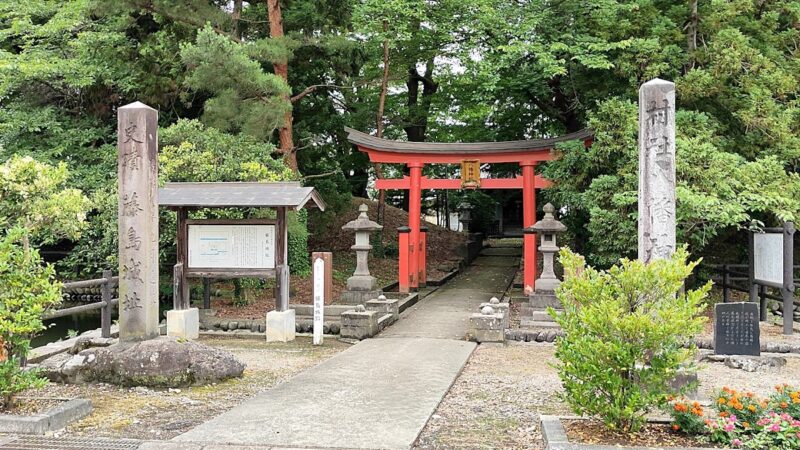
Omokimi Shrine
The central point of interest when visiting the Nittame Castle ruins is Omokimi Shrine. As a branch shrine of Omokimi Shrine, which considers Mount Chokai as its sacred mountain, it has attracted the faith of the local people.
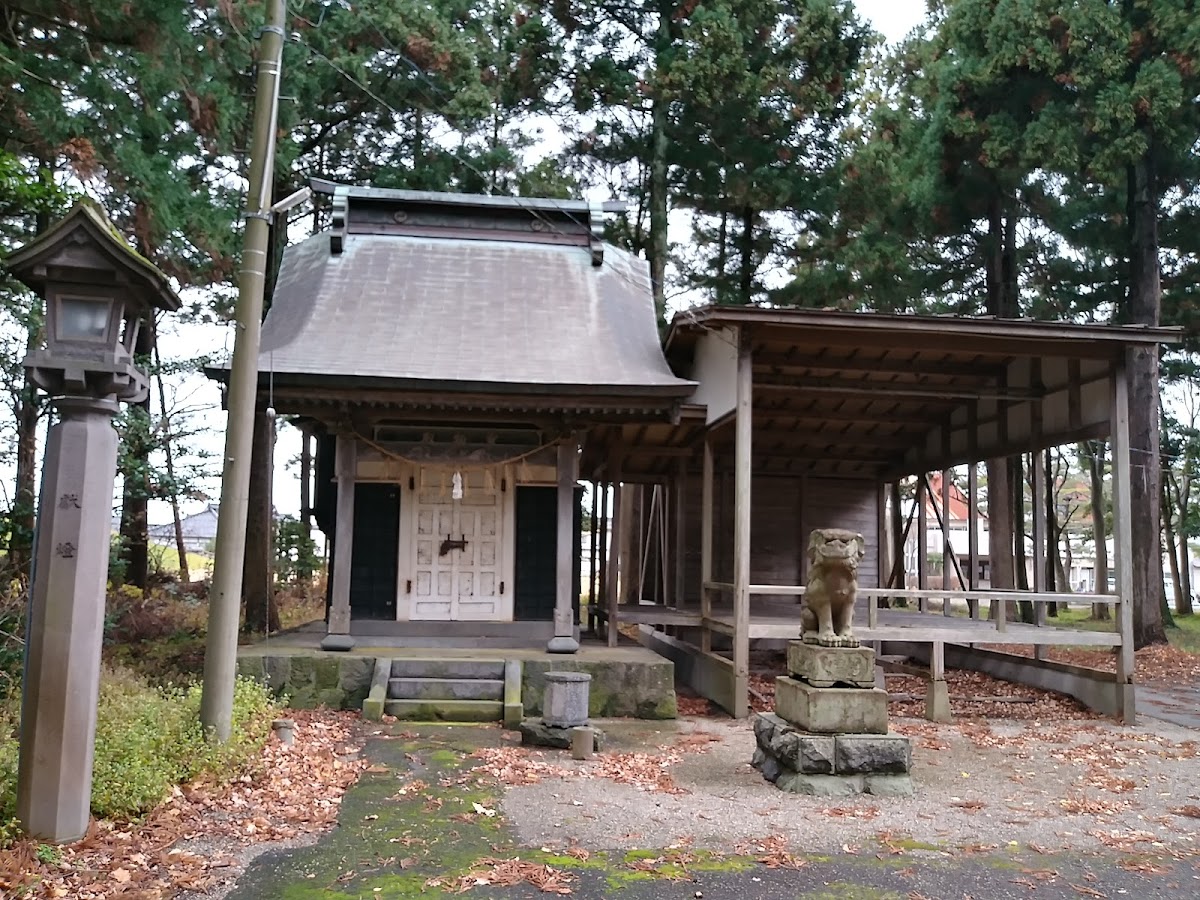
The shrine building dates from the late Edo period to the Meiji period and is located in the center of the main keep site. The grounds are enveloped in a tranquil atmosphere, allowing visitors to feel the remnants of the castle in its heyday.
When visiting, it is recommended to observe the earthworks remaining behind and around the shrine building. Because the site has been maintained as a shrine, the remains are relatively well preserved.
Points to Observe the Earthworks
Earthworks that are particularly clear remain on the north and east sides of the shrine grounds. By observing their height, width, and cross-sectional shape, you can understand the actual defensive structures of a medieval castle. The surface of the earthen rampart is covered with vegetation, which helps prevent erosion. From spring to summer, it is covered in greenery, and in autumn, the autumn leaves are beautiful, allowing visitors to enjoy the changing scenery throughout the seasons.
Traces of the Moat
On the outer perimeter of the temple grounds, especially on the east and south sides, traces of the moat remain as small depressions. Careful observation of the local topography reveals micro-topography indicating the former presence of a moat.
While many parts are completely filled in, there are areas, such as the boundaries with surrounding fields, where the original topography is preserved.
Value as the Oldest Castle in the Prefecture
The greatest value of Nittame Castle lies in the fact that it is the oldest castle in Yamagata Prefecture. While Yamagata Prefecture boasts numerous famous castles such as Yamagata Castle, Yonezawa Castle, and Tsurugaoka Castle, these all developed after the Sengoku period (Warring States period).
Nittame Castle has a history dating back to the late Heian period and is highly valued academically as a valuable example of the early form of samurai residences in the Tohoku region. Although small in scale, its historical value is immense.
Access Information
Location
Address: Nittame, Honjo, Sakata City, Yamagata Prefecture (within the grounds of Omokimi Shrine)
Access by Public Transportation
By JR:
- Get off at Sakata Station on the JR Uetsu Main Line
- Take the Shonai Kotsu bus from Sakata Station bound for Yuza via Honjo or Fukiura
- Get off at the Honjo bus stop and walk for approximately 10 minutes.
Since bus services are limited, it is recommended to check the timetable in advance.
Access by Car
If using the expressway:
- Approximately 15 minutes from the Sakata Chuo Interchange on the Nihonkai Tohoku Expressway
- Head north on National Route 7 and follow the signs for the Honjo area.
Parking: There are several parking spaces within the grounds of Omokimi Shrine. Please use these spaces respectfully as they are for worshippers only.
Visiting Hours and Fees
Visiting Hours: The shrine grounds are always open (daytime visits are recommended).
Admission Fee: Free
Estimated Time Required: Approximately 30 minutes to 1 hour
As this is shrine grounds, please observe proper worship etiquette. Especially during festivals and other events, please refrain from visiting or follow the instructions of shrine staff.
Best Season to Visit
Spring (April-May)
During cherry blossom season, cherry blossoms bloom in and around the shrine grounds, adding a vibrant touch to the castle ruins. The earthworks are lush with greenery, making this an ideal season for observing the historical remains.
Summer (June-August)
The greenery is dense, making the earthworks’ shape most clearly visible. However, overgrown vegetation can make detailed observation difficult. Don’t forget insect repellent.
Autumn (September-November)
The temple grounds are beautifully colored during the autumn foliage season. The weather is stable, making it an ideal time for a stroll. Mid-October to early November is especially recommended.
Winter (December-March)
During the snowy season, the earthworks’ shape is highlighted by the shadows cast by the snow, creating a unique landscape. However, the ground can be slippery, so warm clothing and safety precautions are necessary.
Nearby Tourist Spots
Historical Spots in Sakata City
Former Honma Family Residence (approx. 20 minutes by car): The residence of the Honma family, one of Japan’s leading landowners. A nationally designated Important Cultural Property.
Sankyo Warehouses (approx. 20 minutes by car): A group of rice warehouses from the Meiji era. A representative tourist spot in Sakata, known for its beautiful zelkova tree-lined streets.
Former Abumiya (approx. 20 minutes by car): A building of a shipping agent from the Edo period. A valuable historical site that conveys the prosperity of Sakata.
Nearby Castles
Tsurugaoka Castle (approx. 30 minutes by car): The site of the castle of the Sakai clan of the Shonai Domain, selected as one of the Continued Top 100 Castles of Japan. Currently maintained as Tsuruoka Park.
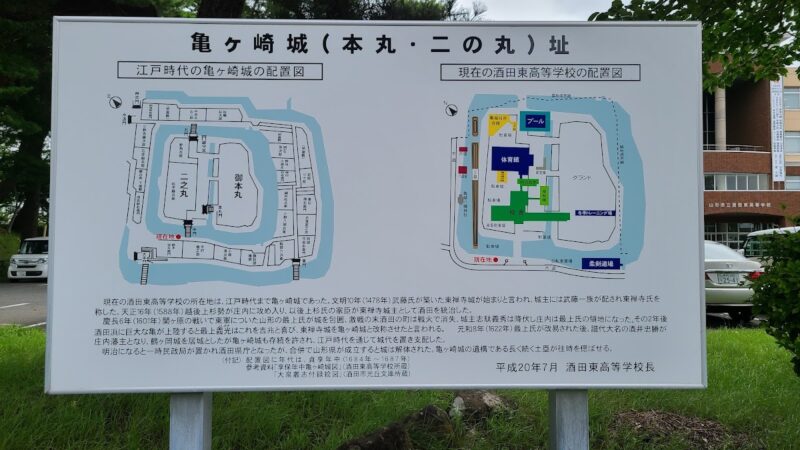
Kamegasaki Castle (approx. 20 minutes by car): The site of a castle from the medieval to early modern period located within Sakata City.
Sunagoshi Castle (approx. 15 minutes by car): The site of a flatland castle within Sakata City. Known as the residence of the Muto clan.
Tozenji Castle (approx. 25 minutes by car): A medieval castle in the Shonai region. The remains of the mountain castle are well preserved.
Natural and Scenic Spots
Mt. Chokai (approx. 40 minutes by car): A famous peak with an elevation of 2,236m, also known as Dewa Fuji. The sacred mountain of Omokami Shrine.
Sixteen Arhat Rocks (approx. 30 minutes by car): A group of strangely shaped rocks created by the rough waves of the Sea of Japan. A nationally designated scenic spot.
Tamadare Falls (approx. 35 minutes by car): A beautiful waterfall fed by the groundwater of Mt. Chokai.
Points to Enjoy Nittame Castle
Recommendation for Prior Study
Since Nittame Castle does not have large stone walls or a keep, learning about its history and structure beforehand will allow you to enjoy it more deeply. It would be particularly helpful to understand the following points:
- The history of Minamoto no Yoshiie and the Later Three Years’ War
- Characteristics of samurai residences from the late Heian period to the Kamakura period
- Defensive systems using earthworks and moats
- The history of the Sudo clan and their role in the Shonai region
Photography Tips
When photographing castle ruins, pay attention to the following points to take good pictures:
- Find an angle that shows the height and shape of the earthworks
- A composition combining the shrine building of Omokimi Shrine and the earthworks
- Shooting from a low angle to emphasize the micro-topography of the moat remains
- Landscape photography combining seasonal plants and ruins
Please be very careful about photography etiquette as this is a shrine site.
Recommended Combination Visits
Since visiting Nittame Castle alone offers limited time, we recommend combining your visit with other nearby castle ruins and tourist attractions:
Shonai Castle Tour Course: Nittame Castle → Kamegasaki Castle → Tsurugaoka Castle (1-day course)
Sakata Historical Exploration Course: Nittame Castle → Former Honma Family Residence → Sankyo Warehouse → Former Abumiya (Half-day to 1-day course)
Chokai Mountain Foothills Tour Course: Nittame Castle → Chokai Mountain (5th station) → Tamasudare Waterfall → Juroku Rakan Rock (1-day course)
Nittame Castle and the Castle Culture of Yamagata Prefecture
Characteristics of Castles in Yamagata Prefecture
Yamagata Prefecture boasts a diverse array of castles. Yamagata Prefecture boasts numerous castles that flourished from the Sengoku period to the Edo period, including Yamagata Castle (selected as one of Japan’s Top 100 Castles), Tsurugaoka Castle and Yonezawa Castle (both included in the Continued Top 100 Castles of Japan), Hasedo Castle, and Kaminoyama Castle.
Many of these castles were built and developed by Sengoku daimyo and Fudai daimyo such as the Mogami, Uesugi, and Sakai clans. They are primarily early modern castles with structures such as stone walls, turrets, and keeps.
The Position of Nittame Castle
Within this context, Nittame Castle occupies a unique position in the history of castles in Yamagata Prefecture. Its history dates back to the late Heian period, making it a valuable historical site that conveys the appearance of a samurai residence from before the Sengoku period.
While its scale and structure are simpler compared to later castles, it is an indispensable presence for understanding the origins of castles in Yamagata Prefecture. Visiting Nittame Castle will allow you to experience the long history of castle culture in Yamagata Prefecture.
Significance in the History of Castles in the Tohoku Region
In the Tohoku region, following the Former Nine Years’ War and the Later Three Years’ War at the end of the Heian period, many samurai groups were formed under the influence of the Minamoto clan. Nittame Castle is a product of that era and an important example of the early form of samurai residences in the Tohoku region.
While castles from a similar period exist throughout Tohoku, examples with well-preserved remains and protected by historical site designation are limited. Nittame Castle provides valuable material for the study of medieval castles in the Tohoku region.
Efforts for Preservation and Utilization
Historic Site Designation and Protection
The Nittame Castle ruins are legally protected as a Yamagata Prefecture designated historical site. This protects the remains from destruction and uncontrolled development, making it possible to pass them on to future generations.
Maintaining the site as part of the grounds of the Omokami Shrine has also significantly contributed to the preservation of the remains. Daily management by shrine officials and local residents forms the foundation for maintaining the castle ruins in good condition.
Future Challenges and Prospects
Nittame Castle is not as well-known as Yamagata Castle or Tsurugaoka Castle. However, its historical value is extremely high, and further research, study, and information dissemination are expected in the future.
Specifically, the following initiatives can be considered:
- Detailed understanding of the remains through archaeological excavations
- Improvement of information boards and explanatory panels
- Restoration of its appearance using digital technology
- Utilization for local history education
- Enhancing its appeal as a tourist resource
It is hoped that Nittame Castle, a treasure of the region, will become known to more people and become a place that many will visit.
Summary
Nittame Castle is the oldest castle site remaining in Yamagata Prefecture, located in Sakata City. Built by the Sudo clan during the late Heian period, in the time of Minamoto no Yoshiie, this castle, though not large in scale, is a valuable historical site that conveys the early form of samurai residences in the Tohoku region.
Currently, the site of the main keep is the grounds of the Omokimi Shrine, where you can observe remnants such as earthworks and moats. Standing in the quiet grounds and reflecting on the history of yesteryear, you can truly appreciate the deep history of castle culture in Yamagata Prefecture.
When you visit Sakata City, be sure to stop by the Nittame Castle ruins. While there are no magnificent keeps or stone walls, it possesses the weight of nearly a thousand years of history and the value of a cultural heritage preserved by the local people. Combining a visit with other nearby tourist spots will allow you to enjoy a fulfilling historical exploration of the Shonai region.