Takadama Castle (Takadama-jo): History and Highlights in Tendo City | A Thorough Explanation of Castles in Yamagata Prefecture
Located in Takadama, Tendo City, Yamagata Prefecture, Takadama Castle is a flatland castle that played an important role in Dewa Province (present-day Yamagata Prefecture) from the Muromachi period to the Sengoku period. It has a history of changing lords many times between the Tendo and Mogami clans, and is known today as a valuable historical site with remnants of earthworks and moats.
This article provides a detailed explanation of the history of Takadama Castle, from its construction to its abandonment, the successive lords, the characteristics of its castle structure, and the remains that can be seen today.
Table of Contents
- Overview of Takatsuma Castle
- History of Takatsuma Castle
- Successive Castle Lords and Changes in Territory Lords
- Castle Structure and Layout
- Remaining Structures and Points of Interest
- Access to Takatsuma Castle and Surrounding Area Information
- Relationship with Other Castles in Tendo City
Overview of Takatsuma Castle
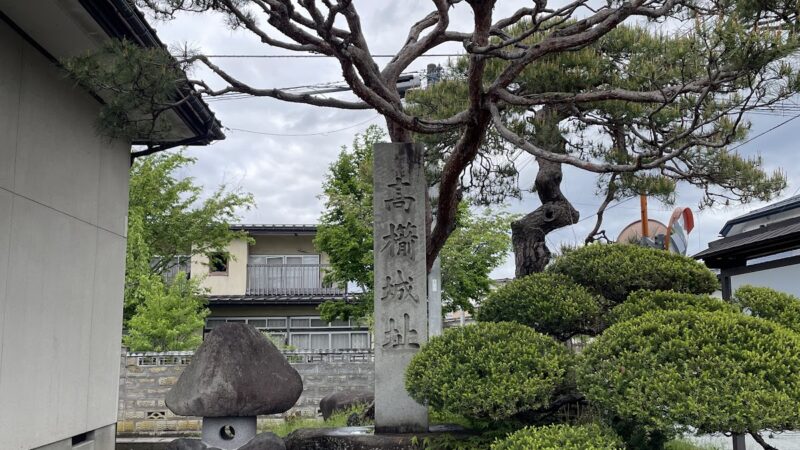
Takatsuma Castle was a flatland castle located in Takatsuma, Tendo City, Yamagata Prefecture, also known as Takatsuma-kan. It belonged to Murayama District, Dewa Province, and functioned as a base for regional control from the Muromachi period to the Sengoku period.
Basic Information
- Location: Takatsuma, Tendo City, Yamagata Prefecture
- Castle Type: Flatland Castle
- Construction Period: Oei Era (1394-1428)
- Builder: Takatsuma Yoshinao (legend)
- Main Lords: Takatsuma clan, Tendo clan, Mogami clan
- Abandonment Period: Early Edo period
- Remains: Earthworks, moat remains
- Designation: City-designated Historic Site (Tendo City)
Takatsuma Castle is located slightly south of the center of Tendo City, built on a plain between the Tachigawa and Midaregawa rivers. This location was a strategic transportation hub in the Yamagata Basin, making it militarily and economically important.
History of Takatsuma Castle
Legend of its Construction during the Oei Era
Regarding the construction of Takatsuma Castle, a legend remains that it was built during the Oei era (1394-1428) by Takatsuma Yoshinao. The Takatsuma clan were local lords of Murayama District in Dewa Province and held considerable power in the region.
The Oei era coincided with the reign of Ashikaga Yoshimochi, the fourth shogun of the Muromachi shogunate, and a time when the Shiba clan held power as the Oshu Tandai (governor of Oshu) in the Tohoku region. It is believed that the Takatsuma clan consolidated their regional control while maintaining relations with this central power.
Large-Scale Renovation during the Bunmei Era
The basic form of Takatsuma Castle as seen today is thought to have been renovated during the Bunmei era (1469-1487). This period coincided with the time around the Onin War (1467-1477), a time of intense warfare throughout Japan.
It is presumed that Takatsuma Castle developed from a mere residence into a full-fledged castle through renovations during the Bunmei era. Defensive functions were significantly strengthened through the construction of earthworks, the excavation of moats, and the arrangement of baileys.
The Conflict Between the Tendō and Mogami Clans
With the arrival of the Sengoku period, Takatsuma Castle became a target of conflict between two major powers: the Tendō and Mogami clans.
Tendō Clan Rule
The Tendō clan were local lords based in Murayama District, Dewa Province, with Tendō Castle (Maizuru Castle) as their residence. The Tendō clan is said to have descended from the Shiba clan and wielded considerable power in the Murayama region from the Muromachi period to the Sengoku period. Takatsuma Castle functioned as a subsidiary castle of Tendō Castle under the control of the Tendō clan for a period.
Mogami Clan Expansion
On the other hand, the Mogami clan was a Sengoku daimyo based in Yamagata Castle, expanding their power from Mogami District, Dewa Province. Particularly during the time of Mogami Yoshiaki (1546-1614), the Mogami clan actively expanded into the Murayama region, leading to fierce conflict with the Tendo clan.
In 1584, Mogami Yoshiaki attacked the Tendo clan and captured Tendo Castle. This battle led to the downfall of the Tendo clan, and it is believed that Takatama Castle also came under the control of the Mogami clan.
Mogami Clan Rule and Abandonment of the Castle
After Mogami Yoshiaki’s unification, Takatama Castle functioned as a branch castle of the Mogami clan. The Mogami clan governed their territory by centering their operations around Yamagata Castle and strategically placing numerous branch castles in the surrounding area; Takatama Castle was one of these.
In the Battle of Sekigahara in 1600, Mogami Yoshiaki fought on the Tokugawa side against the Uesugi clan (Keichō Dewa Campaign), and his military achievements earned him the title of daimyo with a domain of 570,000 koku. However, in 1622 (Genna 8), the Mogami clan was dispossessed of their domain and forced to leave Dewa Province.
Afterward, the Torii, Hoshina, and Matsudaira clans, among others, ruled Yamagata, but it is believed that Takatsuma Castle had already been abandoned by the early Edo period. After losing its function as a castle, the surrounding area was converted into farmland, which remains the case today.
Successive Lords and Changes in Rulers
Regarding the successive lords of Takatsuma Castle, due to limited historical records, many details are unknown, but the following changes are presumed to have occurred:
Takatsuma Clan Era (Oei Era to Mid-Muromachi Period)
- Takatsuma Yoshinao: The person believed to have built the castle. It is said that he constructed the castle in Takatsuma during the Oei era.
- Successive Takatsuma Clan Leaders: Details are unknown, but it is believed that the Takatsuma clan ruled the castle until the Bunmei era.
Period of Tendo Clan Rule (Late Muromachi Period to Mid-Sengoku Period)
There was a period when the Tendo clan ruled Takatama Castle, and it functioned as a subsidiary castle of Tendo Castle. It is presumed that a member of the Tendo clan or a vassal was appointed as the castle lord.
Period of Mogami Clan Rule (After 1584 to Early Edo Period)
- Samurai under Mogami Yoshiaki: After the fall of the Tendo clan in 1584, it is possible that a vassal of the Mogami clan was appointed as the castle lord.
- Abandoned Castle: By the early Edo period, it had already lost its function as a castle and was abandoned.
Castle Structure and Layout
Takatama Castle was built as a flatland castle and has characteristics different from mountain castles.
Characteristics of a Flatland Castle
A flatland castle is a castle built on flat land. Compared to mountain castles, it has inferior defensive capabilities, but it has the advantage of being easily able to function as a political and economic center. The plains of the Yamagata Basin where Takatsuma Castle is located have high agricultural productivity and convenient transportation, making it a suitable location for a lord’s residence.
Layout and Enclosure Arrangement
Although a detailed layout map of Takatsuma Castle does not remain, on-site surveys and topographical analysis suggest the following structure:
Main Enclosure (Honmaru)
The main enclosure, the center of the castle, was surrounded by earthworks and a moat. It is believed that the lord’s residence and important facilities were located here.
Second and Third Enclosures
Several enclosures were arranged around the main enclosure, and it is presumed that residences for retainers and warehouses were located here.
Moat and Earthworks
Moat and earthworks surrounded the castle as defensive structures. While water moats are commonly used in flatland castles, it is possible that dry moats were also used at Takatsuma Castle. The earthworks were approximately 2-3 meters high, and it is thought that fences or walls were built on top of them.
Formation of the Castle Town
It is presumed that a castle town formed around Takatsuma Castle. The current Takatsuma area is considered to have the characteristics of a “rural castle town,” and remnants of the castle era continue to influence the local culture.
Remaining Structures and Points of Interest
After Takatsuma Castle was abandoned, many structures were lost over the long years, but some traces can still be seen today.
Remains of Earthworks
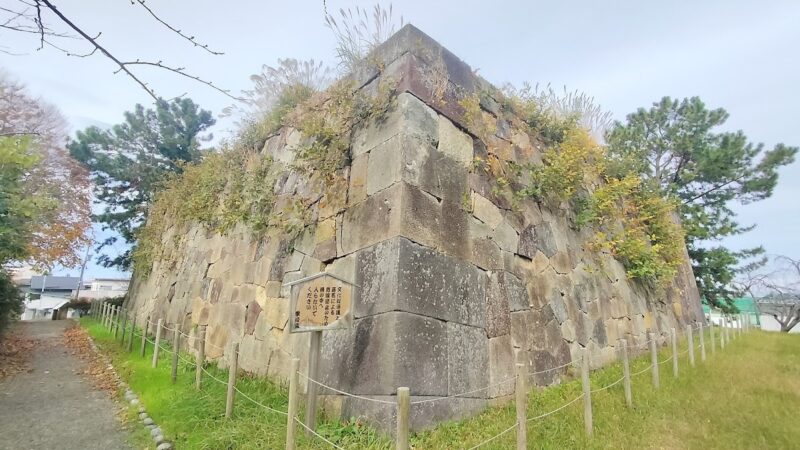
Remnants of earthworks remain in some parts of the castle site. While their height is lower than it was then, the shape of the earthworks allows us to infer the scale and layout of the castle. Earthworks played an important role as defensive structures for the castle, preventing enemy intrusion and clearly defining the boundaries within the castle.
Remains of Moats
Remains of moats can also be seen in some areas. Although they are now filled in or used as waterways, it is possible to estimate the location of the moats from the topography.
Remains of Moats ### Place Names and Legends
The Takatsuma area retains place names and legends related to the castle. Place names such as “Jōnai” (castle grounds) and “Horibata” (moat edge) are valuable clues indicating the former existence of a castle.
Precautions for Visitors
Much of the Takatsuma Castle site is currently private land or farmland, so caution is required when entering. Please keep the following points in mind when visiting.
- Avoid trespassing on private property.
- Be considerate and avoid interfering with agricultural work.
- Take care not to damage the historical remains.
- Always take your trash with you.
Access to Takatsuma Castle and Surrounding Information
Transportation Access
Public Transportation
- Approximately 15 minutes on foot from JR Ou Main Line “Takatsuma Station”
- Bus service is also available from Tendo City (contact the Tendo City Tourism Association for details)
By Car
- Approximately 15 minutes from Yamagata Expressway “Yamagata Kita IC”
- Accessible from National Route 13
- Use public parking facilities (Takatsuma Community Center, etc.)
Nearby Tourist Spots
Tendo Castle (Maizuru Castle)
Tendo Castle, which had a deep connection with Takatsuma Castle, is also worth visiting. It was a mountain castle that flourished as the main castle of the Tendo clan, and is now maintained as Maizuru Mountain.
Tendo Onsen (Hot Springs)
Tendo City is also known as a hot spring resort, allowing visitors to relax in the hot springs after touring the castle ruins. This historic hot spring opened in 1911 (Meiji 44).
Tendo, the Town of Shogi (Japanese Chess)
Tendo City is nationally famous for its production of shogi pieces. Visitors can enjoy tours of the Shogi Museum and shogi piece workshops.
Takatama Community Center
The Takatama Community Center, the central facility of the Takatama district, provides information on local history and culture. Materials about Takatama Castle and interviews with local residents may also be available.
The Takatama district is also known as a “town of culture and education” and a “town of rice and fruit,” and agricultural experiences and local events are held there.
Relationship with Other Castles in Tendo City
Besides Takatama Castle, several other castle ruins exist in Tendo City, each playing an important role in the region’s history.
Tendo Castle (Maizuru Castle)
This was the most important castle of the Tendo clan, serving as their main base. Built as a mountain castle, it sits on Maizuru Mountain overlooking the city of Tendo. Takatsuma Castle served as a subsidiary castle of Tendo Castle at one point, and the two castles were closely related.
Tendo Castle fell to an attack by Mogami Yoshiaki, becoming the site of the Tendo clan’s downfall. Currently, it is maintained as a park and is known as a famous cherry blossom viewing spot.
Naruse Castle (Tatenouchi)
This castle was located in the Naruse district of Tendo City, near Ryuto Gongen Shrine. It is a valuable historical site as the former residence of a local lord in the Murayama region.
Castle Network
These castles did not exist in isolation, but rather formed a interconnected castle network. By arranging multiple subsidiary castles around the main castle, the clan efficiently governed their territory and enhanced their defensive capabilities.
After Mogami Yoshiaki destroyed the Tendo clan, these castles came under the control of the Mogami clan and were incorporated into their territorial system.
Takatama Castle and Dewa Province in the Sengoku Period
The history of Takatama Castle symbolizes the turmoil in Dewa Province (Yamagata Prefecture) during the Sengoku period.
Sengoku History of the Murayama Region
The Murayama region was one of the central areas of Dewa Province. Due to its rich agricultural productivity and strategic location, it was constantly a target of conflict. Many local lords, including the Tendo, Mogami, Sagae, and Shiratori clans, vied for power and engaged in constant warfare.
Mogami Yoshiaki’s Unification of the Territory
Mogami Yoshiaki was a Sengoku daimyo who unified the Murayama region from the late Sengoku period through the Azuchi-Momoyama period. His conquest of the Tendo clan in 1584 was a crucial step in this unification process.
Yoshimitsu excelled not only in military power but also in diplomatic skills and economic policies, helping the Mogami clan grow into a powerful daimyo with a domain of 570,000 koku. Takatama Castle is positioned as part of the Mogami clan’s domain management.
Transition to the Edo Period
After the Battle of Sekigahara, the establishment of the Tokugawa Shogunate marked the end of the Sengoku period. With the arrival of a peaceful era, many small and medium-sized castles became unnecessary and were abandoned. Takatama Castle was one of them.
After the Mogami clan’s downfall in 1622, fudai daimyo were appointed to Yamagata, establishing the Edo period’s governing system.
Current Status and Challenges of Takatama Castle Research
Historical research on Takatama Castle faces many challenges due to the limitations of historical sources.
Limitations of Historical Sources
Primary sources (contemporary documents and records) concerning Takatama Castle are very scarce, and much of the information regarding its construction date and successive lords relies on tradition. It is hoped that further discoveries of historical materials and archaeological investigations will reveal a more detailed history in the future.
The Need for Archaeological Investigation
Detailed surveys and excavations of the castle ruins have not been sufficiently conducted. Scientific investigations may provide a more accurate understanding of the castle’s structure, construction date, and period of use.
The Importance of Local History Research
Takatsuma Castle is an important historical site for understanding the history of the region. Records of local residents’ traditions and research on place names are also valuable sources of information.
Summary
Takatsuma Castle was a flatland castle located in Tendo City, Yamagata Prefecture. From its construction during the Oei era to its abandonment in the early Edo period, it watched over the history of the region for approximately 200 years. It is a castle that embodies the turmoil of the Sengoku period in Dewa Province, including the conflict between the Tendo and Mogami clans and the unification of the Murayama region by Mogami Yoshiaki.
Currently, some remains of earthworks and moats remain at the castle site, allowing us to imagine its appearance at the time. When visiting Tendo City, why not also visit this historic castle ruin, along with enjoying shogi (Japanese chess) and hot springs?
Understanding the history of Takatsuma Castle provides important clues to understanding the Sengoku period history of Yamagata Prefecture. Further research and preservation efforts are expected to progress with the cooperation of local residents.
References and Related Information
For more detailed information about Takatsuma Castle, please refer to the following resources and facilities:
- Tendo City History Compilation Committee, “Tendo City History”
- Yamagata Prefectural Board of Education, “Medieval Castles and Residences of Yamagata Prefecture”
- Tendo City Library (Local History Corner)
- Tendo City Board of Education (Cultural Property Related Materials)
- Yamagata Prefectural Museum
Takatsuma Castle is a valuable historical heritage of the region. When visiting, please remember to protect the remains and be considerate of the local community while experiencing the historical romance of the Sengoku period.