Imaisurugi Castle Complete Guide | A Thorough Explanation of the History and Highlights of the Mountain Castle in Oyabe City, Toyama Prefecture
What is Imaisurugi Castle?
Imaisurugi Castle is a mountain castle built on Mt. Hakuba (elevation 186 meters), adjacent to the central urban area of Oyabe City, Toyama Prefecture. It was constructed in 1585 by Maeda Toshiie, who was advancing his conquest of Etchu (present-day Toyama Prefecture), as a strategic base to monitor and attack Sassa Narimasa. It is a designated historical site of Oyabe City and is also selected as Toyama Castle Card No. 43, making it an important historical heritage site.
The main keep, located at the mountaintop, measures approximately 50 meters east-west and 30 meters north-south, making it one of the largest mountain castles in Toyama Prefecture. Even today, the remains of the baileys and moats are well-preserved, conveying the appearance of a Sengoku period mountain castle.
History of Imaishido Castle
Background and Purpose of Construction
From 1584 to 1585, tensions were high between Sassa Narimasa of Etchu Province and Maeda Toshiie of Kaga Province. This was a crucial period as part of Toyotomi Hideyoshi’s unification of Japan, with the pacification of Etchu Province being a key objective. Maeda Toshiie focused on the Oyabe area as a forward base for monitoring Sassa Narimasa and for the conquest of Etchu.
In April 1585, Maeda Toshiie began construction of Imaishido Castle on Mount Hakuba. This location, close to the border between Etchu and Kaga Provinces, was ideal for monitoring the movements of Sassa Narimasa, whose base was Toyama Castle. Furthermore, it was a strategic point on the Hokuriku Road, near the Kurikara Pass, making it an extremely important location militarily and traversally.
Maeda Hidetsugu and Toshihide’s Entry into the Castle
After the castle’s construction, Maeda Hidetsugu (Toshiie’s youngest brother) entered the castle as its commander. Hidetsugu was a trusted younger brother of Toshiie, and his entrustment of this important stronghold demonstrates the high strategic value of Imaishido Castle. Later, Hidetsugu’s son, Maeda Toshihide, also served as lord of the castle, and records show that both father and son resided there.
It is believed that Maeda Toshihide later moved the Kokuzo Bodhisattva statue from the Isurugihiko Shrine on Mount Ishido (Noto Peninsula) to the castle town, which is why the area came to be called “Isurugi.” This is the origin of the current place name in the center of Oyabe City.
Toyotomi Hideyoshi’s Stay
Records show that in August of Tensho 13 (1585), Toyotomi Hideyoshi himself stayed at Imaishido Castle for the pacification of Etchu Province (the Battle of Toyama). The fact that Hideyoshi, the unifier of Japan, visited this castle indicates that Imaishido Castle was not merely a local mountain castle, but played a crucial role in the national political and military situation.
Following Hideyoshi’s conquest of Etchu Province, Sassa Narimasa surrendered, and Etchu came under the control of the Maeda family. In this conflict, Imaishido Castle functioned as an important base for the Maeda army.
Development as a Castle Town
After the conquest of Etchu, the town of Imaishido was developed as a castle town for Imaishido Castle. When Maeda Toshihide became the lord of the castle, the development of the castle town intensified, attracting merchants and artisans to promote its growth. It also functioned as a post town on the Hokuriku Road, and began to prosper as a transportation hub.
Abandonment and its Aftermath
In 1615, when the Edo Shogunate issued the “One Castle Per Province” decree, Imaishido Castle was abandoned. However, the town of Ishido, which developed as a castle town, continued to prosper as a post town on the Hokkoku Kaido road. Its geographical advantage as a transportation hub near the Kurikara Pass remained unchanged even after the castle’s loss, supporting the town’s development.
After the castle was abandoned, the site was left neglected for a long time, but it has now been developed into Shiroyama Park, a place of recreation for citizens.
Structure and Remains of Imaishido Castle
Layout and Arrangement
Imaishido Castle is a typical mountain castle built around the summit of Mt. Hakuba. The main remains are arranged as follows:
Honmaru (Main Enclosure)
The Honmaru, located on the mountaintop, measures approximately 50 meters east-west (some sources say approximately 41 meters) and approximately 30 meters north-south (some sources say approximately 27 meters). It is one of the larger mountain castles in Toyama Prefecture, with a structure capable of accommodating many soldiers. The site of the main keep still maintains a relatively flat terrain, allowing us to imagine what it looked like in those days.
Kuruwa (Enclosures)
Multiple enclosures are arranged around the main keep. These enclosures formed elevation changes for defensive purposes, making it difficult for enemies to invade. Each enclosure is cleverly positioned to utilize the terrain, demonstrating the high level of castle-building technology of the Sengoku period.
Moat
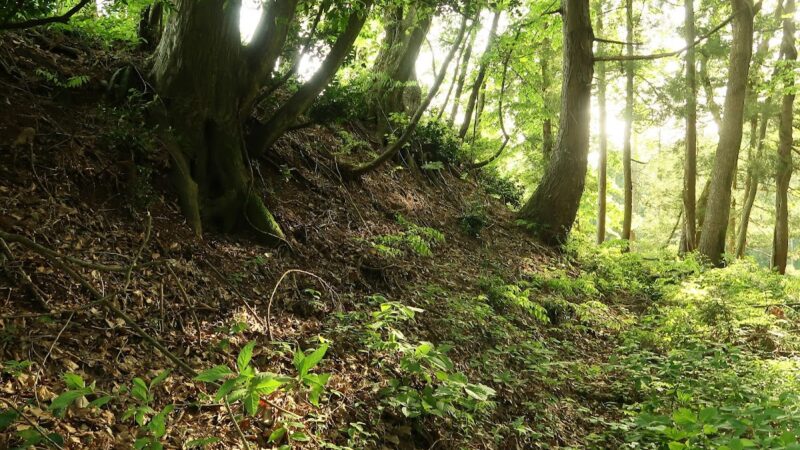
Multiple moats, dug to cut across the ridge, can be seen. These moats prevented enemy intrusion and clearly defined the divisions within the castle. The moats, still clearly visible today, are one of the highlights of Imaishido Castle.
Defensive Structures
Imaishido Castle, being a mountain castle, featured a defensive system that made maximum use of the terrain. By utilizing the steep slopes, it made enemy attacks difficult, and the structure allowed for effective defense even with a small force.
The elevation of 186 meters provided sufficient visibility of the surrounding area, offering the advantage of early detection of enemy movements. Furthermore, the mountaintop offered views of the Toyama Plain and the Kurikara Pass, making it an ideal location for a military surveillance base.
Existing Remains
The following remains still exist at the Imaishido Castle site:
- Flat Area of the Main Enclosure: The wide, flat area at the mountaintop is the site of the main enclosure.
- Enclosure Remains: Multiple enclosure remains clearly identifiable as steps.
- Moat: A deep trench remaining, cutting across the ridge.
- Earthwork Remains: Traces of earthworks can be seen in some areas.
- Traces of the Ascent Route: A path believed to be the ascent route to the castle at that time.
These remains have been preserved in relatively good condition for over 400 years, making them valuable historical materials that convey the appearance of a mountain castle from the Sengoku period to the present day.
Origin of the Name and Changes in the Place Name
The unique place name “Imaishido” has an interesting origin.
Origin of “Isurugi”
The place name “Isurugi” originates from Mount Sekido on the Noto Peninsula. Mount Sekido has long been known as a sacred site for Shugendo (mountain asceticism), and the Isurugihiko Shrine was located there.
In 1585, when Maeda Toshihide became the lord of the castle, he moved the Kokuzo Bodhisattva from the Isurugihiko Shrine on Mount Sekido to the castle town, and it is believed that this is how the area came to be called “Isurugi.” It is thought that by enshrining a deity, he created a spiritual center for the castle town and prayed for its development.
Reason for the “Ima” (今) in the Name
The addition of “Ima” (今) to the castle’s name is thought to distinguish it from Mount Sekido in Noto. “Ima” means “new,” suggesting that it signifies a newly opened land of Isurugi. It is also possible that it was used to indicate the current location, meaning “Isurugi, which is here now.”
Changes in Place Name
During the Edo period, the area developed as a post town called “Ishidō-machi,” and it continued to exist as Ishidō-machi even after the Meiji Restoration. In 1954, when it merged with surrounding towns and villages to form Oyabe City, Ishidō became the central urban area of Oyabe City. Even today, the place name “Ishidō” remains as a town name within Oyabe City, and is preserved in places like “Ishidō Station.”
Development as Shiroyama Park
Currently, the site of Imaishidō Castle has been developed as “Shiroyama Park” and is open to citizens and tourists.
Park Facilities
Shiroyama Park has the following facilities:
- Walking Trail: A well-maintained hiking trail leading to the main castle ruins at the summit.
- Observation Space: From the summit, you can enjoy a panoramic view of Oyabe city and the surrounding mountains.
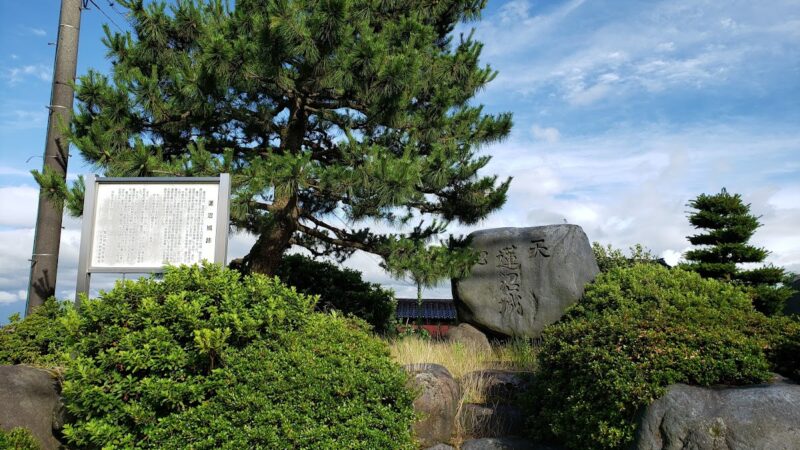
- Information Board: Information boards explaining the history and remains of the castle are installed.
- Benches: Benches are placed throughout the park for resting.
Seasonal Charms
Shiroyama Park shows different faces throughout the four seasons:
Spring: Cherry blossoms bloom, making it a popular spot for cherry blossom viewing among locals.
Summer: Lush green forests provide cool shade.
Autumn: The autumn leaves are beautiful, and the entire mountain is colored.
Winter: The snow-covered castle ruins create a fantastical atmosphere.
As a Place for Historical Learning
Shiroyama Park is also used as a place for local elementary and junior high school students to learn about history. By actually visiting the castle ruins, students can feel closer to the history of the Sengoku period that they learn about in textbooks. The information board contains detailed explanations, making it easy to understand even for those unfamiliar with history.
Highlights of Imaishido Castle
View from the Main Enclosure
The greatest highlight of Imaishido Castle is the view from the main enclosure. From the 186-meter-high summit, you can see the city of Oyabe, and on clear days, you can even see the Tateyama and Hakusan mountain ranges in the distance. Imagining Maeda Hidetsugu and his son Toshihide looking out over Etchu from this spot during the Sengoku period evokes a sense of historical romance.
Clearly Preserved Moat
The moat is particularly well-preserved at Imaishido Castle. The deep moat cutting across the ridge is a valuable historical relic demonstrating the defensive techniques of the time. Standing on either side of the moat, you can appreciate its depth and steepness, truly understanding the ingenuity used to prevent enemy intrusion.
Clearly Preserved Moat
Terraces in the Enclosures
The arrangement of multiple enclosures in a stepped fashion is still clearly visible as terrain elevation changes. Climbing the castle while following these elevation changes allows you to experience the castle’s structure as it was in its time. Imagining the role each enclosure played will deepen your understanding of the castle’s history.
Harmony with Nature
Imaishido Castle Ruins are surrounded by abundant nature. The landscape, where the ruins and nature harmonize, is a unique charm of castle ruins. Especially during the fresh greenery of spring and the vibrant autumn foliage, these are excellent seasons to enjoy both history and nature.
Access and Visiting Guide
Location
Address: Shiroyama-cho, Oyabe City, Toyama Prefecture
Location: Hakuba Mountain, behind the central urban area of Oyabe City (formerly Isurugi-cho)
Access by Public Transportation
JR Hokuriku Main Line
- Get off at Isurugi Station, approximately 20 minutes on foot to the trailhead
- The path from the station to the entrance of Shiroyama Park is relatively flat
Ainokaze Toyama Railway
- Get off at Isurugi Station (same station as the JR Hokuriku Main Line)
Access by Car
Hokuriku Expressway
- Approximately 10 minutes by car from Oyabe IC
- Approximately 15 minutes by car from Oyabe-Higashi IC
Parking
- Parking space available at the foot of Shiroyama Park (limited number of spaces)
Time to Climb
From the trailhead to the main keep ruins: Approximately 20-30 minutes on foot Recommended total visit time: 1-2 hours
Points to note when visiting
- Clothing: Since you will be walking on mountain paths, comfortable shoes and clothing that allows for easy movement are essential.
- Season: Snow is present in winter, so caution is advised when visiting.
- Hydration: Bring drinking water, especially in summer.
- Insect repellent: Insect repellent spray is useful from spring to autumn.
- Time of day: Allow ample time to descend before sunset.
Nearby tourist spots
When visiting Imaishido Castle, we recommend also visiting the following nearby spots:
- Kurikara Pass: A historical spot famous as the site of a battle during the Genpei War.
- Oyabe City Roadside Station Märchen Oyabe: A unique roadside station lined with fairytale-like architecture.
- Crossland Oyabe: Enjoy panoramic views of the surrounding area from the 118-meter-high Crossland Tower.
- Haniwa Gokoku Hachimangu Shrine: A shrine associated with Minamoto no Yoshinaka
The Relationship Between Imaishido Castle and the Maeda Family
Maeda Toshiie’s Administration of Etchu Province
Maeda Toshiie was a Sengoku period warlord known as the founder of the Kaga domain with its million koku (unit of rice production), but controlling Etchu Province was a crucial issue in his expansion of power. Imaishido Castle was one of the important bases in Toshiie’s administration of Etchu.
In the conflict with Sassa Narimasa in 1585, Imaishido Castle functioned as a frontline military base. Toshiie used this castle as a base to strengthen his influence in Etchu, and ultimately succeeded in gaining control of Etchu with the backing of Toyotomi Hideyoshi.
The Unity of the Maeda Family
The placement of his youngest brother, Hidetsugu, at Imaishido Castle demonstrates the strength of the Maeda family’s unity. This shows Toshiie’s strategy of entrusting important bases to blood relatives in order to build a secure system of control.
Maeda Hidetsugu and his son Toshihide ruled the Ishido area as castle lords and dedicated themselves to the development of the castle town. Their rule laid the foundation for Ishido’s growth from a military base to a castle town and then a post town.
Cultural Value of Imaishido Castle
Designated Historic Site of Oyabe City
The Imaishido Castle ruins are a designated historic site of Oyabe City and are protected as an important cultural property of the region. The city is working to preserve and utilize the remains, carrying out regular grass cutting and maintenance of information boards.
Toyama Castle Card
Imaishido Castle has been selected as No. 43 of the “Toyama Castle Card” series. This is part of a project introducing important castles in Toyama Prefecture, and collecting castle cards allows you to enjoy touring castles throughout the prefecture. Obtaining a castle card as a memento of your visit to Imaishido Castle would be a good idea.
Subject of Historical Research
Imaishido Castle, a mountain castle from the late Sengoku period, is an important subject of castle research. Its layout and the state of its remains allow for the study of the castle construction techniques and military strategies of the time. It is also an indispensable historical site for understanding the Maeda family’s administration of Etchu Province.
History of Imaishido Castle and Oyabe City
Origins of Oyabe City
Oyabe City was formed in 1954 (Showa 29) through the merger of Ishido Town and surrounding towns and villages. The city’s name originates from the Oyabe River that flows through the region. Around 1585 (Tensho 13), when Imaishido Castle was built, this area began full-scale development, laying the foundation for the development of Oyabe City.
Development as a Transportation Hub
One reason for the construction of Imaishido Castle was its strategic location as a transportation hub. The Hokuriku Road, with its Kurikara Pass, was an important transportation route from ancient times. Ishido, which developed as a castle town and post town, maintained its position as a transportation hub even after the Meiji Restoration, thanks to the opening of the railway.
Even today, the Hokuriku Expressway and National Route 8 pass through, and Oyabe City plays a vital role as a transportation hub. The importance of the strategic location where Ishido Castle was built remains unchanged across the ages.
Regional Identity
Imashido Castle is a symbol of the history and identity of the people of Oyabe. The castle ruins are a place of relaxation for citizens and a place for historical education. Every year, local schools hold lessons about Ishido Castle, where children learn about the history of their region.
Summary
Imashido Castle is a mountain castle built by Maeda Toshiie as an important base during the conquest of Etchu Province at the end of the Sengoku period. Built on Mt. Hakuba, which is 186 meters above sea level, this castle is one of the largest mountain castles in Toyama Prefecture, and the remains of the main keep, baileys, and moats are still well-preserved today.
Since its construction in 1585, this historic castle was ruled by the Maeda father and son, Hidetsugu and Toshihide, and even Toyotomi Hideyoshi stayed there. Although it was abandoned in 1615 due to the “One Castle Per Province” decree, the town of Isurugi, which developed around the castle, continued to prosper as a post town on the Hokkoku Kaido road.
Currently, the site of Ima-Isurugi Castle has been developed into Shiroyama Park, a place of relaxation for the citizens of Oyabe. With its views from the main keep, clearly defined moats, and the elevation changes of the baileys, it offers many points of interest and is a spot enjoyable even for those not particularly interested in history. It is designated as an Oyabe City Historic Site and is also selected as Toyama Castle Card No. 43, protecting it as an important historical heritage site of Toyama Prefecture.
It is easily accessible on foot from JR Isurugi Station, and with other historical sites such as Kurikara Pass nearby, it is an ideal place to visit as part of a historical exploration of Toyama Prefecture. Please visit Imaishido Castle, where you can feel the spirit of the Sengoku period while enjoying the history and nature of Oyabe City.