History and Remains of Saishoji Castle (Nanto City, Toyama Prefecture) | A Thorough Explanation of a Sengoku Period Mountain Castle Site
What is Saishoji Castle?
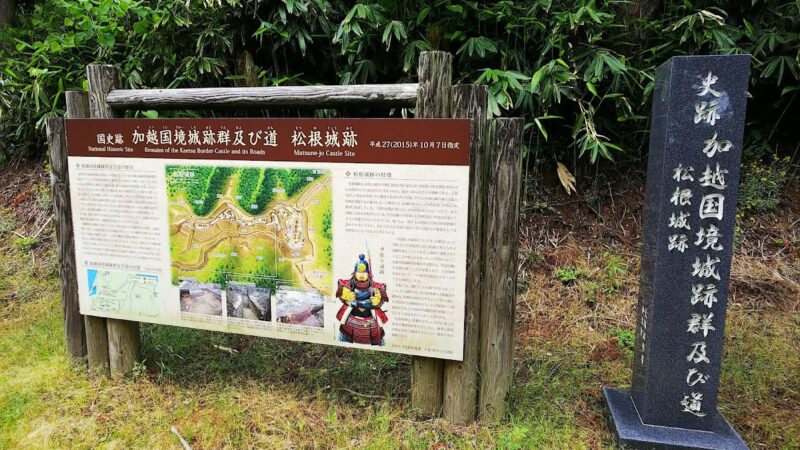
Saishoji Castle is a Sengoku period mountain castle site located in the Kawanishi district of Fukumitsu-cho, Nanto City, Toyama Prefecture. Built on a hill approximately 163 meters above sea level, this castle, which skillfully utilized the terrain with a relative height difference of approximately 70 meters, was once an important base protecting a strategic point in Etchu Province.
Even today, remains such as earthworks, baileys, and moats are well-preserved, and it is known as a valuable historical site for the study of medieval castles in Toyama Prefecture. The castle’s name originates from Saishoji Temple, a Shinshu Otani sect temple located nearby, but there are various theories regarding the direct relationship between the castle and the temple, and many aspects await further historical clarification.
Location and Geographical Characteristics of Nishikatsuji Castle
Nanto City, where Nishikatsuji Castle was built, is located in the southwestern part of Toyama Prefecture. It borders Toyama City to the east, Kanazawa City in Ishikawa Prefecture to the west, Hida City and Shirakawa Village in Gifu Prefecture to the south, and Tonami City and Oyabe City to the north. This geographical location made it a crucial transportation hub connecting Etchu Province, Kaga Province, and Hida Province, and it became a target of conflict among various powers during the Sengoku period (Warring States period).
The castle was situated near a tributary of the Oyabe River system, functioning as an excellent observation point overlooking the surrounding plains. Located in the southern part of the Tonami Plain, known for its scattered settlements, it is believed to have had a strong economic base, backed by a region rich in agricultural production.
History of Nishikatsuji Castle
Background of Construction and Etchu Province in the Sengoku Period
While there are no clear records of the exact date of Nishikatsuji Castle’s construction, the form of the remains and the historical context of the surrounding area suggest that it was built during the Sengoku period, from the late 15th to the 16th century.
Etchu Province during the Sengoku period was a time of political turmoil, with local forces such as the Jinbo and Shiina clans (who served as shugodai, or deputy governors) vying for power, further complicated by the involvement of the Uesugi clan and the Ikko-ikki forces. The Nanto region, in particular, was close to the border with Kaga Province and was strongly influenced by the Kaga Ikko-ikki rebellion.
Castle Lord and Ruling Forces
Unfortunately, there is a lack of reliable historical sources regarding the specific lord of Nishikatsuji Castle, and many details remain unclear. However, based on its relationship with surrounding castles and geographical conditions, the following possibilities have been suggested:
Theory of a Local Lord’s Castle: It is possible that a local lord who controlled the Fukumitsu region built this castle as a base for defending and controlling his territory. Several mountain castles from the same period, such as Kuwayama Castle and Tori Castle, exist around Nanto City, each functioning as a base for a small-scale lord.
Theory of an Ikkō-ikki Related Facility: In Etchū Province, the Ikkō-ikki held significant power in the 16th century, establishing defensive bases throughout the region. Given the connection to the temple name, Seishōji, it is possible that the Ikkō-ikki forces used this castle as both a religious and military base.
The Uesugi Clan’s Invasion of Etchū and the Castle’s Fate
In the latter half of the 16th century, Uesugi Kenshin of Echigo Province intensified his invasion of Etchū Province. From the Eiroku era (1558-1570) to the Tenshō era (1573-1592), the Uesugi clan successively subdued various forces within Etchū Province. It’s possible that Nishikatsuji Castle was attacked by the Uesugi clan or came under their control during this period. Following the Honnō-ji Incident in 1582, Etchū Province came under the control of Sassa Narimasa, a supporter of the Oda clan. After Toyotomi Hideyoshi’s unification of Japan, the Maeda clan came to rule most of Etchū Province as the Kaga Domain.
Abandonment and Aftermath
The exact time of Nishikatsuji Castle’s abandonment is unclear, but generally, many mountain castles were abandoned from the late Sengoku period to the early Edo period. In particular, the “One Castle Per Province” decree of the Keichō era (1596-1615) and the Buke Shohatto (Laws for Military Households) of the Genna era required each domain to demolish castles other than their primary residence.
After becoming part of the Kaga Domain, Nishikatsuji Castle likely lost its military function and was abandoned. Since then, the castle site has become a forest, and has been passed down as an “ancient castle site” in the memories of local residents.
Layout and Remains of Nishikatsuji Castle
Basic Structure of the Castle
Nishikatsuji Castle exhibits the typical form of a medieval mountain castle, characterized by defensive structures that skillfully utilize the natural terrain. Multiple enclosures are arranged in a stepped pattern around the main enclosure, each separated by earthworks and moats.
Main Enclosure (Honmaru): The main enclosure, the center of the castle, is located at the highest elevation. Traces of earthworks are found around it, suggesting it functioned as the lord’s residence and command post.
Second and Third Enclosures: Multiple enclosures are arranged around the main enclosure, utilizing the elevation differences. These were defensive baileys, used as spaces for soldiers to be positioned during battles.
Characteristics of Defensive Structures
Earthworks: Remains of earthworks can be seen in various places within the castle. These earthworks functioned as defensive walls to prevent enemy intrusion, and the construction of fences and walls on top of them further enhanced defensive capabilities. The earthworks of Nishikatsuji Castle still remain today as raised areas about 1-2 meters high.
Moat: Moats dug to cut across ridges are important defensive structures for mountain castles. At Nishikatsuji Castle, multiple moats have been identified, separating the main enclosure from other enclosures. This prevented the enemy from easily reaching the main enclosure.
Enclosure (Kuruwa): Flat, constructed enclosures were used for garrisoning soldiers and storing supplies. At Nishikatsuji Castle, multiple enclosures of varying sizes have been identified, each organically coordinating to form the overall defensive system of the castle.
Entrance and Passages
The entrance (koguchi) to the castle is the most important defensive structure. While some details of Nishikatsuji Castle’s entrance are unknown, based on typical mountain castle examples, it is believed that winding passages and gates were constructed to make enemy intrusion difficult.
Relationship with Nishikatsu-ji Temple
Overview of Nishikatsu-ji Temple (Shinshu Otani School)
Nishikatsu-ji Temple, from which Nishikatsu-ji Castle derives its name, is a Shinshu Otani school temple still existing in Nanto City, Toyama Prefecture. However, the current location of Nishikatsu-ji Temple is in the Sakagami district of Toga Village, a different location from the Kawanishi district of Fukumitsu Town where the castle ruins are located.
Nishikatsu-ji Temple’s mountain name is Gokoku-san, and it has been a center of local faith as a Jodo Shinshu temple. While the temple’s founding is believed to date back to before the Sengoku period, detailed records are limited.
Nishikatsu-ji Shimo-dojo and the Gokayama Region
In the history of Shinshu Buddhism, missionary centers called “Shimo-dojo” were established in various locations. The Gokayama region also had Shinshu centers, including the Senko-ji Shimo-dojo, and Nishikatsu-ji Temple may have functioned as one of them.
Gokayama is known for its World Heritage-listed Gassho-zukuri village, but historically, it is also a land deeply rooted in Shin Buddhism. It was also strongly influenced by the Ikko-ikki uprisings of the Sengoku period, reflecting a historical context where religion, politics, and military affairs were closely intertwined.
Various Theories Regarding the Relationship Between the Castle and the Temple
There are differing opinions among researchers regarding the direct relationship between Nishikatsuji Castle and Nishikatsuji Temple.
Same Origin Theory: This theory posits that the castle and temple originally existed in the same location, integrating religious and military functions. During the Ikko-ikki era, it was not uncommon for temples to also serve as defensive structures.
Different Origin Theory: This theory suggests that the castle and temple had separate origins, and that the name “Nishikatsuji” simply happened to exist in the same area. Some researchers support this theory due to their current different locations.
Relocation Theory: This theory suggests that the temple, originally located in the same place, relocated due to warfare or the religious policies of the Kaga Domain.
Due to the limited availability of reliable historical sources, no definitive conclusions have been reached at this time, but further research is anticipated.
Surrounding Castles and Medieval Historical Sites in Nanto City
Castle Groups in the Fukumitsu Area
In addition to Nishikatsuji Castle, several other medieval castles exist in the Fukumitsu area of Nanto City.
Kuwayama Castle: A mountain castle located in Kawanishi, Fukumitsu-cho, and close to Nishikatsuji Castle. It is believed to have been built around the same time, and they may have cooperated to defend the region.
Tori Castle: Castle ruins located in Tori, Fukumitsu-cho. It is considered one of the important strongholds in Etchu Province during the Sengoku period.
These castles, while each being an independent defensive stronghold, are thought to have formed a network across the entire region. Numerous such small castles existed in Etchu Province during the Sengoku period, supporting the governing system of local forces.
Other Historical Sites in Nanto City
Nanto City was formed on November 1, 2004, through the merger of eight towns and villages: Johana, Taira, Kamitaira, Toga, Inami, Iguchi, Fukuno, and Fukumitsu. The city is dotted with rich historical heritage sites.
Johana Area: Johana flourished as a transportation hub from ancient times and developed as a temple town centered around Zentoku-ji Temple. Historical streetscapes remain today.
Inami Area: Developed as a temple town for Zuizen-ji Temple, it is known as a village of wood carvings.
Gokayama Area: The Gassho-zukuri village is registered as a World Heritage Site, conveying its unique culture and history.
Current Status and Visiting Nishikatsuji Castle
Current Preservation Status
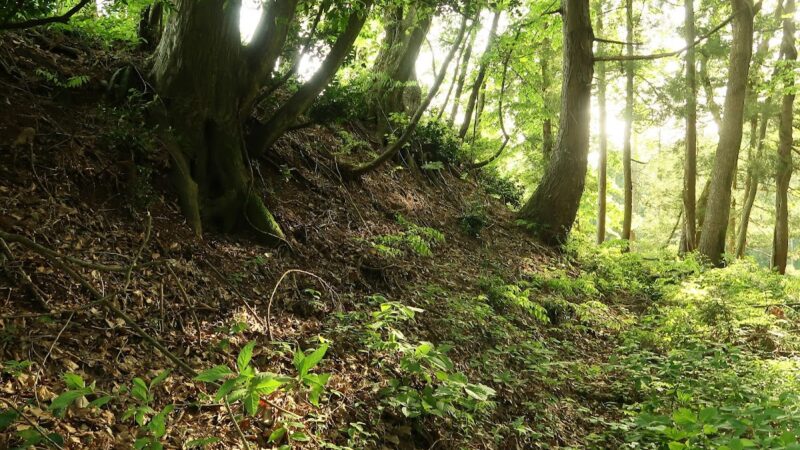
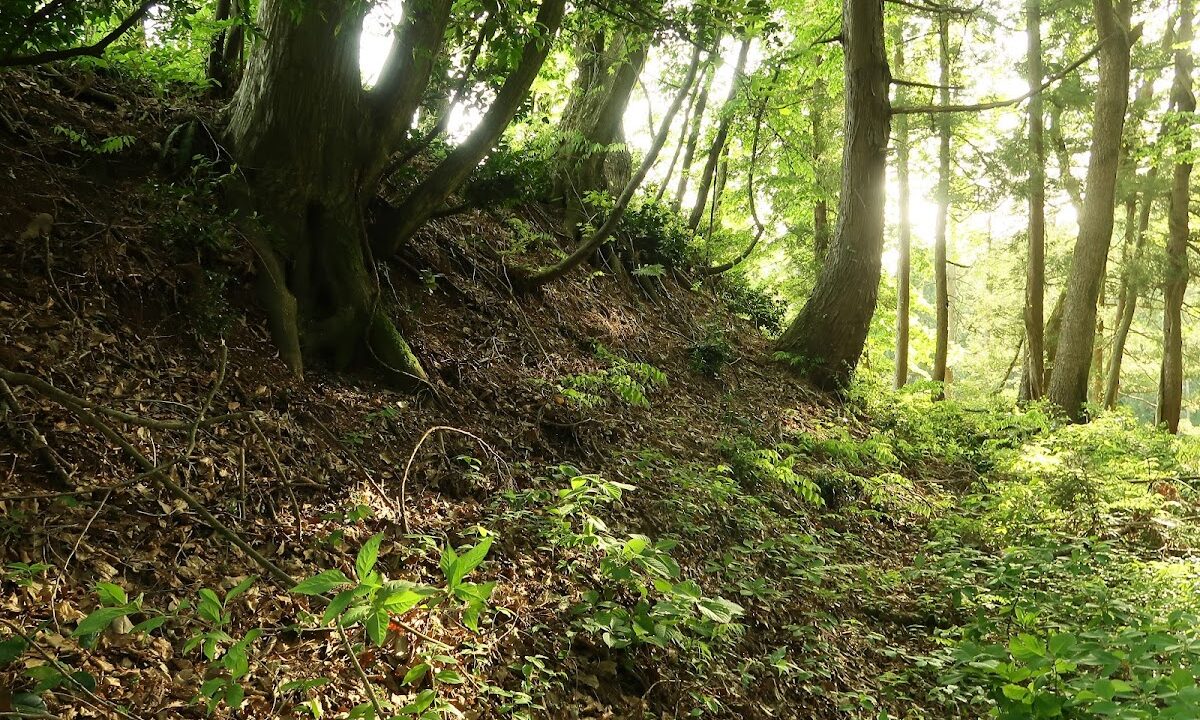
The Nishikatsuji Castle ruins are currently a forest, and the remains are preserved buried within nature. While not extensively maintained, this is precisely why the castle retains its appearance from the Sengoku period in relatively good condition.
Major remains such as earthworks and moats can be seen by visiting the site. However, it requires climbing a mountain path, and there are no well-maintained walking trails, so appropriate preparation and caution are necessary for a visit.
Access Methods
Public Transportation:
- The nearest station is JR Johana Line “Fukumitsu Station”.
- Access is by foot or taxi from Fukumitsu Station.
- From Kanazawa Station, take the Nanto-Kanazawa Line bus to Johana Station (approximately 60 minutes), then travel further towards Fukumitsu.
Car:
- Approximately 15-20 minutes from Hokuriku Expressway “Tonami IC” or “Fukumitsu IC”.
- There is no dedicated parking lot around the castle ruins, so you will need to park in a nearby public facility or a suitable location.
Precautions for Visiting
- Preparation for Hiking: Visiting the mountain castle ruins involves light hiking. Please prepare appropriate clothing and shoes, and drinking water. 2. Season and Weather: Visiting in winter is difficult due to snow. We recommend choosing a day with good weather from spring to autumn.
- Safety Precautions: The mountain trails are not well-maintained, so please be extremely careful to avoid slips and injuries. Visiting alone is not recommended; it is best to go in a group.
- Protection of Remains: As this is a valuable historical site, please be careful not to damage the earthworks or enclosures.
- Consideration for Private Property: The area around the castle ruins may include private property. Please be extremely careful when entering.
Nanto City Tourism and Nishikatsuji Castle
Nearby Tourist Attractions
When visiting Nishikatsuji Castle, combining your visit with other tourist attractions in Nanto City will allow you to gain a deeper understanding of the region’s history and culture.
Gokayama Gassho-zukuri Villages: The Ainokura and Suganuma villages, registered as World Heritage Sites, are must-sees. They preserve the lifestyle and culture of mountain villages from the Sengoku period to the Edo period. Johana Betsuin Zentoku-ji Temple: A Shinshu Otani sect temple and a central landmark in the town of Johana. It boasts magnificent temple buildings and historically significant structures.
Inami Wood Carving Village: Developed as a temple town for Zuizen-ji Temple, Inami is known for its exquisite wood carving techniques. Visitors can observe the craftsmanship up close.
Nanto City Fukumitsu Museum of Art: A museum associated with the woodblock print artist Shiko Munakata, primarily exhibiting his print works.
A Tour of Nanto City for History Fans
Besides Nishikatsuji Castle, Nanto City has numerous other castle ruins, making it an attractive area for medieval castle enthusiasts.
Recommended Route Example:
- Morning: Castles in the Fukumitsu area (Nishikatsuji Castle, Kuwayama Castle, etc.)
- Lunch: Local cuisine in Fukumitsu or Johana
- Afternoon: Johana Betsuin Zentoku-ji Temple and a stroll through the townscape of Johana
- Evening: Gokayama Gassho-zukuri Village (if time permits)
By combining castle tours and cultural sightseeing in this way, a fulfilling historical exploration of Nanto City is possible.
Historical Significance of Nishikatsuji Castle
Position in the Medieval History of Etchu Province
Nishikatsuji Castle is a valuable historical site that shows the reality of regional rule in Etchu Province during the Sengoku period. Although not a large-scale castle, it is important evidence that tells the story of how local forces controlled and defended their territory.
Etchu Province was a turbulent region where rulers changed one after another, including the Uesugi clan, the Ikko-ikki, the Oda clan, the Sasa clan, and the Maeda clan. Understanding the role played by small mountain castles like Nishikatsuji Castle is essential for understanding regional society during the Sengoku period.
Value in Mountain Castle Research
The remains of Nishikatsuji Castle are an excellent example of 16th-century mountain castle construction techniques. The arrangement of earthworks, moats, and baileys allows us to glean insights into the castle construction philosophy and defensive tactics of the time.
In particular, comparing mountain castles in Toyama Prefecture with castles in the Kaga Domain of Ishikawa Prefecture and castles associated with the Uesugi clan in Niigata Prefecture provides clues to clarifying the characteristics and spread of regional castle construction techniques.
Contribution to Regional History Research
Research on Nishikatsuji Castle plays an important role in elucidating the medieval history of the Nanto City area. Given the limited availability of documentary sources, castle remains are invaluable as physical evidence directly reflecting the political and military situation of the time.
Further archaeological investigations may clarify the castle’s construction period, usage period, and circumstances of its abandonment. Furthermore, analysis of excavated artifacts may reveal the lineage of the castle lords, their lifestyles, and their trade relationships.
Future Preservation and Utilization
Protection as a Cultural Property
While the Nishikatsuji Castle ruins are not currently designated as a national or prefectural cultural property, they need to be protected as a valuable historical heritage of the region. While the area is protected from natural destruction due to forestation, this also presents the challenge of unclear details regarding the remains.
Future detailed surveys and excavations are desirable to accurately understand and record the remains.
Potential as a Tourism Resource
Nanto City is a tourist destination boasting the World Heritage site of Gokayama Gassho-zukuri villages. The medieval castles, including Nishikatsuji Castle, have the potential to be utilized as a new resource for historical tourism.
Development of Historical Trails: Developing historical walking trails connecting multiple castles in the Fukumitsu area could attract history enthusiasts and hiking aficionados.
Installation of explanatory signs: Installing detailed explanatory signs at the castle ruins will deepen visitors’ understanding.
Utilization of digital technology: Using AR (augmented reality) technology, etc., it is possible to recreate the appearance of the castle in its heyday, providing a new form of historical experience.
Use in local education
Nishikatsuji Castle can also be used as teaching material for local children to learn about their local history. By actually visiting the castle ruins and observing the remains, it becomes possible to provide a living history education that cannot be obtained from textbooks.
Knowing local history fosters attachment and pride to one’s hometown and contributes to the development of future leaders of the community.
Summary
Nishikatsuji Castle is the site of a Sengoku period mountain castle located in Fukumitsu-cho, Nanto City, Toyama Prefecture. Built on a hill 163 meters above sea level, the remains such as earthworks, baileys, and moats are well preserved.
While much remains unknown about the castle’s detailed history and its lords, it is an important historical site, serving as a base for local forces in Etchu Province during the Sengoku period, and is also thought to have connections to the Ikkō-ikki uprisings. Further research is needed to understand its relationship with the nearby Shinshu Ōtani-ha Nishikatsuji Temple.
Currently a forested area, requiring hiking preparations for visits, it is a valuable site for castle enthusiasts and history buffs, as it preserves the appearance of a Sengoku period castle in relatively good condition.
Nanto City boasts a rich historical and cultural heritage, including the World Heritage site of Gokayama Gassho-zukuri villages. The medieval castle group, including Nishikatsuji Castle, is an important element demonstrating the region’s historical layering, and its future preservation and utilization are highly anticipated.
For those interested in the history of Etchu Province during the Sengoku period, those who enjoy exploring mountain castles, and those who want to learn more about the history of Nanto City, Nishikatsuji Castle is a must-see historical site.