Iiyama Castle (Yonago City, Tottori Prefecture) Complete Guide | A Thorough Explanation of History, Remains, and the Stage of the Yonago Castle Incident
What is Iiyama Castle?
Iiyama Castle (Iinoyama-jo) is a flatland castle located in Kume-cho, Yonago City, Tottori Prefecture, that existed from the Sengoku period to the early Edo period. Built on Iiyama, which is approximately 60 meters above sea level, this castle is located east of Yonago Castle, across National Route 9, and played an important role as the third bailey or outer bailey of Yonago Castle.
Also known as “Unememaru,” “Kume Castle,” and “Higashi-no-maru,” it was a strategic point near the border of Hoki Province and Izumo Province, and was the stage for numerous historical events from the medieval to the early modern period.
Currently, the summit of Iiyama is maintained as a park, and remains such as stone walls and baileys remain. Along with the Yonago Castle ruins, it is designated as a national historic site and is a valuable cultural asset for understanding medieval mountain castles in the San’in region.
History of Iiyama Castle
The Ōnin War and the Beginning of Construction
The construction period of Iiyama Castle is believed to be from the Ōnin War to the Bunmei era (1467-1487). During this period, fierce battles were fought between the Amago clan, the deputy governor of Hōki Province, and the Yamana clan, the governor of Hōki Province.
Around Bunmei 2 (1470), Iiyama Castle is believed to have been built by Yamana Muneyuki as a fort for guarding the border between Hōki and Izumo Provinces. At that time, Iiyama was connected to Minatoyama Mountain and functioned as a frontline base for border defense.
Changes in the Sengoku Period
During the Sengoku period, Iiyama Castle became the stage for the struggles of powerful daimyo in the Chūgoku region, such as the Yamana, Amago, and Mōri clans. Due to its geographical importance on the border between Hōki and Izumo Provinces, it was recognized as a key base that each force needed to secure.
During the conflict between the Amago and Mori clans, in particular, fierce battles were repeatedly fought over control of this region. Although small in scale, Iiyama Castle maintained its strategic value as a border guard and emergency defensive base.
The Role of Iiyama Castle and the Improvement of Yonago Castle by Kikkawa Hiroie
In 1591, when Kikkawa Hiroie, a senior retainer of the Mori clan, became the lord of Yonago Castle, a major turning point arrived for Iiyama Castle. Kikkawa Hiroie carried out large-scale construction (renovation work) on Yonago Castle, and at the same time, he ordered the strengthening of Iiyama Castle.
Written documents from this period contain descriptions of the strengthening of Iiyama Castle, indicating that it was considered important as part of the defense system of Yonago Castle. Located east of the main keep of Yonago Castle on Minatoyama, Iiyama Castle came to function as an outpost of Yonago Castle, known as “Higashi-no-maru” (Eastern Bailey).
The Nakamura Era and the Yonago Castle Rebellion
After the Battle of Sekigahara in 1600, Yonago Castle became the territory of Nakamura Kazutada. However, in November 1603, the most dramatic event in the history of Iiyama Castle occurred. This is known as the “Yonago Castle Rebellion” or “Nakamura Rebellion.”
When the chief retainer, Yokota Naizen Murasuke, was assassinated by his lord, Nakamura Kazutada, the Yokota family and their supporters revolted and barricaded themselves in Iiyama Castle. The Yokota forces continued their resistance, utilizing the terrain of Iiyama, and fierce battles ensued.
Records also show that Yagyu Munenori’s father, Yagyu Munenori (Sekishusai), participated in this rebellion as a military strategist for the Nakamura forces and fought bravely. Ultimately, the Yokota forces were suppressed, but this incident remains a significant event in the history of the Yonago Domain.
After the Edo Period
After the Yonago Castle Incident, Iiyama Castle gradually lost its function as a military base. During the peaceful Edo period, it was not maintained as a full-fledged castle, and only its remains were preserved.
After the Meiji Restoration, the castle site was placed under local management and is now developed as a park. Along with the Yonago Castle site, it is preserved as an important historical heritage of Yonago City.
Layout and Remains of Iiyama Castle
Location and Topography
Iiyama Castle is a flatland castle built on the summit of Mt. Iiyama, approximately 60 meters above sea level. Its relative height (height from the foot of the mountain) is about 50 meters; it is not a particularly high mountain, but it occupies a strategic position overlooking the surrounding area.
It is located opposite Mt. Minatoyama (approximately 90 meters above sea level), where Yonago Castle is located, across National Route 9. The two castles were designed to cooperate in the defense of Yonago. Its location near Lake Nakaumi was also advantageous for the transportation of goods and information using water transport.
Layout of the Enclosures
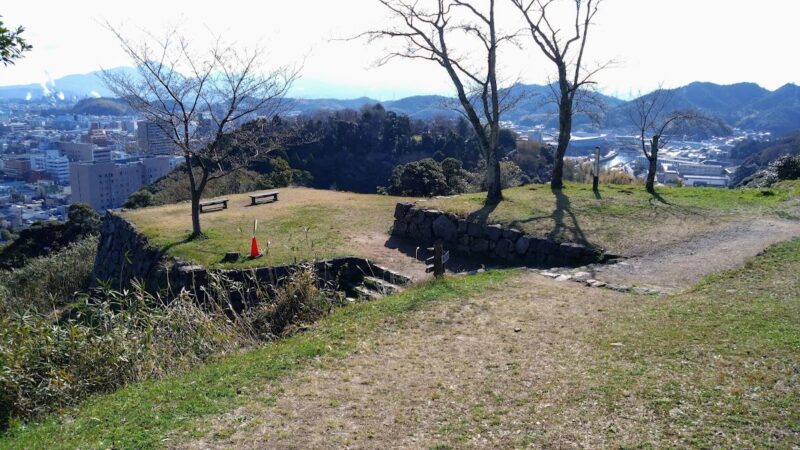
Iiyama Castle’s layout features multiple enclosures (kuruwa) centered around the mountaintop. The main enclosure (equivalent to the honmaru) is located on the flat area of the mountaintop, surrounded by the second and third enclosures arranged in a stepped fashion, a typical structure for a mountain castle.
Each enclosure is relatively small, but its layout takes advantage of the steep terrain for high defensive capabilities. The design utilized the elevation differences between the enclosures, allowing for effective defense even with a small number of troops.
Characteristics of the Stone Walls
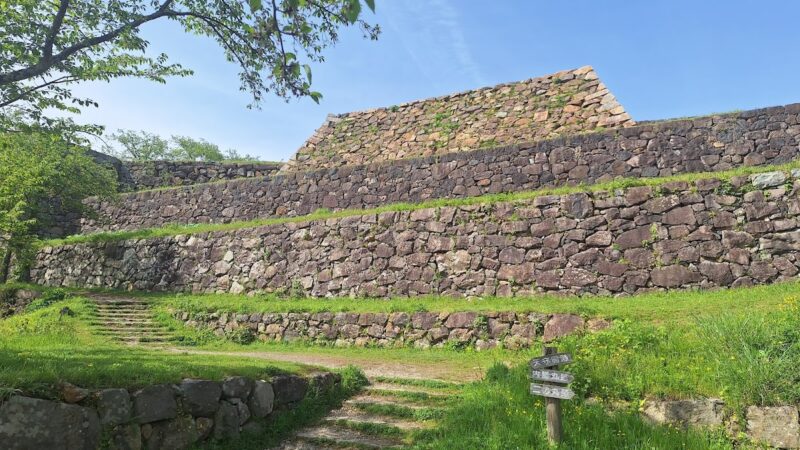
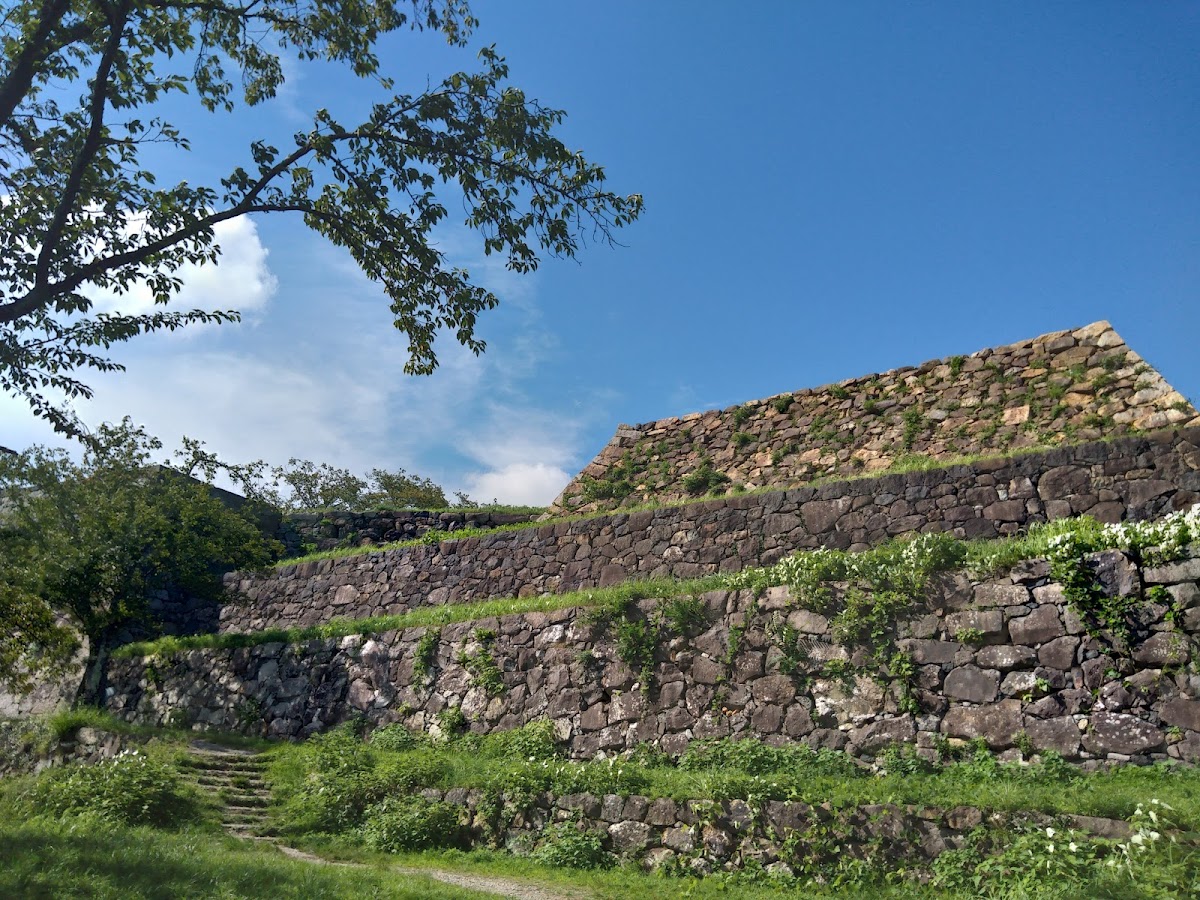
One of the highlights of Iiyama Castle is the stone walls remaining in various places. Relatively solid stone walls for a medieval mountain castle can be observed, and in particular, the sections believed to have been constructed during the renovations by Kikkawa Hiroie show techniques that are foreshadowed by early modern castles.
The stone walls are primarily constructed using a method called “nozurazumi,” where natural stones are stacked as they are, but some processed stones were also used, allowing observation of the evolution of techniques over time. The height of the stone walls varies depending on the location, but the highest parts are approximately 3-4 meters high.
Moats and Earthworks
Multiple moats (horikiri), important defensive structures for mountain castles, can be found. Moats are dry moats dug to cut across ridges, serving to prevent enemy intrusion.
Earthworks surround the baileys, and parts of them remain in good condition today. It is believed that fences or walls were built on top of the earthworks, enhancing defensive capabilities.
Entrance (Koguchi)
The remains of a koguchi (koguchi), the entrance to the castle, have also been confirmed. Koguchi were often designed with complex structures to prevent enemy intrusion, and traces of winding passages and narrow sections created by stonework remain at Iiyama Castle.
Current Status of Iiyama Castle Site
Development as a Park
Currently, the Iiyama Castle site has been developed as Iiyama Park, a place of relaxation for citizens. Because the hiking trail is well-maintained, it is relatively easy to reach the summit and enjoy a historical walk.
From the summit, you can enjoy a panoramic view of Yonago city, Lake Nakaumi, and even the ruins of Yonago Castle on Minatoyama, allowing you to appreciate the excellent location of the former castle. On clear days, you can even see Mount Daisen, and the magnificent view is one of the attractions of Iiyama Castle ruins.
Preservation of the Remains
The remains of Iiyama Castle are in relatively good condition for a medieval mountain castle. Major remains such as stone walls, baileys, and moats can be seen, allowing you to imagine the castle’s appearance in its heyday.
The stone walls around the main bailey are particularly impressive and a must-see for castle enthusiasts. However, some areas are collapsing or weathered, making continuous preservation efforts crucial.
Information Boards and Explanations
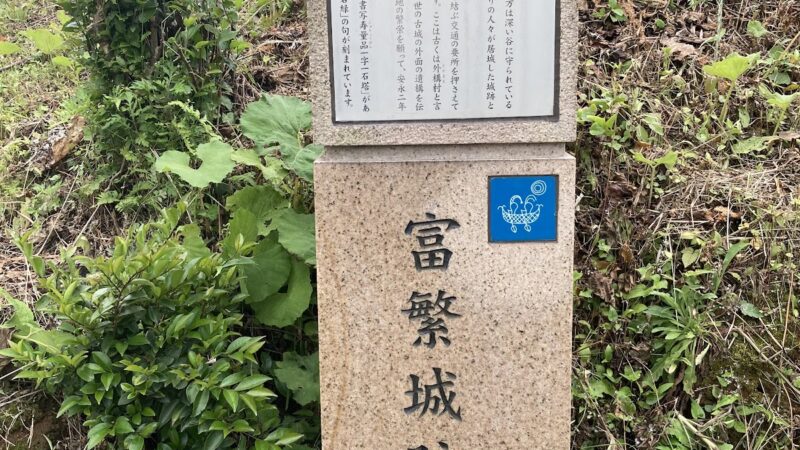
Information boards are installed at the castle ruins, allowing you to learn about the history and layout of Iiyama Castle. The exhibit also includes a detailed explanation of the Yonago Castle Incident, allowing for a deeper understanding of the historical events that took place in this area.
Relationship with Yonago Castle
Function as an Outpost of Yonago Castle
Iiyama Castle played an outpost role in the defense system of Yonago Castle, functioning as the “Higashi-no-maru” or “Uneme-maru.” An outpost is a defensive base located away from the main castle, serving to disperse enemy attacks and prevent them from approaching the main castle.
Located east of the main keep of Yonago Castle on Minatoyama, Iiyama Castle functioned as a forward base against enemies approaching from the east, enhancing the overall defensive capabilities of Yonago Castle. The two castles were within visual range, and it is believed that communication via signal fires and flags was possible.
Integrated Castle System
When Kikkawa Hiroie renovated Yonago Castle, it was designed as an integrated castle system, including Iiyama Castle. The combination of the main keep, second bailey, and third bailey of Minatoyama, along with the outwork of Iiyama, created a defensive network covering a wide area.
This type of castle layout, utilizing multiple mountains, is a characteristic structure found in mountain castles of the Chugoku region, demonstrating the high level of castle-building technology during the Sengoku period that maximized the use of the terrain.
Designated as a National Historic Site
On January 26, 2006, the Iiyama Castle ruins were designated as a National Historic Site as part of the Yonago Castle ruins. This designation recognized the main Yonago Castle on Minatoyama and Iiyama Castle as a single integrated castle site, and efforts are being made to preserve and utilize it.
The designated historic site area includes the main part of Minatoyama and the Iiyama Castle ruins, providing valuable information for understanding the changes in castle architecture from the late Sengoku period to the early modern period.
Details of the Yonago Castle Incident
Background of the Incident
The Yonago Castle Incident, which occurred in 1603 (Keicho 8), was an incident in which a conflict among the retainers escalated into armed clash. Nakamura Kazutada became the lord of Yonago Castle at a young age, but the chief retainer, Yokota Naizen Muraaki, held the real power.
However, as Kazutada grew older, the relationship between the two deteriorated, and ultimately Kazutada resorted to the drastic measure of assassinating Yokota Naizen. This assassination triggered a rebellion by the Yokota clan and their supporters, who barricaded themselves in Iiyama Castle.
The Battle of Iiyama Castle
Once the Yokota forces holed up in Iiyama Castle, Nakamura Kazutada’s side began a siege and attack. Iiyama Castle, though small, was a strong mountain castle, and the Yokota forces fiercely resisted, taking advantage of the terrain.
Records indicate that Yagyu Munenori (Sekishusai), a renowned swordsman, participated in this battle as a military strategist for the Nakamura side. Thanks to Yagyu’s valiant efforts, the Yokota forces were ultimately suppressed, but it was a fierce battle with heavy casualties on both sides.
Impact of the Incident
This disturbance greatly unsettled the Nakamura clan’s Yonago domain. The shogunate also viewed the situation seriously and intervened in the aftermath. Nakamura Kazutada himself died young in 1609, bringing the Nakamura clan’s rule over Yonago to an end after only nine years.
The Yonago Castle Incident is considered a historically significant event, illustrating the difficulties of controlling retainers in daimyo families during the early Edo period.
Access and Visiting Information for Iiyama Castle
Access Methods
Access by Train:
- Approximately 20 minutes on foot from JR San’in Main Line “Yonago Station”
- Approximately 5 minutes by taxi from Yonago Station
Access by Car:
- Approximately 10 minutes from San’in Expressway “Yonago IC”
- Approximately 5 minutes from Yonago city center via National Route 9
- Parking: Public parking is available nearby (Yonago Castle Ruins parking lot is available)
Points to Note
Estimated Time Required: Approximately 15-20 minutes on foot from the trailhead to the summit, approximately 1 hour including sightseeing
Highlights:
- Main enclosure ruins and stone walls at the summit
- Layout and structure of each enclosure
- Defensive facilities such as moats and earthworks
- View from the summit (Yonago Castle Ruins, Lake Nakaumi, Yonago city)
Notes:
- As it is a mountain trail, comfortable walking shoes are recommended.
- Be careful as the ground can become slippery in rainy weather.
- Insect repellent is necessary during summer.
- Be careful not to get too close to the stone walls, as there is a risk of collapse.
Nearby Attractions
When visiting Iiyama Castle Ruins, we highly recommend also visiting Yonago Castle Ruins. Visiting both castles will give you a comprehensive understanding of Yonago’s castle system.
Furthermore, Yonago city center offers historical sites such as the Yonago Castle Town and the Yonago City San’in History Museum, allowing you to learn more about Yonago’s history.
Historical Significance of Iiyama Castle
Strategic Point on the Border of Hoki and Izumo Provinces
The greatest historical significance of Iiyama Castle lies in its strategic location on the border between Hoki and Izumo Provinces. From the medieval to the early modern period, this region was the boundary of the spheres of influence of powerful daimyo such as the Yamana, Amago, and Mori clans, and Iiyama Castle was located on the front lines.
Iiyama Castle, despite its small size, played a crucial role in border surveillance and defense, significantly influencing the regional political and military situation.
Transitional Period from Medieval Mountain Castles to Early Modern Castles
Iiyama Castle is a valuable historical site that showcases the transitional period from medieval mountain castles to early modern castles. The process by which a fort built during the Ōnin War was transformed into an early modern castle through renovations by Kikkawa Hiroie during the Sengoku period represents a significant transformation in the history of Japanese castles.
The changes in stone wall construction techniques and the layout of the baileys, reflecting the changes over time, are also important points for castle research.
Historical Stage of the Yonago Castle Incident
The fact that Iiyama Castle was the stage for the Yonago Castle Incident, a significant event in the early Edo period, further enhances its historical value. This incident is historically significant as a classic example of the tensions within samurai society during the transition from the Sengoku period to an era of peace.
Visiting the Iiyama Castle ruins allows you to stand on the site of this dramatic historical event and imagine the tense situation at the time.
Summary
Iiyama Castle is a historically rich hilltop castle located in Kume-cho, Yonago City, Tottori Prefecture. It originated as a fort built by the Yamana clan during the Bunmei era of the Onin War, and functioned as an important strategic point on the border between Hoki and Izumo provinces throughout the Sengoku period.
During the development of Yonago Castle by Kikkawa Hiroie, it was reinforced as an outpost, playing a vital role in the castle’s defenses. In the Yonago Castle Incident of 1603, it became the stage for a dramatic event where the family of the chief retainer Yokota Naizen Muraakira holed up in the castle and rebelled against their lord, Nakamura Kazutada.
Currently, it is maintained as a park, and the remains such as stone walls, baileys, and moats are well preserved. From the summit of Mt. Iiyama, approximately 60 meters above sea level and 50 meters above sea level, you can enjoy a panoramic view of Yonago city and Lake Nakaumi, truly appreciating the strategic importance of the former castle.
Designated as a national historic site along with Yonago Castle ruins, Iiyama Castle ruins are a valuable cultural asset that demonstrates the evolution of castles during the transition from the medieval to the early modern period, and are an indispensable historical site for learning about the history of the San’in region. When you visit Yonago, be sure to visit these historically significant castle ruins.