A Complete Guide to the History and Highlights of Kusaka Castle (Yonago City, Tottori Prefecture) | Information You Should Know Before Visiting
Kusaka Castle, located in Kusaka, Yonago City, Tottori Prefecture, is a valuable castle ruin that conveys the history of the San’in region during the Sengoku period. Built in the Kusaka district, which spreads out at the foot of Mt. Daisen in the southern part of Yonago City, this castle is an indispensable part of understanding the region’s history. This article comprehensively introduces information that castle fans and history enthusiasts should know, from the historical background of Kusaka Castle to specific highlights and practical information for visitors.
Historical Background of Kusaka Castle
Construction History and Historical Context
Kusaka Castle is a flatland castle built during the Sengoku period and functioned as a base for regional control in Hoki Province (present-day central-western Tottori Prefecture). During this period, the San’in region was the stage for conflict between the two major powers, the Amago clan and the Mori clan, and Kusaka Castle was under their influence.
There are various theories regarding the construction period, but it is believed to have been built sometime between the mid-to-late 16th century by local lords and regional powerful families. The Kusaka area was strategically located at a key transportation hub connecting the Yonago Plain and the foothills of Mount Daisen, making it militarily and economically important.
Castle Lords and Changes
While it is believed that the castle lords of Kusaka Castle were successively powerful local families, detailed records are limited. In the history of Hoki Province, this region was under the influence of the Amago clan and later the Mori clan, and it is possible that Kusaka Castle’s lords changed as a result.
From the late Sengoku period to the early Edo period, Hoki Province was ruled by various clans, including the Kikkawa, Nakamura, and Kato clans, before finally becoming the territory of the Ikeda clan. It is believed that Kusaka Castle ceased to play a military role during this process and was abandoned.
Location and Geographical Characteristics of Kusaka Castle
Geography of the Kusaka District, Yonago City
The Kusaka district of Yonago City, where Kusaka Castle is located, is situated in the southern part of Yonago City, in western Tottori Prefecture. This area is surrounded by a rich natural environment, with Mount Daisen, also known as “Hoki Fuji,” to the east, Yonago city center and the Sea of Japan to the north, and Lake Nakaumi to the west.
Yonago City is located almost in the center of the San’in region and has flourished as a transportation hub since ancient times, serving as the “gateway to San’in.” Within Yonago City, the Kusaka district has played an important role as an entrance to Mount Daisen and as an agricultural area.
Castle Location Conditions
Kusaka Castle was built as a flatland castle, situated on a hill overlooking the surrounding plains. This location possesses typical characteristics of Sengoku period castles, allowing for early detection of enemy movements and utilizing the advantageous terrain for defense.
Located in a position to monitor the transportation route from the foot of Mt. Daisen to the Yonago Plain, it is believed to have functioned not only as a military base but also as a symbol of regional control.
Structure and Layout of Kusaka Castle
Basic Structure of the Castle
Kusaka Castle, a castle of a local powerful family during the Sengoku period, possessed a relatively small but practical structure. Multiple baileys were arranged around the main bailey (honmaru), and a defensive system was constructed that skillfully utilized the natural terrain.
Taking advantage of its location as a hilltop castle, it is presumed that defensive lines were formed using the elevation differences of the slopes. While not as steep as a mountain castle, it had a structure superior in defense to a flatland castle.
Current State of Remains
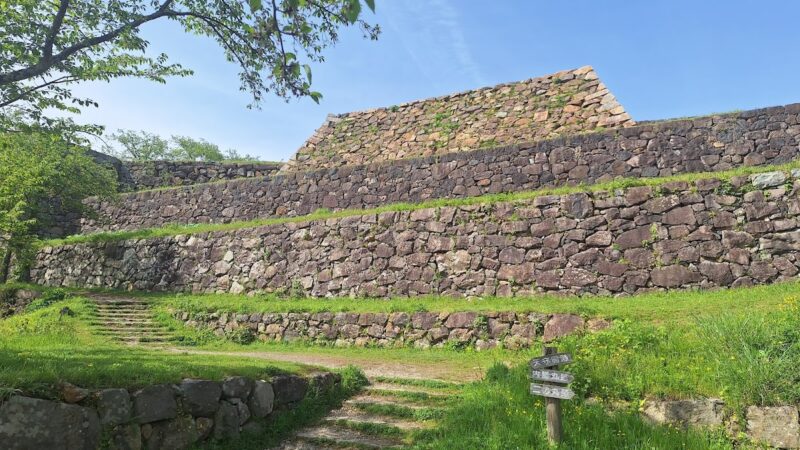
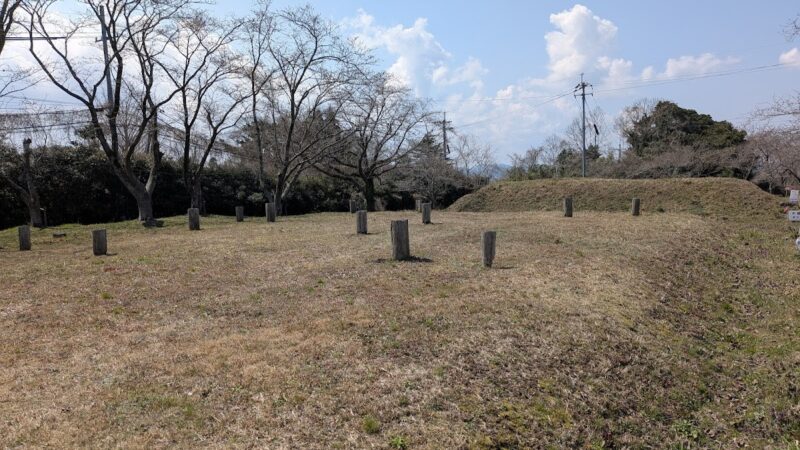
Currently, no stone walls or buildings remain at the Kusaka Castle site, but the undulations of the terrain and the arrangement of the baileys allow us to imagine the castle’s former appearance. Traces of earthworks and moats, remnants of defensive facilities created by civil engineering works, may remain as part of the terrain.
Current State of Remains
Currently, no stone walls or buildings from the time remain at the Kusaka Castle site, but the former appearance of the castle can be imagined from the topography and the arrangement of the baileys. Investigations by castle researchers and local history enthusiasts are ongoing, gradually revealing the true nature of Kusaka Castle.
Highlights of Kusaka Castle
Views from the Castle Ruins
One of the greatest attractions of visiting Kusaka Castle ruins is its view. From the hillside where the castle was built, you can see the Yonago Plain, the Sea of Japan in the distance, and the majestic Mt. Daisen to the east. The castle lords of the Sengoku period likely gazed upon this same view while protecting their territories.
Especially on clear days, the beautiful silhouette of Mt. Daisen stands out, showcasing a figure worthy of its nickname, “Hoki Fuji.” You can also enjoy the scenery of each season, with different expressions depending on when you visit, such as the fresh greenery of spring and the autumn foliage.
Understanding Castle Construction Through Topography
At Kusaka Castle ruins, you can observe the castle construction techniques of the Sengoku period, which skillfully utilized the natural terrain. The wisdom and technology of the people of that time are etched into the terrain, from the angle of the slopes and the arrangement of the baileys to the ingenuity used to secure water.
For castle enthusiasts, walking around the site can be enjoyable, as you speculate things like, “Was there a moat here?” or “Was this difference in elevation intentionally created for defense?”
Surrounding Historical Environment
Besides the castle ruins, the Kusaka area retains elements that evoke a sense of history. Traces of old roads, local shrines and temples, and traditional rural landscapes preserve an environment that allows you to feel the atmosphere of the era when Kusaka Castle existed.
How to Access Kusaka Castle
Access by Public Transportation
There are several routes to Kusaka Castle using public transportation.
Via JR San’in Main Line/Hakubi Line:
- Approximately 33 minutes on foot from Kishimoto Station on the JR Hakubi Line
- Take the Nihon Kotsu Fukuman Line bus from Hoki-Daisen Station on the JR San’in Main Line/Hakubi Line, get off at the “Kusaka” bus stop, and walk for approximately 6 minutes.
Since bus service is limited, it is recommended to check the timetable in advance. Especially on holidays and outside of peak tourist seasons, service may be infrequent.
Access by Car
If traveling by car, you can access the site via national and prefectural roads from the Yonago IC or Mizoguchi IC on the Yonago Expressway. It is approximately 20-30 minutes by car from Yonago city center.
Regarding parking, there may not be a dedicated facility for the castle ruins, so you will need to use nearby public facilities or appropriate parking spaces. It is recommended to check information at the Yonago City Tourist Information Center before visiting.
Important Notes Regarding Access
Kusaka Castle Ruins are not a well-maintained tourist facility, so please note the following points when visiting:
- Wear comfortable shoes and clothing.
- Insect repellent may be necessary depending on the season.
- Prepare drinking water and necessary supplies in advance.
- The ground may be slippery depending on the weather.
Visitor Guide and How to Enjoy
Best Time to Visit
Kusaka Castle Ruins are accessible year-round, but each season has its own unique characteristics.
Spring (March-May): The fresh greenery is beautiful, and the weather is mild, making it ideal for a stroll. You can enjoy the contrast between the remaining snow on Mt. Daisen and the fresh greenery.
Summer (June-August): The greenery is lush, and you can feel the vitality of nature, but heat and insect repellent measures are necessary.
Autumn (September-November): The autumn foliage is beautiful, and the view of Mt. Daisen is magnificent. The weather is stable, making it ideal for exploring the castle ruins.
Winter (December-February): The air is clear and offers excellent views, but be prepared for the cold. Snow can accumulate, so watch your step.
Estimated Time Required
For a thorough visit to Kusaka Castle Ruins, allow 1-2 hours. This is sufficient time to observe the castle’s topography, explore the surrounding area, and enjoy the scenery.
If you plan to take photographs or conduct detailed research, it is recommended to allocate more time.
Useful Items to Bring
- Map or smartphone with GPS
- Camera (for landscape photography)
- Binoculars (for observing distant views)
- Reference books and materials related to castles
- Drinking water and snacks
- Rain gear (in case of weather changes)
Nearby Tourist Attractions
Yonago Castle Ruins
After visiting Kusaka Castle, be sure to also visit Yonago Castle, a representative castle ruin of Yonago City. Yonago Castle is a full-fledged modern castle built in the early Edo period, and its remains, such as the stone walls, are well-preserved. The view from the castle ruins, built on Minatoyama Hill overlooking Yonago city, is magnificent, offering panoramic views of the Sea of Japan, Lake Nakaumi, and Mount Daisen.
Mount Daisen
Located east of the Kusaka district, Mount Daisen, at 1,729 meters, is the highest peak in the Chugoku region. Its beautiful form, also known as “Hoki Fuji,” has long been an object of worship. Various activities such as mountain climbing, hiking, and skiing can be enjoyed throughout the four seasons.
Kaike Onsen
Located in the northern part of Yonago City, facing the Sea of Japan, Kaike Onsen is one of the leading hot spring resorts in the San’in region. After exploring Kusaka Castle and Yonago Castle, you can relax and soothe your tired body in the hot springs. Many inns and hotels line the coastal hot spring town, where you can also enjoy fresh seafood.
Lake Nakaumi
Located west of Yonago City, Lake Nakaumi is the second largest brackish lake in Japan and a valuable natural environment registered under the Ramsar Convention. It’s a spot where you can enjoy nature through activities like birdwatching, cycling, and lakeside walks.
History and Culture of Yonago City
Yonago as a Transportation Hub in San’in
Yonago City has long flourished as the “gateway to San’in.” Located almost in the center of the San’in region, it developed as a commercial city where people and goods gathered, serving as a transportation hub for both land and sea routes. During the Edo period, it prospered as a castle town of Yonago Castle and as a commercial port.
Even today, it remains a key railway hub where the JR San’in Main Line and Hakubi Line intersect, and maintains its status as a transportation center with the Yonago Expressway and San’in Expressway, as well as Yonago Airport.
Regional Traditions and Culture
Yonago City and its surrounding areas have a rich tradition and culture that has been passed down through generations. The culture nurtured throughout history, including shrines and temples related to the Oyama faith, traditional crafts, and local festivals, still thrives today.
In rural areas, including the Kusaka district, traditional agricultural culture and strong community ties are preserved, offering a cultural landscape distinct from urban areas.
Current Status and Challenges of Kusaka Castle Research
Limitations of Historical Materials and Research Progress
Historical materials concerning Kusaka Castle are limited, leaving many aspects of the castle’s detailed history and structure unclear. However, recent advances in castle research, through archaeological surveys, topographical measurements, and re-examination of ancient documents, are gradually yielding new insights.
Continued research activities by local historians and castle researchers are contributing to clarifying the true nature of Kusaka Castle.
Efforts for Preservation and Utilization
Cooperation from local residents, government, and researchers is crucial for the preservation and utilization of the Kusaka Castle ruins. Creating an environment where visitors can safely learn about history is essential, including the protection of remains, the installation of information boards, and the development of walking paths.
At the same time, preventing the destruction of historical remains due to excessive development and preserving the historical landscape are also important challenges.
Significance of Visiting Kusaka Castle
As an Entry Point to Understanding Local History
Visiting Kusaka Castle is not simply about seeing a single castle ruin; it’s an entry point to understanding the history of Yonago City and Hoki Province, and even the Sengoku period of the San’in region. While not a large-scale castle, it’s a valuable place to experience local history.
Discovering the Depth of Castle Research
Throughout Japan, there are countless small, local castle ruins like Kusaka Castle, in addition to famous castles. Visiting these castle ruins and imagining their appearance from the topography and remains is one of the joys of castle research.
Visiting castles like Kusaka Castle, where historical records are scarce, allows you to experience both the enjoyment and the difficulty of deciphering history from limited information.
Manners and Precautions for Visitors
Respect for Private Property
Since the castle ruins and surrounding area may be private property, please do not enter areas marked as “No Entry.” As this is also a living space for local residents, please strictly refrain from making noise or engaging in disruptive behavior.
Protection of the Natural Environment
Please be sure to take all your trash with you, and refrain from collecting plants or altering the terrain. Not only historical remains, but the natural environment is also a valuable local resource.
Safety Considerations
When walking in undeveloped areas, please pay close attention to your footing, and it is recommended to avoid walking alone. Especially in bad weather or during winter, please refrain from exploring unnecessarily.
Summary
Kusaka Castle, located in Kusaka, Yonago City, Tottori Prefecture, is a valuable historical site that conveys the history of the region as a castle of a local powerful family during the Sengoku period. While it has not been developed into a large-scale tourist destination, this is precisely why it is a place where you can quietly experience the atmosphere of that time.
When you visit Yonago City, why not take a look at local historical sites like Kusaka Castle, in addition to famous historical sites such as Yonago Castle? Spending time contemplating the lives of people during the Sengoku period against the backdrop of the majestic scenery of Mt. Daisen will surely be a memorable experience.
The views from the castle ruins, the historical traces etched into the terrain, and the rich nature and culture of the surrounding area—Kusaka Castle is full of elements that will captivate history buffs and castle enthusiasts. Be sure to visit the site in person and experience its charm for yourself.