A Complete Guide to the History and Highlights of Nagashima Takajo Castle (Edogawa Ward, Tokyo) | Visiting the Ruins of a Medieval Castle in Kasai
In Higashi-Kasai, Edogawa Ward, Tokyo, lies an area once known as “Nagashima.” Now a highly urbanized area with numerous residences and commercial facilities, this site was once home to the medieval castle, “Nagashima Takajo Castle.” Also known as “Nagashima Yashiki,” this castle site is a valuable historical site that tells the story of medieval history in the Kanto region, attracting the attention of castle enthusiasts and history buffs.
This article provides a comprehensive overview of Nagashima Takajo Castle, from its historical background to its current remains, surrounding shrines and temples, and access information.
Basic Information on Nagashima Takajo Castle
Nagashima Takajo Castle was a medieval castle located near Higashi-Kasai 3-chome, Edogawa Ward, Tokyo. Let’s begin by summarizing the basic information.
Common Name/Alternate Name
- Official Name: Nagashima Takajo
- Alternate Name: Nagashima Yashiki
- Former Province Name: Musashi Province
Location
- Address: Near 3-chome, Higashi-Kasai, Edogawa-ku, Tokyo
- Nearest Station: Approximately 15 minutes on foot from Kasai Station on the Tokyo Metro Tozai Line
- Estimated Location: Behind Shoenji Temple, around Shimo-Imai Katori Shrine (Nagashima Katori Shrine)
Classification/Structure
- Castle Classification: Flatland Castle (Residence)
- Construction Style: Residence of a Medieval Samurai
- Keep Structure: None (No keep existed as it was a medieval residence)
- Main Facilities: Residence, earthworks, moat (estimated)
Builder and Lord
- Builder: Said to be Yamauchi Uhyoe Saiemon Toshitane (Nagashima clan)
- Lord: Nagashima clan
- Year of Construction: Details unknown (Medieval period)
- Year of Abandonment: Details unknown (Estimated to be from the late Sengoku period to the early Edo period)
Designated Cultural Property
Currently, it is not designated as a cultural property by the national government, Tokyo Metropolitan Government, or Edogawa Ward. However, it is recognized as an important historical site for understanding the history of the region.
Historical Background of Nagashima Takajo Castle
Characteristics of the Medieval Kasai Region
The Kasai region where Nagashima Takajo Castle was built occupied an important geographical location in the medieval period. The Kasai region, including present-day Edogawa Ward, was a low-lying wetland area facing Edo Bay (Tokyo Bay), and was a water-rich area with many rivers and waterways crisscrossing it.
This area was a manor of Ise Grand Shrine known as “Kasai Mikuriya,” and the Kasai clan held power here during the medieval period. The place name Nagashima is thought to originate from a slightly elevated area surrounded by waterways and wetlands, resembling an “island.”
Relationship between the Nagashima and Yamauchi Clans
Yamauchi Uhyoe Saemon Toshitane, believed to be the builder of Nagashima Takajo Castle, is thought to have been a local samurai based in this area. The fact that he adopted “Nagashima” as his surname suggests he was a family deeply rooted in this region.
In the medieval Kanto region, under the rule of the Kamakura and Muromachi Shogunates, local lords existed throughout the land, constructing residences and castles to protect their territories. Nagashima Takajo Castle is presumed to have functioned as one such residence of a medieval samurai.
Transition from the Sengoku Period to the Edo Period
During the Sengoku period, the Kanto region came under the influence of the Later Hojo clan. The Kasai area also came under the control of the Hojo clan, and while detailed records of the role of Nagashima Takajo Castle are scarce, it is possible that it continued to exist as a residence of a small local lord.
After Toyotomi Hideyoshi’s siege of Odawara in 1590 (Tensho 18), when Tokugawa Ieyasu entered the Kanto region, this area also came under the control of the Tokugawa clan. During the Edo period, its function as a castle was lost, and the surrounding area was developed into an agricultural region.
Current Remains and Traces
Current State of Remains
Unfortunately, there are almost no clear remains of Nagashima Takajo Castle today. In the urbanized Higashi-Kasai area of Edogawa Ward, traces of the former castle have been lost due to residential development and road construction.
No traces of defensive structures such as earthworks or moats can be confirmed, and no remains of buildings exist. However, it is possible to estimate the location of the former castle based on the surrounding topography and the arrangement of temples and shrines.
Estimation from Rapid Survey Maps
Looking at rapid survey maps created in the early Meiji period, there is a notation for “pear” in the area behind Shōenji Temple, near the current parking lot of Shimo-Imai Katori Shrine. This indicates a pear orchard, suggesting that this area was used for agriculture at the time.
The location of this pear orchard is considered the estimated site of Nagashima Takajo Castle. It is not uncommon for medieval castle sites to be used as orchards or fields in later generations, and it is thought that the slightly elevated topographical features were suitable for agriculture.
Nagashima Monument
A stone monument called the “Nagashima Monument” exists at the site. This monument commemorates the fact that this area was once called “Nagashima” and is an important clue to conveying the history of the region.
While detailed informational facilities such as explanatory signs are limited, visiting this monument allows you to truly feel the existence of the former Nagashima area.
Surrounding Shrines, Temples, and Historical Sites
The area surrounding the Nagashima Takajo Castle ruins is home to a concentration of shrines and temples dating back to the medieval period. These may have had a deep connection to the castle, and it is recommended to visit them as well during your trip.
Nagashima Katori Shrine (Shimo-Imai Katori Shrine)
This shrine is located very close to the estimated site of Nagashima Takajo Castle. Katori Shrine enshrines Futsunushi-no-kami, a god of war, and is known for its deep connection to samurai.
The grounds of Nagashima Katori Shrine are located in the former center of the Nagashima area, and its connection to the castle has been suggested. It was common for samurai in the medieval period to establish shrines dedicated to their clan deities or guardian deities near their residences.
Basic Information:
- Location: Near Higashi-Kasai 3-chome, Edogawa-ku, Tokyo
- Deity: Futsunushi-no-kami
- Access: Approximately 15 minutes on foot from Kasai Station
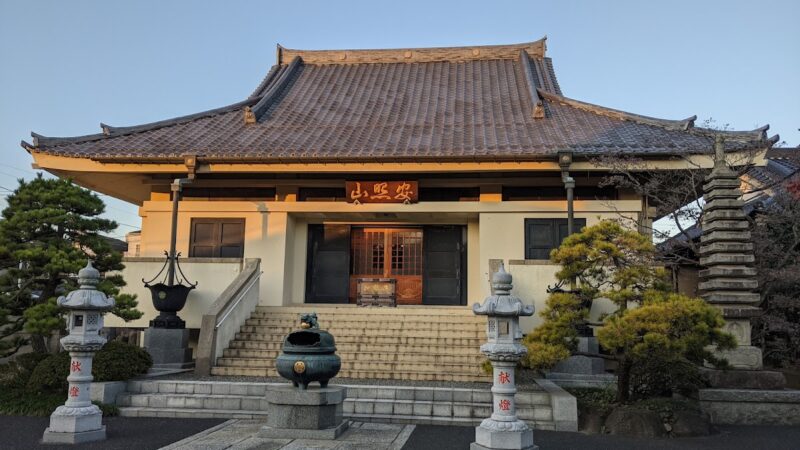
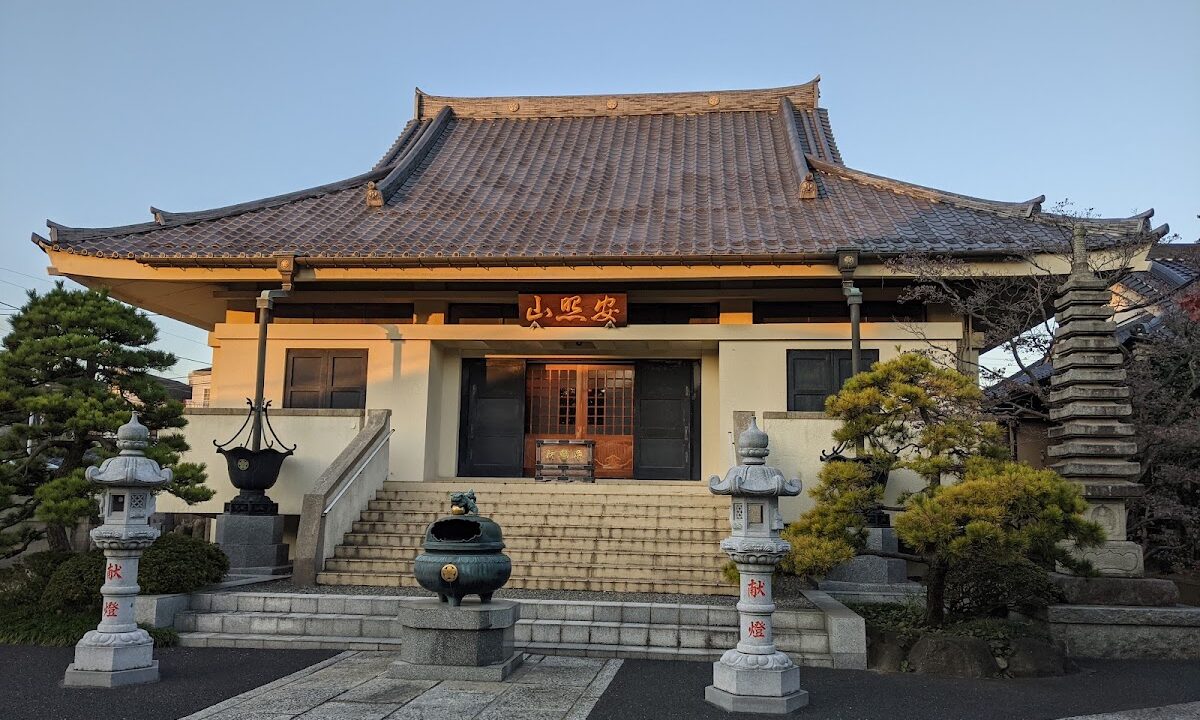
Shōenji Temple
This temple is adjacent to the estimated site of Nagashima Takajo Castle. It is also listed on the rapid survey map, suggesting it existed before the Edo period.
The area behind Shōenji Temple is considered the estimated site of the castle, making the relationship between the temple and the castle an interesting topic. In the medieval period, temples sometimes functioned as part of the castle’s defensive structure or were protected as the lord’s family temple.
Basic Information:
- Location: Near Higashi-Kasai 3-chome, Edogawa-ku, Tokyo
- Sect: Details require on-site verification
- Features: Adjacent to the estimated site of Nagashima Takajo Castle
Seikōji Temple
Another important temple in the Nagashima area. Along with surrounding shrines and temples, it formed the religious center of the former Nagashima region.
The reason why shrines and temples are concentrated in this area is due to its topographical feature of being slightly elevated. While the surrounding area is low-lying and wetland, important facilities were gathered on this slightly elevated area, which was less susceptible to flooding.
Other Nearby Spots
Around the Nagashima Takajo Castle Ruins, there are several important spots for understanding the history of Edogawa Ward.
- Former Edogawa River: A river flowing on the east side, the former main course of the Edogawa River.
- Remains of Waterways in the Kasai Area: Traces that tell the story of medieval water transport.
- Streetscape of Higashi-Kasai: Historic place names remaining amidst urbanization.
Access and Visiting Nagashima Takajo
Access by Public Transportation
Train:
- Get off at Kasai Station on the Tokyo Metro Tozai Line.
- Approximately 15 minutes on foot from the North Exit.
- Alternatively, you can take a bus from the station.
Bus:
- Various Toei Bus and Keisei Bus routes are available.
- The nearest bus stop is “Higashi-Kasai 3-chome”.
Access by Car
- Approximately 10 minutes from Kasai IC on the Shuto Expressway Wangan Line.
- Parking: Coin parking is available nearby (e.g., parking near Katori Shrine).
Points to Note During Your Visit
Estimated Time Required: Approximately 15-30 minutes
- As there are no clear remains, the visit will be brief.
- A 1-2 hour stroll is possible, including the surrounding shrines and temples.
Notes for Visitors:
- As it is located in a residential area, consideration for local residents is necessary.
- There are few explanatory signs, so prior research is recommended.
- Please be considerate of your surroundings when taking photographs.
Recommended Sightseeing Route:
- Start from Kasai Station
- Visit Nagashima Katori Shrine
- Visit Shoenji Temple
- Check out the Nagashima Monument
- Go to Seikoji Temple
- Stroll around the surrounding former Nagashima area.
Evaluation and Reviews of Nagashima Takajo Castle
Evaluation from Castle Enthusiasts
Nagashima Takajo Castle has very few remaining castle structures, resulting in a low rating on general castle evaluation websites. According to Kojodan’s data, the average rating is ★★☆☆☆ 1.75, with a recorded visit time of approximately 15 minutes.
However, this is an evaluation based on the state of preservation of the remains, and is a different perspective from historical value or academic importance. Nagashima Takajo Castle offers important clues to understanding the history of the Kasai region during the medieval period.
Visitor Feedback
Castle enthusiasts who have actually visited the site have offered the following comments:
- “Although no remains are left, you can truly experience the local history of the medieval period.”
- “Visiting it together with the surrounding shrines and temples deepens understanding.”
- “There’s a joy in finding traces of history within the urbanized modern landscape.”
- “It would be good if the information boards were more comprehensive.”
Number of Visitors and Popularity
According to data from the Castle Enthusiasts Group, the number of visitors is 66 (as of 2024), which is not particularly large. While this is a small number compared to other well-known castle sites in Tokyo, it can be said to be a spot where you can enjoy the pleasure of visiting a lesser-known castle site.
Position in the History of Castles in Edogawa Ward
Other Castles and Fortifications in Edogawa Ward
In addition to Nagashima Takajo Castle, there are several other medieval castle sites in Edogawa Ward. According to the “Castle Wanderings,” several castle ruins are recorded within Edogawa Ward, indicating its historical importance as a border region between Shimosa and Musashi Provinces.
Main Castle Ruins:
- Nagashima Takajo (Higashi-Kasai)
- Other smaller residence ruins (details are described in various historical documents)
Medieval History of the Kasai Region
The Kasai region was ruled by the Kasai clan from the late Heian period to the Kamakura period. The Kasai clan were powerful retainers who served Minamoto no Yoritomo and possessed vast territories.
After the Muromachi period, the power of the Kasai clan declined, but many local lords remained in the region, governing their respective territories. Nagashima Takajo is thought to have played an important role in the region’s history as one of the bases of such local lords.
Comparison with Medieval Castles in Tokyo
Surprisingly, many medieval castle ruins remain in Tokyo, especially within the 23 wards. However, in most cases, the remains have been lost due to urbanization.
Similar Castle Sites:
- Setagaya Castle (Setagaya Ward): Some remains such as earthworks still exist.
- Akatsuka Castle (Itabashi Ward): Dry moats and other features are preserved.
- Shakujii Castle (Nerima Ward): Earthworks and moats remain.
Although Nagashima Takajo Castle’s remains are less well-preserved, it is a valuable historical site for understanding the medieval history of the eastern Edogawa Ward.
Origin and Changes of the Place Name Nagashima
Origin of the Place Name
The place name “Nagashima” is thought to literally mean “long island.” It is presumed that the name came from the fact that the slightly elevated area, surrounded by waterways and wetlands, resembled an island.
The Higashi-Kasai area of Edogawa Ward was once a water-rich region crisscrossed by the Edogawa River, the Old Edogawa River, and many other waterways. Although it has now been reclaimed and flood control works have turned it into land, in the medieval period it was a region where people lived in harmony with water.
Changes in Place Names
After the Meiji era, due to the reorganization of administrative districts, the independent place name “Nagashima” disappeared and is now included in the place name “Higashi-Kasai.” However, the name “Nagashima” still remains as a memory of the region, as seen in “Nagashima Katori Shrine” and “Nagashima Monument.”
Traces of Nagashima in Modern Times
Walking around the area of present-day Higashi-Kasai 3-chome, you can find traces of the former “Nagashima.” The area where shrines and temples are concentrated is slightly higher than the surrounding terrain, giving a sense of the former slightly elevated area.
Significance of Visiting Nagashima Takajo Castle
Value as a Historical Learning Site
Visiting the Nagashima Takajo Castle ruins offers more than just a tour of the castle; it provides the following learning opportunities:
- Understanding Medieval Local Communities: Learning how local lords lived and governed their regions
- The Relationship Between Topography and History: The wisdom of choosing a place to live in a waterside area
- Urbanization and Historical Heritage: Becoming aware of the layers of history sleeping beneath modern cities
- Changes in Place Names: The memories and history of the region as told by place names
How to Enjoy Castle Exploration
Famous castles and castles with well-preserved remains are not the only targets for castle exploration. Visiting castle ruins with few remaining structures, like Nagashima Takajo, offers a unique kind of enjoyment:
- Using your imagination: Imagining the castle’s former appearance from limited information
- Deep dive into local history: The pleasure of researching local historical materials and old maps
- The charm of minor spots: Exploring quiet historical sites that haven’t been commercialized for tourism
- The sense of accomplishment upon completion: The desire to complete the quest to visit all recorded castle ruins
Contribution to the community
Visiting such historical sites and sharing information on social media and blogs helps to reaffirm the historical value of the region. By unearthing and sharing local history, which is often unknown even to local residents, we can cultivate a sense of attachment and pride in the region.
Summary: The charm of Nagashima Takajo and future prospects
Nagashima Takajo was a medieval castle located in Higashi-Kasai, Edogawa Ward, Tokyo. Although no clear remains exist, we can learn that a local lord’s residence once stood on this site from surrounding shrines, temples, place names, and old maps. ### Summary of Nagashima Takajo Castle’s Characteristics
- Location: Near Higashi-Kasai 3-chome, Edogawa-ku, Tokyo
- Alternate Name: Nagashima Yashiki
- Builder: Yamauchi Uhyoe Saiemon Toshitane (Nagashima clan)
- Castle Classification: Flatland castle (residence)
- Current Status: No remains, shrines and temples remain on the estimated site
- Surroundings: Nagashima Katori Shrine, Shoenji Temple, Seikoji Temple, etc.
- Access: Approximately 15 minutes on foot from Kasai Station on the Tokyo Metro Tozai Line
Future Prospects
Urban historical sites like Nagashima Takajo Castle are expected to see the following developments in the future:
- Detailed Academic Research: Clarification of history through ancient documents and archaeological investigations
- Installation of Information Boards: Enhancement of information provided to visitors
- Digital Restoration: Recreating the castle’s appearance in its heyday using AR and VR
- Utilization in Local History Education: Utilization in school education and lifelong learning
- Tourism Resource Development: Incorporation into historical walking routes in the Kasai area
In Conclusion
Nagashima Takajo Castle may not be flashy, but it is a valuable trace of the Middle Ages remaining in Tokyo’s downtown area. In today’s increasingly urbanized world, visiting such historical sites and reflecting on the past not only deepens our understanding of history but also provides an opportunity to rediscover the profound depths of the land where we live.
If you have the opportunity to visit the area around Kasai Station, please extend your trip a little and visit the Nagashima Takajo Castle ruins and the surrounding shrines and temples. You will surely be able to feel the spirit of the Middle Ages that certainly existed amidst the modern cityscape.