Ushigome Castle (Shinjuku Ward, Tokyo): A Complete Guide to its History and Highlights | The Castle Ruins of the Sengoku Period Remaining at Koshōji Temple
The Kagurazaka area in Shinjuku Ward, Tokyo, is known as a popular spot lined with stylish restaurants and cafes, but this area was once home to Ushigome Castle, a castle from the Sengoku period. Built around the present-day Koshōji Temple, this castle served as the residence of the Ushigome clan, who served the Hojo clan. This article provides a detailed explanation of Ushigome Castle, from its history to its current state and access methods.
Basic Information on Ushigome Castle
Ushigome Castle was a hilltop castle located in Fukuro-machi, Shinjuku Ward, Tokyo. The area around the present-day Koshōji Temple is considered to be the site of the castle.
Location and Former Province
- Location: 15 Fukuro-cho, Shinjuku-ku, Tokyo (around Koshōji Temple)
- Former Province: Musashi Province
- Classification/Structure: Hilltop Castle (Residence)
- Keep Structure: None (Residence Style)
Construction and Abandonment Period
- Construction Year: Estimated to be during the Tenbun era (around 1532-1555)
- Builder: Ushigome Katsuyuki (Son of Ōgo Shigeyuki)
- Lord: Ushigome Clan
- Abandonment Year: Estimated to be after the Siege of Odawara in Tenshō 18 (1590)
Ushigome Castle was built on a tongue-shaped plateau extending from southwest to northeast. This terrain was suitable for a castle, suggesting it was a high ground offering a panoramic view of the surrounding area.
The History of the Ushigome Clan and the Background of the Construction of Ushigome Castle
From the Ogo Clan to the Ushigome Clan
The ancestors of the Ushigome clan were the Ogo clan, a samurai family from Seta District, Kōzuke Province (present-day Gunma Prefecture). The Ogo clan was a powerful family based at the foot of Mount Akagi and became vassals of Hojo Ujiyasu, who was expanding his power in the Kanto region during the Sengoku period.
During the Tenbun era, Ogo Shigeyuki, the head of the Ogo clan, pledged allegiance to Hojo Ujiyasu and was granted territory in Ushigome, Musashi Province. In the generation of Shigeyuki’s son, Katsuyuki, the family changed their surname to “Ushigome,” taking the name of the territory.
Relationship with the Hojo Clan
The Ushigome clan served as powerful vassals of the Later Hojo family of Odawara, supporting the Hojo clan’s rule in Musashi Province. Ushigome Castle is thought to have served more as a governing center for the region than merely a military base.
In 1590, when the Hojo clan was destroyed in Toyotomi Hideyoshi’s siege of Odawara, the Ushigome clan’s history also came to an end. It is presumed that Ushigome Castle was abandoned around this time.
Structure and Characteristics of Ushigome Castle
Character as a Residence
Ushigome Castle is presumed to have been a residence primarily for the lord, rather than a large-scale fortress with defensive structures like the mountain castles or hill castles of the Sengoku period. Detailed records of the castle’s internal structure, such as moats, gates, and other features, are lacking, leaving many aspects unclear.
Topographical Characteristics
The castle was built on a tongue-shaped plateau extending from southwest to northeast. This terrain functioned as a natural defensive line and provided a strategic location overlooking the surrounding lowlands. While it is difficult to confirm the original topography on-site due to the dense construction of buildings today, remnants of it can be felt in the slopes of Kagurazaka.
Current Status of Remains
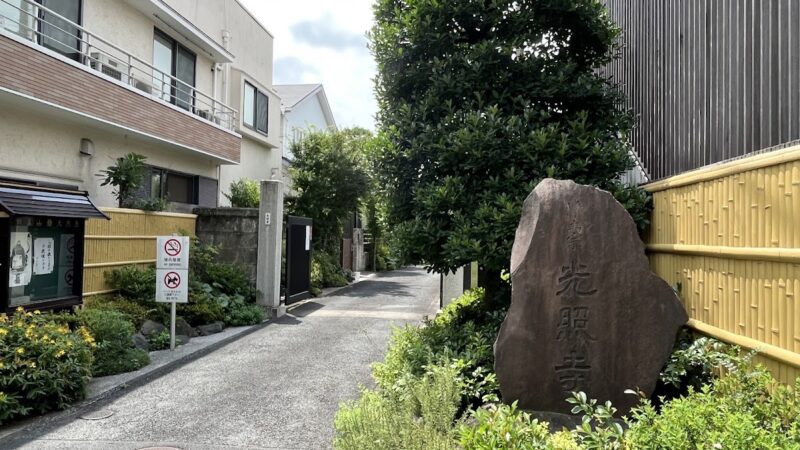
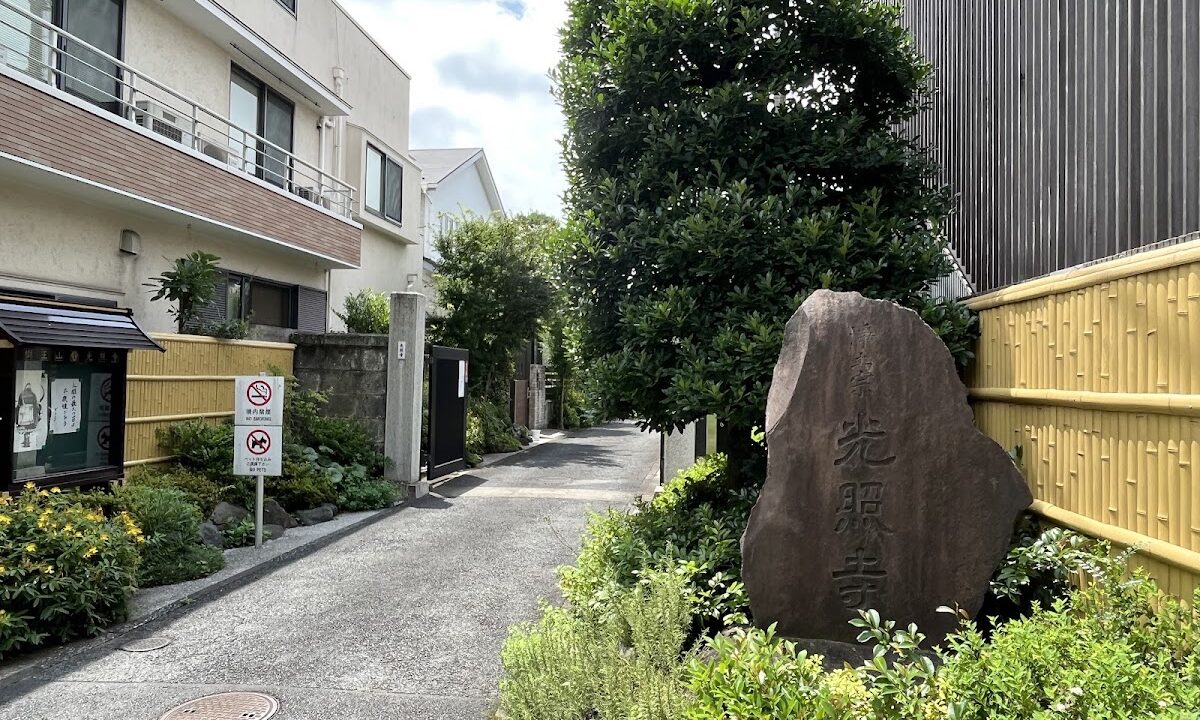
Unfortunately, very little remains of Ushigome Castle exist today. Earthworks, moats, stone walls, and other castle structures cannot be confirmed, having been lost due to the development of the grounds of Koshōji Temple and surrounding residential areas. However, an explanatory sign about Ushigome Castle is installed near the entrance to Koshōji Temple, indicating that a castle once stood on this site.
Relationship between Koshōji Temple and Ushigome Castle
History of Koshōji Temple
Koshōji Temple, currently standing on the site believed to be the site of Ushigome Castle, is a Jōdo sect temple. However, this temple moved to its current location in 1645 (Shōhō 2), relocating from Kanda. Therefore, there is no direct relationship between Koshōji Temple and Ushigome Castle; the temple was established on this site approximately 55 years after the castle was abandoned.
Precautions Regarding Photography
Photography is prohibited throughout the entire grounds of Koshōji Temple, including the exterior of the main hall. This rule must be strictly observed when visiting the castle site. Careful consideration is required when photographing explanatory signs.
How to Access Ushigome Castle
Nearest Stations and Walking Routes
Access to Ushigome Castle Ruins (Koshōji Temple) is very convenient, within walking distance of several stations.
Main Access Methods:
- Toei Oedo Line Ushigome-Kagurazaka Station: Approximately 3 minutes on foot (closest)
- Tokyo Metro Tozai Line Kagurazaka Station: Approximately 5 minutes on foot
- JR Sobu Line/Tokyo Metro Lines Iidabashi Station: Approximately 10 minutes on foot
Recommended Route from Iidabashi Station
When visiting from Iidabashi Station, the most common route is to walk up the slope of Kagurazaka Street, which was built during the Edo period. As you walk up this slope, you can feel the former topography and historical atmosphere. Kagurazaka Street is lined with many restaurants and shops, allowing you to enjoy a stroll through the town in conjunction with your visit to the castle ruins.
Map and Map Information
The address of Kōshōji Temple is 15 Fukuro-machi, Shinjuku-ku, Tokyo. You can find its exact location by searching “Kōshōji Shinjuku-ku” on your smartphone’s map app. The surrounding area has many shopping streets and restaurants in Kagurazaka, and there are plenty of landmarks.
Historical Spots Around Ushigome Castle
History of the Kagurazaka Area
The Kagurazaka area, where Ushigome Castle once stood, was a region where samurai residences of daimyo and hatamoto were concentrated during the Edo period. After the Meiji era, it developed into a Yamanote residential area and also flourished as a geisha district. Even today, cobblestone alleys and restaurants remain in the back streets, conveying the atmosphere of the past.
Scope of the Ushigome Area
Ushigome is a regional name in Shinjuku-ku, Tokyo, and geographically corresponds to the northeastern part of Shinjuku-ku. It refers to the area of the former Ushigome Ward of Tokyo City, and is a wide area including place names such as “Kagurazaka,” “Waseda,” and “Ichigaya.” In 1947, the former Ushigome, Yotsuya, and Yodobashi wards merged to form the current Shinjuku Ward.
Nearby Attractions
When visiting the Ushigome Castle ruins, we recommend also visiting the following spots:
- Kagurazaka Street: A charming street with cobblestone alleys and long-established restaurants.
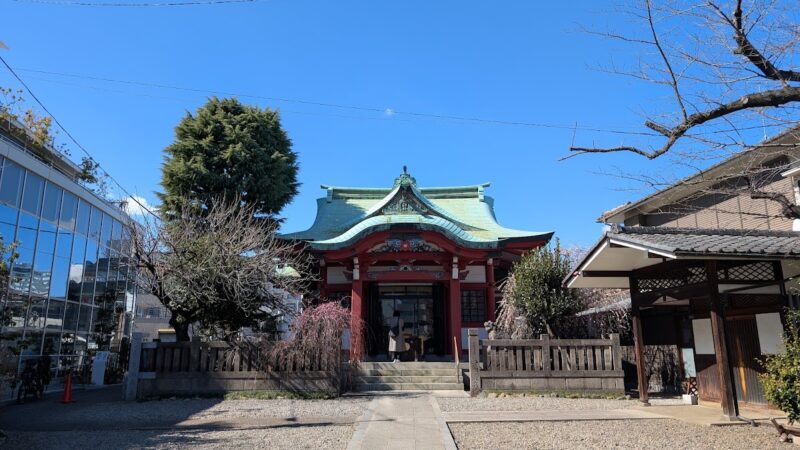
- Akagi Shrine: A shrine beloved as the guardian shrine of Kagurazaka.
- Bishamonten Zenkoku-ji Temple: One of Kagurazaka’s iconic temples.
- Kakurenbo Yokocho: A charming labyrinthine alley.
Historical Significance of Ushigome Castle
Tokyo in the Sengoku Period
Ushigome Castle holds valuable historical significance as a castle from the Sengoku period that existed in what is now central Tokyo. It’s hard to imagine from the image of modern Shinjuku with its towering skyscrapers, but Sengoku warlords lived in this area and played a part in the Hojo clan’s rule.
The Hojo Clan’s Rule over Musashi Province
Ushigome Castle was one of the important bases for the Hojo clan, who were based in Odawara, in their rule over Musashi Province. From the Tenbun to the Tensho eras, the Hojo clan built a vast sphere of influence in the Kanto region, and achieved efficient governance by incorporating local influential figures like the Ushigome clan as vassals.
Relationship with the Founding of Edo
In 1590, the Hojo clan was destroyed, and Tokugawa Ieyasu entered the Kanto region, leading to the full-scale development of Edo. Ushigome Castle was abandoned around this time and redeveloped as a samurai residential area during the Edo period. The transformation from a Sengoku period castle to an Edo period samurai residence is an interesting example in considering the history of Tokyo.
How to Enjoy Your Visit to Ushigome Castle
Visiting Time and Points to Note
Approximately 15 minutes is sufficient for visiting the Ushigome Castle ruins. However, since no remains are left, the main purpose of the visit will be to learn about the history by reading the explanatory signs. Remember that photography is prohibited on the grounds of Kōshōji Temple, so please visit respectfully.
Value as a Castle Tour
Among those who enjoy visiting castles throughout Japan, Ushigome Castle is known as a “castle ruin easily accessible in the heart of Tokyo.” Although no remains are left, learning about the history through the explanatory signs and imagining the former topography is a great part of the castle tour.
Combine with a Kagurazaka Stroll
While a visit to Ushigome Castle ruins alone may not be enough, combining it with a stroll through the Kagurazaka area will make for a more fulfilling historical exploration. You can walk while feeling the historical changes from a castle ruin from the Sengoku period to a samurai residence from the Edo period, a geisha district from the Meiji era onward, and finally to a fashionable modern town.
Summary: The Present and Future of Ushigome Castle
Ushigome Castle was a flatland castle from the Sengoku period located around Kōshōji Temple in Shinjuku Ward, Tokyo. Built during the Tenbun era by Ushigome Katsuyuki, who changed his surname from the Ogo clan, Ushigome Castle served as a vassal of the Hojo clan and contributed to the governance of Musashi Province. It was abandoned after the Siege of Odawara in 1590, and although no remains exist today, its history is preserved through explanatory plaques.
With its excellent accessibility—just a 3-minute walk from Ushigome-Kagurazaka Station on the Toei Subway—it’s a popular castle site in central Tokyo, beloved by castle enthusiasts and history buffs. Visiting it alongside the charming streets of Kagurazaka allows you to experience the historical transformations of Tokyo from the Sengoku period to the present day.
Even in modern-day Shinjuku, lined with skyscrapers, there once stood a castle where Sengoku warlords resided—why not visit the Ushigome Castle ruins to feel the romance of such history?