Sekido Castle (Tama City, Tokyo) Complete Guide | History, Remains, and Access Information
Sekido Castle, located in Tama City, Tokyo, is a medieval mountain castle built on a hill on the south bank of the Tama River. Also known as “Tenshudai” (castle tower base), it was strategically located overlooking a key point on the Kamakura Road. While clear remains are difficult to confirm due to ongoing residential development, it remains a historically important castle attracting attention from castle enthusiasts and history buffs.
Overview and Location of Sekido Castle
Sekido Castle is a flatland castle built on a hill approximately 115 meters above sea level and 50 meters above ground level. It is located in the Sekido district of present-day Tama City, Tokyo, south of Seiseki-Sakuragaoka Station on the Keio Line.
The Sekido district where the castle is located is on the south bank of the Tama River and was a transportation hub where the Kawasaki Road, Noyaru Road, and Kamakura Road intersected. Across the Tama River lay Nakagawara and Bubaigawara, and this geographical location enhanced the military importance of Sekido Castle.
Regarding the origin of the place name “Sekido,” one theory suggests it derives from “Kasumigaseki,” a barrier established on the Kamakura Road. The discovery of wooden structures at the barrier site confirms that this area was a crucial point for traffic control. Sekido, which also flourished as a post town, was not merely a military base but also an economically important region.
History of Sekido Castle
Construction during the Kamakura Period
There are various theories regarding the construction period of Sekido Castle, but it is generally believed to date back to the Kamakura period. It is thought to have been built to monitor and defend an important road as part of the Kamakura Shogunate’s efforts to strengthen its control over the Kanto region.
The Battle of Sekido and the Battle of Bubaigawara
The most significant event in which Sekido Castle’s name is etched in history is the “Battle of Sekido” in the early Nanboku-cho period. This battle followed the Battle of Bubaigawara in 1333.
When the anti-shogunate army led by Nitta Yoshisada advanced towards Kamakura, they faced the Hojo forces across the Tama River. Although Nitta’s army suffered a defeat at the Battle of Bubaigawara, they received reinforcements and launched a counterattack, resulting in fierce fighting around Sekido. It is believed that the name “Sekido” (meaning “gate”) in this area led to the creation of the name “Battle of Sekido.”
Sekido Castle in the Muromachi Period
During the Muromachi period, it is believed to have been under the control of the Uesugi clan, who served as the Kanto Kanrei (governor of the Kanto region). In particular, it was a battleground for the conflict between the Yamanouchi Uesugi and Ogigayatsu Uesugi clans, and records indicate that Ogigayatsu Uesugi Sadamasa captured Sekido Castle from Yamanouchi Uesugi Akizane.
However, historical materials concerning Sekido Castle from this period are limited, and the specific structure and size of the castle are not clearly known. While records of a Sekido fort exist, many details remain unclear.
The Sengoku Period and the Rule of the Hojo Clan
It is believed that during the Sengoku period, the area came under the control of the Hojo clan, who had brought the Kanto region under their control. The Saeki clan (including Saeki Ichisuke Michinaga), vassals of the Hojo clan, governed this area and made Sekido Castle their residence.
The Saeki clan, as important retainers of the Hojo clan, were entrusted with governing the Tama region. It is presumed that Sekido Castle played a role in monitoring the crossing points of the Tama River and managing people traveling along the Kamakura Road.
Related facilities such as the Terakata Ooyashiki (Saeki Residence) and Ariyama Residence are also believed to have existed in the surrounding area, suggesting that a system of control centered around Sekido Castle was established.
Abandonment of the Castle and its Aftermath
When the Hojo clan was destroyed in Toyotomi Hideyoshi’s Odawara campaign in 1590, it is believed that Sekido Castle also ceased to serve its purpose. After Tokugawa Ieyasu entered Edo, the Sekido area became a shogunate territory and a territory of hatamoto (direct retainers of the shogun), and the castle lost its function.
During the Edo period, it became known as “Tenshudai” (castle tower base), which is presumed to have originated from the fact that the elevated area of the castle ruins resembled a castle tower base.
Structure and Layout of Sekido Castle
Regarding the specific layout and structure of Sekido Castle, many details remain unknown due to the scarcity of existing remains. However, some inferences can be made based on the location and surrounding topography.
Defense Utilizing the Topography
The castle was built on a hill on the south bank of the Tama River. The north side faced a steep slope along the Tama River, and the south side also had undulating terrain. It is thought that the defensive structure utilized this natural topography.
From the 115-meter-high plateau, it was possible to overlook the Tama River crossing point and the Kamakura Road, making it a suitable location for surveillance and defense. The 50-meter height difference would have made it a barrier that attackers could not easily climb. ### Estimated Facilities
Based on the general structure of medieval mountain castles, it is likely that multiple baileys (kuruwa) were arranged around the main enclosure (honmaru). It is also thought to have had defensive structures such as moats and earthworks, but these cannot be confirmed now due to residential development.
The Terakata Ooyashiki and Ariyama Yashiki, which are believed to have existed in the surrounding area, are presumed to have served as residences for the castle lord and his retainers, or as subsidiary castles.
Monument to the Castle Tower Base
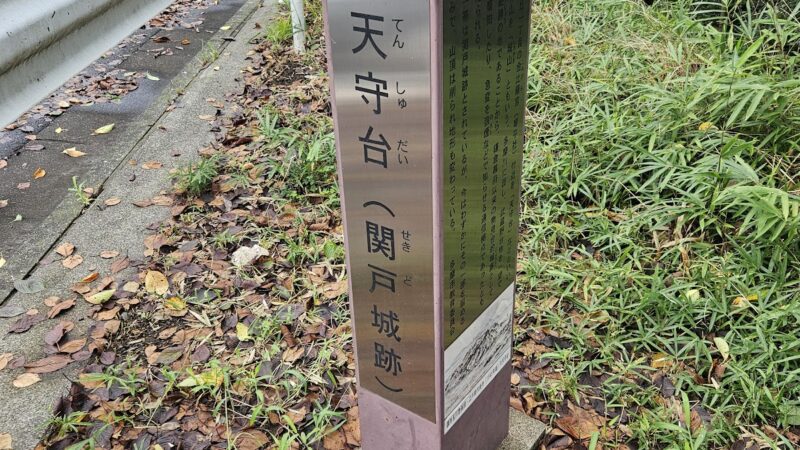
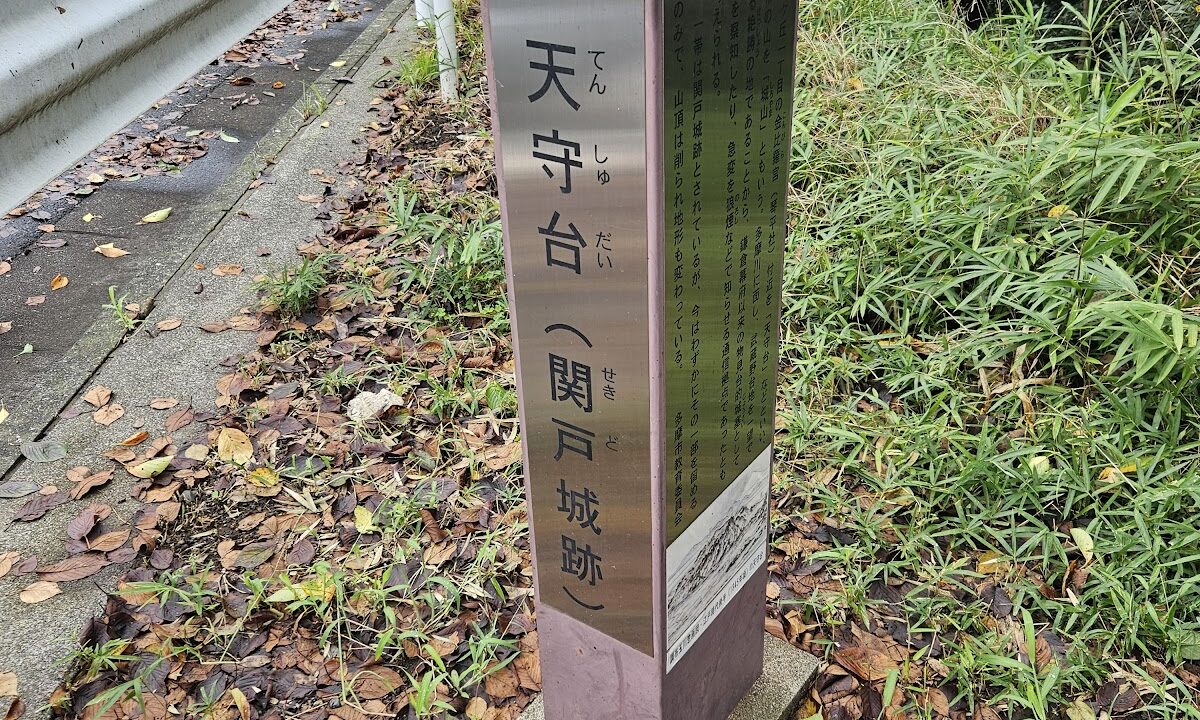
Currently, a monument to the “castle tower base” stands at the Sekido Castle ruins. This monument is situated on a steep slope, serving as a valuable marker that conveys the atmosphere of the former castle’s elevated position.
The area around the monument is now a residential area, and no clear remains can be confirmed, but the topography allows us to imagine what the castle looked like in its heyday.
Highlights of Sekido Castle
Monument to the Castle Tower Base
The biggest highlight when visiting Sekido Castle is the “castle tower base” monument standing at the castle ruins. Located on a somewhat steep slope within a residential area, this monument is the only marker indicating the existence of Sekido Castle.
From the monument’s location, one can observe the surrounding topography, providing clues to understanding how the former castle was built utilizing the terrain.
View from the Hilltop
From the hilltop of the Sekido Castle ruins, you can enjoy views towards the Tama River. While the view is now limited by the increase in buildings, you can still experience the perspective from which the castle’s soldiers once stood on watch.
In particular, observing the flow of the Tama River and the topography on the opposite bank will help you understand why the castle was built in this location.
Surrounding Historical Environment
Around the Sekido Castle ruins, you can see traces of the Kamakura Road and remnants of the old townscape of the Sekido district. Across the Tama River is Bubaigawara, where historical sites associated with Nitta Yoshisada are scattered.
Exploring not only Sekido Castle itself, but also the surrounding historical environment, will lead to a deeper understanding.
Atmosphere of the Castle Ruins
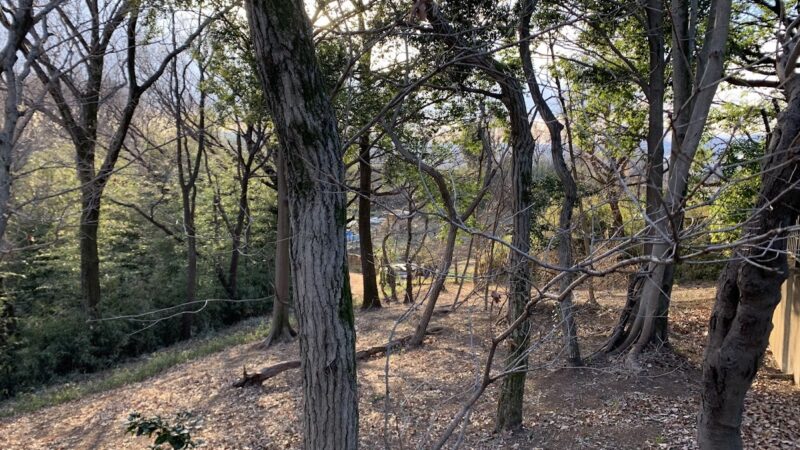
Although residential development is progressing, the undulating terrain remains around the Sekido Castle ruins, allowing you to feel the unique atmosphere of a medieval castle site. The steep slopes and elevation differences are valuable traces that tell the story of the defensive structure of the time.
Access and Visiting Guide
Access by Train
The nearest station to Sekido Castle Ruins is Seiseki-Sakuragaoka Station on the Keio Line. The castle ruins are approximately a 15-minute walk from the station.
Route from Keio Line Seiseki-Sakuragaoka Station:
- Exit the west exit of Seiseki-Sakuragaoka Station
- Head south towards the Sekido area
- Walk through the residential area towards the castle tower monument
There are many commercial facilities around the station, making it convenient for meals and breaks before or after your visit.
Access by Car
If visiting by car, it is approximately a 15-minute drive from the Kunitachi-Fuchu Interchange on the Chuo Expressway. However, since the area around the castle ruins is a residential area, there is no dedicated parking lot. We recommend using nearby coin-operated parking lots or public transportation.
Points to Note When Visiting
- As the castle ruins are located in a residential area, consideration for the surrounding residents is necessary.
- The path leading to the castle tower monument is a steep slope, so please watch your step.
- Since no clear remains are left, learning about the history beforehand will deepen your understanding.
- The estimated time for a visit is about 15 minutes.
Best Time to Visit
Sekido Castle Ruins are an outdoor historical site, so it is possible to visit year-round. However, please consider the following:
- Spring (March-May): The weather is mild and suitable for strolling. The surrounding area is also beautiful during cherry blossom season.
- Autumn (September-November): The temperature is pleasant, and you can enjoy the autumn foliage.
- Summer (June-August): You will need to take precautions against the heat and insects.
- Winter (December-February): You will need to take precautions against the cold, but the leaves have fallen from the trees, making it easier to observe the terrain.
Nearby Attractions and Related Historical Sites
Bubaigawara Battlefield Site
Bubaigawara, located on the opposite bank of the Tama River, is the site of a battle where Nitta Yoshisada and the Hojo army clashed. Around JR Nambu Line/Keio Line “Bubaigawara Station,” there is a statue of Nitta Yoshisada and a monument to the battlefield. Visiting these together with Sekido Castle will give you a better understanding of the overall picture of the battle.
Around Tama City Hall
Sekido 6-chome is home to Tama City Hall and has developed as the city center. There are libraries and other facilities around the city hall where you can view materials related to the history of the Tama region. ### Fuchu City Local History Museum
Located in Fuchu City, north of the Tama River, the Local History Museum offers a chance to learn about the history and culture of the Tama region. It also features extensive exhibits that help understand the historical context of Sekido Castle.
Traces of the Kamakura Road
Around Sekido, traces of the former Kamakura Road remain. You can experience the medieval transportation route by following the ancient path.
Fuchu City Local History Museum
Located in Fuchu City, across the Tama River, you can learn about the history and culture of the Tama region. ## Recommended Itinerary for Visiting Sekido Castle
Half-Day Course (Approx. 3 Hours)
- Seiseki-Sakuragaoka Station (Start)
- Sekido Castle Ruins (15-minute visit)
- Sekido Area Stroll (30 minutes)
- Tama River Riverbed (30-minute break)
- Bubaigawara Battlefield Site (30-minute visit)
- Bubaigawara Station (Goal)
Full-Day Course (Approx. 6 Hours)
Morning:
- Seiseki-Sakuragaoka Station (Start)
- Sekido Castle Ruins (30-minute visit)
- Historical Sites Tour of the Sekido Area (1 hour)
- Lunch (Near the station)
Afternoon:
- Bubaigawara Battlefield Site (1-hour visit)
- Fuchu City Local History Museum (2-hour visit)
- Fuchu Station (Goal)
Evaluation of Sekido Castle and Voices of Castle Enthusiasts
Within the castle enthusiast community, Sekido Castle is a castle whose evaluation is divided due to the state of its remaining structures. According to data from Kojodan (a castle enthusiast website), the average rating is ★★☆☆☆ 1.75, which is not necessarily high. This is mainly because clear remains cannot be confirmed.
However, many voices praise its historical importance and the strategic value of its location, and a considerable number of castle enthusiasts recognize its certain value as the stage for the important historical event known as the “Battle of Sekido.”
Visitors have shared the following impressions:
- “Although no remains are left, the topography allows us to imagine what it was like in the past.”
- “Visiting it together with Bubaigawara helped me understand the overall picture of the battle.”
- “Seeing the monument standing quietly amidst a residential area made me feel the passage of history.”
- “I could really appreciate the importance of its location as a key point on the Kamakura Road.”
While the average visit time is relatively short, around 15 minutes, combining it with other nearby historical sites allows for a fulfilling historical exploration.
Historical Significance of Sekido Castle
Although the remaining structures of Sekido Castle are limited, it is a historically important castle for the following reasons:
Role as a Transportation Hub
Located at the crossing point of the Tama River and on the Kamakura Road, it was an extremely important base for managing east-west transportation in the Kanto region. Throughout the Middle Ages, controlling this area was one of the keys to controlling Kanto.
The Stage of the Nanboku-cho War
Sekido Castle played a crucial role in a pivotal turning point in Japanese history as the site of the “Battle of Sekido” during Nitta Yoshisada’s attack on Kamakura. Considering that this battle paved the way for the downfall of the Kamakura Shogunate, the historical significance of Sekido Castle is immeasurable.
Its Place in the History of Kanto Castles
From the Kamakura period to the Sengoku period, Sekido Castle continuously served as a battleground for powerful forces in the Kanto region, making it indispensable for understanding the history of Kanto castles. Its strategic value is evident in the fact that it was a castle highly valued by the Kanto’s rulers, such as the Uesugi and Hojo clans.
History and Culture of the Sekido Area
To understand Sekido Castle, it is also important to know the history of the entire Sekido area.
Origin of the Place Name and the Checkpoint
The place name “Sekido” is said to originate from “Kasumigaseki,” a checkpoint established on the Kamakura Road. It was a location where a checkpoint was set up, functioning as a center for managing transportation and logistics.
Archaeological investigations have uncovered rows of wooden beams at the site of a checkpoint, confirming the existence of a checkpoint-like facility.
Development as a Post Town
From the medieval to the early modern period, Sekido flourished as a post town. It was an economically important area, serving as a resting place for travelers on the Kamakura Road and as a center for the collection of goods.
Development in the Modern Era
After the Meiji era, the Sekido area gradually modernized. The opening of the Keio Line improved access to central Tokyo, leading to its development as a residential area.
Currently, Sekido, centered around Seiseki-Sakuragaoka Station, is a vibrant town with a concentration of commercial and residential areas, forming the core of Tama City.
Current Status and Challenges of Sekido Castle Research
Research on Sekido Castle faces many challenges due to the limitations of historical sources.
Lack of Historical Sources
Primary sources concerning Sekido Castle in the medieval period are extremely limited. In reality, much basic information, such as the castle’s specific structure, successive lords, and construction date, remains unknown.
Difficulties in Archaeological Investigation
Because the castle site has been completely developed into residential land, conducting full-scale archaeological excavations is difficult. While there may be opportunities for new discoveries in the future due to redevelopment, this is currently unlikely.
Importance of Place Name and Folklore Research
Given the limited historical sources and remains, carefully collecting and analyzing place names and local folklore provides crucial clues to understanding the true nature of Sekido Castle.
Summary: The Charm and Significance of Visiting Sekido Castle
Although Sekido Castle lacks clear remains, it is a historical site worth visiting for the following reasons:
- Historical Importance: The site of the “Battle of Sekido,” which was crucial to the downfall of the Kamakura Shogunate.
- Strategic Location: A key transportation hub between the Kamakura Road and the Tama River.
- Interesting Topography: Scenic views from a high vantage point and natural terrain suitable for defense.
- Connection with Surrounding Historical Sites: Enjoy visiting Sekido Castle in conjunction with related historical sites such as Bubaigawara.
- History in an Urban Area: Experience the layered nature of history from the castle ruins buried in a modern residential area.
When visiting Sekido Castle, learning about its history beforehand and gaining a comprehensive understanding of the surrounding topography and related historical sites will lead to a deeper historical experience.
Even without surviving remains, you can feel the weight of the history etched into the land—that is arguably Sekido Castle’s greatest charm. Located close to central Tokyo, this medieval castle is easily accessible and well worth a visit.
Reference Information and Related Links
For more detailed information about Sekido Castle, please refer to the following resources:
- Tama City Library: Extensive collection of local history materials for the Tama region
- Fuchu City Local History Museum: Exhibits on the history of the Tama River basin
- Castle-related Books: “Comprehensive Survey of Japanese Castles,” “Medieval Castles and Residences of Tokyo,” etc.
- Online Castle Databases: Kojodan, Nippon Castle Tour, etc.
Further research is expected on the history and structure of Sekido Castle. We look forward to new discoveries and research findings.