Complete Guide to Ishihama Castle (Arakawa Ward, Tokyo) | History, Location, Highlights, and Access Explained in Detail
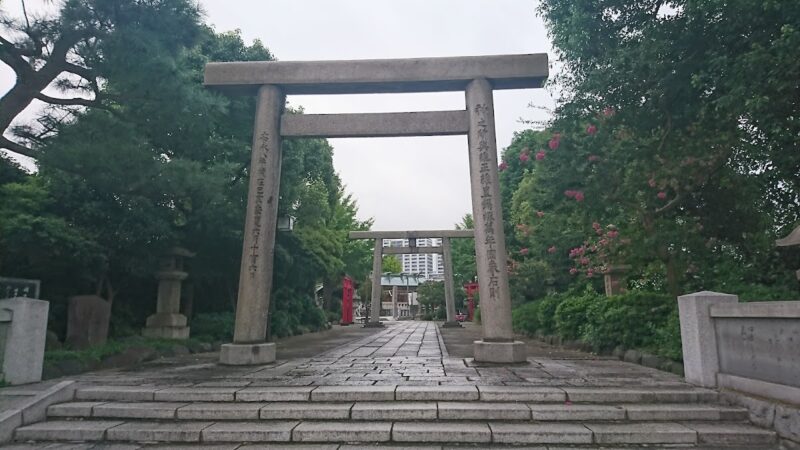
Ishihama Castle was a medieval flatland castle located in Minami-Senju, Arakawa Ward, Tokyo. Situated on the west bank of the Sumida River (formerly the Arakawa River), it functioned as an important base protecting the border between Musashi Province and Shimosa Province from the Muromachi period to the Sengoku period. Although the castle’s remains have been lost due to urban development, the area around Ishihama Shrine is considered a strong candidate for its location, making it a historical site visited by history buffs and castle enthusiasts.
This article comprehensively explains all information about Ishihama Castle, including its detailed history, changes in its lords, various theories regarding its exact location, points of interest that can be seen on-site, and even access methods and surrounding area information for those actually visiting.
What is Ishihama Castle? | Basic Information and Overview
Ishihama Castle was a flatland castle built in Ishihama, Toshima District, Musashi Province (present-day Minami-Senju, Arakawa Ward, Tokyo). The exact construction date is unclear, but it is known as the first castle used by the Chiba clan, a prominent family from Shimosa Province, after they fled to Musashi Province around the mid-15th century during the Muromachi period.
Basic Castle Data
- Location: Minamisenju 3-chome, Arakawa-ku, Tokyo (estimated)
- Castle Structure: Flatland castle
- Construction Period: Mid-Muromachi period (around the 15th century)
- Main Lords: Chiba clan, Hojo clan
- Abandonment Period: Around 1590 (Tensho 18)
- Current Status: Ishihama Shrine grounds, Ishihama Castle Ruins Park (Minamisenju 3-chome Park)
- Remains: None (vanished due to urban development)
The most distinctive feature of Ishihama Castle is its location, utilizing the Sumida River (then the Arakawa River) as a natural moat. It was a strategically important castle due to its location at a key point for river transportation and its crucial position connecting Musashi Province and Shimosa Province.
The History of Ishihama Castle | From the Chiba Clan to the Hojo Clan
The Chiba Clan’s Expansion into Musashi Province and Ishihama Castle
The history of Ishihama Castle is deeply intertwined with the Chiba clan of Shimosa Province. The Chiba clan was a prestigious family descended from the Kanmu Taira clan, and their base was in Shimosa Province. However, amidst the chaos of the Kyotoku Rebellion (1455-1483), the main branch of the Chiba clan faced a serious crisis.
In 1456, Chiba Sanetane and his younger brother, Yoritane, were attacked by Ashikaga Shigeuji and the collateral branch, Makuwari Yasutane, and fled from their base in Shimosa Province to Musashi Province. It is believed that Ishihama Castle was Sanetane’s first base at this time.
It is believed that the Ishihama area was originally inhabited by the Ishihama clan, a branch of the Edo clan. Since the Kaburagi clan, the priests of Ishihama Shrine, are descendants of the Chiba clan, there are records indicating that the Chiba clan built a castle (or residence) in Ishihama.
The Establishment of the Musashi Chiba Clan and the Development of Ishihama Castle
Chiba Sanetane, who fled to Musashi Province, regained his power with the support of the Ogigayatsu Uesugi family. Ishihama Castle served as the base of the Musashi Chiba clan (also known as the Bushu Chiba clan) for over 100 years, from the mid-Muromachi period to the Sengoku period.
Based at Ishihama Castle, the Chiba clan maintained relations with Shimosa Province across the Sumida River, solidifying their power base in Musashi Province. Because the castle was located at a strategic point for river transportation, it also played an important role as a center for the collection of goods.
The Rule of the Later Hojo Clan and Chiba Tanemura
With the arrival of the Sengoku period (Warring States period), the Kanto region underwent significant changes due to the expansion of the Later Hojo clan’s power. The Chiba clan gradually came under the influence of the Hojo clan, and during the Tensho era (1573-1591), Chiba Tanemura, the third son of Hojo Ujishige, became the lord of Ishihama Castle.
Although Chiba Tanemura inherited the Chiba clan name, he effectively ruled Ishihama Castle as a member of the Hojo clan. During this period, Ishihama Castle is thought to have been positioned as a key base within the Later Hojo clan’s control of the Kanto region.
The Abandonment and the End of Ishihama Castle
In 1590, with the fall of the Later Hojo clan in Toyotomi Hideyoshi’s Odawara campaign, Ishihama Castle also disappeared from the stage of history. It is believed that Ishihama Castle was abandoned after the last lord, Chiba Tanemura.
During the Edo period, this area became a direct territory of the Tokugawa shogunate, and the castle site was transformed into farmland and urban areas. Due to changes in the Sumida River’s course, embankment construction, and urban development in the modern era, the castle’s remains were completely lost, and today, even the exact castle grounds cannot be determined.
Location of Ishihama Castle | Multiple Theories about the Castle Site’s Location
The biggest mystery of Ishihama Castle is that its exact location has not been determined. While historical documents confirm its existence on the west bank of the Arakawa River (present-day Sumida River), several theories exist regarding its specific location.
Ishihama Shrine Theory (Minami-Senju, Arakawa Ward)
The most widely accepted theory places the castle around Ishihama Shrine in Minami-Senju 3-chome, Arakawa Ward, Tokyo. The evidence supporting this theory is as follows:
- The Kaburagi family, priests of Ishihama Shrine, are descendants of the Chiba clan.
- The place name “Ishihama” matches the castle name.
- The Tokyo Metropolitan Government’s administrative map of archaeological sites (buried cultural property sites) shows the castle site slightly north of Ishihama Shrine.
- Ishihama Castle Ruins Park (Minami-Senju 3-chome Park) is located south of the shrine.
Ishihama Shrine is an ancient shrine said to have been founded in the first year of the Jinki era (724 AD) during the reign of Emperor Shomu, and is located on a slightly elevated area facing the Sumida River. The terrain is suitable for building a medieval castle, and the geographical conditions make it a plausible location for Ishihama Castle.
Matsuchiyama Shoden Theory (Asakusa, Taito Ward)
On the other hand, there is also a theory that the site was around Honryuin Temple (Matsuchiyama Shoden) in Asakusa 7-chome, Taito Ward. The basis for this theory is as follows:
- Matsuchiyama is a small hill facing the Sumida River, an ideal location for building a castle.
- The place name “Ishihama” remains in the surrounding area.
- It matches geographical descriptions found in some ancient documents.
Matsuchiyama is a small hill approximately 10 meters high, overlooking the surrounding lowlands. While its strategic location is excellent, the current academic consensus supports the Ishihama Shrine theory.
Reasons for Unknown Location
The main reasons why the exact location of Ishihama Castle cannot be determined are as follows:
- River Improvement Works: From the Edo period to the present day, repeated changes to the course of the Sumida River (formerly the Arakawa River) and embankment construction have significantly altered the topography.
- Urban Development: Rapid urbanization since the Meiji era has completely wiped out the castle ruins.
- Lack of Documentary Materials: There are few detailed records concerning Ishihama Castle, and almost no materials remain that indicate the castle’s size or structure.
- Difficulty of Archaeological Excavation: The area is now densely populated with houses, making large-scale archaeological excavations impossible.
The “Comprehensive Survey of Japanese Castles” lists two theories, and currently, the area around Ishihama Shrine is considered the most likely location, but no conclusive evidence has been obtained.
Structure and Layout of Ishihama Castle
Ishihama Castle is thought to have been a flatland castle that utilized the Sumida River (formerly the Arakawa River) as a natural moat. However, because the remains have been completely lost, the specific structure and layout of the castle remain speculative.
Estimated Castle Structure
Based on historical documents and topographical analysis, the structure of Ishihama Castle is estimated as follows:
Location: Slightly elevated on the west bank of the Sumida River. Located at a strategic point for river transportation, overlooking Shimosa Province on the opposite bank.
Defensive Structures: The Sumida River served as a natural moat on the east side, and it is estimated that earthworks and moats surrounded the castle in other directions.
Castle Area: Details are unknown, but it is highly likely that it was relatively small for a medieval flatland castle. It is thought to have had a strong residential character.
Buildings: It is presumed that the main enclosure contained the lord’s residence, warehouses, and barracks, but it is thought that there were no large-scale structures such as stone walls or a keep.
River-Based Defensive System
The most distinctive feature of Ishihama Castle is its use of the Sumida River, a major river, as a defensive line. In the Kanto region during the medieval period, rivers were not only important transportation routes but also powerful defensive barriers.
Ishihama Castle was able to establish a favorable defensive position against attacks from Shimosa Province by utilizing this river as its eastern defensive line. Furthermore, it is believed that controlling river traffic allowed them to maintain an advantage in the transportation of supplies and the gathering of information.
Highlights of Ishihama Castle | Historical Sites You Can See on Site
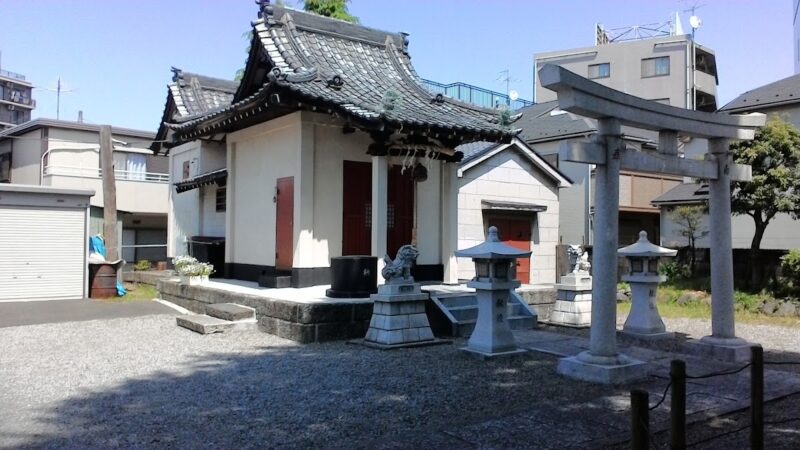
Although the remains of Ishihama Castle have been completely lost, there are several points of interest around Ishihama Shrine, the presumed site, that evoke the castle’s history.
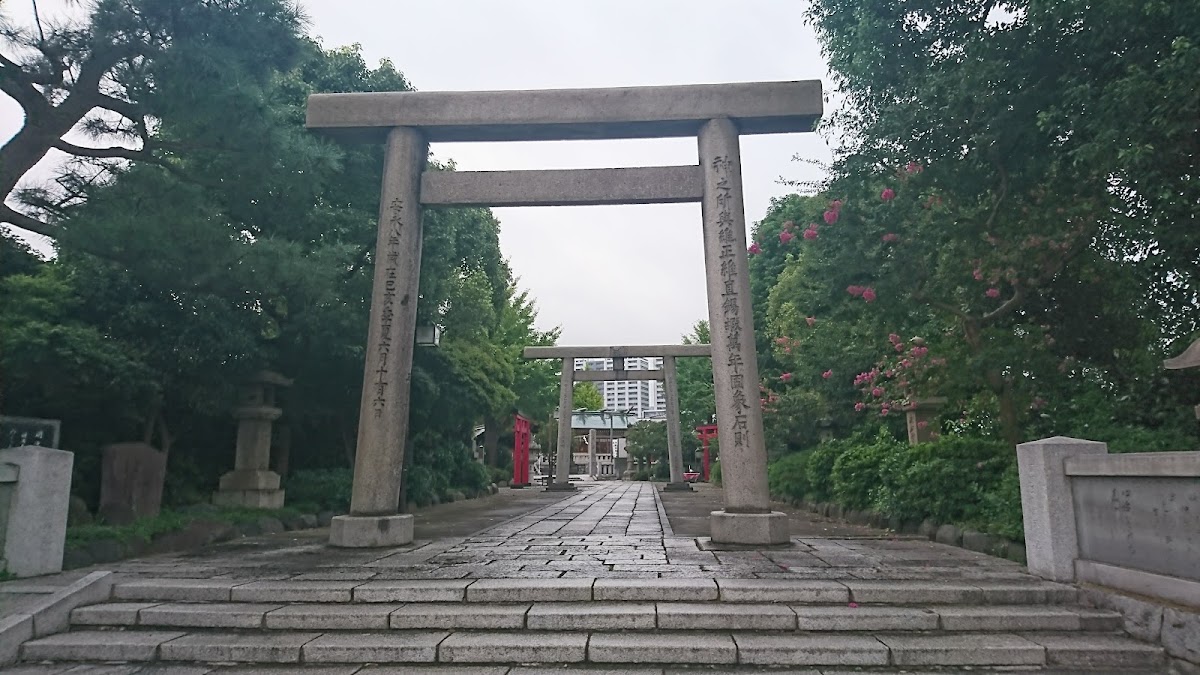
Ishihama Shrine
Location: 3-28-58 Minamisenju, Arakawa-ku, Tokyo
Ishihama Shrine is an ancient shrine located on the most likely site of Ishihama Castle. Founded in 724 AD (Shinki 1), it is known as “the oldest shrine in Arakawa Ward.” It is believed that the castle and the shrine had a close relationship during the time Ishihama Castle existed.
From the shrine grounds, you can see the Sumida River, giving you a real sense of the importance of this area as a river transportation hub in the Middle Ages. Within the shrine grounds, there are information boards about Ishihama Castle, where you can learn about the castle’s history.
Ishihama Castle Ruins Park (Minami-Senju 3-chome Park)
South of Ishihama Shrine, a few minutes’ walk away, is Minami-Senju 3-chome Park, also known as “Ishihama Castle Ruins Park.” This park was named to commemorate the historical site of Ishihama Castle, and it features explanatory boards about the castle.
While the park itself is a small children’s playground, it is well-maintained as a valuable place to convey the local history. It’s a spot worth visiting along with Ishihama Shrine when visiting the castle ruins.
View of the Sumida River
By viewing the Sumida River from the area around Ishihama Shrine, you can experience how Ishihama Castle utilized the river as a fortress. Although the current course of the Sumida River has changed due to renovations since the Edo period, the area’s importance as a water transport hub remains unchanged.
The Tokyo Skytree is visible on the opposite bank, allowing you to enjoy a unique landscape where the medieval and modern eras intersect.
Surrounding Historical Environment
The area around Ishihama Castle is rich in historical traces from the medieval to early modern periods. Numerous old temples and shrines, such as Susanoo Shrine, Entsuji Temple, and Enmeiin Temple, are scattered throughout the area, making it ideal for historical walks.
How to Access Ishihama Castle
This section provides detailed directions to Ishihama Shrine, the presumed site of Ishihama Castle.
Access by Train
Nearest Stations:
- JR Joban Line, Tokyo Metro Hibiya Line, Tsukuba Express “Minami-Senju Station”
- Tokyo Metro Hibiya Line “Minowa Station”
Route from Minami-Senju Station:
Approximately 15 minutes on foot from the South Exit (East Exit) of Minami-Senju Station. Exit the station and head south along Meiji-dori, then turn east. After passing through a residential area, you will arrive at Ishihama Shrine.
Route from Minowa Station:
Approximately 12 minutes on foot from Minowa Station. Exit the station and head northeast, passing through the residential area towards Ishihama Shrine.
Access by Bus
While it’s possible to use Toei buses or the Toden Arakawa Line, you’ll need to walk from the nearest bus stop. Access by train is the most convenient.
Access by Car
Ishihama Shrine does not have its own parking lot. There are several coin-operated parking lots nearby, but parking spaces are limited due to the densely populated residential area. Using public transportation is recommended.
Points to Note When Visiting
- Ishihama Shrine is located in a residential area, and there are few signs, so we recommend using a smartphone map app.
- There are no specific restrictions on visiting hours for the shrine, but it is considered good manners to avoid visiting early in the morning or late at night.
- Ishihama Castle Ruins Park is a small children’s park, so please allow approximately 10-15 minutes for your visit.
- As the surrounding area is residential, please be considerate of the neighbors regarding noise, etc.
Evaluation of Ishihama Castle and Estimated Visiting Time
While Ishihama Castle is not highly rated by castle enthusiasts due to the lack of remaining structures, it has attracted some interest due to its historical significance and connection to the Chiba clan.
Evaluation as a Castle
According to data from Kojodan (a castle enthusiast website), the average rating for Ishihama Castle is ★★☆☆☆ (2.30), which is relatively low among castle ruins nationwide. This is because the remains have been completely lost, and there are few visually appealing elements.
However, from a historical research perspective, it is considered an important historical site due to its historical background and its connection to the important event of the Chiba clan’s expansion into Musashi Province.
Estimated Visiting Time
Please allow approximately 15-30 minutes for visiting the Ishihama Castle Ruins.
- Visiting Ishihama Shrine and strolling through the grounds: 10 minutes
- Visiting Ishihama Castle Ruins Park: 5 minutes
- Enjoying the view of the Sumida River: 5-10 minutes
If you plan to explore the surrounding historical temples and shrines as well, it is recommended to allocate 1-2 hours.
Nearby Tourist Spots and Historical Sites
Here are some nearby tourist spots you might want to visit when you come to Ishihama Castle.
Susanoo Shrine
Approximately a 5-minute walk from Ishihama Shrine. This ancient shrine is said to have been founded in 795 AD (Enryaku 14) and is the guardian shrine of the Minami-Senju area. Within the grounds is a large stone called “Zuikoseki,” and a legend about the shrine’s founding remains.
Entsuji Temple
A Jodo sect temple known as “Tōkomi-dera” (the temple where people are thrown in). This site is famous as the temporary burial place of Yoshida Shoin, Hashimoto Sanai, and others executed during the Ansei Purge. It’s a must-see spot for anyone interested in the history of the late Edo period.
Enmei-in Temple
A Shingon Buddhist temple located very close to Ishihama Shrine. Numerous Koshin towers and stone Buddha statues remain on the grounds, offering insights into Edo-period folk beliefs.
Sumida River Terrace
A promenade along the Sumida River. In spring, the cherry blossoms are beautiful, and you can enjoy a stroll while admiring the Tokyo Skytree. It’s a place where you can truly appreciate the importance of Ishihama Castle as a key point for river transportation.
Shioiri Park
A large metropolitan park near Minami-Senju Station. With its vast grounds facing the Sumida River, it features a lawn area, barbecue area, and observation deck. It’s ideal for a rest after visiting Ishihama Castle.
Related Castles to Ishihama Castle
Understanding the history of Ishihama Castle is enhanced by knowing about related castles in the surrounding area.
Kasai Castle (Katsushika Ward, Tokyo)
The base of the Kasai clan. Like Ishihama Castle, it was located in the Sumida River basin and was an important strategic point in Musashi Province during the medieval period. Currently, the Aoto Palace ruins remain as a historical site.
Edo Castle (Chiyoda Ward, Tokyo)
A central castle in the Kanto region, built by Ota Dokan. During the time of Ishihama Castle, it was one of the important strategic points in Musashi Province. Currently, it is used as the Imperial Palace.
Iwatsuki Castle (Saitama City, Saitama Prefecture)
An important strategic point in northern Musashi Province. It was under the control of the Later Hojo clan for a period, sharing a similar historical background to Ishihama Castle.
Odawara Castle (Odawara City, Kanagawa Prefecture)
The base of the Later Hojo clan. It was the central castle when Ishihama Castle came under the control of the Later Hojo clan. It fell during Toyotomi Hideyoshi’s siege of Odawara, and Ishihama Castle was subsequently abandoned.
Historical Significance of Ishihama Castle
Although no remains of Ishihama Castle exist, it is a castle of significant importance in the history of the Kanto region during the Middle Ages.
Base for the Chiba Clan’s Expansion into Musashi Province
When the Chiba clan, a prominent family from Shimosa Province, was driven from their home base and fled to Musashi Province, Ishihama Castle was their first base. This event is an important example demonstrating the widespread impact of the Kyōtoku Rebellion, a major conflict in the Kanto region.
Using Ishihama Castle as a foothold, the Chiba clan regained their power in Musashi Province and survived as the Musashi Chiba clan for approximately 100 years. This history is of great importance in historical research as it demonstrates the mobility and adaptability of medieval samurai.
Strategic Point for River Transportation
Ishihama Castle faced the Sumida River (formerly the Arakawa River), a major river, and was located at a strategic point for water transportation. In the Middle Ages, rivers were important transportation routes, playing a decisive role in the transport of goods and military operations.
Controlling Ishihama Castle meant controlling the trade routes connecting Musashi Province and Shimosa Province, which led to securing political and economic dominance in the region.
Border between Musashi and Shimosa Provinces
Ishihama Castle was located near the border between Musashi and Shimosa Provinces. Medieval border regions were the front lines where different forces met, and were always areas of tension.
Ishihama Castle was a symbolic representation of the Chiba clan’s power in such a border region, and a frontline base protecting the Chiba clan’s interests in Musashi Province.
Documents and Research on Ishihama Castle
Historical materials on Ishihama Castle are limited, but several important documents and studies exist.
Major Documentary Materials
- “Kamakura Osōshi”: A military chronicle recording the Sengoku period in the Kanto region. It describes the activities of the Chiba clan.
- “Kanto Hasshū Kosenroku”: A historical document recording battles in the Kanto region. This document contains descriptions of Ishihama Castle.
- “Shinpen Musashi Fudoki-ko”: A local history compiled in the late Edo period. It contains descriptions of the place name and history of Ishihama.
Modern Research Books
- “Nihon Jōkaku Taikei” Vol. 6 (Shin Jinbutsu Ōraisha): Contains a detailed explanation of Ishihama Castle, presenting two theories.
- “Medieval Castles and Residences in Tokyo” (Tokyo Metropolitan Board of Education): A research report on medieval castles and residences in Tokyo, including Ishihama Castle.
- Arakawa Ward Local History Materials: Local history materials published by Arakawa Ward contain descriptions of Ishihama Castle.
Future Research Issues
The following research issues remain regarding Ishihama Castle:
- Identifying the exact location of the castle
- Clarifying the castle’s size and structure
- Detailed elucidation of the Chiba clan’s activities in Musashi Province
- Clarifying the castle’s role under the rule of the Later Hojo clan
Future discoveries of new historical documents or even limited archaeological excavations may shed more light on the true nature of Ishihama Castle.
Model Course for Visiting Ishihama Castle
This guide introduces a model historical walking course in the Minami-Senju area, centered around the Ishihama Castle ruins.
Half-Day Course (Duration: Approx. 3 hours)
- Minami-Senju Station (Start)
- Susanoo Shrine (20 mins) – Visit the main shrine of Minami-Senju
- Ishihama Shrine (20 mins) – Visit the estimated site of Ishihama Castle
- Ishihama Castle Ruins Park (10 mins) – Stroll through the park commemorating the castle ruins
- Sumida River Terrace (30 mins) – Stroll along the river and imagine medieval river transportation
- Enmei-in Temple (15 mins) – Visit an ancient temple near Ishihama Shrine
- Entsu-ji Temple (30 mins) – Experience the history of the late Edo period
- Minami-Senju Station (Goal)
Full-Day Course (Duration: Approx. 6 hours)
In addition to the half-day course, visit the following spots:
- Shioiri Park – Take a break in the vast park along the Sumida River
- Kozukahara Execution Ground Site – Site of an Edo period execution ground (Eko-in Temple)
- Arakawa Furusato Culture Museum – A local history museum where you can learn about the history of Arakawa Ward
- Minowa Bridge – The last stop on the Toden Arakawa Line, where you can enjoy a Showa-era retro atmosphere
For lunch, we recommend restaurants around Minami-Senju Station or a picnic at Shioiri Park.
Summary | The Charm and Significance of Visiting Ishihama Castle
Ishihama Castle has limited visual appeal because the remains have been completely lost. However, the historical significance of this castle is immense, and it is an indispensable historical site for understanding the activities of the Chiba clan during the turbulent period of medieval Kanto.
Located in Minami-Senju, Arakawa Ward, Tokyo, close to the city center, Ishihama Castle quietly conveys medieval history. By visiting the site, you can feel that the medieval world where samurai once thrived lies dormant beneath the modern Tokyo skyscrapers.
Standing in the grounds of Ishihama Shrine and gazing at the Sumida River, imagine the thoughts of Chiba Sanetane as he fled from Shimosa Province and arrived in this place. Even though the castle ruins are gone, its history and stories still speak to us.
For castle enthusiasts, those interested in medieval history, and anyone searching for hidden historical spots in Tokyo, Ishihama Castle ruins are well worth a visit. Its convenient location, within walking distance of Minami-Senju Station, is another attractive feature. Why not visit this little-known medieval castle site sometime?