Fujihashi Castle, Ome City, Tokyo | A Complete Guide to the Castle Ruins and Park of Hojo Ujiteru’s Retainers
Located in Ome City, Tokyo, Fujihashi Castle is the remains of a medieval castle that was ruled by a retainer of Hojo Ujiteru during the Sengoku period. Currently maintained as Fujihashi Castle Park, it is a popular historical spot for castle enthusiasts and history buffs, offering close-up views of valuable remains such as earthworks and dry moats. This article provides detailed information on Fujihashi Castle, from its history and highlights to access methods and related castles in the surrounding area.
Basic Information on Fujihashi Castle
Location and Geographical Features
Fujihashi Castle is located in Fujihashi, Ome City, Tokyo and was built on the northern end of a river terrace extending towards the Kasumi River. Situated on a plateau approximately 4 meters high, it faces a vast rice paddy area to the north, believed to have been a wetland at the time. The south side is connected to the plateau, and the castle features a defensive structure that cleverly utilizes the natural terrain. My current address is located in the area of Fujihashi 1-chome to 3-chome, Ome City, and my postal code is 198-0022. It is situated in the eastern part of the city and borders areas such as Imai, Imadera, and Shinmachi.
Castle Classification and Structure
- Former Province Name: Musashi Province
- Classification: Hilltop Castle (Castle on a river terrace)
- Structure: Single Enclosure
- Builder: Hirayama Clan (Tradition)
- Main Lords: Hirayama Echizen-no-kami Torakichi, Fujihashi Kosaburo
- Keep Structure: None (No keep existed as it is a medieval castle)
- Remains: Earthworks, dry moats, outer baileys, turret base remains
- Designation: Ome City Historic Site (Designated November 3, 1953)
The baileys of Fujihashi Castle measure approximately 70 meters east-west and 60 meters north-south, with earthworks encircling from north to west. Outer baileys (outer baileys) are located on the outside, and the remains of a dry moat still exist in the northeast.
History and Lords of Fujihashi Castle
Construction History and the Hirayama Clan
The construction date of Fujihashi Castle is unknown, but it is believed to have functioned under the influence of Hojo Ujiteru during the Sengoku period. The castle lord is said to have been Hirayama Echizen-no-kami Torakichi (also known as Hirayama Shigeyoshi), and the Hirayama clan was a prominent family belonging to the Nishi-to, one of the seven clans of Musashi Province.
The Hirayama clan is said to be a branch of Hirayama Suehige, who was active from the late Heian period to the Kamakura period, and the Hirayama clan of Fujihashi Castle is said to be a branch of the Hirayama clan of Hinohara Castle. Historical records confirm that the Hirayama clan controlled a wide range of territories, including not only Fujihashi but also Hinohara, Hirai, and Okuno.
Relationship with Hojo Ujiteru
During the Sengoku period, the Tama region was an important area under the control of the Later Hojo clan. In particular, Hojo Ujiteru, who was based at Hachioji Castle, strengthened his control over this region, and it is believed that Fujihashi Castle played a part in his network of branch castles. Records show that warriors such as Hirayama Torakichi and Fujihashi Kosaburo served as retainers of Hojo Ujiteru and defended Fujihashi Castle.
Abandonment and Present State
The exact year of Fujihashi Castle’s abandonment is unknown, but it is presumed that it ceased to function when the Hojo clan was destroyed during Toyotomi Hideyoshi’s Odawara campaign in 1590, along with the fall of Hachioji Castle. Afterward, it lost its function as a castle and, over many years, was converted into farmland.
On November 3, 1953, the Fujihashi Castle ruins were designated a historical site of Ome City, and are now maintained and preserved as Fujihashi Castle Ruins Park.
Highlights and Remains of Fujihashi Castle
Remains of Earthworks
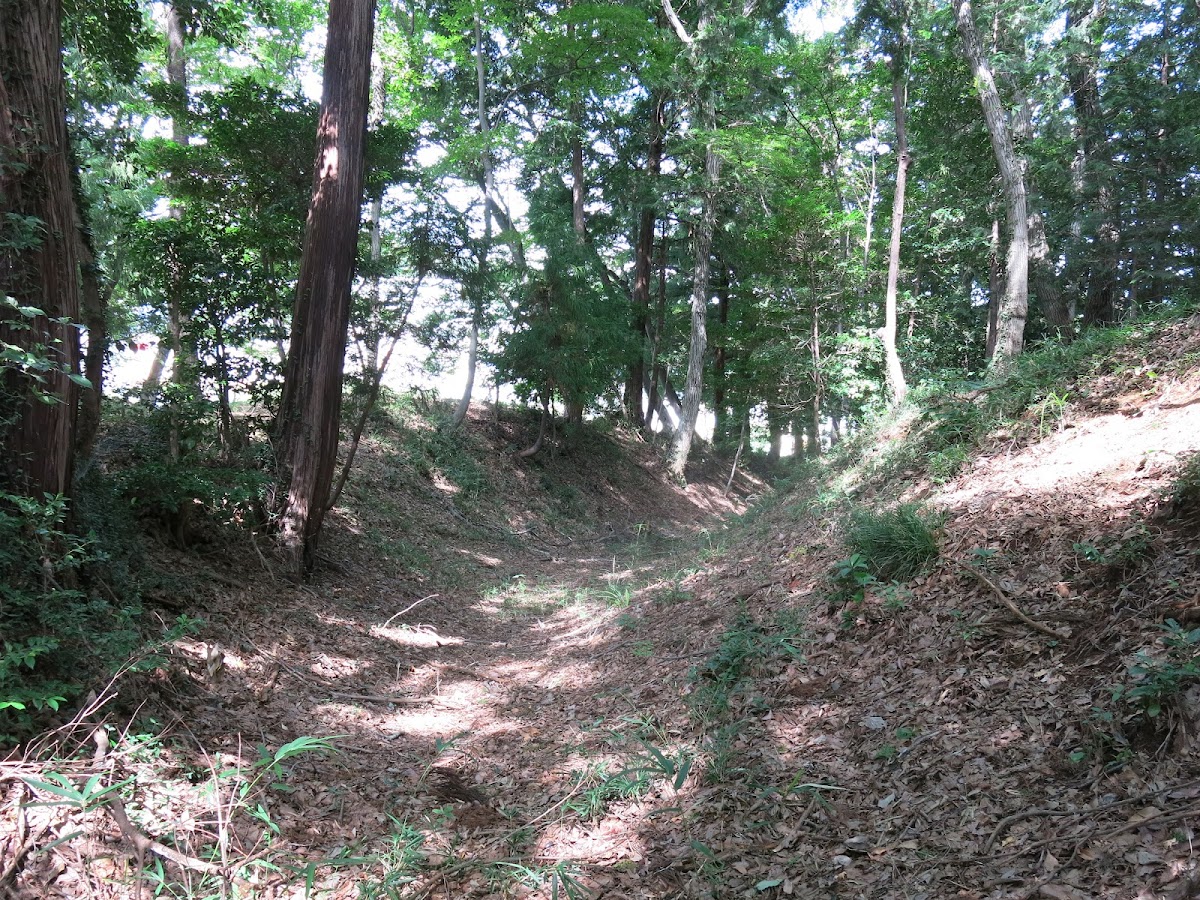
Upon visiting Fujihashi Castle Ruins Park, the first thing you’ll notice are the remains of the earthworks. The earthworks remain in good condition from the north to the west side of the enclosure, reaching a height of approximately 1.5 to 2 meters. Built with mounds of earth as a defensive structure for medieval castles to prevent enemy intrusion, these earthworks are valuable remains that convey the castle-building techniques of the time.
While you cannot walk on top of the earthworks, you can observe their shape and scale up close, making them a crucial point for understanding the castle’s structure.
Dry Moats and Belt Enclosures
Traces of a dry moat remain in the northeastern part of the castle. Dry moats, which do not hold water, served to block enemy intrusion routes and enhance defensive capabilities. Although parts are now filled in, their existence can be confirmed from the topography.
Furthermore, a belt enclosure (or lower enclosure) is located outside the main enclosure. This is a long, narrow enclosure surrounding the main citadel, functioning as the first line of defense. The cliff to the north leads to rice paddies, indicating that the natural terrain served as a natural moat.
Remains of a Watchtower Base
Within the castle grounds, a raised area believed to be the remains of a watchtower base can be identified. A watchtower base is the platform on which a watchtower was built for observation and defense, and was an important facility for surveying the surrounding area. Although only an earthen mound remains today, it provides clues to imagining the castle’s structure at the time.
Information Boards and Guides
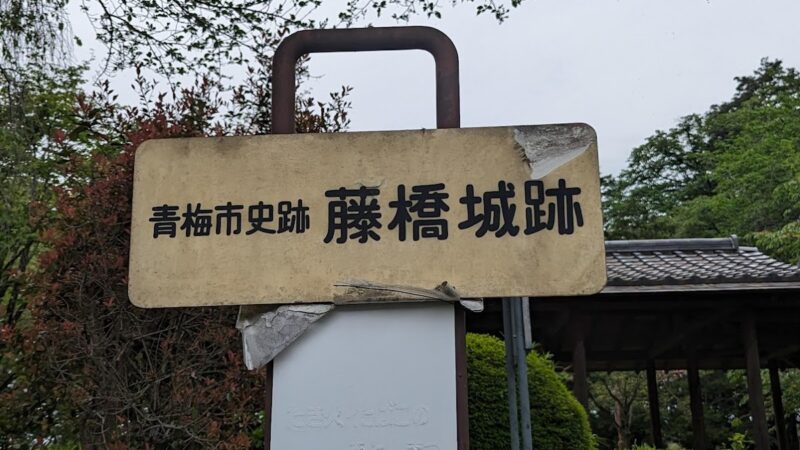
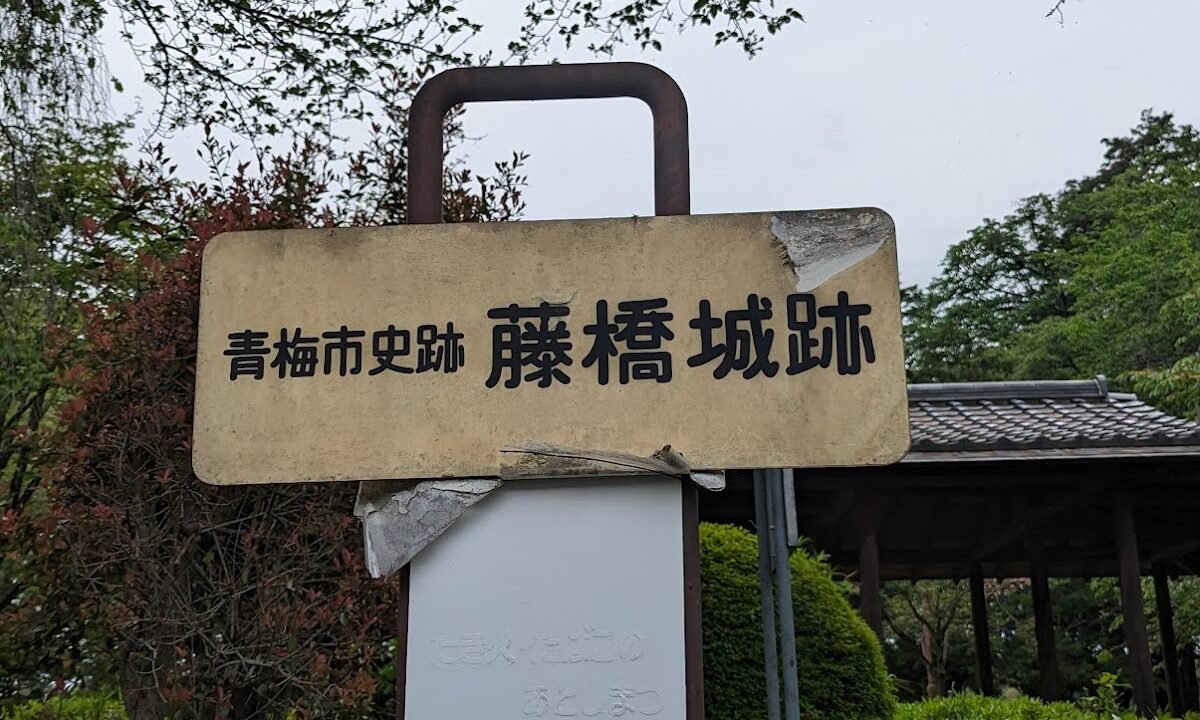
Information boards are installed within the park, offering detailed explanations of the history of Fujihashi Castle, its lord, and the remains. The boards describe that Hirayama Echizen-no-kami Torakichi was the lord, the extent of the Hirayama clan’s territory, and the castle’s structure, making them valuable resources for learning history on-site.
Fujihashi Castle Ruins Park Today
Park Development
The Fujihashi Castle ruins are now a popular park for local residents, known as Fujihashi Castle Ruins Park. Development has been carried out to balance the preservation of the ruins with park functions, including walking paths and benches. In spring, cherry blossoms bloom, making it a popular place for local relaxation.
The park is relatively compact, and a visit takes approximately 15-30 minutes. Visitors can enjoy the atmosphere of a medieval castle while carefully observing the ruins.
Access and Parking
Access by Train:
- Approximately 15 minutes on foot from JR Hachiko Line “Kaneko Station”
- Approximately 20 minutes on foot from JR Ome Line “Higashi-Ome Station”
The park is located midway between Kaneko Station and Higashi-Ome Station (slightly closer to Kaneko Station), and is accessible from both stations.
Access by Car:
There is no large-scale parking lot dedicated to the park, but depending on the surrounding road conditions, street parking may be available. However, as it is a residential area, the use of public transportation is recommended. Using nearby coin-operated parking or accessing on foot is the most reliable option.
Related Castles in the Ome City Area
Ome City is known as an area with many ancient castle ruins, and in addition to Fujihashi Castle, several other medieval castle ruins are scattered throughout the area. Visiting them together with Fujihashi Castle will allow you to gain a deeper understanding of the Sengoku period history of this region.
Imai Castle (Ome City, Tokyo)
Imai Castle is a castle located near Fujihashi Castle and is also thought to be part of the network of branch castles of Hojo Ujiteru. Although much of the remains have been lost, the existence of the castle is inferred from the place name and topography.
Katsunuma Castle (Ome City, Tokyo)
Katsunuma Castle was a castle located in Katsunuma, Ome City. It is said to have been the residence of the Mita clan and functioned under the influence of the Hojo clan. Although it is now a residential area, some traces of earthworks and moats remain.
Karagaki Castle (Ome City, Tokyo)
Karagaki Castle is a mountain castle built in the mountainous area of Ome City. It’s a defensive fortress utilizing the rugged terrain, and the remains are relatively well-preserved. While a visit involves hiking, you can experience the atmosphere of a genuine mountain castle.
Hinohara Castle (Hinohara Village, Nishitama District, Tokyo)
Hinohara Castle, which has close ties to the Hirayama clan of Fujihashi Castle, is a mountain castle located in Hinohara Village. It is considered one of the Hirayama clan’s strongholds and was a formidable fortress built in a rugged mountainous area. Remains such as baileys and moats still exist today, and the area is maintained as a hiking trail.
Points to Note When Visiting Fujihashi Castle
Best Season for Visiting
Fujihashi Castle Ruins Park is open year-round, but the cherry blossom season in spring (late March to early April) and the autumn foliage season in autumn (October to November) are especially recommended. In summer, vegetation can make it difficult to see the remains, so winter is more suitable for observing the ruins.
Useful items to bring
- Camera (for documenting the ruins)
- Castle-related materials and maps
- Comfortable walking shoes (the park is well-maintained, but there are also unpaved areas)
- Drinks (there are few vending machines nearby)
Photography tips
When photographing the entire earthwork, pointing the camera westward from inside the enclosure will beautifully capture the continuity of the earthwork. Combining the explanatory sign with the ruins is also an effective record.
Historical value of Fujihashi Castle
Significance in the study of medieval castles in the Kanto region
Fujihashi Castle is an important site for studying medieval castles in the Kanto region, particularly the network of branch castles of the Hojo clan. Although smaller in scale compared to large mountain castles and flatland castles, it is recognized for its academic value as a typical example of a local lord’s castle that functioned as a base for regional control. ### History of the Musashi Seven Clans and the Nishi Clan
The Musashi Seven Clans, to which the Hirayama clan belonged, were a collective term for samurai groups that held power in Musashi Province from the Heian period to the Kamakura period. The Nishi Clan, within this group, was active mainly in the Tama region, and the Hirayama clan was a powerful family within it. Fujihashi Castle is a valuable historical site that conveys the history of these local samurai groups.
History and Culture of the Fujihashi Area
Origin of the Place Name
There are several theories regarding the origin of the place name “Fujihashi,” but the most likely theory is that it derives from a bridge where wisteria flowers once bloomed profusely. It is believed that the bridges built over the Kasumi River and its tributaries, along with the surrounding natural landscape, became the origin of the place name.
Castle Culture of Ome City
In addition to Fujihashi Castle, several other medieval castle sites have been confirmed in Ome City, including Katsunuma Castle, Karagaki Castle, and Imai Castle. This indicates that during the Sengoku period, this region was considered important as part of the sphere of influence of Hojo Ujiteru, whose base was Hachioji Castle. Each castle complex was interconnected, forming a regional defense network.
Detailed Visitor Guide to Fujihashi Castle
Main Enclosure (Hon-kuruma)
The central part of the park is the main enclosure. Measuring approximately 70 meters east-west and 60 meters north-south, it is believed that a residence and defensive structures once stood here. Currently, it is a flat area with grass and trees.
Northern Defensive Line
The northern side features a steep cliff facing the Kasumigawa River, functioning as a natural defensive wall. Rice paddies spread below the cliff, and since it was a wetland at the time, it is presumed to have acted as a natural moat, making enemy intrusion difficult.
Southern Contoured Area
The southern side is connected to the plateau, making it the direction requiring the most defense. Therefore, it is possible that particularly thick earthworks and moats were constructed in this direction, but due to residential development, many of the remains have been lost.
Recommended Points for Castle Enthusiasts
Preservation of Remains
The earthworks and dry moats of Fujihashi Castle are in relatively good condition despite their location near an urban area. Having been preserved as a park, it is a valuable example of a medieval castle that still retains its atmosphere.
Castle Tour Route
When planning a route to tour castles in Ome City, Fujihashi Castle is ideal as a starting point or intermediate stop due to its convenient transportation access. It’s possible to visit Fujihashi Castle, Imai Castle, and Katsunuma Castle in one day, allowing for an efficient castle tour.
Quality of Information Boards
The information boards at the site contain detailed information about the castle’s history, lords, and remains, allowing you to understand the castle’s overview even without prior knowledge. Recording the information board content along with taking photos will be helpful for future review.
Summary
Fujihashi Castle in Ome City, Tokyo, is the remains of a medieval castle ruled by the Hirayama clan, vassals of Hojo Ujiteru. Currently, it is maintained as Fujihashi Castle Ruins Park, a valuable historical site where visitors can observe remains such as earthworks, dry moats, and outer baileys.
Although not large in scale, it is an important historical site where one can learn about the history of the Hirayama clan (one of the Musashi Seven Clans, Western Party), the Hojo clan’s rule, and the structure of medieval castles. It is designated as an Ome City Historic Site and is carefully preserved as a local historical heritage.
It is easily accessible on foot from Kaneko Station on the JR Hachiko Line or Higashi-Ome Station on the JR Ome Line, and parking is not a concern, making it an easily accessible castle. Related castles such as Imai Castle, Katsunuma Castle, and Karagaki Castle are scattered in the surrounding area, making it a recommended stop as part of a castle tour of Ome City.
Fujihashi Castle Ruins Park is an attractive spot not only for history buffs and castle enthusiasts, but also for those interested in local history and those who simply enjoy a stroll. Why not take some time to observe the ruins while reading the explanatory signs and reflect on the era in which samurai of the Sengoku period flourished?