Odano Castle (Hachioji City, Tokyo) Complete Guide: A Hilltop Castle Built as an Outpost of Hachioji Castle in the Late Sengoku Period
Basic Information on Odano Castle
Odano Castle (Odano-jo) was a Japanese castle built in the late Sengoku period, located in Nishiterakata-cho, Hachioji City, Tokyo. Built on a hill overlooking Ankado (present-day Jinba Kaido), it functioned as an important outpost of Hachioji Castle.
Common Names and Alternate Names
Odano Castle was also known as “Odano Yashiki” and “Odano Kan,” indicating that it also served as a residence. This is a typical example of castles in the late Sengoku period that combined military bases with the living quarters of the feudal lord.
Location
Location: Nishiterakata-cho, Hachioji City, Tokyo
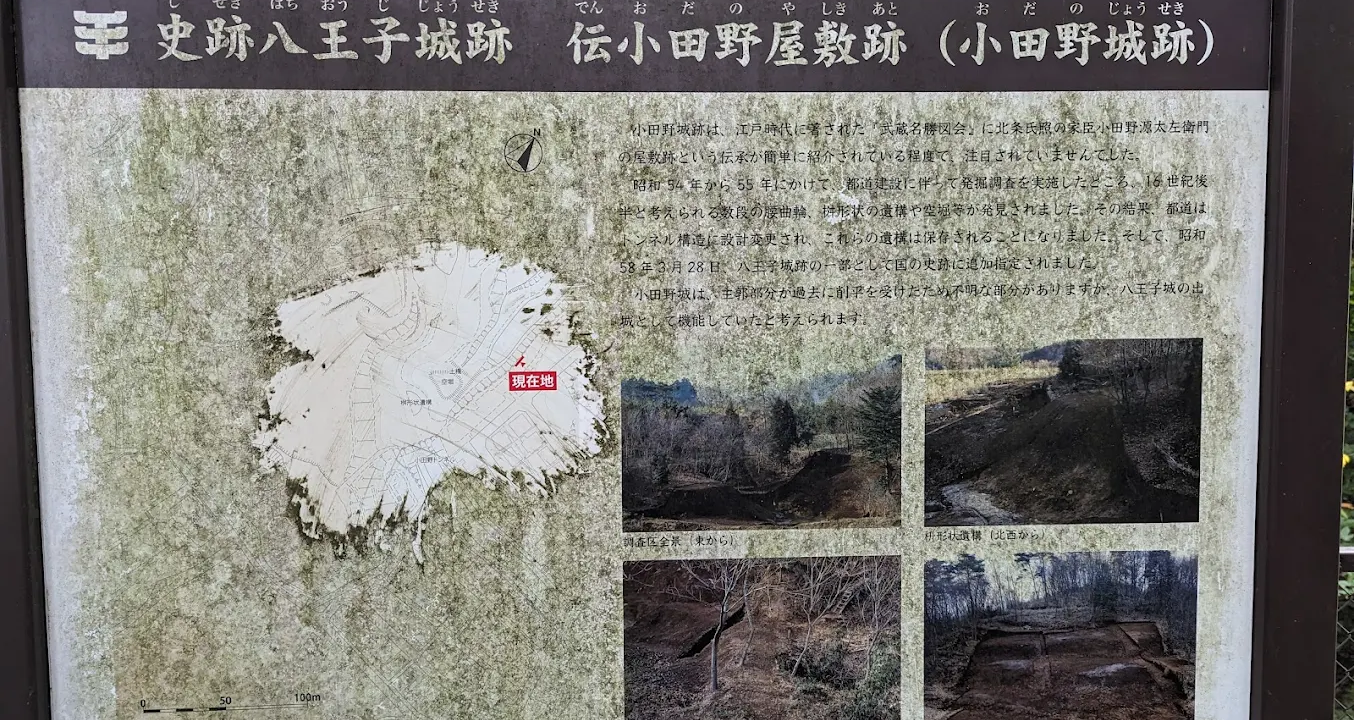
Currently, part of the castle ruins has been developed into “Kansojidai Park,” located west of the Green Town Takao housing complex. The park contains explanatory plaques about the history of the castle ruins and a map of the castle site. It can be accessed by heading east from the “Town Entrance” on Tokyo Metropolitan Road 61.
Castle Form and Scale
- Form: Hilltop Castle
- Construction Period: Late Sengoku Period (Traditionally around Tensho 15 [1587])
- Builder: Odano Gentaemon
- Lord: Odano Clan
- Main Remains: Enclosures, earthworks, dry moats, square-shaped remains, lower enclosures
- Designation: National Historic Site (as part of the Hachioji Castle Ruins)
Odano Castle was built on a hill west of the Kita-Asakawa River, with the Nerima Road (Jinba Road) running to the north. This location was an extremely important strategic position for monitoring and defending the road from the Kai region.
History and Background of Odano Castle
Background and Purpose of Construction
Odano Castle was an outpost built around the same time that Hojo Ujiteru developed Hachioji Castle as his base. It is believed that the castle was built around 1587 (Tensho 15), a period when the Hojo clan was strengthening their control over the Kanto region and setting their sights on a confrontation with Toyotomi Hideyoshi.
The builder of the castle, Odano Gentaemon (also known as Odano Genzaemon), was a powerful retainer of Hojo Ujiteru. The Odano clan, as an important family forming part of the defense network of Hachioji Castle, established the castle in this location. By building the castle overlooking the Anka-michi, a major highway, it is thought to have served as a monitoring and defensive base against invasions from the Koshu region.
Relationship with Hachioji Castle
Odano Castle played an important role as an outpost of Hachioji Castle, defending the main castle. Hachioji Castle was a strong mountain castle where Hojo Ujiteru moved his base from Takiyama Castle, and Odano Castle was part of its defense network.
The Hojo clan’s castle network, centered around Hachioji Castle, included subsidiary castles such as Jofukuji Castle and Hatsuzawa Castle, and Odano Castle was also incorporated into this defense system. It is presumed that Odano Castle, in particular, functioned as a frontline defensive base against attacks from the Koshu Kaido (Ankado) road.
Fall of Odano Castle in 1590
The fate of Odano Castle changed dramatically with Toyotomi Hideyoshi’s Odawara campaign (Hojo attack) in 1590. During this campaign, the northern army, led by Maeda Toshiie and Uesugi Kagekatsu, was responsible for attacking Hachioji Castle.
It is said that Odano Castle was attacked by Uesugi Kagekatsu’s forces immediately before or at the same time as the attack on Hachioji Castle. After a fierce battle, Odano Castle fell, and its lord, Odano Gentaemon, lost his castle. Hachioji Castle itself fell on June 23rd of the same year, with many soldiers, including the castle lord Yokochi Kenmotsu Yoshinobu, being killed in action, and Hojo Ujiteru’s castle reduced to ashes.
The Odano Clan After the Castle’s Fall
It is said that Odano Gentaemon, having lost his castle, subsequently entered the service of the Mito Tokugawa family. This is one example of former Hojo retainers being employed by the Tokugawa family after the fall of the Hojo clan. It appears that the Odano clan’s military achievements and abilities were valued, allowing them to once again pursue a samurai career within the Tokugawa family.
Archaeological Materials and Excavation Surveys
Confirmation of Existence Through Showa Era Excavation Surveys
The existence of Odano Castle was first archaeologically confirmed through excavation surveys conducted from 1978 to 1979. This survey was conducted as an emergency excavation in conjunction with the construction of a metropolitan road, and the remains of a castle from the late Sengoku period were confirmed in good condition.
Details of the Discovered Remains
The excavation uncovered the following remains, believed to date from the late 16th century:
Major Remains:
- Several Tiered Enclosures: Defensive structures arranged in a stepped pattern on the hillside
- Masukagata (Square Enclosure): A structure for defending the castle’s entrance
- Dry Moat: A moat designed to prevent enemy intrusion
- Earthwork: An earthen wall surrounding the enclosure
- Main Enclosure: The central part of the castle located at the top
These remains prove that Odano Castle was not merely a residence, but a full-fledged military fortress. The discovery of the Masukagata (square enclosure) in particular is important evidence that the latest castle construction techniques of the time were employed.
Existing Remains
The following remains can still be seen at the castle site:
- Kuruwa: Flat area centered around the main enclosure
- Earthwork: Remains mainly on the south side of the main enclosure
- Dry Moat: Partially visible
- Highland Area: A scenic spot on the north side of the main enclosure
The view from the main enclosure is still excellent, offering a panoramic view of the Nerima Road to the north. This excellent view clearly demonstrates the castle’s function of monitoring the road.
Layout and Defensive System of Odano Castle
Strategic Location
Odano Castle makes maximum use of its location on a hill west of the Kita-Asakawa River. As a flatland castle utilizing the hilly terrain, it offered the following strategic advantages:
- Road Monitoring Function: Its position overlooking the Anka Road (Jinba Road) allowed for monitoring of developments in the Koshu region.
- Defensive Advantage: Defense utilizing elevation differences created a disadvantageous terrain for attackers.
- Coordination with Hachioji Castle: Its proximity allowed for information transmission and mutual support to the main castle.
- Water Source Securing: Its proximity to the Kita-Asakawa River made water readily available.
Characteristics of the Castle Layout
The layout of Odano Castle exhibits characteristics of the Hojo-style castle construction techniques from the late Sengoku period:
Main Enclosure:
Located at the top of the hill, this was the central part of the castle, presumably containing the lord’s residence and command post. An earthen rampart was built on the south side to strengthen its defenses.
Lower Enclosures:
Several lower enclosures were arranged around the main enclosure, particularly on the slopes. This is a design to gradually prevent the attacking force from approaching and to efficiently deploy defensive forces.
Masugata: The square-shaped structures at the castle entrances were designed to stop enemy incursions and lure them into narrow spaces for attack. This is a characteristic defensive feature of Hojo clan castles.
Dry Moat: Dry moats between baileys and around the castle’s perimeter restrict enemy movement and create a favorable situation for the defenders.
Odano Castle and the Surrounding Castle Network
Defense Network Centered on Hachioji Castle
Odano Castle was part of the Hojo clan’s castle network centered on Hachioji Castle. The following castles were located in this area:
Hachioji Castle (Main Castle): The base of Hojo Ujiteru. A sturdy mountain castle built on Mt. Fukasawa at an altitude of 460 meters, it boasted one of the largest scales in the Kanto region.
Jofukuji Castle: A subsidiary castle located north of Hachioji Castle. This was an important strategic point protecting the border region between Musashi Province and Kai Province.
Hatsuzawa Castle: A subsidiary castle located east of Hachioji Castle. It was positioned to maintain communication with the Takiyama Castle area.
Takiyama Castle: The main base of Hojo Ujiteru before he moved to Hachioji Castle. It continued to function as an important strategic point even after the construction of Hachioji Castle.
These castles cooperated with each other, forming an integrated defense network through signal fires and messenger communication. Within this network, Odano Castle played a clear role in monitoring and defending the Koshu Kaido road area.
Hojo Clan’s Territorial Control and Castle Policy
The Hojo clan (later Hojo clan) established their own unique system of territorial control in the Kanto region. Its characteristics are:
- Network of Main and Sub-Castles: The main castle was located at a key strategic point, with numerous sub-castles positioned around it.
- Control of Roads: Castles were positioned along major roads to manage transportation and logistics.
- Placement of Powerful Vassals: Trustworthy vassals were appointed as castle lords and entrusted with regional governance.
- Introduction of the Latest Castle Construction Technology: The castle incorporated cutting-edge technologies of the time, such as masugata (square enclosure), umadashi (horse-shaped enclosure), and shoji-bori (screen-like moat).
Odano Castle is a typical example of the Hojo clan’s castle policy, and as a castle built during the Hojo clan’s peak in the Tensho era, it encapsulates the technology and strategic thinking of the time.
Access
Detailed information on how to access the Odano Castle ruins is provided below.
Access by Public Transportation
By Train and Bus:
- From JR Chuo Line “Takao Station” North Exit:
- Take the Nishi-Tokyo Bus bound for “Green Town Takao”
- Get off at the “Green Town Takao” bus stop and walk for approximately 5 minutes
- Or get off at the “Town Entrance” bus stop and walk for approximately 7 minutes
- From Keio Line “Takao Station”:
- Connect to JR Takao Station in approximately 3 minutes on foot
- Use the bus mentioned above
- From JR Chuo Line “Nishi-Hachioji Station”:
- Take the Nishi-Tokyo Bus bound for “Green Town Takao”
- Travel time: approximately 20 minutes
Access by Car
From Major Roads:
- From Chuo Expressway “Hachioji IC”: Approximately 15 minutes
- From Ken-O Expressway “Takaosan IC”: Approximately 10 minutes
- Take Tokyo Metropolitan Road 61 (Jinba Kaido) and head towards the “Town Entrance” intersection.
Parking Information:
There is no dedicated parking lot at Kansujidai Park. We recommend using nearby paid parking lots or public transportation.
Points to Note When Visiting the Castle Ruins
Kansujidai Park:
- Opening Hours: Always open
- Admission Fee: Free
- Facilities: Information boards, castle ruin map, benches
Estimated Visit Time: Approximately 30 minutes to 1 hour
Nearest Landmarks:
- West side of Green Town Takao Housing Complex
- Kansujidai Park
- Along Tokyo Metropolitan Road 61 (Jinba Kaido)
Precautions When Visiting
- Protection of Remains: Please be careful not to damage remains such as earthworks and dry moats.
- Safety Assurance: Be careful of your footing on slopes. The ground becomes especially slippery in rainy weather.
- Clothing: We recommend wearing comfortable walking shoes.
- Season: Spring and autumn are ideal for visiting, but we recommend insect repellent in summer and warm clothing in winter.
Sightseeing
Highlights of Odano Castle Ruins
Main Enclosure Ruins: The main enclosure, the central part of the castle, remains as a flat area, allowing visitors to experience its former scale. The earthen rampart on the south side is relatively well-preserved, allowing visitors to see the defensive structures from the Sengoku period up close.
View: From the elevated area north of the main enclosure, you can enjoy a view of the road stretching to the north. This excellent view speaks to the castle’s surveillance function. On clear days, you can even see as far as the city of Hachioji.
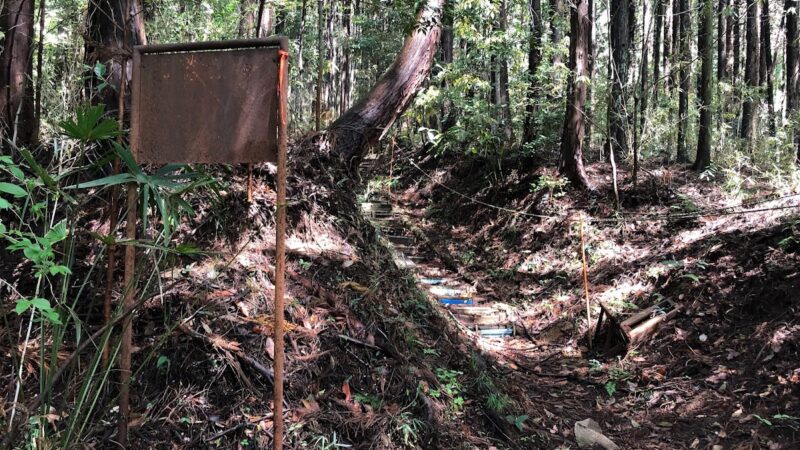
Information Boards/Guidance Boards: Information boards explaining the history and structure of Odano Castle are installed within Kanseijidai Park. Castle ruins maps are also provided, allowing visitors to check the layout while viewing the site.
Nearby Historical Sites and Tourist Attractions
Hachioji Castle Ruins (approx. 5km): The Hachioji Castle Ruins, the main castle of Odano Castle, are a nationally designated historical site. The site boasts excellent guidance facilities, and visiting it in conjunction with Odano Castle allows for a deeper understanding of the Hojo clan’s castle system.
Takiyama Castle Ruins (approx. 10km): The former base of Hojo Ujiteru. Developed as Tokyo Metropolitan Takiyama Park, it boasts one of the best-preserved remains in the Kanto region. Earthworks, dry moats, and baileys remain in excellent condition, allowing visitors to experience a Sengoku period castle.
Mount Takao (approx. 3km): A sacred mountain with an elevation of 599 meters. Accessible by cable car and lift, it offers opportunities to enjoy Yakuoin Temple and nature. A popular spot to visit in conjunction with Odano Castle.
Historical Sites Along the Jinba Road:
Along the Anka Road (Jinba Road), which was monitored by Odano Castle, there are numerous historical sites such as old signposts and temples/shrines.
How to Enjoy Castle Tours
A Course for Touring Hachioji Castles:
- Morning: Visit Hachioji Castle Ruins (2-3 hours)
- Lunch: Eat near Takao Station
- Afternoon: Visit Odano Castle Ruins (1 hour)
- If Time Allows: Hike or stroll around Mount Takao
This course allows you to visit Hojo Ujiteru’s main castle and outposts in one day.
In-depth Course for History Enthusiasts:
- Day 1: Detailed tour of Takiyama Castle ruins
- Day 2: Detailed tour of Hachioji Castle ruins
- Day 3: Visit branch castles such as Odano Castle and Jofukuji Castle
By visiting these sites over multiple days, you can understand the entire Hojo clan’s castle network.
Photography Tips
- Remaining Earthworks: The earthworks on the south side of the main enclosure are a good photo spot.
- View from the Main Enclosure: Use the view to the north as a background.
- Information Board and Remains: Use these as documentary photos to show that it is a castle site.
- Seasonal Scenery: The seasonal scenery, such as the fresh greenery of spring and the autumn leaves.
Current Status and Challenges of Odano Castle Research
Academic Evaluation
Odano Castle is a relatively recently discovered castle site, its existence confirmed by archaeological excavations in the 1970s. This discovery is considered a significant achievement, as it provides an archaeological explanation of the actual state of a subsidiary castle, which is poorly documented in historical records.
Of particular note are:
- Identification of the construction period: Based on the characteristics of excavated artifacts and remains, it is estimated to have been built in the latter half of the 16th century (Tensho era).
- Contemporaneity with Hachioji Castle: Its character as an outpost built around the same time as Hachioji Castle.
- Hojo-style castle construction techniques: The characteristics of the Hojo clan’s castle construction techniques are confirmed from remains such as masugata (square enclosures).
- Short-term use: The reality of a short-lived castle, lasting only a few years from construction to fall.
Future research topics
Many aspects of Odano Castle remain unclear:
- Details of the Odano clan, the castle lords: Historical materials on the career and lineage of Odano Gentaemon are limited.
- Overall picture of the castle: Excavations have been limited to certain areas, and the overall scale and structure remain unclear.
- Circumstances at the time of the castle’s fall: There are few records detailing the attack by Uesugi Kagekatsu or the castle’s final moments.
- Construction process: The order and planning of the castle’s construction in relation to Hachioji Castle
- Actual daily life: Information on life within the castle and the distribution of goods
Further archaeological excavations and documentary research are expected to address these issues.
Summary
Odano Castle (Nishiterakata-cho, Hachioji City, Tokyo) was an outpost of Hachioji Castle, built at the end of the Sengoku period by Odano Gentaemon, a retainer of Hojo Ujiteru. Built as a flatland castle strategically positioned to monitor the Anka-do (Jinba-kaido) road, it played an important role in the Hojo clan’s castle network.
Although it only existed for a short period of a few years until it fell to the forces of Uesugi Kagekatsu during Toyotomi Hideyoshi’s Odawara campaign in 1590, its remains are still preserved today as Kanseijidai Park. Excavations in the 1970s confirmed its existence, and it still retains features of a late Sengoku period castle, such as baileys, earthworks, dry moats, and square-shaped structures.
Currently, the castle ruins are freely accessible, and explanatory signs and maps of the castle site are available. Visiting it along with Hachioji Castle and Takiyama Castle will allow you to gain a deeper understanding of Hojo Ujiteru’s territorial rule and castle policies. As a valuable Sengoku period castle site remaining in Tokyo, it is a historical site worth visiting for history buffs and castle enthusiasts.
It is accessible by bus from Takao Station, and can be combined with sightseeing at Mount Takao. Why not reflect on the history of the Hojo clan while feeling the spirit of the Sengoku period?