Karakai Castle (Ome City, Tokyo) Complete Guide | History and Highlights of the Mountain Castle Where the Mita Clan Fell
What is Karakai Castle?
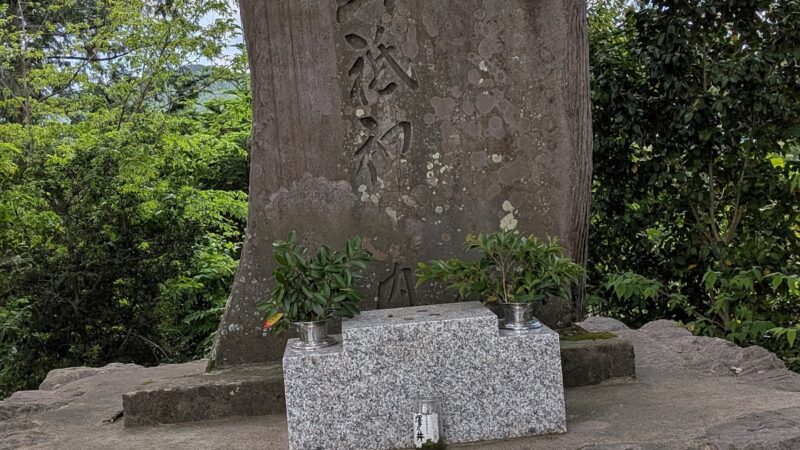
Karakai Castle was a Japanese mountain castle located in Futamatao, Ome City, Tokyo. Built on a steep terrain at an altitude of 457 meters and a relative height of 223 meters, this castle is protected as a designated historical site of Ome City. Also known as “Nishi Castle,” it is referred to as “Karagai Castle” in a letter from Hojo Ujimasa, suggesting it was recognized as an important strategic point even at that time.
Karakai Castle was built by the Mita clan, a prestigious family that served as hereditary retainers of the Yamanouchi Uesugi clan, the Kanto Kanrei (governor of the Kanto region). It is also known as the site where the Mita clan met its end. It is believed to have been built by Mita Tsunahide in the early Eiroku era (1560s), but it has also been suggested that some kind of castle structure may have existed there before that time.
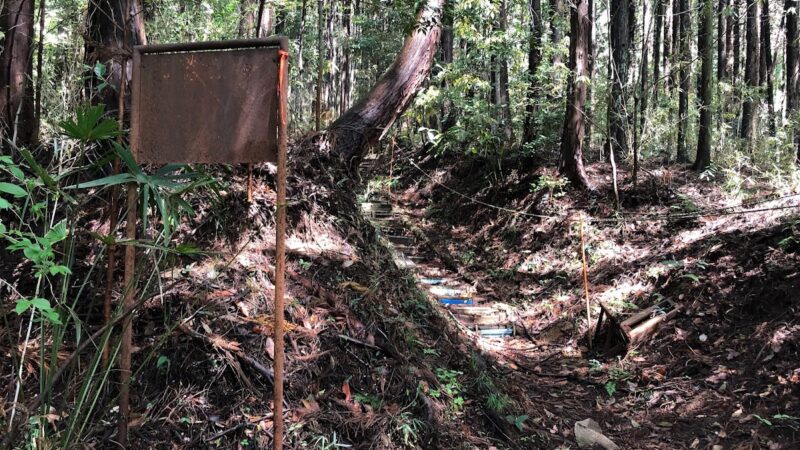
Currently, it is maintained as part of the Ome Hills hiking course and is attracting attention from castle enthusiasts and history buffs as a valuable historical site where remains such as moats and vertical trenches can be seen.
History of Karagaki Castle
Background of the Construction of Karagaki Castle and the Mita Clan
The Mita clan was a prominent family with a long history in Musashi Province, and played an important role as a senior retainer of the Yamanouchi Uesugi clan, the Kanto Kanrei (governor of the Kanto region). Based in the Ome region, the Mita clan initially resided at Katsunuma Castle, but due to changes in the political situation during the Sengoku period, they moved their base to the more fortified Karagaki Castle.
The Eiroku era (1558-1570) was a period of fierce conflict between the Later Hojo clan and the Uesugi clan in the Kanto region. During this time, Mita Tsunahide was initially subservient to the Later Hojo clan, but was forced to make a major decision when Uesugi Kenshin invaded Kanto.
Uesugi Kenshin’s Invasion of Kanto and the Mita Clan’s Choice
Between 1560 and 1561, Uesugi Kenshin of Echigo Province advanced into the Kanto region. Kenshin inherited the position of Kanto Kanrei (Governor of Kanto) and called upon various forces in Kanto to defect from the Later Hojo clan. At this time, Mita Tsunahide, who had deep ties to the Yamanouchi Uesugi clan, chose loyalty to the Uesugi clan, his ancestral lord, and decided to defect from the Later Hojo clan and side with the Uesugi.
This choice marked a fateful turning point for the Mita clan. After Uesugi Kenshin withdrew his troops from Kanto, Mita Tsunahide found himself in complete opposition to the Later Hojo clan and was compelled to prepare for a Hojo attack. Therefore, Tsunahide moved his residence from Katsunuma Castle to Karagaki Castle, and relied on its rugged terrain to prepare for a siege.
The Battle of Karagaki Castle and the Downfall of the Sanda Clan
In the mid-Eiroku era (around 1561-1563), Hojo Ujiteru, lord of Takiyama Castle, raised an army to subjugate the Sanda clan. This battle, known as the “Battle of Karagaki” or “Siege of Karagaki Castle,” is recorded as a rare instance for the Later Hojo clan where they continued their attack until a local lord was completely annihilated.
Karagaki Castle was built on a natural stronghold at an altitude of 457 meters and a relative height of 223 meters. Sanda Tsunahide made full use of this topographical advantage to continue his resistance. However, in the face of Hojo Ujiteru’s relentless attacks, Karagaki Castle finally fell. The Sanda clan, known as a noble family, met its end in this place.
While there are no clear records of how Karagaki Castle was used after the downfall of the Sanda clan, it is believed to have played a certain role under the Later Hojo clan’s rule.
Structure and Layout of Karagaki Castle
Location and Topographical Features
Karagaki Castle is a mountain castle built on Karagaki Mountain (approximately 450 meters above sea level), which is part of the ridge connecting Raiden Mountain and Masugata Mountain. The steep terrain, with a relative height of 223 meters, presented a significant obstacle for attackers and provided favorable conditions for the defenders.
The castle is located in a strategic position overlooking the lowlands along the Tama River, monitoring the transportation routes of the Ome region. This location indicates that it functioned not only as a defensive base but also as an important base for controlling the territory.
Features of the Remains
The following remains can be observed at the current Karagaki Castle site:
Moat: Moats dug to cut across the ridge are important defensive structures to prevent enemy intrusion. Multiple moats have been confirmed at Karagaki Castle, indicating that they enhanced the defensive capabilities of the mountain castle.
Vertical Moats: Vertical moats dug along slopes effectively restrict enemy lateral movement and limit attack routes. The vertical moats at Karagaki Castle, combined with the steep terrain, formed a particularly effective defensive line.
Enclosures (Kuruwa): It is believed that multiple enclosures were arranged around the main enclosure. These enclosures formed a tiered defensive line, designed to gradually halt enemy advances.
Earthworks: Traces of earthworks remain in some enclosures, confirming their reinforcement as defensive structures.
Relationship with Masugatayama Castle
Near Karagaki Castle lies the ruins of a castle called Masugatayama Castle. It has been suggested that Masugatayama Castle may have functioned as an auxiliary facility or subsidiary castle of Karagaki Castle, and that the two castles formed a single defensive network.
While further research is needed to understand the detailed structure of Masugatayama Castle and its specific connection to Karagaki Castle, the combination of multiple castles in its defensive system is a common tactic in Sengoku period castle warfare, suggesting that the Mita clan had meticulously planned their defenses.
Highlights of Karagaki Castle
Development as part of the Ome Hills Hiking Course
The current Karagaki Castle ruins are part of the Ome Hills Hiking Course, allowing visitors to enjoy both historical and nature walks. It’s accessible on foot from Futamatao Station on the JR Ome Line, and the main enclosure can be reached in about 30 minutes of hiking from the entrance.
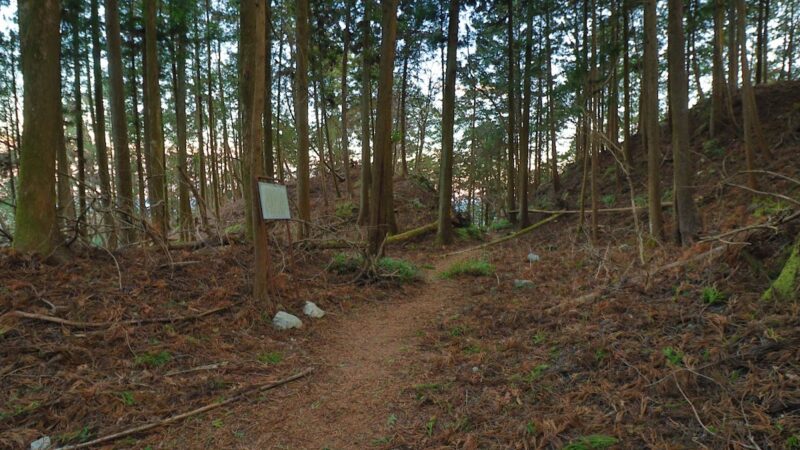
The hiking course is relatively well-maintained, but the steep terrain characteristic of mountain castles remains, allowing visitors to experience the geographical advantages of the time. When visiting the castle, it is recommended to wear comfortable clothing and non-slip shoes.
Observation Points for Castle Remains
The main points of interest when visiting Karagaki Castle are as follows:
Scale of the Moat: The clearly preserved moat speaks to the advanced civil engineering techniques of the time. Its depth and width demonstrate its functionality as a defensive structure.
Arrangement of Vertical Moats: The vertical moats, arranged along the slope, are important remains demonstrating the defensive techniques unique to mountain castles. Observing the arrangement of multiple vertical moats allows us to understand the castle’s defensive plan.
Arrangement of Enclosures: The arrangement of enclosures, centered around the main enclosure, is crucial for understanding the castle’s basic structure. The size and arrangement of each enclosure allow us to infer the castle’s scale and function.
View: From near the main enclosure, one can overlook the town of Ome and the flow of the Tama River, demonstrating the castle’s strategic location.
Kaizenji Temple and the Entrance to the Castle
The entrance to Karagaki Castle is located beyond Kaizenji Temple, north of Futamatao Station. Kaizenji Temple is known as a temple associated with the Mita clan, and visiting it before visiting the castle will allow you to gain a deeper understanding of its historical background.
An information board is installed at the entrance to the castle, where you can find information about the castle’s history and highlights. It also includes information on hiking trail precautions, which is helpful for gathering information to ensure a safe climb.
Obtaining Castle Stamps
At Karagaki Castle, castle stamps are sometimes distributed for a limited time. In the past, castle stamps were distributed at the Yoshikawa Eiji Memorial Museum, and multiple designs were available. Since the distribution status of castle stamps varies depending on the time of year, it is recommended to check the latest information before visiting.
Castle stamps are valuable souvenirs for castle enthusiasts and are popular as mementos of a visit to Karagaki Castle. Distribution locations and periods can be found on the websites of the Ome City Tourism Association and related facilities.
Access Information
Access by Public Transportation
Train: Get off at Futamatao Station on the JR Ome Line. It’s about a 15-minute walk from the north exit to the castle entrance, followed by a 30-minute hike to the castle ruins.
Futamatao Station is a few stops from Ome Station towards Okutama, making it relatively easy to access from central Tokyo. Signposts are installed around the station, so even first-time visitors can easily reach the castle entrance without getting lost.
Access by Car
Car: Approximately 20 minutes from the Ken-O Expressway Ome IC via National Route 411 (Ome Kaido). Parking is available at public parking lots around Kaizenji Temple or coin-operated parking lots around Futamatao Station.
There is no dedicated parking lot around the castle ruins, so using public transportation is recommended. If visiting by car, parking near the station and walking is the most common method.
Precautions for Visiting the Castle
- Estimated Time Required: Allow approximately 30 minutes one way from the entrance to the main enclosure, for a round trip of about 1 hour. If you wish to carefully observe the ruins, it is recommended to allow more time.
- Attire: Since you will be walking on mountain paths, comfortable clothing and non-slip shoes are essential. Particular caution is needed after rain, as the ground can become slippery.
- Items to Bring: It is recommended to bring drinking water, a towel, and insect repellent (in summer).
- Season: Spring to autumn is the best season for visiting the castle. In winter, there is a possibility of snow and ice, so please check weather information beforehand.
- Safety Management: Avoid visiting the castle alone; it is recommended to visit with multiple people whenever possible. It is also important to inform family or friends of your destination before visiting.
Nearby Tourist Attractions
Yoshikawa Eiji Memorial Museum
Located relatively close to Karagaki Castle, the Yoshikawa Eiji Memorial Museum is a facility that opens the former residence of the renowned author, Yoshikawa Eiji. This location previously served as a distribution point for the castle stamp of Karagaki Castle, allowing visitors to enjoy a sightseeing experience that combines castle exploration with a literary stroll.
The memorial hall features exhibits on the life and works of Eiji Yoshikawa, where visitors can view manuscripts of his representative works, including “Miyamoto Musashi,” and personal belongings.
Other Castle Ruins in Ome City
Besides Karagaki Castle, several other castle ruins exist within Ome City.
Katsunuma Castle: This castle was formerly the residence of the Mita clan and served as their base before moving to Karagaki Castle. Understanding the history of Katsunuma Castle provides a deeper understanding of the Mita clan’s transformations.
Somaho Castle: Another medieval castle ruin remaining in Ome City. Visiting it along with Karagaki Castle allows for an understanding of the castle network in this region.
Mount Mitake and Mitake Valley
Mount Mitake and Mitake Valley, representative tourist destinations in the Ome area, are also about a 30-minute drive from Karagaki Castle. It’s possible to create a one-day sightseeing plan that combines castle exploration with nature sightseeing.
Historical Value of Karagaki Castle
The Reality of Local Lords in the Sengoku Period
The history of Karagaki Castle is a valuable example that conveys the reality of local lords in the Sengoku period. The Mita clan, despite having a long history as a prominent family, were forced to make difficult choices amidst the great currents of the times, ultimately leading to their downfall.
This history demonstrates that the Sengoku period was not merely an era of armed conflict, but a time of complex political judgments and conflicts of loyalty. Mita Tsunahide’s choice to remain loyal to the Uesugi clan, his ancestral lords, is praised as an act demonstrating his pride as a samurai.
The Territorial Control Strategy of the Later Hojo Clan
The Battle of Karagaki Castle is also important for understanding the territorial control strategy of the Later Hojo clan. Hojo Ujiteru’s continued attacks until the Mita clan was completely annihilated indicate that complete control of the Ome region was strategically important to the Hojo clan.
The Later Hojo clan controlled a vast territory in the Kanto region, but their control was based on cooperative relationships with local lords. However, it is believed that a policy of thorough suppression was adopted to deter other lords from forces that defected following Uesugi Kenshin’s invasion of the Kanto region.
Value in Mountain Castle Research
Karakaki Castle holds an important position in the study of mountain castles in the Kanto region. Despite being a full-fledged mountain castle with a relative elevation exceeding 200 meters, its remains are relatively well-preserved, making it a valuable resource for studying castle construction techniques and defensive philosophies of the Sengoku period.
In particular, the arrangement of moats and vertical trenches, and the structure of the baileys, are attracting attention from castle researchers as concrete examples demonstrating the level of mountain castle construction technology in the Kanto region during the Eiroku era.
Points to Note When Visiting Karakaki Castle
Preparations
Before visiting Karakaki Castle, we recommend the following preparations:
Learning the Historical Background: Gaining basic knowledge about the history of the Mita clan, Uesugi Kenshin’s invasion of Kanto, and the expansion of the Later Hojo clan’s power will deepen your understanding at the site.
Preparing a Map: Obtaining a hiking trail map or castle layout map in advance will allow you to efficiently tour the ruins.
Checking Weather Information: As it is a mountain castle, the difficulty of climbing it varies greatly depending on the weather. We recommend visiting on a sunny day.
Photography Tips
You can enjoy the following types of photography at Karagaki Castle:
Photographing Ruins: By photographing ruins such as moats and trenches from different angles, you can more clearly record their scale and shape.
Photographing Views: The view from near the main enclosure allows you to capture the townscape of Ome and the flow of the Tama River, visually documenting the castle’s strategic advantage.
Seasonal Changes: Karagaki Castle shows different expressions depending on the season, such as the fresh greenery of spring and the autumn foliage, offering new discoveries with each visit.
Recording and Preservation
When visiting Karagaki Castle, we recommend keeping the following records:
Photographic Record: Taking photos of the ruins and the overall atmosphere will be helpful for future reference.
Visit Record: Note down the date and time of visit, weather, duration, and memorable points. This will be useful for comparative research with other castle ruins.
Collecting Castle Stamps: If available, you can obtain a castle stamp as a memento.
Summary
Karakaki Castle is a valuable Sengoku period mountain castle ruin remaining in Ome City, Tokyo. It holds high historical value as the historical stage where the noble Mita clan remained loyal to Uesugi Kenshin and was ultimately destroyed after conflict with the Later Hojo clan, and as a ruin that conveys the castle-building techniques of the Sengoku period.
Built on a steep terrain at an altitude of 457 meters and a relative height of 223 meters, the castle still clearly retains remains such as moats and vertical trenches. With the development of the Ome Hills hiking course, it has become a historical site that many people can easily visit.
This castle, where Mita Tsunahide met his end, quietly tells the story of the difficult choices faced by local lords during the Sengoku period and the resulting downfall. Located within Tokyo, yet offering the atmosphere of an authentic mountain castle, Karagaki Castle is an attractive destination not only for castle enthusiasts but also for history buffs and hiking lovers.
By visiting Karagaki Castle, you can experience firsthand the local history not found in textbooks, the lives of nameless samurai, and the complex political situation of the Sengoku period. Why not visit this historical site and reflect on the battles of 500 years ago?