History and Remains of Yamanoue Castle (Awa City, Tokushima Prefecture) – A Thorough Explanation of a Sengoku Period Castle on the North Bank of the Yoshino River
What is Yamanoue Castle?
Yamanoue Castle was a medieval castle located in Yamanoue, Ichiba-cho, Awa City, Tokushima Prefecture. Built on a strategically important location on the north bank of the Yoshino River, at the southern end of a plateau, this castle is known as an important historical site that tells the story of the Sengoku period in Awa Province.
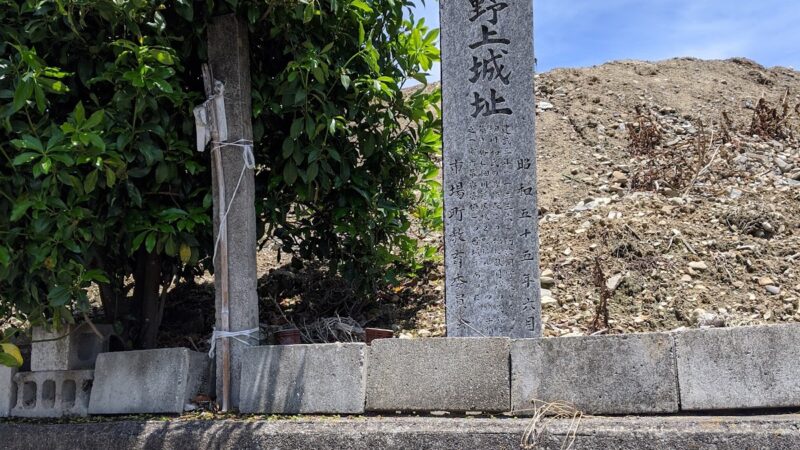
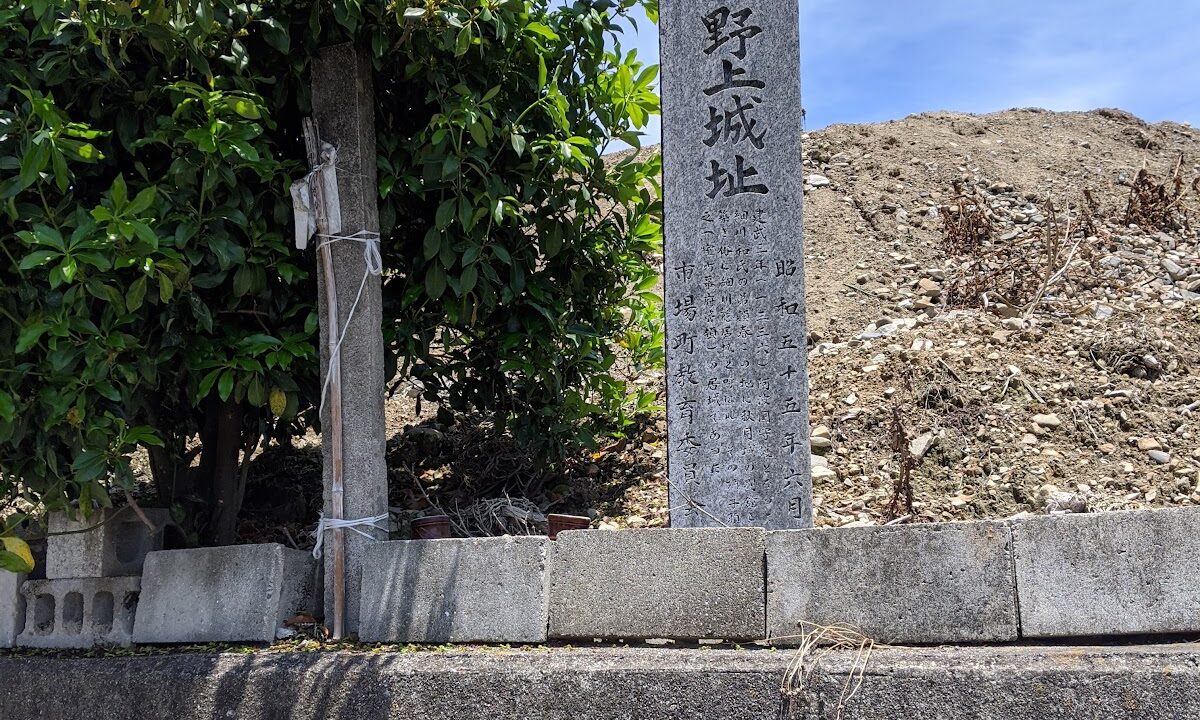
Currently, a stone monument marking the “Yamanoue Castle Historic Site” stands at the castle site, but most of the remains have been lost due to land consolidation projects. However, there are records indicating that traces of moats and other structures once remained, making it a valuable resource for local history research.
Location and Access
Exact Location
The location of Yamanoue Castle is as follows:
- Address: Yamanoue, Ichiba-cho, Awa City, Tokushima Prefecture
- Postal Code: 771-1624
- Geographical Location: Southern end of the plateau on the north bank of the Yoshino River
Geographical Characteristics
Yamanoue, Ichiba-cho, Awa City, is located in the southern part of Awa City. It sits on the north bank of the Yoshino River, one of Shikoku’s major rivers, with the vast Yoshino River basin stretching to the south. This geographical condition enhanced the military value of Yamanoue Castle.
Its location on the southern end of the plateau was ideal for monitoring the Yoshino River’s water transport and controlling north-south traffic. The terrain allowed for the construction of a defensive system utilizing elevation differences, and it is considered to have possessed typical locational conditions for a medieval castle.
Access Method
Access to the Yamanoue Castle ruins is as follows:
If using public transportation:
- Approximately 15 minutes by car from JR Tokushima Line “Kamojima Station”
- Approximately 30 minutes by car from central Tokushima City
If using a car:
- Approximately 20 minutes from Tokushima Expressway “Donari IC”
- From National Route 318 towards Ichiba-cho
There is no dedicated parking lot at the site, but there is space for street parking around the historical monument. However, since it is a residential area, consideration must be given to avoiding inconveniencing local residents.
History of Yamanokami Castle
Construction Period and Background
While there are no clear records regarding the construction period of Yamanokami Castle, it is estimated to have been built between the late 15th and 16th centuries during the Sengoku period. During this period, the Miyoshi clan was expanding its power in Awa Province, and the struggle for control of the Yoshino River basin intensified.
Awa Province has long been a crucial transportation hub connecting the Kinai region and Shikoku, and the Yoshino River water transport was an important route for transporting goods. Yamanoue Castle is believed to have functioned as a base for monitoring water transport and controlling the northern bank region.
Castle Lord and Governing System
Regarding the lord of Yamanoue Castle, reliable historical records are scarce, and many details remain unknown. However, based on local traditions and its relationship with surrounding castles, it is highly probable that the castle lord was a local lord under the command of the Miyoshi clan.
The Miyoshi clan was a Sengoku period daimyo (feudal lord) that extended its influence from its base in Awa Province to the Kinai region (the area around Kyoto). Within their governing system, Yamanoue Castle is presumed to have played an important role as a defensive base for the northern bank region of the Yoshino River.
Trends in the Sengoku Period
During the Sengoku period, complex conflicts unfolded in Awa Province between the Miyoshi clan, the Chosokabe clan of Tosa Province, and forces from Sanuki Province. Yamanoue Castle is thought to have been affected by these conflicts, but no specific records of battles remain.
At the end of the 16th century, after Toyotomi Hideyoshi’s conquest of Shikoku, Awa Province came under the control of Hachisuka Iemasa. It is presumed that Yamanokami Castle was abandoned during this period. This is because, with the establishment of the Tokushima Domain’s rule during the Edo period, small to medium-sized castles like Yamanokami Castle became unnecessary.
Changes Since the Early Modern Period
During the Edo period, the site of Yamanokami Castle was used for farmland. While its function as a castle was completely lost, the memory of it as a “castle site” was passed down among local residents.
Farmland use continued after the Meiji era, and in the 20th century, land consolidation projects were implemented. These projects resulted in the disappearance of most of the remaining structures, such as the moats. Currently, a historical monument remains as the only evidence of its former existence.
Castle Structure and Remains
Former Layout and Structure
Yamanokami Castle is thought to have been a flatland castle that took advantage of its location on the southern edge of a plateau. Although detailed layout maps do not remain, it is presumed to have had the structure of a typical medieval castle.
Presumed Main Structures:
- Main Enclosure: The central area located at the highest point of the plateau
- Moat: A defensive structure that demarcated the castle area (parts of which once remained)
- Earthwork: A defensive line combined with the moat
- Gate Enclosure: An important defensive point serving as an entrance to the castle
The south side, facing the Yoshino River, is thought to have utilized the cliff face of the plateau as a natural defensive line. The north side and east-west directions were likely fortified with artificial moats and earthworks.
Existing Remains
Unfortunately, the remains of Yamanokami Castle have been almost completely lost due to land consolidation. Currently, only the following can be confirmed:
Monument to the Historic Site of Yamanokami Castle:
A stone monument has been erected to indicate the existence of the castle site. This monument was erected to pass on the history of the region to future generations and serves as an important landmark indicating the precise location of the castle ruins. The inscription bears the name and location of the castle, conveying the history of the past to visitors.
Records of Lost Remains
Records indicate that the following remains existed before land consolidation:
Moat Remains:
Until the early Showa period, traces of the moat that demarcated the castle grounds were visible on the ground surface. While the exact width and depth are unknown, there are testimonies that part of it was used as a boundary for farmland.
Topographical Undulations:
Records indicate that subtle undulations remained on the plateau, suggesting the former layout of the castle’s baileys. However, land consolidation leveled the area, and these topographical features have now been largely lost.
History and Culture of Yamanoue, Ichiba-cho, Awa City
Historical Background of the Region
Yamanoue, Ichiba-cho, is a historical area located in the southern part of Awa City. According to the 2010 census, it is a small settlement with a population of 584 people and 203 households.
The place name “Yamanoue” is thought to originate from its location on the upper part of a plateau. Historically, it has been a settlement centered on agriculture, with rice and vegetable cultivation taking place in the fertile land blessed by the Yoshino River.
The Origins of Ichiba Town
Ichiba Town was an independent municipality until April 1, 2005 (Heisei 17), when it merged with Yoshino Town, Donari Town, and Awa Town to form Awa City. The place name “Ichiba” (market) originates from the fact that this area once flourished as a commercial center.
It developed as a center for the collection and distribution of goods using the Yoshino River’s water transport, and a market was held where products from surrounding farming villages were gathered. The Yamanoue district also contributed to the development of the region as part of this economic zone.
The Modern Yamanoue District
The current Yamanoue district maintains the character of a quiet rural settlement. Despite facing challenges such as an aging population and population decline, the bonds of the local community remain strong, and traditional festivals and events are passed down through generations.
The entire city of Awa is known as an “agricultural town,” and agriculture, primarily rice cultivation, is practiced in the Yamanoue district. Agriculture, utilizing the abundant water resources of the Yoshino River and the mild climate, forms a crucial foundation for the local economy.
Overview and Characteristics of Awa City
Establishment of Awa City
Awa City was formed on April 1, 2005 (Heisei 17), through the merger of four towns: Yoshino Town and Donari Town in Itano District, and Ichiba Town and Awa Town in Awa District. Located in the northeastern part of Tokushima Prefecture, on the north bank of the Yoshino River, and backed by the Sanuki Mountains, it is a region blessed with abundant water and greenery.
Geographical Characteristics
Awa City consists of a plain area spreading along the north bank of the Yoshino River and a mountainous area of the Sanuki Mountains to the north. The total area is approximately 191 square kilometers, and the population is approximately 36,000 (2020 census).
The Yoshino River, also known as Shikoku Saburo, is the largest river in Shikoku, and its abundant water volume has been used for agricultural purposes since ancient times. Agriculture, which takes advantage of the warm climate and fertile land, is the main industry of Awa City.
Agriculture and Local Products
Awa City is known as one of the leading agricultural areas in Tokushima Prefecture. A wide variety of agricultural products are produced, and it boasts the top production volume in the prefecture for the following items:
- Carrots
- Lettuce
- Spinach
- Strawberries
Furthermore, Awa City is promoting itself as the “Village of Carrots,” and its local products such as “Kintoki Carrots” are known nationwide.
Shikoku Pilgrimage and Pilgrimage Culture
There are four Shikoku 88 Temple Pilgrimage sites within Awa City, and the culture of pilgrimage remains deeply rooted there.
- Temple No. 7, Jurakuji (Donari-cho)
- Temple No. 8, Kumagaiji (Donari-cho)
- Temple No. 9, Horinji (Donari-cho)
- Temple No. 10, Kirihataji (Ichiba-cho)
These sacred sites are part of the Awa Province pilgrimage route known as the “Dojo of Awakening,” and are visited by many pilgrims. Pilgrimage culture is an important element of the region’s identity.
Tourism Resources
Besides Yamanokami Castle, Awa City has many other historical and cultural tourism resources.
Dochu (Earth Pillars):
A representative tourist spot in Awa City, designated as a national natural monument. These columnar landforms were created by the erosion of sand and gravel layers over many years, and are said to be one of the world’s three greatest natural wonders.
Kirihataji:
Kirihataji, the 10th temple on the pilgrimage route, is located in Ichiba-cho, close to the Yamanokami area. From the temple grounds, you can enjoy a panoramic view of the Yoshino River, and it is also known as a famous cherry blossom viewing spot in spring.
Awa Washi:
Awa Washi, a traditional craft of Awa City, is said to have a history of 1300 years. Traditional techniques are still being passed down today, and you can experience making washi paper at the experience facility.
Historical Sites and Points of Interest Around Yamanokami Castle
Surrounding Castle Ruins
Besides Yamanokami Castle, several medieval castle ruins remain around Awa City.
Ichiba Castle:
This castle was located near the center of Ichiba-cho and served as a base for controlling the commercial area that gave Ichiba-cho its name. Although it is now a residential area, the character for “castle” remains in the place name.
Donari Castle:
This castle was located in Donari-cho and played an important role under the rule of the Miyoshi clan. It is now developed as Donari Central Park, and some remains can be seen.
History and Culture of the Yoshino River
The Yoshino River, which bordered Yamanokami Castle, is an indispensable part of understanding the history and culture of Awa Province.
History of Water Transport:
During the Edo period, specialty products such as Awa indigo were transported using the Yoshino River. Many river ports were established along the river, and it flourished as a center for the collection and distribution of goods.
History of Flood Control:
The Yoshino River was also known as a “raging river,” frequently causing flood damage. The history of flood control work, which has continued since the Edo period, is a testament to the efforts of the local people.
Cultural Facilities in Ichiba-cho
Awa City Ichiba Library:
Located at 212-2 Uenodan, Ichiba-cho, this library houses local historical materials. Valuable materials can be viewed when researching the history of the region, including Yamanokami Castle.
Awa City Hall:
The administrative center of Awa City, with its main building located in Ichiba-cho. We also provide tourist information and information on local history.
Historical Value and Preservation of Yamanokami Castle
Significance in Historical Research
Despite the scarcity of remaining structures, Yamanokami Castle is an important historical site for studying the medieval history of Awa Province.
Context of Local History:
The existence of Yamanokami Castle provides important clues to understanding the castle layout in the Yoshino River north bank region. It is also a valuable example for understanding the rule system of the Miyoshi clan and the activities of local powerful families.
Perspective of Castle Research:
As a typical example of a medieval flatland castle, it is attracting attention in the field of castle research. Its location at the southern end of a plateau reflects the castle-building techniques and military thinking of the time, giving it academic value.
Challenges of Preservation and Utilization
Currently, only a historical monument remains at the Yamanokami Castle site, and challenges remain in terms of preserving the remains.
Importance of Record Preservation:
Now that the physical remains have been lost, it is crucial to collect and preserve records such as old photographs, survey maps, and testimonies from local residents. Digital archiving is essential for transmitting this information to future generations.
Utilization in Local History Education:
Promoting local history education using the historical monument is also important. Incorporating the history of Yamanokami Castle into local history lessons at elementary and junior high schools can foster a sense of attachment to the region and an interest in history.
Future Prospects
The following initiatives are expected for the future of the Yamanokami Castle ruins:
Installation of Information Boards:
In addition to the current historical monument, installing information boards explaining the castle’s history and structure can enhance the information provided to visitors.
Digital Restoration:
A project to digitally restore the former appearance of Yamanokami Castle using the latest CG technology is also conceivable. Allowing users to experience the castle’s appearance in its heyday through smartphone apps, etc., could increase interest in history.
Utilization as a Regional Resource:
It is also important to utilize historical heritage sites, including the Yamanokami Castle ruins, as a tourist resource. Methods of utilization that contribute to regional development, such as setting up historical walking courses combined with the Shikoku Pilgrimage, are expected.
Summary
Yamanokami Castle was a medieval castle located in Yamanokami, Ichiba-cho, Awa City, Tokushima Prefecture, built on a strategically important location at the southern end of a plateau on the north bank of the Yoshino River. Currently, most of the remains have been lost due to land consolidation, and only a historical monument remains, but it is an important historical site that conveys the history of Awa Province during the Sengoku period.
Yamanokami Castle, which is thought to have played a role in monitoring water transport on the Yoshino River under the control of the Miyoshi clan, is a valuable resource for regional historical research. Although the physical remains have been lost, its historical value remains undiminished.
Awa City is a rich region where agriculture and pilgrimage culture thrive, and the Yamanokami Castle ruins, as part of this region’s history, should be passed down to future generations. It is our responsibility to connect the history and culture of the region to the future through the preservation and utilization of historical sites.
When you visit the Yamanoue Castle ruins, stand before the historical monument and reflect on the time when a castle stood here and many people lived their lives here. Even though there are few visible remains, the weight of history and the memory of the region are certainly etched into this place.