Kakihara Castle (Awa City, Tokushima Prefecture): History and Current Location | A Thorough Explanation of Medieval Castles in Awa Province
Kakihara Castle, believed to have existed in Kakihara, Yoshino-cho, Awa City, Tokushima Prefecture, is one of the important castles of medieval Awa Province. While its exact location is now difficult to pinpoint, it remains an indispensable part of regional history, attracting the interest of castle researchers and history enthusiasts.
This article provides a detailed explanation of Kakihara Castle’s historical background, estimated location, current state of the remains, and the geographical characteristics of the surrounding area.
Overview and Historical Background of Kakihara Castle
The Position of Kakihara Castle in Awa Province
Kakihara Castle was a medieval castle located in Awa Province (present-day Tokushima Prefecture). While numerous castles were built in Awa Province, Kakihara Castle is thought to have been strategically important, situated in the Yoshino River basin.
Medieval Awa Province was a battleground for the power struggles of powerful daimyo such as the Miyoshi and Chosokabe clans. The Yoshino River was an important waterway running east-west through Awa Province, and the Kakihara region, located on its northern bank, is presumed to have been of high military value as a transportation hub.
Construction Period and Lord of Kakihara Castle
The exact construction period and lord of Kakihara Castle are unclear due to a lack of reliable historical records. However, considering that many castles in Awa Province were built during the Sengoku period (Warring States period), it is highly likely that Kakihara Castle was also built between the 15th and 16th centuries.
Many castles in Awa Province were built by local lords and powerful families to protect their territories, and it is presumed that Kakihara Castle was built in a similar manner. For forces seeking to control the Yoshino River basin, this region must have been an important base.
Function and Role as a Castle
Kakihara Castle is thought to have been built as a flatland castle or hilltop castle. It is presumed to have been located on a slightly elevated area on the northern bank of the Yoshino River, and likely served as a base for monitoring river traffic and controlling the surrounding area. Medieval castles were not merely military facilities; they also functioned as the lord’s residence and administrative center. Kakihara Castle is believed to have played a role in governing the surrounding farming villages as a base for regional control.
Estimated Location and Current Status of Kakihara Castle
Various Theories and Evidence Regarding Location
The exact location of Kakihara Castle remains unclear. However, several estimations have been made based on multiple historical sources and local traditions.
The most plausible theory places it near the east side of the north end of the Awa Chuo Bridge on National Route 318. This estimation is based on a comprehensive assessment of topographical features, the origin of the place name, and artifacts discovered in the surrounding area.
The location on the north bank of the Yoshino River is strategically advantageous for monitoring river traffic and ensuring communication with the opposite bank. Furthermore, a slightly elevated position would offer defensive advantages, making it a suitable location for building a castle.
Current Remains and Monuments
Unfortunately, very few remains of Kakihara Castle exist today. Over the long course of time, it is believed that traces of the castle were lost due to flooding of the Yoshino River and land development.
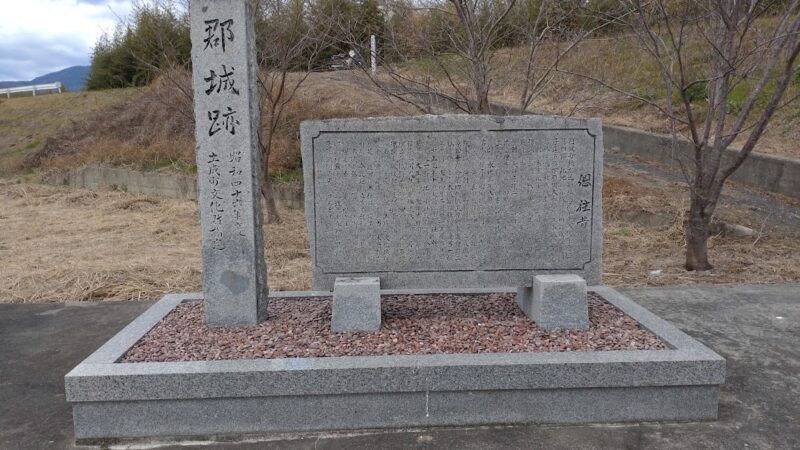
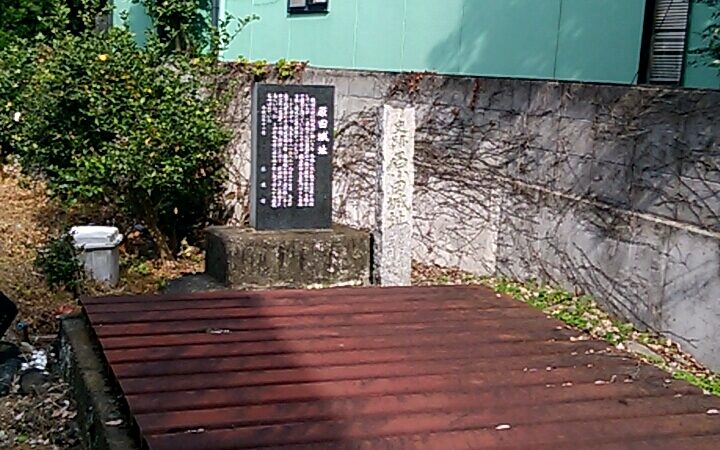
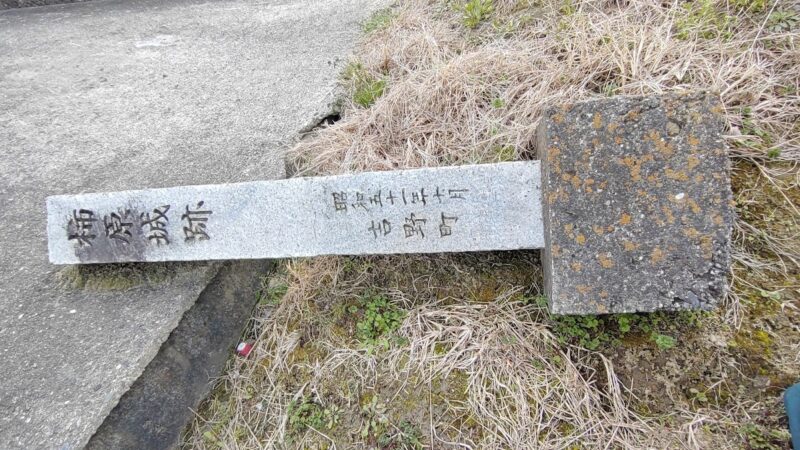
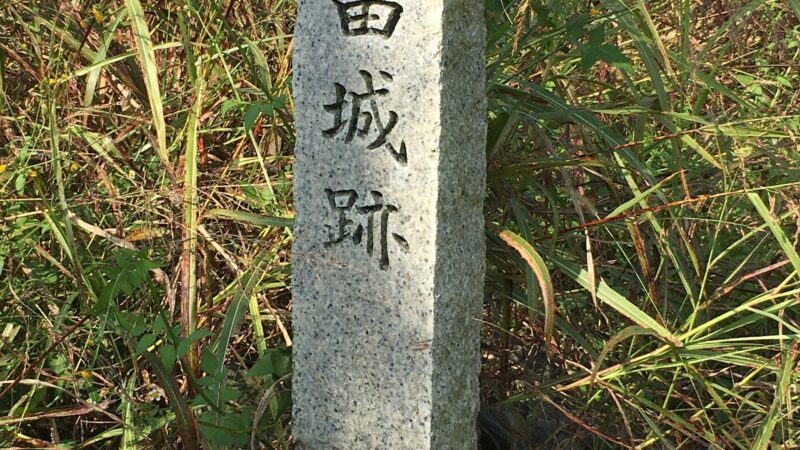
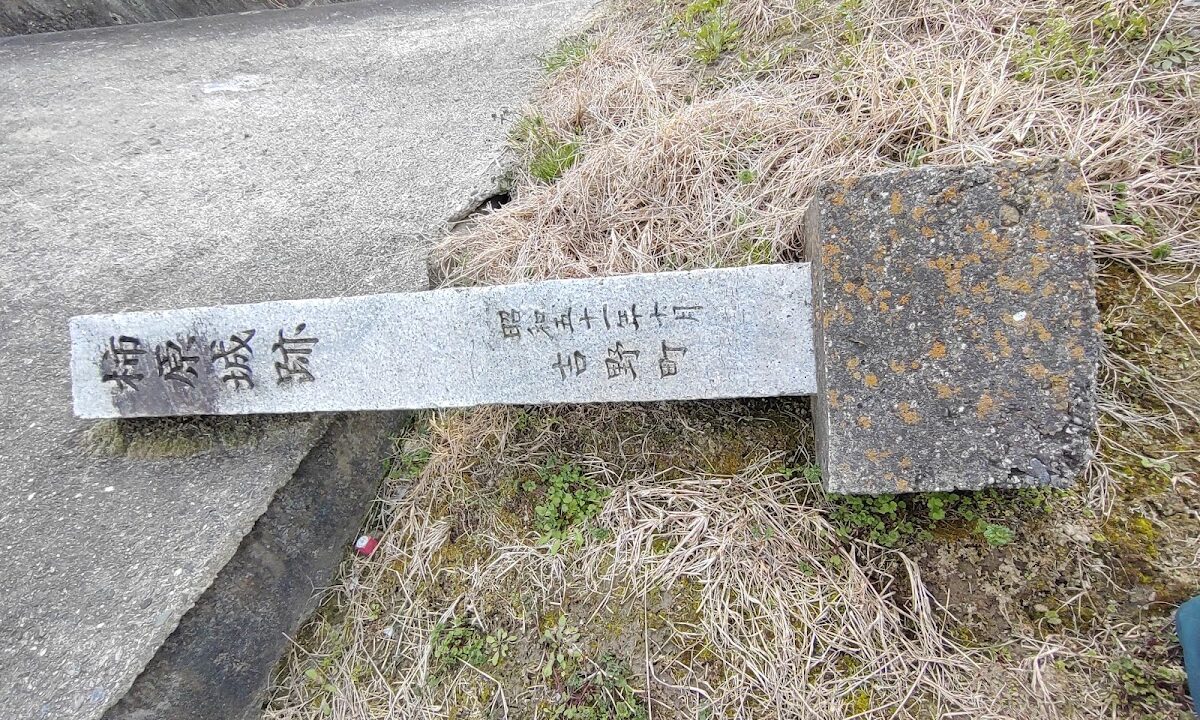
Currently, there are records indicating that a stone monument remains beside the rice paddies below the embankment. This monument is one of the valuable pieces of evidence indicating the former existence of Kakihara Castle in this area. However, reports from visitors regarding the condition and exact location of the monument are limited, raising concerns about its preservation.
No clear traces of earthworks or moats indicating a castle site have been confirmed, and the area has been completely converted into farmland. This is a common situation for flatland castles in Awa Province, as many castle sites disappeared due to land reclamation and flood control projects from the early modern period onward.
Possibilities and Challenges of Archaeological Excavation
It appears that no full-scale archaeological excavation of the Kakihara Castle site has been conducted to date. The lack of a clearly defined location, the fact that the site is currently privately owned and farmland, and the low probability of surviving remains are obstacles to conducting such an investigation.
However, recent advances in archaeological techniques, such as ground-penetrating radar surveys and aerial photograph analysis, may make it possible to discover archaeological remains not visible on the surface. Further investigations are anticipated to shed light on the region’s history.
Geography and History of the Kakihara Area
Geographical Characteristics of Kakihara, Yoshino Town
Kakihara, Yoshino Town, is located in the northeastern part of Awa City, Tokushima Prefecture. It is centered on a plain along the north bank of the Yoshino River, characterized by fertile farmland.
Geographically, blessed with fertile soil provided by the Yoshino River, agriculture, primarily rice cultivation, has flourished since ancient times. Furthermore, its convenient river transportation led to its development as a center for the collection and distribution of goods.
Currently, the Kakihara area is a transportation hub with National Route 318 passing through it, providing good access to the center of Awa City. Residential areas and commercial facilities are scattered throughout the surrounding area, transforming it from a rural region into a suburban residential area.
Rivers and Water Management
The existence of the Yoshino River is indispensable when discussing the history of the Kakihara region. The Yoshino River, also known as Shikoku Saburo, is the largest river in Shikoku and has long had a significant impact on the lives and culture of the region.
The Yoshino River boasts abundant water volume and has been used for agricultural irrigation. However, it is also a turbulent river prone to flooding, making flood control a crucial issue for the region. Currently, levees have been constructed, significantly reducing the risk of flooding.
The location where Kakihara Castle is believed to have been located was selected considering its relationship with the Yoshino River. It was a key point for river transportation and likely functioned as a flood control base as well.
Origin of the Place Name and Sub-district Name
There are several theories regarding the origin of the place name Kakihara, but the most common is that it derives from a field where many “kaki” (persimmon) trees grew. Another theory suggests it is a corruption of “Kakihara,” possibly indicating the presence of some kind of boundary or defensive structure in the past.
The Kakihara region has several sub-districts, and place names such as “Kita-Nijo” (North Nijo) and “Minami-Nijo” (South Nijo) remain. The place name “Nijo” may originate from the Jori system (a land division system), indicating that this region was systematically developed from ancient times.
Such place names provide important clues to understanding the region’s history. Analysis of place names is also an indispensable element in estimating the location of castles.
History and Culture of Awa City
Establishment and Development of Awa City
Awa City is a relatively new city, formed on April 1, 2005 (Heisei 17), through the merger of four towns: Yoshino-cho, Donari-cho, Ichiba-cho, and Awa-cho. It is located in the northeastern part of Tokushima Prefecture and borders Tokushima City, the prefectural capital.
The city area spreads mainly along the north bank of the Yoshino River and is characterized by its rich nature and agricultural areas. The population is approximately 35,000 (early 2020s), and while it is showing a gradual decline, it also functions as a commuter town for Tokushima City.
Medieval History of Awa Province
During the medieval period, Awa Province was under the control of powerful warlords such as the Hosokawa and Miyoshi clans. The Miyoshi clan, in particular, expanded their influence from Awa to the Kinai region, and at one point wielded power surpassing that of the Shogunate.
Towards the end of the Sengoku period, Chosokabe Motochika of Tosa invaded Awa Province, and many castles became battlegrounds. Kakihara Castle may have appeared on the historical stage in some form during this period.
After Toyotomi Hideyoshi’s conquest of Shikoku, Awa Province came under the control of the Hachisuka clan and became the Tokushima Domain during the Edo period. Many medieval castles were abandoned during this process, and Kakihara Castle is thought to have been one of them.
Major Tourist Resources of Awa City
Besides Kakihara Castle, Awa City has many other historical and cultural resources.
The Earth Pillars are a unique natural monument designated by the government and are a representative tourist spot of Awa City. Furthermore, it is home to Horinji Temple, the 9th temple of the Shikoku 88 Temple Pilgrimage, and is known as a place visited by pilgrims.
Facilities where visitors can experience making Wasanbon (a type of refined sugar), and restaurants serving Tarai Udon (a traditional Awa dish) are also popular. These tourist resources are important elements in promoting the charm of Awa City.
Access to Kakihara Castle and Surrounding Facilities
Transportation Access
Access to the estimated site of Kakihara Castle is primarily by car.
Access by Car:
- Approximately 15 minutes from the Tokushima Expressway “Donari IC” via National Route 318
- Approximately 30 minutes from central Tokushima City via National Routes 192 and 318
- The target location is near the north end of Awa Chuo Bridge
Public Transportation:
- The nearest station is JR Tokushima Line “Kamojima Station” (approximately 5km)
- Using a taxi or rental car from the station is recommended
- There are also local buses, but the number of services is limited
There is no dedicated parking lot at the site, but there is space for temporary parking along the national highway. However, please avoid trespassing on private property or farmland.
Nearby Historical Facilities
When visiting Kakihara Castle Ruins, we recommend also visiting nearby historical facilities.
Awa City Historical and Folk Museum exhibits the history and culture of the Awa City area, and some materials on medieval castles are also on display.
The castle ruins of Donari-cho are also nearby and are useful for understanding medieval castles in Awa Province. Akizuki Castle ruins and Donari Castle ruins are well-known examples.
Points to Note When Visiting
When visiting Kakihara Castle ruins, please note the following:
- No clear remains are present, so avoid excessive expectations.
- The location of the stone monument may change, and it may not be found.
- There is a lot of private land and farmland**, so please do not trespass.
- The area near the Yoshino River embankment can be dangerous depending on the weather.
- Information boards and explanatory signs are unlikely to be installed.
Visiting castle ruins offers the enjoyment of using your imagination to envision their former glory. Considering the strategic significance of the castle based on the surrounding topography, national highways, and the location of the Yoshino River can also be interesting.
Current Status and Future Challenges of Kakihara Castle Research
Limitations of Historical Sources and Oral Traditions
Research on Kakihara Castle faces a major challenge: the absolute lack of historical sources. Many medieval regional castles generally lack detailed records.
Currently available sources mainly consist of geographical records compiled from the early modern period onward and Edo-period maps. However, these sources do not provide detailed descriptions of Kakihara Castle.
Local oral traditions are also an important source of information, but they are being lost over time. Interviews with local elders are expected to become increasingly difficult in the future.
The Need for Archaeological Investigations
Archaeological investigations are essential to clarify the actual state of Kakihara Castle. However, as mentioned above, there are many obstacles to conducting investigations, such as the difficulty in identifying the location and the fact that the site is currently agricultural land.
Nevertheless, investigations to the extent possible are valuable from the perspective of clarifying regional history and protecting cultural properties. In particular, when development projects are planned, it is desirable to conduct preliminary trial excavations. ### Positioning in Local History
Kakihara Castle is an important element in understanding the medieval history of Awa City and Tokushima Prefecture. Even without clear remains, its very existence demonstrates the layered historical complexity of the region.
In the future, it is important to consider Kakihara Castle not in isolation, but within the context of the surrounding castle complex and the overall medieval history of the Yoshino River basin. Comparative research may clarify the characteristics and role of Kakihara Castle.
Summary: Historical Value and Significance of Preservation of Kakihara Castle
Kakihara Castle is a medieval castle believed to have existed in Kakihara, Yoshino-cho, Awa City, Tokushima Prefecture. Although its exact location and detailed history are largely unknown, it is estimated to have been located near the east side of the north end of the Awa Chuo Bridge on National Route 318.
Currently, there are almost no clear remains, and only a stone monument remains beside the rice paddies below the embankment. However, this castle was strategically located on the north bank of the Yoshino River and is thought to have played a certain role in the medieval history of Awa Province.
Research on Kakihara Castle faces challenges due to a lack of historical materials and the disappearance of remains, but it holds significant importance for understanding the region’s history. Further archaeological investigations and comparative studies with surrounding castles may reveal new facts.
When visiting the castle ruins, try to imagine its former appearance while observing the Yoshino River and the surrounding topography. Even without visible remains, you should be able to sense the traces of history etched into the land.
Remembering the existence of “vanished castles” like Kakihara Castle and passing it on to future generations is also an important role for us. A respect for local historical heritage leads to the continuation of culture.