Yano Castle, Tokushima City (Tokushima Prefecture) – Complete Guide to History, Remains, and Access
Basic Information about Yano Castle
Yano Castle (Yano-jo) was a flatland castle from the Sengoku period located in Yano, Kofu-cho, Tokushima City, Tokushima Prefecture. It was situated approximately 500 meters northwest of Kokubunji Temple, the 15th temple of the Shikoku 88 Temple Pilgrimage, on the tip of a ridge extending eastward from a hilly area called Kienzan, at an elevation of approximately 28-30 meters.
Common Names/Alternate Names
Yano Castle does not have a specific alternative name, but because it is located on a hill locally known as “Shiroyama” (Castle Mountain), it is sometimes simply called “Shiroyama.” Currently, Shiroyama Shrine is located at the top of the castle ruins, and it is a popular place of worship in the region.
Location and Former Province
Location: Nishi-Yano, Kofu-cho, Tokushima City, Tokushima Prefecture (Some sources also list it as Yano, Kofu-cho, Tokushima City)
Former Province: Awa Province
Awa Province corresponds to present-day Tokushima Prefecture and is known as a region where the Miyoshi clan held power during the Sengoku period. Yano Castle is located near the Awa provincial capital and was an important base controlling a key transportation hub.
Classification and Structure
Classification: Hilltop Castle
Structure: Concentric Enclosure Style
Yano Castle is a typical hilltop castle utilizing the tip of a hill ridge. The relative height difference is approximately 20-25 meters, and it is built in a way that it can be seen looking up from the surrounding plains. The castle employs a concentric enclosure style, with multiple enclosures arranged along the ridge. The enclosures extend east and west from the main enclosure, creating a layout that skillfully utilizes the natural terrain.
Castle Tower Structure
Yano Castle did not have a castle tower (tenshu). As a residence of a local powerful family during the Sengoku period, its structure focused on practical defensive facilities, and it did not have the symbolic castle tower found in later, early modern castles.
Builder and Construction Year
Builder: Yano Suruga-no-kami Kunimura
Construction Year: Estimated to be during the Eiroku era (1558-1570)
While there are slight differences in historical sources regarding the construction date, many documents state that it was built by Yano Kunimura during the Eiroku era. Yano Kunimura is said to be the son of Yano Hoki-no-kami Toramura, lord of Yagami Castle, and was a warrior who served as a senior retainer of the Miyoshi clan.
History of Yano Castle
Relationship between the Yano and Miyoshi Clans
The Yano clan is said to be descended from the Fujiwara clan, but much about their detailed origins remains unknown due to a lack of historical records. During the Sengoku period, the Yano clan served the Miyoshi clan for generations, playing a crucial role in maintaining the Miyoshi clan’s power in Awa Province.
Yano Suruga-no-kami Kunimura, a senior retainer of the Miyoshi clan, participated in major military operations of the Miyoshi clan, earning their trust. He was appointed lord of Hikita Castle in Sanuki Province in 1571. Kunimura also served as lord of Toramaru Castle, functioning as a key figure in maintaining the Miyoshi clan’s power in both Sanuki and Awa Provinces.
The Death of Miyoshi Nagaharu and the Loyalty of Yano Kunimura
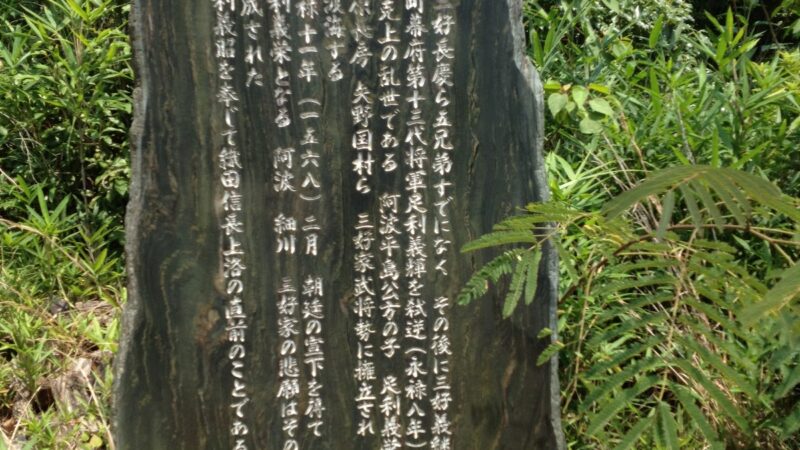
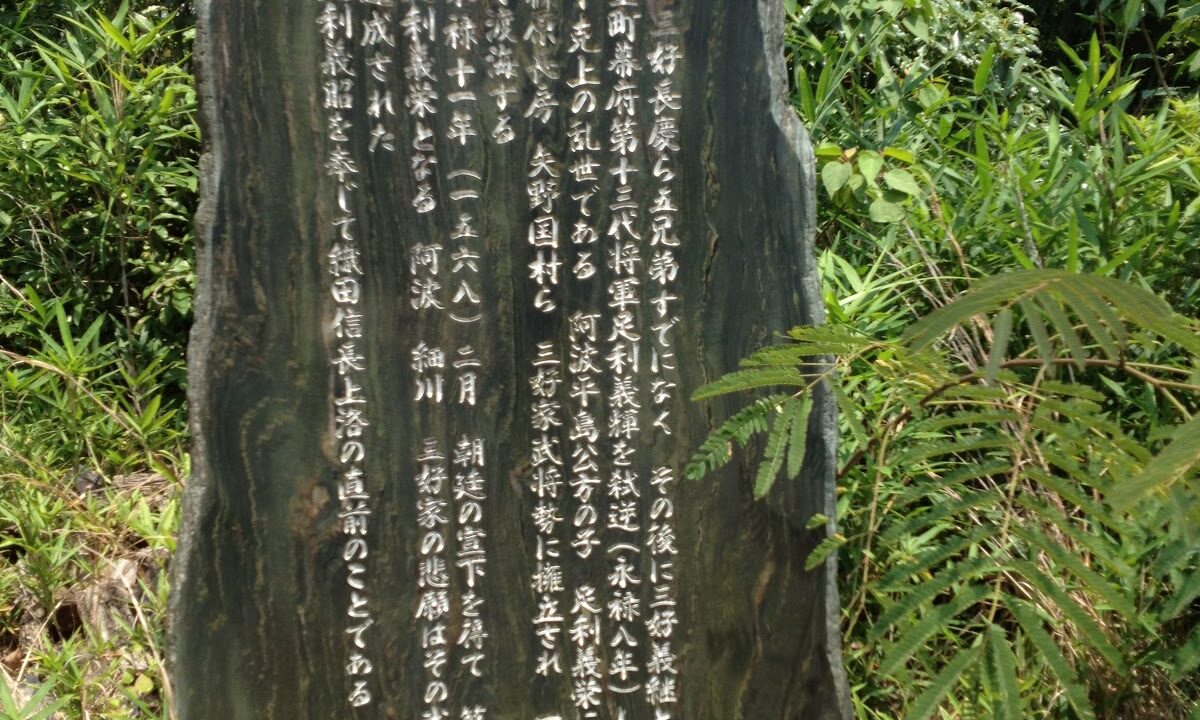
In 1577, a conflict arose between Miyoshi Nagaharu and Hosokawa Saneyuki, resulting in Nagaharu’s suicide. Amidst this chaos, Yano Kunimura, then lord of Toramaru Castle in Sanuki Province, bravely fought against Izawa Yoritoshi, who attacked Nagaharu, and achieved a military feat by killing Izawa Yoritoshi.
Afterward, Kunimura welcomed Sogō Masayasu, Nagaharu’s younger brother and heir to the Sogō family, to Shōzui Castle, supporting the restoration of the Miyoshi clan. This action demonstrates that Yano Kunimura was not merely a vassal, but a trusted retainer with strong loyalty to the Miyoshi clan.
The Battle Outside Wakijo Castle and the End of Yano Kunimura
The “Battle Outside Wakijo Castle,” which occurred in 1579 (Tenshō 7), determined the fate of Yano Castle and Yano Kunimura.
That year, Miyoshi Tokutarō Yasutoshi, the eldest son of Miyoshi Yasunaga and lord of Iwakura Castle, surrendered to Chōsokabe Motochika. Tokutarō ordered the Miyoshi generals to lead their troops to Iwakura Castle in order to invade Tosa. Following this order, Yano Kunimura, along with Mori Hida-no-kami, Miyoshi Echigo-no-kami, and others hastily assembled their forces and marched toward Iwakura Castle.
However, this was a clever stratagem by Miyoshi Yasutoshi and Takeda Nobuaki. Chosokabe forces, sallied forth from Waki Castle and other locations, attacked the Miyoshi generals heading toward Iwakura Castle. Caught off guard, Yano Kunimura and his men were shot, and Kunimura was killed. This battle resulted in the loss of key Miyoshi retainers, significantly weakening the Miyoshi clan’s power in Awa Province.
The Fall and Abandonment of Yano Castle
After Yano Kunimura’s death in battle, it is presumed that Yano Castle effectively fell into ruin. According to the “Castle Ruins Record,” Yano Castle fell in 1582, but since its lord, Kunimura, was killed in 1579, it is thought that the castle had almost completely lost its function for the following three years. As the Chosokabe clan’s invasion of Awa Province intensified, Yano Castle, having lost its successor and formidable defensive forces, was unable to maintain its strategic value and disappeared from the historical stage.
Yano Castle’s Layout and Remains
Castle Location and Topographical Utilization
Yano Castle is located south of the Tokushima City Archaeological Museum, built on the tip of a hill ridge extending eastward from Mt. Kien. This location offers a view of the Yoshino River tributaries and is ideally situated for monitoring the road from the Kokufu area to Tokushima.
The castle’s main enclosure is located on the hilltop at an elevation of approximately 28-30 meters, with a relative height difference of about 20-25 meters. Rather than steep cliffs, the hill has gentle slopes, making access relatively easy, but defensive features are evident throughout.
Layout of the Enclosures
Yano Castle’s layout is a series of interconnected enclosures arranged along a ridge. The main enclosure is located at the highest point of the hill, where the Shiroyama Shrine now stands. Several enclosures with varying elevations are arranged around the main enclosure, and the castle grounds extend in an east-west direction.
Each enclosure skillfully utilizes the natural terrain, while flat surfaces are secured through leveling. The elevation differences between the enclosures functioned as defensive lines, delaying enemy advances.
Earthworks and Moats
As defensive structures of Yano Castle, remains of earthworks and moats have been confirmed. The earthworks were built along the edges of the enclosures and can still be observed as raised areas in some places. The height of the earthworks varies depending on the location, but they are generally about 1 to 2 meters high.
The moats were constructed to block the ridge and served to prevent attacks from the rear. While some parts are now obscured due to burial and weathering, the location of the moats can be estimated from changes in the terrain. ### Existing Remains
Main Remains:
- Enclosures (multiple)
- Earthworks
- Traces of a moat
- Leveled area
Reconstructed Structures: None (only stone monuments and markers)
The remains of Yano Castle are relatively well-preserved for a castle of a local powerful family during the Sengoku period. However, due to the construction of Shiroyama Shrine, the improvement of the approach road, and the fact that the surrounding area is designated as a historical site as the Kienzan Kofun Cluster, some of the remains have been altered.
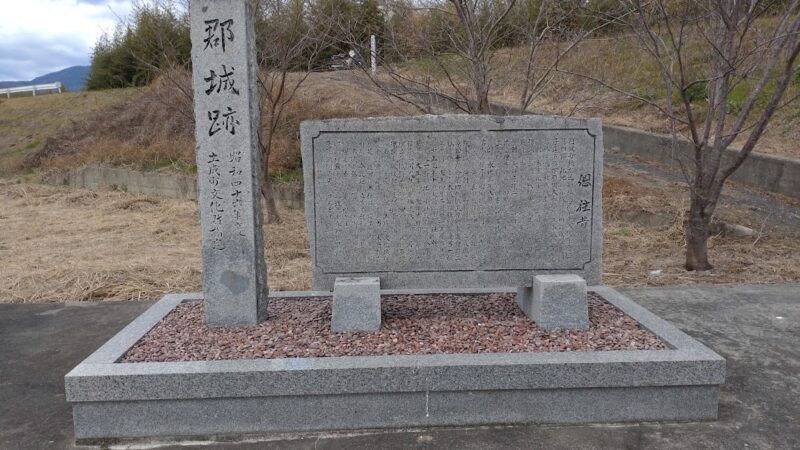
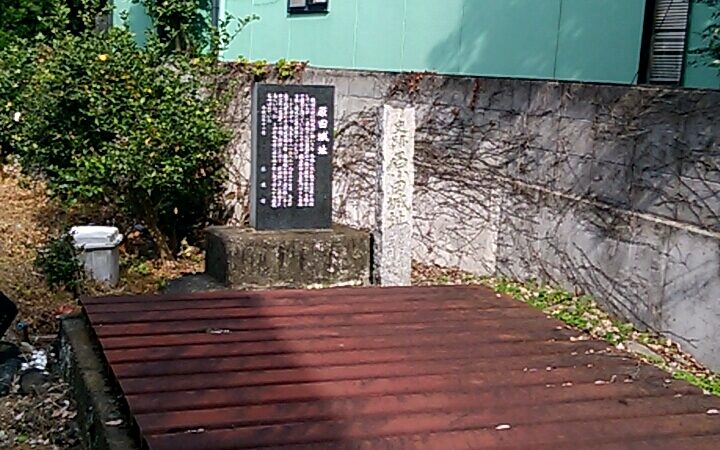
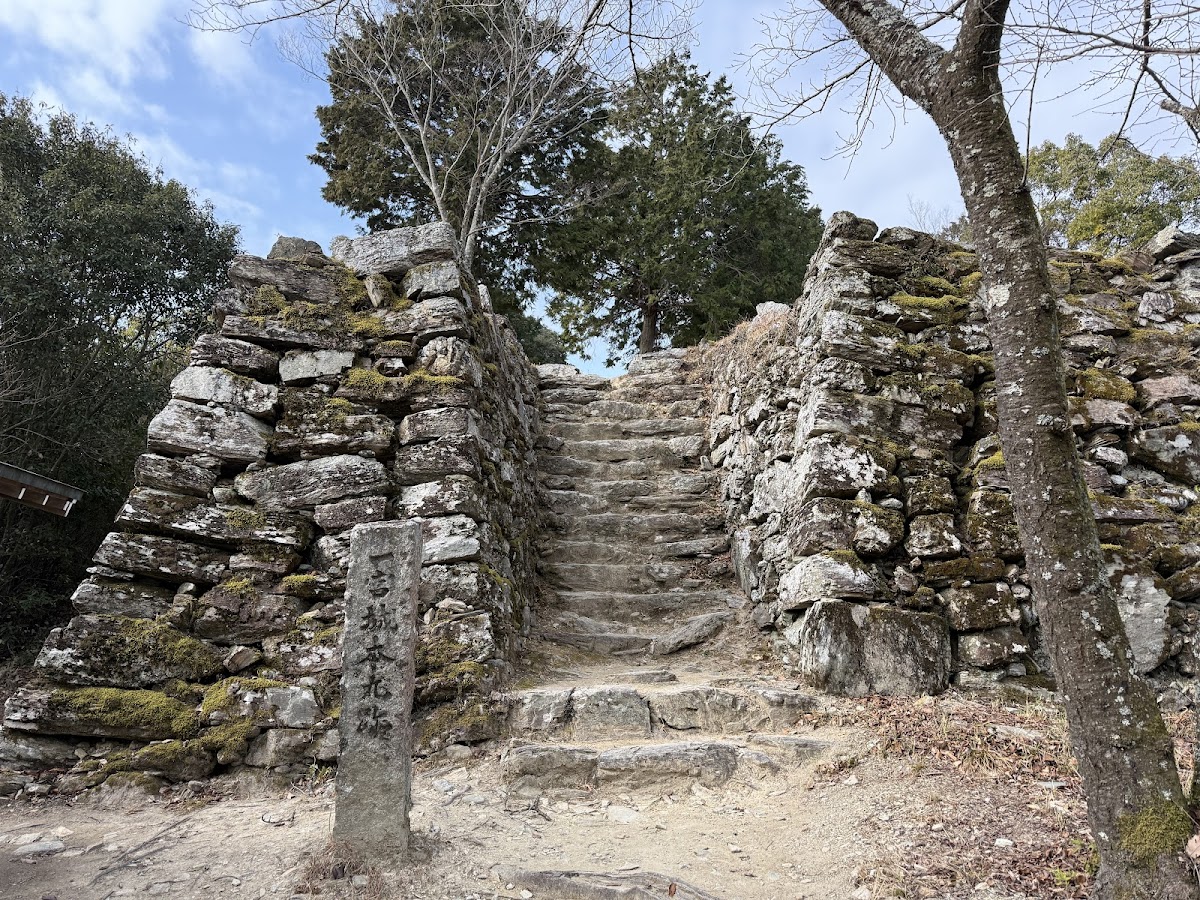
A wooden marker post indicating “Yano Castle Site” is installed at the site, indicating that it is a castle site. No stone remains such as stone walls have been confirmed, indicating that it was an earthen castle.
Relationship with the Kienzan Kofun Cluster
The hill on which Yano Castle was built contains the Kienzan Kofun Cluster from the Kofun period. It has been suggested that the topography of these burial mounds may have been utilized in the construction of the castle. Repurposing burial mounds as enclosures or utilizing surrounding moats as defensive walls were common techniques in castle construction during the Sengoku period (Warring States period).
When visiting the castle ruins, you can also see the wooden marker for the “Kienzan Kofun Group,” allowing you to feel the layered history from ancient to medieval times.
How to Access Yano Castle
Access by Public Transportation
By JR:
- Get off at JR Tokushima Main Line “Fuchu Station,” approximately 35 minutes on foot.
- Take a Tokushima Bus from JR “Tokushima Station,” get off at the “Yakurahimeguchi” bus stop, approximately 15 minutes on foot.
If using the bus, take a bus bound for Kofu from the bus terminal in front of Tokushima Station. After getting off at the “Yakurahimeguchi” bus stop, walk south. Since bus services are limited, it is recommended to check the timetable in advance.
Access by Car
If using the expressway:
- Approximately 26 minutes from Itano IC on the Takamatsu Expressway
- Approximately 21 minutes from Aizumi IC on the Tokushima Expressway
From either IC, take national or prefectural roads towards Kofu-cho, Tokushima City. Setting “Tokushima City Archaeological Museum” as your destination on your car navigation system is convenient.
Parking Information
There is no dedicated parking lot at Yano Castle Ruins, but you can use the Tokushima City Archaeological Museum parking lot. The museum is located just north of the castle ruins, and the castle ruins are accessible on foot in a few minutes from the parking lot.
The parking lot is free and has space for several regular cars. However, it is recommended to check in advance for museum closing days and after-hours parking.
Route to the Castle
- Park your car in the parking lot of the Tokushima City Archaeological Museum.
- Exit to the road on the west side (some sources say south side) of the parking lot.
- Look for the “Yano Castle” signpost along the road.
- Follow the path indicated by the signpost and head south.
- Turn right and go up the slope.
- You will come across a wooden signpost for “Yano Castle Ruins.”
- Further on, you will find a signpost for the “Kinoyama Tumulus Cluster.”
- The Shiroyama Shrine is located at the summit (this is the main enclosure).
The path to the castle is a well-maintained pilgrimage route and is relatively easy to walk. However, it may become slippery in rainy weather or during winter, so appropriate footwear is recommended. The time required to climb the castle from the parking lot to the summit is approximately 10-15 minutes on foot.
Nearby Attractions and Related Historical Sites
Tokushima City Archaeological Museum
Located just north of the Yano Castle ruins, the Tokushima City Archaeological Museum exhibits the results of investigations into the Awa Provincial Government site and artifacts unearthed from the Kienzan Kofun burial mounds. Visiting both the Yano Castle site and the museum will provide a deeper understanding of the region’s history from ancient to medieval times.
Awa Historical Park (Awa Provincial Government Site)
The ancient Awa Provincial Government site is spread around Yano Castle. Currently, it is maintained as the Awa Historical Park, where the remains of the provincial government’s administrative offices and related facilities have been restored and are on display. The proximity of the ancient administrative center and the Sengoku period castle allows visitors to appreciate the historical importance of this region.
Kokubunji Temple, the 15th Temple of the Shikoku 88 Temple Pilgrimage
Located approximately 500 meters southeast of Yano Castle, Kokubunji Temple is the 15th temple of the Shikoku 88 Temple Pilgrimage. This temple is the successor to Awa Kokubunji Temple, which was built during the Nara period by imperial decree of Emperor Shomu. Its principal image is Yakushi Nyorai (Medicine Buddha). When visiting Yano Castle, you can also add a visit to this historic temple to your itinerary.
Other Castles of Awa
For castle enthusiasts visiting Yano Castle, we recommend visiting other castles in the surrounding Awa region.
- Ichinomiya Castle (Ichinomiya-cho, Tokushima City): A mountain castle with remaining stone walls, the residence of the powerful Ichinomiya clan of Awa Province.
- Katsuzui Castle (Aizumi-cho, Itano-gun): A flatland castle that flourished as the base of the Miyoshi clan.
- Tokushima Castle (Tokushima-cho, Tokushima City): A modern castle that survived throughout the Edo period as the residence of the Hachisuka clan.
By visiting these castles, you can experience the changes in castles in Awa Province from the Sengoku period to the Edo period.
Historical Significance of Yano Castle
Positioning within the Miyoshi Clan’s Territory
Yano Castle was one of the castles that played a crucial role in the Miyoshi clan’s control of both Awa and Sanuki provinces. Its location near the provincial capital made it a strategically important transportation hub since ancient times, and a location of high strategic value in maintaining control over Awa Province.
Since Yano Kunimura also served as the lord of Toramaru Castle and Hikida Castle in Sanuki, it is believed that Yano Castle functioned not merely as the residence of a local powerful family, but also as a relay point in the network connecting Awa and Sanuki.
Symbol in the Chosokabe Clan’s Invasion of Awa
The death of Yano Kunimura in the Battle of Wakijo Castle in 1579 (Tensho 7) symbolized the end of the Miyoshi clan’s rule over Awa. Following this battle, the Chosokabe clan’s invasion of Awa accelerated, and the Miyoshi clan’s power rapidly declined.
The fall (or abandonment) of Yano Castle holds significant meaning in the history of Awa Province, marking a turning point in the shift in power during the Sengoku period.
Characteristics as a Local Clan Castle
Yano Castle, a typical flatland castle built by a local clan during the Sengoku period, preserves the castle-building techniques and defensive philosophies of the time. Its structure, primarily consisting of earthworks and moats rather than stone walls, reflects the region’s technological level and economic power.
While simpler than large-scale early modern castles, its design was highly functional as a practical defensive structure, making it a valuable historical site for understanding the lives and battles of samurai in local communities during the Sengoku period.
Notes and Manners for Visiting Yano Castle
Clothing and Equipment for Visiting
Yano Castle is a mountain castle, and there is a slight uphill climb to reach it. The following equipment is recommended.
- Comfortable walking shoes (sneakers or hiking boots, etc.)
- Comfortable clothing
- Hat, drinking water, and insect repellent in summer
- Warm clothing in winter
- Non-slip shoes and rain gear in rainy weather
Visitor Etiquette
The Shiroyama Shrine is located at the top of the castle ruins and is a place of worship for the local community. Please observe the following manners when visiting:
- Show respect to the shrine and observe proper worship etiquette
- Do not damage the ruins or dig up the soil
- Always take your trash with you
- Avoid actions that may disturb local residents, such as shouting
- Photography is permitted, but please avoid trespassing on private property
Best Time and Season for Visiting
Yano Castle Ruins are open for visits year-round, but the following times are especially recommended.
- Spring (March-May): Mild climate and beautiful fresh greenery.
- Autumn (October-November): Enjoy the autumn foliage and comfortable temperatures.
Summer (June-September) is hot and humid with many insects, so adequate precautions are necessary. Winter (December-February) is relatively mild in Tokushima, but it gets cold in the early mornings and evenings, so take precautions against the cold.
Visiting during daylight hours is recommended. After sunset, it gets dark and visibility is poor, so caution is necessary.
Summary
Yano Castle is a hilltop castle from the Sengoku period located in Kofu-cho, Tokushima City, Tokushima Prefecture. It was built during the Eiroku era by Yano Suruga-no-kami Kunimura, a senior retainer of the Miyoshi clan. In 1579, the lord of the castle, Kunimura, was killed in the Battle of Wakijo-gai, and the castle was abandoned shortly thereafter. However, remnants such as baileys and earthworks still remain today.
The castle ruins can be accessed from the Tokushima City Archaeological Museum, and it takes about 10-15 minutes on foot to reach the Shiroyama Shrine at the mountaintop. Nearby attractions include the Awa Historical Park and Kokubunji Temple, making it a place where you can experience the history of Awa from ancient to medieval times.
Yano Castle, which tells the story of the battles between the Miyoshi and Chosokabe clans in Awa during the Sengoku period, is a valuable historical site as a castle of a local powerful family, and a place worth visiting for castle enthusiasts and history buffs. When you visit Tokushima, be sure to visit the Yano Castle ruins and experience the atmosphere of the Sengoku period.