Hakuchi Castle, Miyoshi City (Tokushima Prefecture) | The History and Current Remains of Hakuchi Castle, Chosokabe Motochika’s Base for Unifying Shikoku
What is Hakuchi Castle?
Hakuchi Castle is a Sengoku period mountain castle located in Hakuchi, Ikeda-cho, Miyoshi City, Tokushima Prefecture. Also known as Hakuchi Onishi Castle, it is currently protected as a Miyoshi City designated historical site. This castle is known as an important base for Chosokabe Motochika, a Sengoku daimyo of Tosa Province, when he aimed to unify Shikoku, and played an extremely important role in the history of Shikoku.
The current site of the castle ruins is occupied by “Hotel Awano-sho,” but behind Onishi Shrine, remains such as earthworks and cliffs from that time remain, conveying the atmosphere of the Sengoku period.
Geographical Importance of Hakuchi Castle
Location as a Crossroads of Shikoku
The greatest feature of Hakuchi Castle lies in its geographical location. Situated in the mountainous area of central Shikoku, it was a strategically important location truly worthy of being called the “crossroads of Shikoku.”
- West Direction: Crossing the Sakaime Pass leads to Iyo Province (present-day Ehime Prefecture)
- North Direction: Crossing the Inohana Pass leads to Sanuki Province (present-day Kagawa Prefecture)
- East Direction: Following the Yoshino River leads to the central part of Awa Province, centered on the Tokushima Plain
- South Direction: Traveling upstream along the Yoshino River and crossing the difficult Oboke and Koboke gorges leads to Tosa Province (present-day Kochi Prefecture)
Due to these geographical conditions, Shiroji Castle occupied an important position as a base for military deployment throughout Shikoku and as a transportation hub. Its location along the Yoshino River also provided a significant advantage for transporting goods and transmitting information using water transport.
Regional Characteristics of Shiroji, Ikeda-cho, Miyoshi City
Shiroji, Ikeda-cho, where Shiroji Castle is located, is part of present-day Miyoshi City. As of 2015, the area had a population of approximately 1,570 people and about 630 households. It borders Ikeda-cho Umaji to the west, Ikeda-cho Nishiyama and, across the Yoshino River, Ikeda-cho Nakanishi and Ikeda-cho Itano to the east, Yamashiro-cho Yamatogawa to the south, and Mitoyo City in Kagawa Prefecture to the north.
Even today, it occupies an important position, similar to the Sengoku period, as it is located in the central part of Shikoku and serves as a transportation hub with the Tokushima Expressway and National Route 32.
History of Shiroji Castle
Construction and the Era of the Onishi Clan
The exact date of construction of Shiroji Castle is unknown, but one theory suggests it was built during the Kamakura period by the Kondo clan, who were estate officials in this area. The Kondo clan later adopted the name Onishi and built their power base in this area.
In the Muromachi period, the Onishi clan became subordinates of the Hosokawa clan, the shugo (military governor) of Awa Province, and maintained a certain level of power in western Awa Province. The Hosokawa clan was a powerful daimyo family that served as shogunal deputies in the Muromachi shogunate, and the Onishi clan played an important role as their subordinates.
The Rise of the Miyoshi Clan and the Subordination of the Onishi Clan
With the arrival of the Sengoku period, the Miyoshi clan, who had been vassals of the Hosokawa clan, rose to power. In the latter half of the 16th century, the Miyoshi clan, based in Miyoshi County, boasted enough power to briefly control the Muromachi shogunate. This Miyoshi clan and Miyoshi County are thought to be the origin of the Miyoshi surname found throughout Japan.
As the Miyoshi clan expanded its power, the Onishi clan changed their lord-vassal relationship from the Hosokawa clan to the Miyoshi clan, and continued to maintain their position in western Awa Province, based at Shiroji Castle. The Onishi clan flexibly adapted to the changing times and survived as a powerful local clan.
The Conquest by Chosokabe Motochika (Tensho 4, 1576)
In Tensho 4 (1576), the most important turning point in the history of Shiroji Castle occurred. Chōsokabe Motochika, a Sengoku-period daimyo of Tosa Province, launched an invasion of Awa Province and captured Shiroji Castle.
At this time, the castle lord was Ōnishi Kakuyō, but Shiroji Castle fell to Motochika’s offensive, and the Ōnishi clan surrendered the castle. This capture provided Motochika with a crucial foothold for unifying Shikoku.
Shiroji Castle as a Base for Shikoku Unification
The significance of Chōsokabe Motochika acquiring Shiroji Castle was immense. As mentioned above, Shiroji Castle is located at the crossroads of Shikoku, and by using it as a base, Motochika was able to deploy his military forces throughout Shikoku.
Motochika renovated and expanded Shiroji Castle, using it as a frontline base for the Shikoku unification war. From here, invasion operations into Sanuki Province (Kagawa Prefecture) and Iyo Province (Ehime Prefecture) were launched, and Motochika’s Shikoku unification project steadily progressed.
Hashiba Hideyoshi’s Conquest of Shikoku and Shiroji Castle
In 1585 (Tensho 13), Toyotomi Hideyoshi (then known as Hashiba Hideyoshi) launched his conquest of Shikoku. Hideyoshi dispatched a large army, with his younger brother Hashiba Hidenaga as commander-in-chief, to Shikoku, invading the territory of the Chosokabe clan.
At this time, Chosokabe Motochika established his headquarters at Shiroji Castle, intending to intercept Hideyoshi’s army. Motochika, well aware of Shiroji Castle’s strategic importance, chose it as his last line of defense. However, faced with an overwhelming difference in military strength, Motochika was forced to surrender, and his dream of unifying Shikoku was shattered.
Shiroji Castle After the Edo Period
After Toyotomi Hideyoshi’s conquest of Shikoku, Awa Province became the territory of the Hachisuka clan, and Shiroji Castle is believed to have been abandoned. Throughout the Edo period, it lost its function as a castle, and its remains gradually returned to nature.
Even after the Meiji era, the Shiroji Castle ruins were recognized as a historical heritage site of the region and are currently protected as a designated historical site of Miyoshi City.
Remains of Shiroji Castle
Overview of Existing Remains
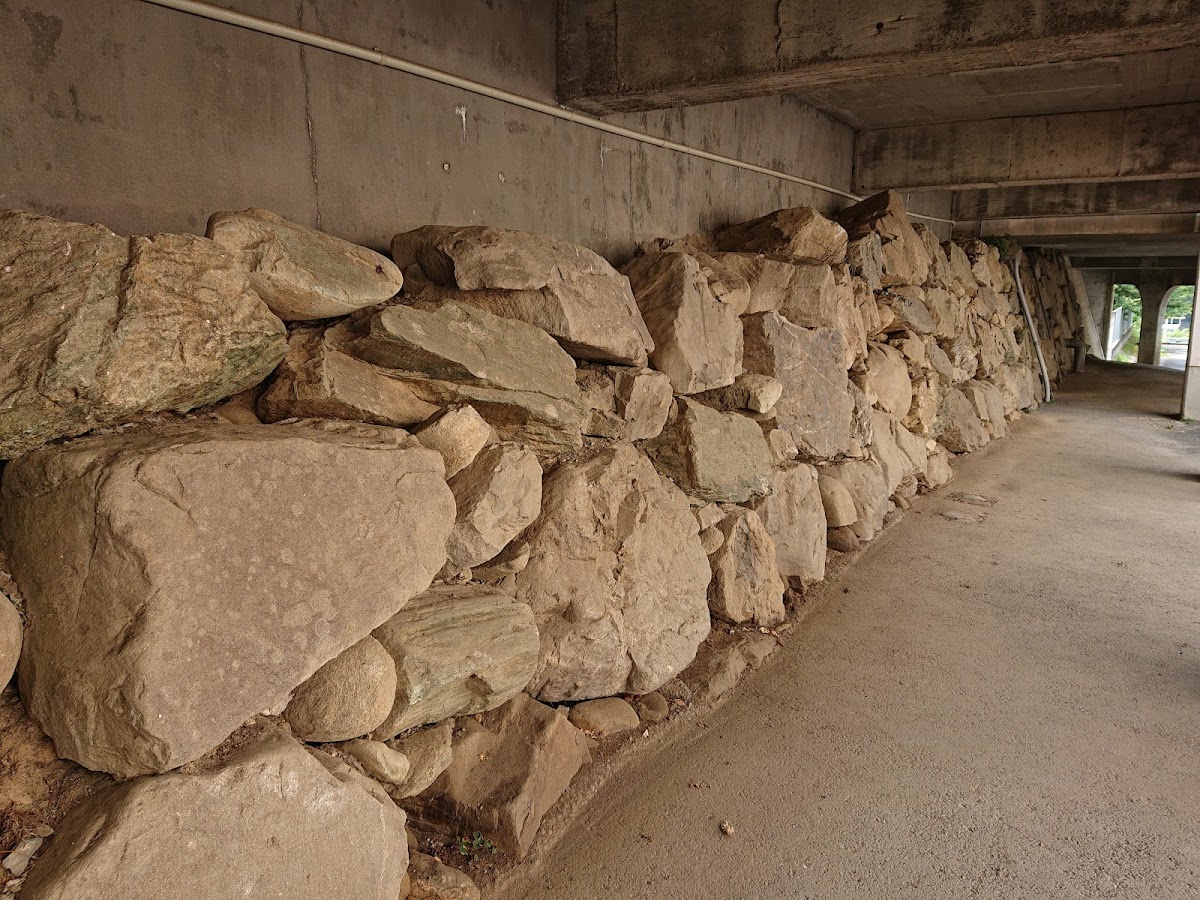
The Shiroji Castle ruins are now the site of the “Hotel Awano-sho,” and many of the original remains have been lost. However, a small number of remains that retain the atmosphere of the Sengoku period remain behind Onishi Shrine.
Earthworks and Cut Slopes
The main remains remaining behind Onishi Shrine are earthworks and cut slopes. Earthworks are defensive structures built by piling up earth to prevent enemy intrusion, while cut slopes are defensive structures created by artificially cutting and steepening slopes. These remains confirm that Shiroji Castle possessed defensive functions as a mountain castle.
In particular, the earthworks remaining on the south side are preserved in relatively good condition and are valuable resources for understanding the castle construction techniques of the time.
Stone Monument at Shiroji Castle Ruins and Onishi Shrine
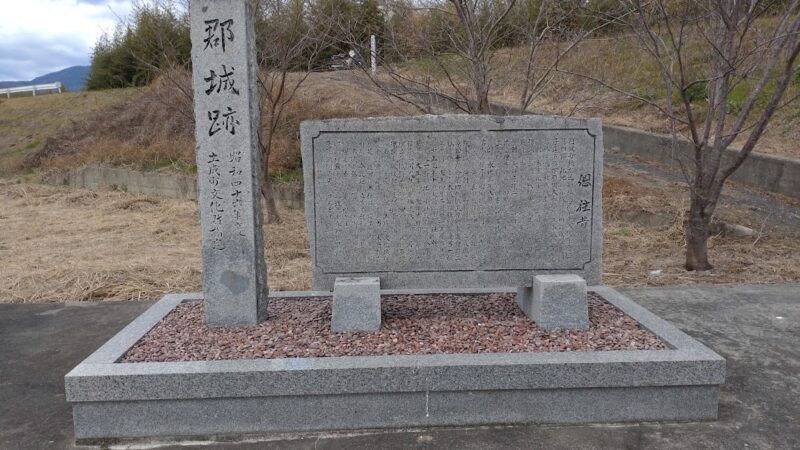
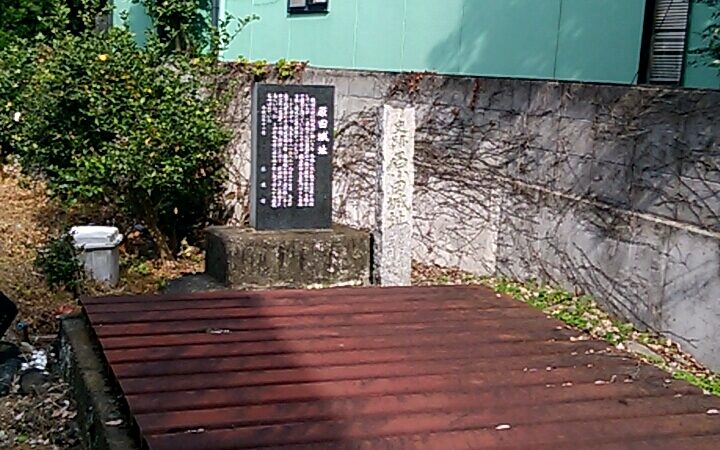
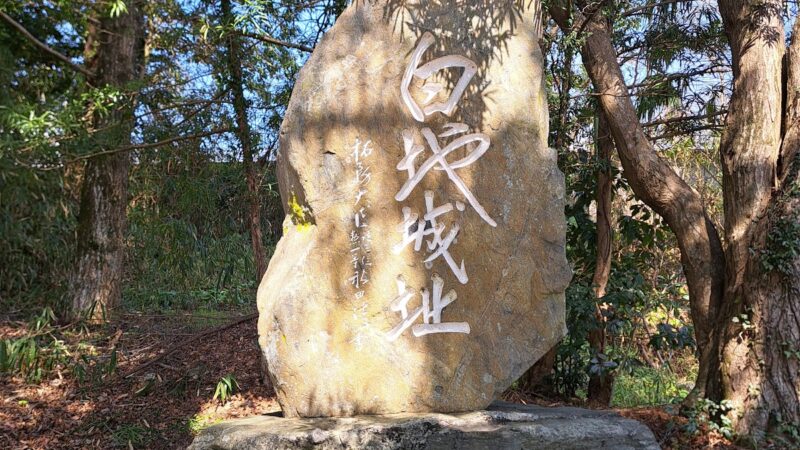
A stone monument marking “Shiroji Castle Ruins” stands at the castle site, indicating that this area was once an important fortress. Onishi Shrine is believed to be a shrine dedicated to the Onishi clan, who once ruled this area, and is an important presence that conveys the historical memory of the region.
Layout and Castle Structure
Shiroji Castle is classified as a flatland castle (hirayama-jiro). A flatland castle is a castle built on a hill or plateau in a flat area. While not as steep as a mountain castle, it offers superior defense compared to a flatland castle.
Built on a plateau along the Yoshino River, Shiroji Castle is presumed to have utilized the river as a natural moat and had a layout that took advantage of the surrounding terrain. Currently, many of the remains have been lost, making a detailed reconstruction of the layout difficult. However, the remaining earthworks and cliffs suggest that it was a castle of considerable size.
Basic Information on Shiroji Castle
Location and Access
- Location: Shiroji Honmyo, Ikeda-cho, Miyoshi City, Tokushima Prefecture
- Former Province: Shiroji, Miyoshi District, Awa Province
- Postal Code: 〒778-5251
- Access: Approximately 10 minutes by car from Awa-Ikeda Station on the JR Dosan Line, approximately 15 minutes by car from Ikawa-Ikeda IC on the Tokushima Expressway
Castle Classification
- Castle Structure: Hilltop Castle
- Construction Period: Kamakura period (estimated)
- Builder: Kondo clan (later Onishi clan)
- Main Lords: Onishi clan, Chosokabe clan
- Year of Abandonment: After Tensho 13 (1585) (estimated)
- Designated Cultural Property: Miyoshi City Designated Historic Site
- Common Name/Alternate Name: Shiroji Onishi Castle
Visitor Information
While most of the castle ruins are located within the grounds of “Hotel Awano-sho,” the remains around Onishi Shrine are accessible for viewing. However, since the area includes private land and the grounds of the accommodation facility, consideration for local residents and the facility is necessary when visiting.
The Historical Value of Shiroji Castle and Miyoshi City
The Position of Shiroji Castle in Miyoshi City
In addition to Shiroji Castle, Miyoshi City has several other castle ruins, including Tao Castle and Yatsuishi Castle. These castle ruins attest to Miyoshi City’s important role as a historical stage for the entire Shikoku region during the Sengoku period.
Shiroji Castle, in particular, is an indispensable presence in the history of Shikoku during the Sengoku period, serving as one of the most important bases in Chosokabe Motochika’s unification of Shikoku, and as the site of a decisive battle during Hashiba Hideyoshi’s conquest of Shikoku.
Strategic Significance in the Shikoku Unification War
The role that Shiroji Castle played in the Shikoku Unification War was far more than just a military base. Located in the heart of Shikoku, this castle served as a central hub for Chosokabe Motochika’s administration of Shikoku, functioning as a base for information gathering, resource storage, and logistics.
Motochika’s importance to Shiroji Castle stemmed from its geographical advantage: controlling it allowed him to exert influence over the entire Shikoku region. Indeed, using Shiroji Castle as his base, Motochika successfully controlled almost all of Shikoku until Hideyoshi’s invasion in 1585.
Historical Value in Modern Times
Currently, the Shiroji Castle ruins are recognized as an important historical heritage site of Miyoshi City. Although many of the remains have been lost, the remaining earthworks and cliffs are valuable resources that convey the castle-building techniques of the Sengoku period.
Furthermore, the history of Shiroji Castle plays a crucial role in the formation of the region’s identity. The history of the Onishi clan, a local powerful family, its connection to Chosokabe Motochika, a hero of Shikoku, and its confrontation with Hashiba Hideyoshi, a powerful figure in Japan, all contribute to Miyoshi City’s proud historical heritage.
Historical Spots Around Shiroji Castle
Oboke and Koboke Gorsge
South of Shiroji Castle, upstream along the Yoshino River, lies the Oboke and Koboke gorges, designated as a national natural monument. This gorge was an important route used by Chosokabe Motochika when he invaded Awa Province from Tosa Province, and is an essential geographical element for understanding the history of Shiroji Castle.
Other Castle Ruins in Miyoshi City
Besides Shiroji Castle, several other castle ruins remain within Miyoshi City. Castles such as Tao Castle and Yatsuishi Castle functioned as branch castles within the spheres of influence of the Miyoshi and Chosokabe clans, and visiting these sites allows one to understand the castle network of the time.
History of the Yoshino River and Water Transport
The Yoshino River, which flows in front of Shiroji Castle, has been an important water transport route in Shikoku since ancient times. The river flowing through the castle town played a crucial role in the transport of goods and the transmission of information, supporting the prosperity of Shiroji Castle. Even today, settlements that retain the atmosphere of that time are scattered along the Yoshino River.
Current Status and Challenges of Shiroji Castle Research
Limitations of Historical Sources
Historical sources concerning Shiroji Castle are limited, leaving many questions unanswered, including the construction date, detailed layout, and changes in castle lords. In particular, there are almost no historical records regarding the castle’s appearance during the Onishi clan’s rule.
Challenges in Preserving Remains
Because a large portion of the castle site is occupied by the “Hotel Awano-sho,” large-scale excavations and preservation of remains are difficult. The remaining remains are deteriorating over time, and appropriate preservation measures are needed.
Future Research Possibilities
In recent years, castle research methods have diversified, and new insights can be gained through the creation of layout maps, topographic surveys, and re-examination of historical documents. Furthermore, comparative research with surrounding castle sites could clarify the characteristics and role of Shiroji Castle.
Summary
Shiraji Castle, located in Shiraji, Ikeda-cho, Miyoshi City, Tokushima Prefecture, is a Sengoku period hilltop castle and a historically extremely important fortress that served as a base for Chosokabe Motochika’s unification of Shikoku. Taking advantage of its geographical location at the crossroads of Shikoku, it functioned as the central hub of Motochika’s administration of the region.
Shiraji Castle, believed to have been built by the Kondo clan (later the Onishi clan) during the Kamakura period, survived under the control of the Hosokawa clan during the Muromachi period and the Miyoshi clan during the Sengoku period. However, it was captured by Chosokabe Motochika in 1576. Afterward, Motochika developed Shiraji Castle as a base for unifying Shikoku, and in 1585, he established his headquarters there to intercept the forces of Hashiba Hideyoshi.
Currently, most of the castle site is occupied by the “Hotel Awano-sho,” but remnants such as earthworks and cliffs remain behind the Onishi Shrine and are protected as a Miyoshi City designated historical site. Although much of the remains have been lost, the surviving structures and historical context are invaluable resources for understanding the Sengoku period history of Shikoku.
The history of Shiroji Castle tells a story that symbolizes Japan’s Sengoku period: the rise and fall of local powerful families, the ambitions of heroes aiming to unify Shikoku, and the path to national unification. When visiting Miyoshi City, be sure to stop by this historic castle site and reflect on the history of Shikoku.