Shigekiyo Castle, Mima City (Tokushima Prefecture): A Sengoku Period Castle Ruins with Remaining Double Moats and the History of the Ogasawara Clan
Shigekiyo Castle is a medieval castle located in Mima-cho, Mima City, Tokushima Prefecture. Built on a river terrace on the north bank of the middle reaches of the Yoshino River, it is a Sengoku period castle ruin. Historically important, it was the stage for battles between the Chosokabe clan’s eastward expansion into Awa Province and the local forces that resisted them. Even today, it is known as a rare castle ruin in Tokushima Prefecture with well-preserved double moats and earthworks.
Shigekiyo Castle, Mima City (Tokushima Prefecture): A Sengoku Period Castle Ruins with Remaining Double Moats and Earthworks
Shigekiyo Castle is a medieval castle ruin located in Mima-cho, Mima City, Tokushima Prefecture. ## Basic Information on Shigechiyo Castle
Location: 53-1 & 2, Shiro, Mima-cho, Mima City, Tokushima Prefecture
Other Names: None
Castle Structure: Hilltop Castle
Year of Construction: 1339 (Ryakuō 2)
Builder: Ogasawara Nagachika
Main Lords: Ogasawara clan, Ōnishi clan
Year of Abandonment: Around 1579 (Tenshō 7)
Remains: Moat, earthworks, bailey remains
Designated Cultural Property: Mima City Designated Historic Site (Designated December 7, 2001)
Access: Approximately 10 minutes by car from JR Anabuki Station, approximately 20 minutes on foot from the Tokushima Bus “Shimizu” bus stop
Shigechiyo Castle ruins are located on a river terrace formed by the Yoshino River, and are a natural stronghold separated from the west and north by steep cliffs. The castle grounds measure approximately 100 meters north-south by 100 meters east-west, and are surrounded on the south and east sides by a double moat and earthen rampart.
History of Shigechiyo Castle
From Construction to the Rule of the Ogasawara Clan
Shigechiyo Castle is said to have been built in 1339 (Ryakuō 2) by Ogasawara Nagachika. The Ogasawara clan was a samurai family based in Shinano Province, and expanded into Awa Province during the Nanboku-chō period. Nagachika established his power in Mima District of Awa Province, and ruled the area from Shigechiyo Castle.
The Ogasawara clan ruled this area for generations, and during the Sengoku period, they served as vassals of the Miyoshi clan. During the Tenshō period, Ogasawara Bungo-no-kami Nagamasa was the lord of Shigechiyo Castle and was a powerful local lord in Mima District.
The Chosokabe Clan’s Invasion and the Murder of the Castle Lord
The most dramatic events in the history of Shigechiyo Castle occurred between 1577 (Tensho 5) and 1578 (Tensho 6). During this period, Chosokabe Motochika, a Sengoku daimyo of Tosa Province, was intensifying his invasion of Awa Province with the aim of unifying Shikoku.
In January 1577 (Tensho 6), Ogasawara Nagamasa, the lord of Shigechiyo Castle, was murdered by Onishi Yorikane, the younger brother of Onishi Kakuyo, the lord of Shiroji Castle, who had been sent as a hostage to the Chosokabe clan, and Kume Keima, the lord of Nakatori Castle. This murder is believed to have been planned as part of the Chosokabe clan’s conquest of Awa Province.
After murdering the castle lord, Onishi Yorikane forced his brother, Onishi Kakuyo, who had fled to Sanuki Province, to surrender to the Chosokabe clan and welcomed him to Shigechiyo Castle. This brought Shigechiyo Castle under the control of the Chosokabe clan.
The Battle Between the Chosokabe and Miyoshi Clans
In 1578 (Tensho 6), a fierce battle unfolded between the Tosa forces led by Chosokabe Motochika, who invaded Awa Province to pacify Shikoku, and the Miyoshi clan, who controlled Awa Province. Shigechiyo Castle became one of the important strategic points in this battle.
After capturing Shiroji Castle, the Chosokabe clan began their eastward advance, bringing the entire Mima County area, including Shigechiyo Castle, under their control. Meanwhile, Sogō Masayasu, a senior retainer of the Miyoshi clan, attempted to defend Awa Province against the Chosokabe invasion, but gradually found himself at a disadvantage.
The Fall of the Castle and its Aftermath
After the establishment of Chosokabe rule, Shigechiyo Castle functioned as one of the Chosokabe clan’s strongholds in Awa Province. However, when the Chosokabe clan surrendered during Toyotomi Hideyoshi’s conquest of Shikoku in 1585 (Tensho 13), Awa Province became the territory of Hachisuka Iemasa, and it is believed that Shigechiyo Castle ceased to serve its purpose and was abandoned.
Shigechiyo Castle’s Layout and Remains
Castle Structure
Shigechiyo Castle is located on a river terrace on the north bank of the middle reaches of the Yoshino River, and is a flatland castle that skillfully utilizes the natural terrain. The castle grounds measure approximately 100 meters north-south by 100 meters east-west, making it a relatively compact structure.
The west and north sides are separated by steep cliffs, which serve as natural defensive structures. These cliffs facing the Yoshino River were an important defensive line that made enemy incursions difficult. On the other hand, the south and east sides were surrounded by artificially constructed double moats and earthen ramparts, further strengthening the defenses.
Features of the Double Moat and Earthworks
The most distinctive feature of Shigechiyo Castle is the presence of a double moat, which is considered rare even in Awa Province. The moat and earthworks are best preserved on the eastern side of the castle grounds, and the double moat and earthworks can be clearly seen running along the current road.
This double moat is believed to have been constructed after the Chosokabe clan occupied the castle. The Chosokabe clan was known for strengthening the defenses of occupied castles using their own unique construction techniques, and the double moat of Shigechiyo Castle is seen as one example.
The earthworks were built on both sides of the moat, and combined with the depth of the moat, they provided a highly effective defensive structure. Even today, the height of the earthworks and the depth of the moat are relatively well preserved, allowing us to imagine its appearance at the time.
Main Enclosure Site and Ogasawara Shrine
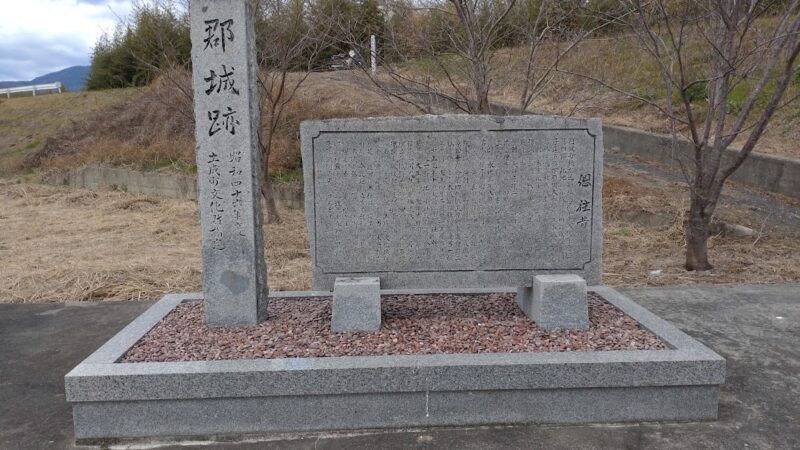
Currently, Ogasawara Shrine stands on the site of the castle’s main enclosure. This shrine was founded to enshrine the Ogasawara clan, who were the lords of the castle, and has been carefully preserved by the local people.
Around the site of the main keep, earthworks and dry moats can be observed, allowing us to understand the structure as the central part of the castle. From the shrine grounds, one can overlook the surrounding terrain, appreciating the castle’s advantageous location.
Archaeological Survey Results
In 2003 (Heisei 15), the Tokushima Prefectural Buried Cultural Properties Center conducted a survey, and topographical surveys revealed that the castle’s overall size was 100 meters north-south by 100 meters east-west.
This survey unearthed artifacts such as earthenware, pottery, porcelain, and metalwork, providing clues to the lifestyle of the time the castle was in use. The artifacts, particularly those from the Muromachi to Sengoku periods, are central and consistent with historical documents.
Historical Background of Shigechiyo Castle and its Surroundings
Situation in Awa Province during the Sengoku Period
During the Sengoku period, the Miyoshi clan wielded immense power in Awa Province. Miyoshi Nagayoshi expanded his influence to the Kinai region, and at one point wielded such power that he was called a “ruler of Japan.” However, after Nagayoshi’s death, the Miyoshi clan’s power gradually declined.
Amidst this, Chosokabe Motochika of Tosa Province rose to power and began invading surrounding provinces with the aim of unifying Shikoku. Awa Province was a crucial base for the Chosokabe clan’s unification of Shikoku, and full-scale invasions began in the late 1570s.
Geographical Importance of Mima District
Mima District, where Shigekiyo Castle is located, is situated in the middle reaches of the Yoshino River and was a vital transportation hub connecting the east and west of Awa Province. The road along the Yoshino River was a major transportation route within Awa Province, making it a militarily and economically important region.
Furthermore, Mima District is located at the boundary between mountainous and plain areas, and had relatively high agricultural productivity. Therefore, it became an important base of control for both the local lord, the Ogasawara clan, and the invading Chosokabe clan.
Chosokabe Clan’s Castle Construction Techniques
The Chosokabe clan is known for making unique modifications to the castles they occupied. They were particularly skilled in techniques for strengthening moats and earthworks to enhance defensive capabilities.
The double moat of Shigechiyo Castle is also believed to be a result of renovations by the Chosokabe clan. By constructing a double moat, enemy intrusion became more difficult, significantly improving the castle’s defensive strength. Such castle-building techniques played a crucial role in the Chosokabe clan’s unification of Shikoku.
History of Shigechiyo Village and Shigechiyo Castle
Shigechiyo Village was formed at the foot of Shigechiyo Castle. Shigechiyo Village was a village dating back to the early modern period, and with the implementation of the town and village system on October 1, 1889 (Meiji 22), it became an independent municipality.
Shigechiyo Village belonged to Mima District, Tokushima Prefecture, and was located in the western half of present-day Mima Town, Mima City. On March 31, 1957 (Showa 32), it merged with Gunri Town to form Mima Town, and Shigechiyo Village was abolished on the same day. Subsequently, through the Heisei-era municipal mergers, Mima Town became part of Mima City, which remains the case today.
Shigechiyo Village belonged to Mima District, Tokushima Prefecture, and was located in the western half of present-day Mima Town, Mima City. The place name Shigekiyo is thought to originate from the name of the castle, indicating a close connection between the region’s history and the existence of the castle.
Current Status and Preservation of Shigekiyo Castle Ruins
Protection as a City-Designated Historic Site
Shigekiyo Castle Ruins were designated as a historic site by Mima City (then Mima Town) on December 7, 2001. This officially positioned the preservation and utilization of the castle ruins, and efforts are being made to protect the remains.
The designation as a city-designated historic site indicates that Shigekiyo Castle Ruins are an important cultural asset that conveys the history of the region. In particular, the well-preserved double moat, rare in Tokushima Prefecture, is highly valued.
Preservation Status of the Remains
Currently, the moat and earthworks are best preserved on the eastern side of the castle grounds. The double moat and earthworks remain clearly visible along the current road, conveying the appearance of the castle in its time to visitors.
The double moat visible from the roadside is easily discernible when passing by by car or on foot, and conveys the impressive scale of the castle ruins. The height of the earthworks and the depth of the moats are relatively well-preserved, making it a valuable example for understanding the defensive structure of medieval castles.
Earthworks and dry moats can also be seen around the Ogasawara Shrine, which stands on the site of the main keep. The shrine grounds are cleaned and maintained by local residents, keeping them in good condition.
Points of Interest
The main points of interest when visiting the Shigechijo Castle ruins are as follows:
Double Moat and Earthworks: The double moat and earthworks remaining along the road on the east side of the castle grounds are a must-see. These are rare remains in Awa Province and important evidence of the castle-building techniques of the Chosokabe clan.
Ogasawara Shrine: This shrine, built on the site of the main keep, enshrines the Ogasawara clan, who were the lords of the castle. From the shrine grounds, you can overlook the surrounding terrain, allowing you to appreciate the castle’s advantageous location.
River Terrace Topography: The castle was built on a river terrace formed by the Yoshino River, and the steep cliffs on the west and north sides serve as natural defensive structures.
Access to Shigekiyo Castle and Surrounding Sightseeing
Access Methods
Public Transportation: Approximately 10 minutes by car from Anabuki Station on the JR Tokushima Line. Approximately 20 minutes on foot from the Shimizu bus stop on the Tokushima Bus.
Car: Approximately 15 minutes from the Wakimachi Interchange on the Tokushima Expressway. Located along National Route 438, access is relatively easy.
Parking: There is some space around Ogasawara Shrine, but there is no dedicated parking lot. Please be considerate of local residents when visiting.
Nearby Sightseeing Spots
Udatsu Townscape: In Wakimachi, Mima City, there is a “Udatsu townscape” where traditional townhouses from the Edo to Meiji periods line the streets. Designated as a National Important Preservation District for Groups of Traditional Buildings, visiting this area along with the Shigechijo Castle ruins will allow you to gain a deeper understanding of Mima City’s history.
Wakimachi Theater (Odeon Theater): This theater, built during the Taisho era, still hosts performances today. It is designated as a National Important Cultural Property and is known as a valuable example of modern architecture.
Anabuki River: Known as Japan’s cleanest river, the Anabuki River is a popular tourist spot, attracting many visitors in the summer. Visitors can enjoy its crystal-clear waters and beautiful gorge scenery.
Historical Lessons from Shigechijo Castle
The history of Shigechijo Castle tells the story of the power struggles in Awa Province during the Sengoku period and the complex political situation surrounding regional control. The assassination of Ogasawara Nagamasa symbolized the clever strategy of the Chosokabe clan and the division of local forces.
Furthermore, the double moat, a remnant of the Chosokabe clan’s castle renovations, demonstrates the high level of castle-building technology of the Sengoku daimyo and speaks to their efforts to secure control of occupied territories.
The well-preserved remains of Shigechijo Castle are invaluable cultural assets that convey the region’s history to future generations, and are an important element in forming the historical identity of Mima City. By visiting the Shigechijo Castle ruins, we can experience firsthand the history of Awa Province during the Sengoku period.
Summary
Shigechijo Castle is a valuable medieval castle ruin remaining in Mima City, Tokushima Prefecture. Built by Ogasawara Nagachika, it became the stage for the Chosokabe clan’s invasion of Awa Province during the Sengoku period. After a dramatic incident in which the castle lord, Ogasawara Nagamasa, was assassinated, it came under the control of the Chosokabe clan and was subsequently abandoned.
The remaining double moat and earthworks are highly valued as rare remains in Awa Province and are protected as a Mima City designated historical site. The castle ruins possess many historical values, including its location on a river terrace in the middle reaches of the Yoshino River, its layout that utilizes natural fortifications, and the castle-building techniques of the Chosokabe clan.
A visit to the Shigechijo Castle ruins offers a wealth of historical insights, including the history of Awa Province during the Sengoku period, the relationship between local lords and feudal lords, and the structure of medieval castles. When visiting Mima City, we highly recommend taking the time to visit this valuable historical site.