

Mumo Castle (Tochigi Prefecture) Complete Guide: Exploring the Utsunomiya Clan’s Mountain Castle and the Roots of the Okubo Clan
What is Mumo Castle?: A Sengoku Period Mountain Castle Built by a Prominent Family of Shimotsuke Province
Mumo Castle is a medieval mountain castle located in Bato, Nakagawa-machi, Nasu-gun, Tochigi Prefecture. It is believed to have been built around the Shoo-Einin era (1288-1299) by Mumo Yasumune, a branch family of the Utsunomiya clan, and is currently protected as a Tochigi Prefecture designated historical site.
Located at a strategic point in the northeastern part of Shimotsuke Province, this castle has a unique structure utilizing two ridges running east-west, and is a valuable historical site that well preserves the appearance of a Sengoku period mountain castle. The main castle, the West Castle, is now home to the Shizu Shrine, while the East Castle (Mumo East Castle) is located to the east.
The Mumo clan, as a powerful branch family of the Utsunomiya clan, maintained significant influence in northern Shimotsuke Province. Of particular note is the historical fact that descendants of the Takemoto clan migrated to Mikawa and became the ancestors of the Okubo clan, who served Tokugawa Ieyasu.
History of the Takemoto Clan: From a Branch Family of the Utsunomiya Clan to the Okubo Clan
Establishment of the Takemoto Clan and its Relationship with the Utsunomiya Clan
Takemoto Yasumune, the ancestor of the Takemoto clan, was born as the third son of Utsunomiya Kagetuna. In the mid-Kamakura period, he was granted the land of Takemoto, and the family began to use the name Takemoto. The place name Takemoto corresponds to the present-day Bato district of Nakagawa Town, a strategically important transportation hub along the Nakagawa River.
Although the Takemoto clan was a branch family of the Utsunomiya clan, their influence was not to be underestimated. When the main Utsunomiya family line died out, the Takemoto clan produced heads of the family several times, indicating that they were a particularly important family within the Utsunomiya clan.
The Takemoto Clan in the Sengoku Period: Relationship with the Satake Clan
During the Sengoku period, the Takemoto clan developed a deep relationship with the Satake clan of neighboring Hitachi Province. The northern part of Shimotsuke Province was a region where the powers of the Utsunomiya, Nasu, and Satake clans intersected. The Takemoto clan engaged in complex diplomacy, sometimes acting as vassals of the Utsunomiya clan and sometimes aligning themselves with the Satake clan.
Particularly in the latter half of the 16th century, they came under the influence of the Satake clan and are believed to have functioned as a base for the Satake clan’s expansion into Shimotsuke. It is thought that Takemoto Castle underwent extensive renovations as a Sengoku-period mountain castle during this period, and many of the remaining structures such as earthworks, dry moats, and trenches are estimated to have been constructed during this time.
The Dysfunction and Restoration of the Takemoto Clan
The history of the Takemoto clan was turbulent, marked by repeated periods of dysfunction and restoration. Due to their relationship with the main Utsunomiya family, the Takemoto family would temporarily cease to exist when the head of the family succeeded to the main family. Each time, they were restored by adopting a member of the Utsunomiya family.
This history of discontinuity and revival demonstrates the special position the Takemoto clan held within the Utsunomiya family. They were not merely a branch family, but recognized as an important lineage supporting the main family.
Relationship with the Mikawa Okubo Clan
The most interesting aspect of the Takemoto clan’s history is their relationship with the Okubo clan of Mikawa Province. Towards the end of the Sengoku period, a branch of the Takemoto clan migrated to Mikawa and became the ancestors of the Okubo clan who served Tokugawa Ieyasu.
The Okubo clan was known as a senior retainer of the Tokugawa family, producing figures such as Okubo Tadayo and Okubo Tadachika, who played crucial roles in the establishment of the Edo shogunate. The fact that their ancestors were the Takemoto clan of Shimotsuke Province is a major factor in positioning Takemoto Castle as a historically important fortress.
The Toyotomi and Tokugawa Eras and the End of the Takemoto Clan
After Toyotomi Hideyoshi’s siege of Odawara in 1590, the Utsunomiya clan was dispossessed of their territory, and the Takemoto clan also lost their land. When the Satake clan established themselves as a powerful daimyo with a domain of 540,000 koku in Hitachi Province, a portion of northern Shimotsuke Province came under their control. However, the Takemoto clan itself lost its status as a local lord.
After the Battle of Sekigahara, when the Satake clan was transferred to Akita, the Takemoto area became a direct territory of the shogunate and a territory of a hatamoto (direct retainer of the shogun), and Takemoto Castle was completely abandoned. However, the castle ruins were carefully preserved by the local people and have remained in good condition to this day.
Structure of Takemoto Castle: A mountain castle with separate enclosures
Structure of Nishijo (Main Castle)
Nishijo, the main castle of Takemoto Castle, is built on a hill where Shizu Shrine is located. The relative height is approximately 50 meters, making it a relatively easy climb for a mountain castle.
The Honmaru (main enclosure) is located behind Shizu Shrine, about a 5-minute climb further up, and is surrounded by an earthen rampart. The main enclosure (Honmaru) measures approximately 40 meters east-west and 30 meters north-south, a standard size for a medieval mountain castle. Earthen ramparts remain, approximately 2-3 meters high, with the northern and western ramparts being particularly well-preserved.
The second enclosure (outpost) is located south of the main enclosure, where the worship hall of Shizu Shrine now stands. A dry moat, connected by an earthen bridge, enhances its defensive capabilities. The dry moat is approximately 4-5 meters deep and 6-8 meters wide, with a V-shaped profile.
The moat is clearly visible north of the main enclosure, dividing the ridge. This moat reaches approximately 5 meters deep and 10 meters wide, making it one of the most impressive remains of the Takemoto Castle.
Structure of Higashi Castle (Takemoto Higashi Castle)
Higashi Castle is located on the ridge opposite Nishi Castle, across a valley to the east. While slightly smaller than the West Castle, the East Castle functioned as an independent fortress.
The East Castle’s baileys were divided into multiple levels, each demarcated by earthen ramparts. The valley between the East and West Castles functioned as a natural moat, limiting movement between the two castles. This structure of a separate castle and baileys offered a tactical advantage: even if the enemy captured one castle, a counterattack could be launched from the other.
Relationship with Furudate
Before the construction of Takemoto Castle, Takemoto Yasumune is believed to have had a residence at a place called “Furudate,” located at the southwestern foot of the current castle site. This Furudate was a residence on flat land, and it is thought that the castle was moved to the mountaintop during the Sengoku period to improve its defensive capabilities.
Although almost no remains of Furudate exist today, the place name “Baba Higashi” remains, suggesting the former residence’s existence.
Highlights of Takemoto Castle: The Charm of the Remains
Earthworks and Enclosures
The greatest highlight of Takemoto Castle is its well-preserved earthworks. The earthworks surrounding the main enclosure remain 2-3 meters high, conveying the castle-building techniques of the Sengoku period. There are places where you can walk on top of the earthworks, allowing you to experience the scale of the castle at that time.
The enclosures are divided into multiple levels, each clearly demarcated by distinct elevation differences. The flat surfaces of each enclosure are well-preserved, allowing you to imagine the buildings that once stood here.
Dry Moats and V-Shaped Moats
The dry moat between the second enclosure and the main enclosure is a typical V-shaped moat, a valuable relic for learning about the moat techniques of medieval castles. The bottom of the moat is deeply excavated in a V-shape, showing a clever design to prevent enemy intrusion.
An earthen bridge for crossing the moat also remains, illustrating the basic principle of castle design: enhancing defensive capabilities through limited movement routes.
Moat
The moat on the north side of the main enclosure is the most impressive surviving structure of Takemoto Castle. Excavated to completely sever the ridge, the moat reaches a depth of approximately 5 meters, with steep cliffs on both sides.
Looking at this moat, one can truly appreciate how crucial the division of the ridge was for defense in this mountain castle. Even if the enemy attacked along the ridge, their advance could be halted by this moat.
Shizu Shrine
The Shizu Shrine is located in the second enclosure of Takemoto Castle. This shrine was revered as the tutelary deity of the Takemoto clan and also served as the guardian deity of the castle. While the current shrine building dates from the Edo period or later, the style of climbing the long stone steps to worship evokes the former path leading to the castle.
There are 155 steps to Shizu Shrine, and it is somewhat steep, but a detour known as the “Women’s Slope” has also been constructed, making it accessible even for those with limited mobility.
Kentoku-ji Temple: The Family Temple of the Takemoto Clan
Located about a 10-minute walk southwest of Takemoto Castle, Kentoku-ji Temple is known as the family temple of the Takemoto clan. The temple grounds contain the tombs of successive generations of the Takemoto clan, allowing visitors to reflect on their history.
Kentoku-ji Temple is a Soto Zen Buddhist temple and has been preserved by the local people even after the fall of the Takemoto clan. When visiting Takemoto Castle, we highly recommend visiting Kentoku-ji Temple and reflecting on the history of the Takemoto clan.
Access and Visiting Information
Location
Address: Bato, Nakagawa-machi, Nasu-gun, Tochigi Prefecture
Designation: Tochigi Prefecture Designated Historic Site
Transportation Access
Access by Car:
- Approximately 40 minutes from the Tohoku Expressway “Yaita IC” via National Route 293
- Approximately 50 minutes from the Joban Expressway “Naka IC” via National Route 118
Public Transportation:
- Approximately 90 minutes by Kanto Bus bound for “Bato Bus Depot” from JR Utsunomiya Station, get off at “Bato Town Hall” bus stop, and walk for approximately 10 minutes
- Access by public transportation is somewhat inconvenient; visiting by car is recommended.
Parking
Free parking is available at the Nakagawa-machi Bato Hiroshige Museum Parking Lot. It’s approximately a 3-minute walk from the parking lot to Shizu Shrine. The parking lot is spacious and can accommodate about 20 cars.
Castle Ascent Route
- From the parking lot, head towards the torii gate of Shizu Shrine.
- Climb the stone steps (155 steps, approximately 5 minutes). There is also a detour via the women’s path.
- Arrive at the Shizu Shrine main hall (second enclosure).
- The castle entrance is next to the main hall; proceed to the main enclosure from there (approximately 5 minutes).
- Proceed north from the main enclosure to see the moat.
The total time required is approximately 40-60 minutes if you take your time to look around.
Precautions for Visiting
- As it is a mountain castle, please wear comfortable shoes and clothing.
- Insect repellent is useful in summer.
- Be careful as the ground can be slippery during and after rain.
- To protect the remains, please do not enter the earthworks or moats.
- Toilets are available at the Bato Hiroshige Museum.
Visiting Hours
The castle ruins themselves are open to visitors at all times, but it is recommended to avoid visiting early in the morning or late at night. Visiting during daylight hours (around 9:00 AM to 4:00 PM) is recommended for safety.
Nearby Tourist Attractions
Nakagawa-machi Bato Hiroshige Museum
This museum, adjacent to the parking lot, primarily exhibits works by Utagawa Hiroshige. It’s ideal for a visit before or after exploring Mumo Castle.
Kentoku-ji Temple
As mentioned above, this is the family temple of the Mumo clan. Located about a 10-minute walk from Mumo Castle, it offers a deeper understanding of the Mumo clan’s history.
Nakagawa River
The Nakagawa River, flowing east of Mumo Castle, is known as a mecca for ayu (sweetfish) fishing. It’s bustling with anglers from early summer to autumn.
Nearby Castles
Karasuyama Castle (Nasu-Karasuyama City): Approximately 30 minutes by car from Mumo Castle. A mountain castle known as the residence of the Nasu clan.
Otawara Castle (Otawara City): Approximately 40 minutes by car from Mumo Castle. This was the castle of the Otawara clan, and is now maintained as Ryujo Park.
Historical Significance of Takemoto Castle
Takemoto Castle is an important historical site that tells the story of the medieval and Sengoku periods in northern Shimotsuke Province. It is particularly valued for the following reasons:
Power Structure of the Utsunomiya Clan
The Takemoto clan, as a branch of the Utsunomiya clan, played an important role in the control of northern Shimotsuke Province. The existence of Takemoto Castle is a concrete example of how the Utsunomiya clan deployed its family members throughout the region to govern their territory.
Castle Structure with Separate Enclosures
The structure of a single castle with separate enclosures, combining two castles (east and west), is a valuable example of the development of castle construction technology during the Sengoku period. This structure had the advantage of increasing defensive capabilities while also allowing for the efficient deployment of multiple units.
Genealogy of the Mikawa Okubo Clan
The fact that descendants of the Takemoto clan migrated to Mikawa and became the ancestors of the Okubo clan, who served Tokugawa Ieyasu, is an interesting example illustrating the process by which local small and medium-sized lords developed into a nationwide samurai family through the turmoil of the Sengoku period.
Well-Preserved Remains
The well-preserved remains of earthworks, dry moats, trenches, and baileys are extremely valuable for studying the realities of mountain castles during the Sengoku period. Takemoto Castle, which has escaped development and survived to the present day, is an important resource for the study of medieval castles in Tochigi Prefecture.
Significance of Visiting Takemoto Castle
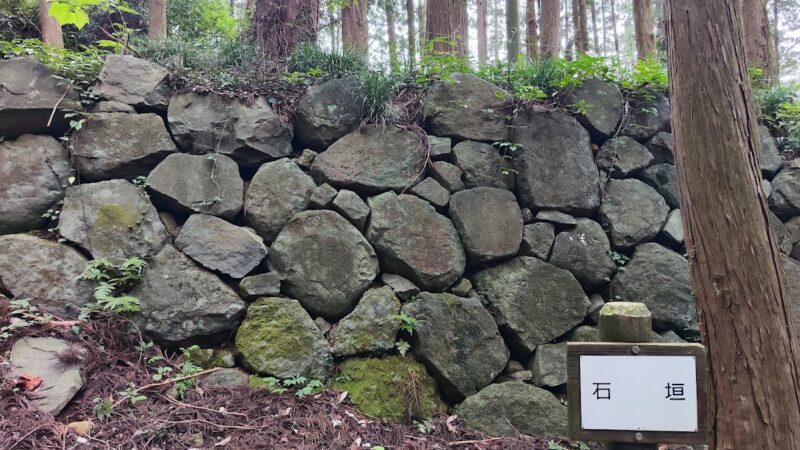
Takemoto Castle lacks a flashy keep or stone walls, but it is a valuable historical site that conveys the appearance of a medieval mountain castle built of earth and wood. In the quiet mountains, while gazing at the earthworks and trenches, one can reflect on the people of the Takemoto clan who once lived and fought here.
The Takemoto clan, a branch of the Utsunomiya clan, ruled northern Shimotsuke Province and later moved to Mikawa Province, giving rise to the ancestors of the Okubo clan, who became important retainers of the Tokugawa family. Visiting Takemoto Castle, their stronghold, offers a valuable opportunity to experience the history of a prominent local family that survived the tides of time.
For castle enthusiasts, those interested in Japanese history, and those who simply enjoy a quiet mountain walk, Takemoto Castle is a historical site well worth visiting. Why not immerse yourself in the romance of medieval history amidst the rich natural beauty of Nakagawa Town?
--765x450.png)

