Koyama Castle (Yoshida Town, Haibara District, Shizuoka Prefecture) Complete Guide | History and Highlights of Takeda Shingen’s Strategy for Conquering Tōtōmi Province
What is Koyama Castle?
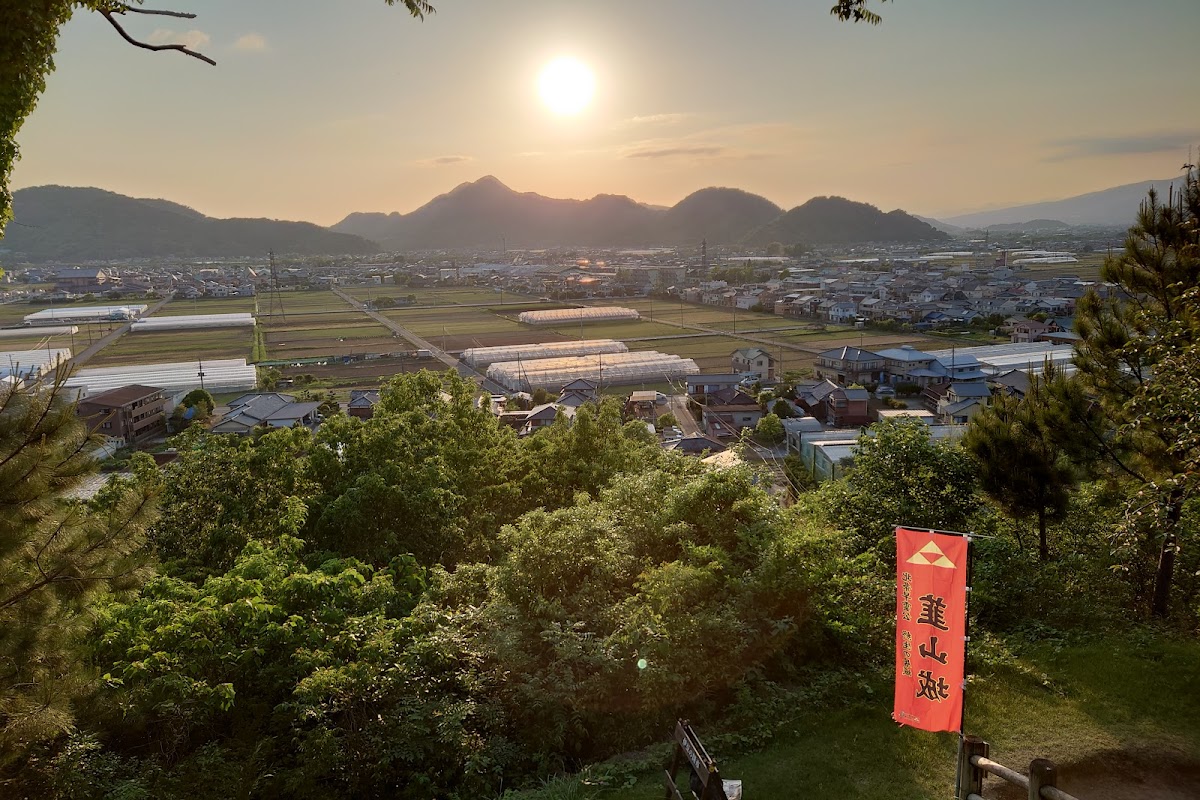
Koyama Castle (Koyama-jō) is a Sengoku period hilltop castle site located in Kataoka, Yoshida Town, Haibara District, Shizuoka Prefecture. The correct pronunciation is “Koyama-jō,” not “Oyama-jō.” Built on a hilltop approximately 30 meters above sea level along the Yuhi River near Mt. Fuji Shizuoka Airport, this castle served as a crucial base for Takeda Shingen’s conquest of Tōtōmi Province.
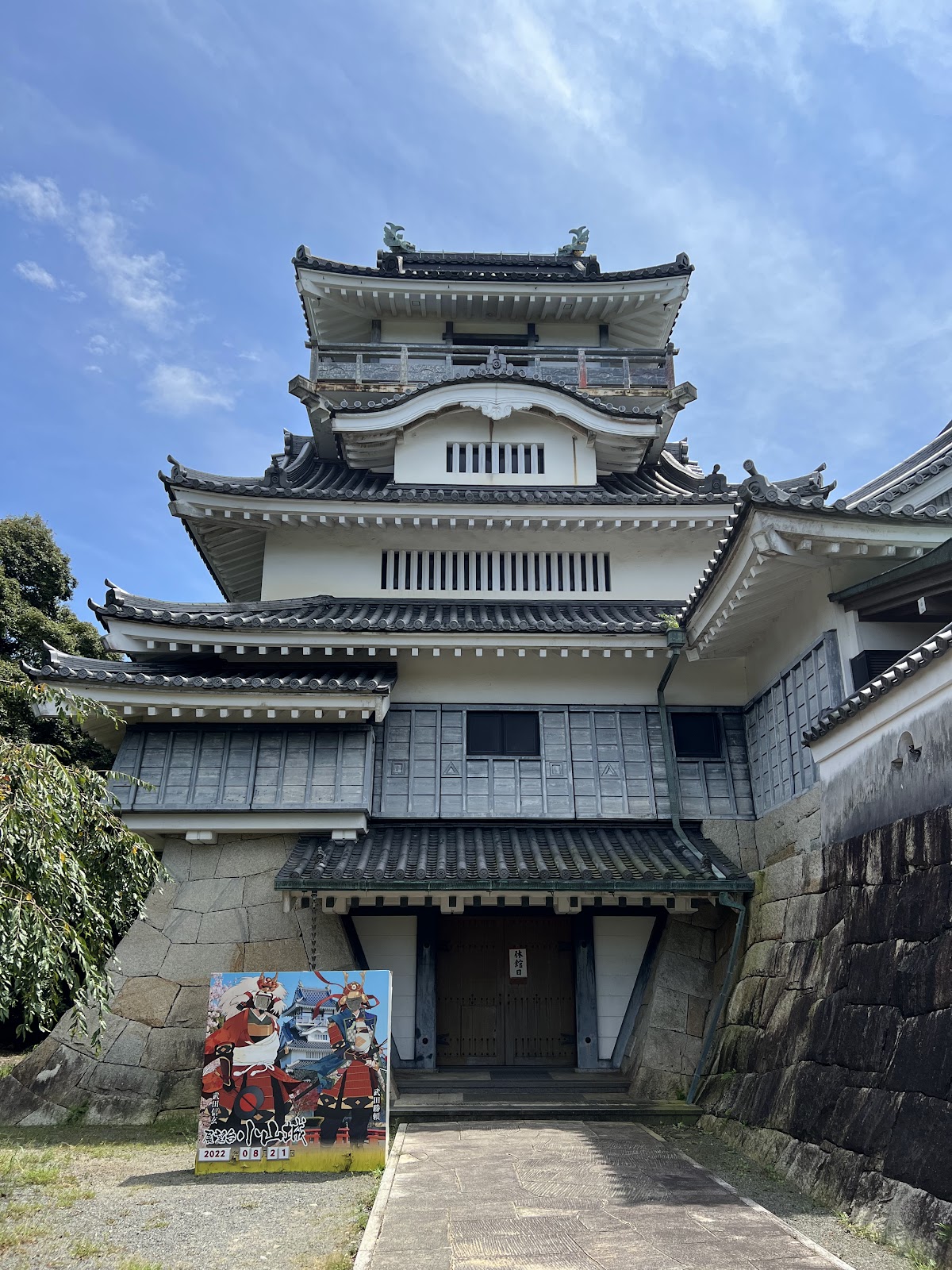
Currently, the site is maintained as Nōmanji-yama Park, and the replica keep, “Observation Deck Koyama Castle,” built in 1987, is a beloved symbol of Yoshida Town. The castle features restored circular outworks and crescent-shaped moats, characteristic of the Kōshū-ryū style of castle construction, making it a valuable historical site for learning about Sengoku period castle structures.
Basic Information about Koyama Castle
Location: 2519-1 Kataoka, Yoshida-cho, Haibara-gun, Shizuoka Prefecture
Castle Style: Concentric Hilltop Castle
Year of Construction: Genki 2 (1571)
Builder: Baba Nobuharu (Vassal of the Takeda Clan)
Main Lords: Okuma Tomohide (Nagahide), Sone Masayo, Yoda Nobuaki
Year of Abandonment: Tensho 10 (1582)
Designated Cultural Property: Yoshida Town Designated Historic Site
Remains: Enclosures, earthworks, moats (Reconstructed: Maru-umadashi, Mikazuki-bori)
Replica Building: Observation Deck Koyama Castle (Three-story, four-tiered keep, modeled after Inuyama Castle)
History of Koyama Castle
The Imagawa Clan Era and Yamazaki Fort
It is believed that a military facility called “Yamazaki Fort” originally existed on the site where Koyama Castle was built, established by the Imagawa clan. The Imagawa clan was a powerful daimyo family that ruled Suruga and Tōtōmi provinces during the Sengoku period, but their power rapidly declined after Imagawa Yoshimoto’s defeat by Oda Nobunaga at the Battle of Okehazama in 1560.
Construction by Takeda Shingen (1571)
In February 1571, Takeda Shingen of Kai Province led a large army of approximately 25,000 men to invade Tōtōmi Province. During this invasion, Shingen captured Yamazaki Fort, renamed it “Koyama Castle,” and remodeled it into a full-fledged castle serving as a frontline base for his control of Tōtōmi.
The castle was built by Baba Nobuharu, known as one of the Four Heavenly Kings of Takeda. Baba Nobuharu was a general in the Takeda army who excelled in castle construction techniques, and he built Oyama Castle by incorporating the finest of the Koshu-ryu style of castle building. The first lord of the castle was appointed Okuma Tomohide (Nagahide). Okuma Tomohide was originally a retainer of Nagao Kagetora (Uesugi Kenshin), but he surrendered to the Takeda clan.
Conflict with Tokugawa Ieyasu
Oyama Castle was located on the front lines bordering Tokugawa territory in Totomi Province, and was the site of fierce battles between the Takeda and Tokugawa Ieyasu. The Takeda clan used Oyama Castle as a base to continue their invasion of Totomi, threatening various Tokugawa castles.
In 1573 (Tensho 1), Sone Masayo became the lord of the castle, and later Yoda Nobushige served as lord. Yoda Nobushige was known as an excellent general among the Takeda retainers and dedicated himself to the defense of Oyama Castle.
The Fall of the Takeda Clan and the Loss of Oyama Castle (Tensho 10, 1582)
In March of Tensho 10 (1582), when Takeda Katsuyori was defeated in the Koshu campaign by the combined forces of Oda Nobunaga and Tokugawa Ieyasu, Oyama Castle became isolated. It is said that the Takeda defenders, realizing their defeat, set fire to the castle themselves and retreated to Koshu.
As a result, Oyama Castle was abandoned and never used as a castle again.
Modern Development
In September 1987 (Showa 62), Yoshida Town developed the Oyama Castle site into Nomanjiyama Park and constructed a replica castle tower, “Oyama Castle Observation Deck,” as a symbol of the town. This castle tower is modeled after Inuyama Castle in Aichi Prefecture and has a three-story, four-tiered structure.
At the same time, the circular barbican and crescent-shaped moat, characteristic features of the Koshu-ryu castle construction technique, have been restored based on historical records, making it a valuable educational facility that conveys the structure of a Sengoku period castle to the present day.
Structure of Koyama Castle
Layout and Enclosure Arrangement
Koyama Castle was designed as a multi-enclosure flatland castle, with a structure in which multiple enclosures (kuruma) are arranged in a continuous pattern on a hill about 30 meters above sea level. The main enclosure was at the center, with the second and third enclosures arranged in a stepped pattern, each separated by earthworks and moats.
The current replica keep is built on the site of the third enclosure, and the main enclosure is located at the back of the park.
Characteristics of the Koshu-ryu Castle Construction Technique
The most distinctive feature of Koyama Castle is the use of the Koshu-ryu castle construction technique, unique to the Takeda clan.
Circular Barbican (Maru-umadashi): A semicircular or circular enclosure built to defend the castle’s entrance. It served to prevent enemy intrusion and also functioned as a gathering point for sorties. At Koyama Castle, the circular barbican has been reconstructed based on historical records, allowing visitors to see its scale and structure firsthand.
Crescent-shaped Moat: This crescent-shaped moat surrounds the outside of the circular barbican. This is a particularly distinctive feature of the Koshu-ryu castle construction technique, and at Koyama Castle, an extremely rare triple crescent-shaped moat structure has been confirmed. This complex moat arrangement made it difficult for attackers to easily approach the castle.
Absence of Stone Walls
Koyama Castle uses very few stone walls. This is a common characteristic of Takeda clan castles, employing a defensive system centered on earthworks and moats. In eastern Japan during the Sengoku period, castles using stone walls were not yet common; construction using civil engineering techniques was the mainstream.
Current Koyama Castle (Nomanjiyama Park)
Koyama Castle Observation Deck
Currently, the Koyama Castle site is home to the “Koyama Castle Observation Deck,” built in 1987. This building is a three-story, four-tiered replica of the castle keep, modeled after Inuyama Castle, a national treasure in Inuyama City, Aichi Prefecture. While there is no evidence of a historical castle keep existing, it is a beloved landmark in Yoshida Town.
The interior of the keep has been renovated into a museum, featuring the following exhibits:
- 1st Floor: Exhibits of armor and weapons from the Takeda and Tokugawa clans
- 2nd Floor: Explanatory panels on the history of Koyama Castle and its construction techniques
- 3rd Floor: Materials related to warlords and battles of the Sengoku period
- 4th Floor (Observation Deck): An observation floor offering panoramic views of Suruga Bay, Mt. Fuji, and the Southern Alps.
On clear days, the observation deck offers magnificent views of Mt. Fuji and the beautiful Suruga Bay, making it a popular tourist spot. ### Restored Ruins
Within Nomanjiyama Park, there are restored circular barbicans and crescent-shaped moats based on historical records. A pathway is designed to access the castle keep via a red bridge (restored bridge). The contrast between this red bridge and the white-walled replica keep makes it a popular photo spot.
The restored moat is close to its original size in depth and width, making it a valuable place to experience the defensive system of the Koshu-ryu castle construction technique. Walking around the moat, you can imagine the siege battles of the Sengoku period.
Local History Museum
Adjacent to the Koyama Castle observation deck is the Yoshida Town Local History Museum. Here, materials related to the history and culture of Yoshida Town are displayed, allowing for a deeper understanding of the history of Koyama Castle. Nostalgic folk implements, farming tools, and everyday items from the Showa era are also on display, making it a place to learn about local history.
Transportation Access
Access by Car
Tomei Expressway: Approximately 3 minutes (approx. 1.5 km) from Yoshida Interchange
Parking: Free parking available at Nomanjiyama Park (approx. 50 regular cars)
Access by Public Transportation
JR Tokaido Main Line: Approximately 30 minutes from Fujieda Station on the Shizutetsu Justline “Special Needs School Line,” get off at the “Kataoka Kitayoshida Special Needs School” bus stop, then approximately 10 minutes on foot.
Shizuoka Railway: Shizutetsu Justline buses are also available from Shizuoka Station, but since the number of buses is limited, it is recommended to check the timetable in advance.
Access from Mt. Fuji Shizuoka Airport
Located approximately 15 minutes by car from Mt. Fuji Shizuoka Airport, it is easily accessible for tourists using the airport.
Visitor Information
Opening Hours: 9:00 AM – 4:30 PM
Closed Days: Mondays (or the following day if Monday is a public holiday), New Year’s holidays
Admission Fee:
- Adults: 200 yen
- Elementary and Junior High School Students: 100 yen
- Preschool Children: Free
Contact Information:
Yoshida Town Industrial Division
Address: 87 Sumiyoshi, Yoshida-cho, Haibara-gun, Shizuoka Prefecture
Phone: 0548-33-2122
Highlights of Koyama Castle
1. Triple Crescent Moat
The greatest highlight of Koyama Castle is its triple crescent moat, a rare sight nationwide. The triple moat surrounding the circular outwork is a complex defensive system that can be considered the pinnacle of Koshu-ryu castle construction techniques. You can observe its ingenious design while walking around the moat.
2. Restoration of the Maru-umadashi (Circular Barracks)
The Maru-umadashi, restored based on historical records, is a valuable historical structure that allows for a three-dimensional understanding of defensive facilities from the Sengoku period. Seeing it in person deepens your understanding of how the semi-circular enclosure functioned.
3. View from the Observation Deck
From the observation deck on the top floor of Koyama Castle, you can enjoy a 360-degree panoramic view. On a clear day, you can see Mount Fuji, the Southern Alps, and Suruga Bay. Imagining that Sengoku period warlords also gazed upon the same view from this spot evokes a sense of historical romance.
4. Exhibition of Armor and Weapons
Inside the castle keep, armor and weapons of the Takeda and Tokugawa clans are on display, allowing you to see the equipment of Sengoku period samurai up close. The armor bearing the Takeda family crest is a particularly unique exhibit, befitting a castle associated with the Takeda clan.
5. The Contrast Between the Red Bridge and the Castle Tower
The contrast between the red reconstructed bridge spanning the crescent-shaped moat and the white-walled replica castle tower is a representative landscape of Oyama Castle. Cherry blossoms in spring and autumn leaves add color, allowing visitors to enjoy the scenery throughout the seasons.
Nearby Tourist Attractions
Mt. Fuji Shizuoka Airport
Located about 15 minutes by car from Oyama Castle, this is Shizuoka Prefecture’s gateway to the sky. From the observation deck, you can see planes taking off and landing up close, and the terminal building has a wide variety of shops and restaurants selling Shizuoka Prefecture’s local products.
Oigawa Port
A fishing port facing Suruga Bay, where fresh seafood is landed. Whitebait and sakura shrimp are particularly famous, and you can enjoy freshly caught seafood dishes at restaurants near the port.
Sumiyoshi Shrine
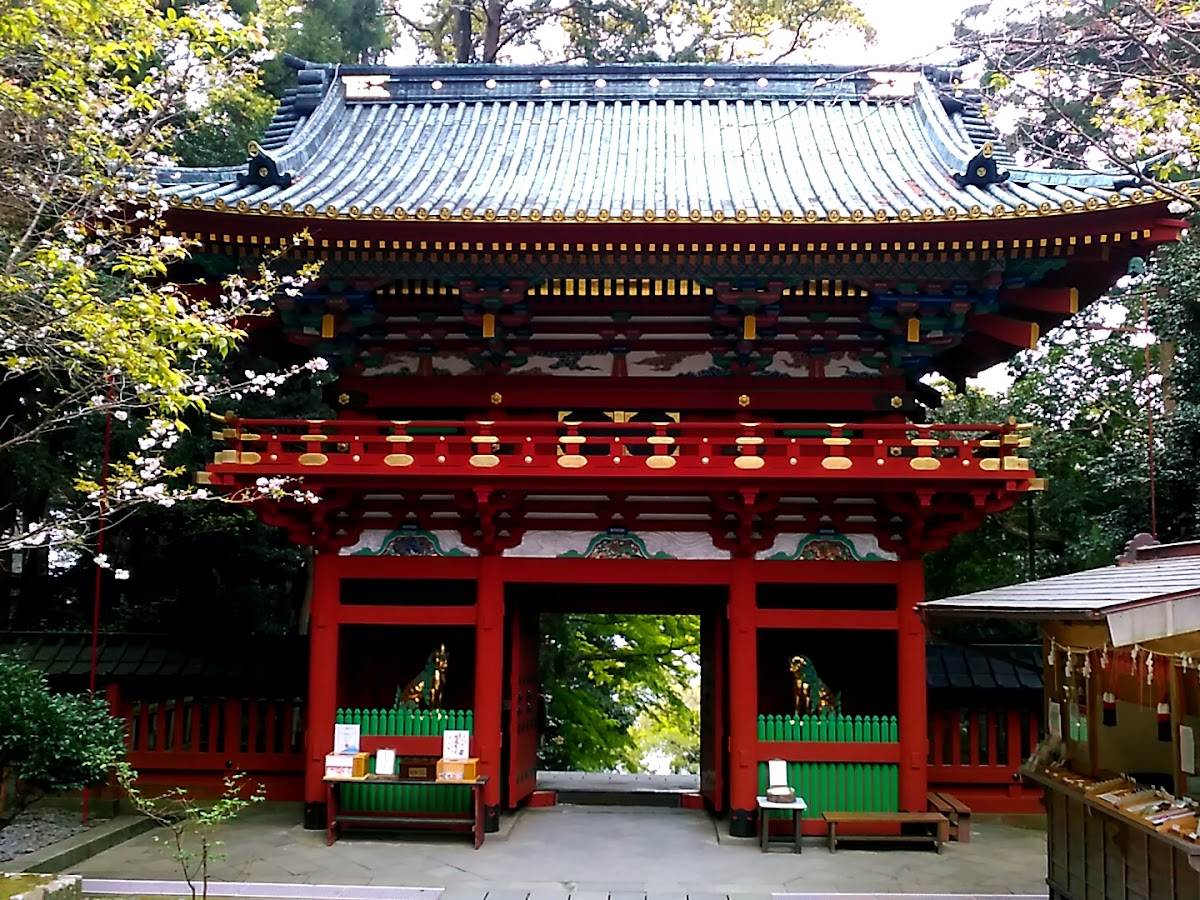
An ancient shrine located in the center of Yoshida Town, worshipped as the guardian deity of the region. The quiet grounds are suitable for a stroll and have a historical atmosphere.
Points to Note When Visiting Koyama Castle
Estimated Time Required
A visit including a tour of the Koyama Castle observation deck and a stroll through the reconstructed ruins should take approximately 1-2 hours. Those who wish to learn more about the history or enjoy photography should allow 2-3 hours.
Clothing and Items to Bring
While the park has paved walking paths, there are some steps and slopes around the moat. Comfortable walking shoes are recommended. In summer, the sun is strong, so bringing a hat and sunscreen is advisable.
Photo Spots
A popular photo spot is the angle that captures the red bridge and the castle tower together. The view of Mt. Fuji from the observation deck also offers excellent photo opportunities. Early morning and evening are particularly recommended times due to the beautiful lighting.
Event Information
Yoshida Town hosts various events throughout the year, and events sometimes take place at Koyama Castle. The area around Nomanjiyama Park is particularly lively during the autumn “Yoshida Town Industrial Festival.” Checking the event information on the Yoshida Town official website before your visit will allow you to enjoy a more fulfilling sightseeing experience.
Historical Significance of Koyama Castle
Koyama Castle is an essential fortress for understanding the power dynamics of the Tokai region during the Sengoku period, serving as a crucial base during Takeda Shingen’s invasion of Totomi Province. Located on the front lines between the two major powers, the Takeda and Tokugawa clans, this castle, the stage for their battles, still conveys the tension of the Sengoku period.
Furthermore, as a castle that strongly retains the characteristics of the Koshu-ryu style of castle construction, it holds an important position in castle research. In particular, the triple crescent-shaped moat is a valuable relic demonstrating the pinnacle of the Takeda clan’s castle construction technology, attracting attention from castle enthusiasts nationwide.
Currently, Nomanjiyama Park serves a multifaceted role not only as a place for historical learning but also as a place of relaxation for local residents and a tourist spot, and is cherished as a symbol of Yoshida Town.
Summary
Koyama Castle (Yoshida Town, Haibara District, Shizuoka Prefecture) is a flatland castle built as a base for Takeda Shingen’s conquest of Totomi Province. It is a castle that embodies the finest examples of Koshu-ryu castle construction techniques by Baba Nobuharu. It has a history as the site of fierce battles with Tokugawa Ieyasu, and is now maintained as Nomanjiyama Park, where visitors can see the Koyama Castle observation deck and the reconstructed circular barbican and crescent-shaped moat.
For those interested in the history of the Sengoku period, those who want to learn about castle architecture, or those who want to enjoy sightseeing in Shizuoka Prefecture, Koyama Castle will be an attractive destination. It is easily accessible from Mt. Fuji Shizuoka Airport, and visiting it along with other nearby tourist spots will make for a more fulfilling trip.
When you visit Yoshida Town, be sure to stop by Koyama Castle and enjoy the historical romance of the Sengoku period and the beautiful scenery of Suruga Bay.