Complete Guide to Iwami Castle | History and Highlights of the Mountain Castle that Protected the World Heritage Site, Iwami Silver Mine
What is Iwami Castle?
Iwami Castle is a Sengoku period mountain castle located in Omori-cho, Oda City, Shimane Prefecture. Built on the summit of Mt. Ryugan (153m above sea level), this castle is registered as a national historic site as a component of the World Heritage Site “Iwami Silver Mine Site and its Cultural Landscape.”
It functioned as a strategic point to monitor and defend the important road connecting Iwami Silver Mine and Nima on the Sea of Japan coast, and played a crucial role in the 16th-century struggle for control of Iwami Silver Mine. It is a natural stronghold utilizing rocky outcrops, characterized by its steep terrain with a relative height of approximately 130m.
The Iwami Silver Mine site includes four castle ruins: Yamabuki Castle, Iwami Castle, Yahazu Castle, and Yataki Castle. Iwami Castle, in particular, held a crucial position as a defensive stronghold on the north side of the silver mine.
History of Iwami Castle
The Battle for the Iwami Silver Mine in the Sengoku Period
The construction of Iwami Castle is rooted in the fierce battles for control of the Iwami Silver Mine in the 16th century. The Iwami Silver Mine is believed to have been discovered in 1526 (Daiei 6), and its enormous silver output attracted the attention of surrounding warlords.
Initially, the Iwami Silver Mine was under the control of local lords, the Ogasawara and Yunotsushi clans. However, the Ouchi, Amago, and Mori clans, vying for supremacy in the Chugoku region, successively sought control of the mine, leading to intense battles.
Construction and Transformation of the Castle
Iwami Castle is believed to have been built in the 1500s, probably around the mid-16th century. While detailed information regarding the exact construction date and builder is scarce due to a lack of historical records, the involvement of the Onsen clan has been suggested.
The castle was located at a strategic point on the road leading northwest from the silver mine to the Sea of Japan, and played a role in monitoring incursions from the Nima area. Its location on the summit of the rocky mountain, Ryugan-yama, made it an extremely difficult natural fortress for attackers.
In 1562 (Eiroku 5), when Mori Motonari seized control of the Iwami Silver Mine, it is believed that Iwami Castle and the surrounding castles came under the control of the Mori clan. The Mori clan prioritized the management of the Iwami Silver Mine and improved and strengthened the surrounding castles.
After the Edo Period
After the Battle of Sekigahara, the Iwami Silver Mine became a direct territory (tenryo) of the Tokugawa Shogunate. During the Edo period, it is believed that the castle lost its military function and was abandoned. However, the importance of the Iwami Silver Mine continued, and administrative and security systems were established for its management.
Structure and Layout of Iwami Castle
Location and Topography
Iwami Castle is located at the southeastern edge of the Nima Plain, built on the summit of Mt. Ryugan, which is 153m above sea level. The relative height from the foot of the mountain is approximately 130m, making it a mountain castle that makes maximum use of the steep, rocky terrain.
The castle’s location is approximately 5km north-northwest of the Iwami Silver Mine’s fortifications (the central part of the silver mine), and it was a strategic point overlooking the road connecting the silver mine to the Sea of Japan. The Nima Plain stretches out to the west, making it an ideal location for monitoring the road.
Castle Structure
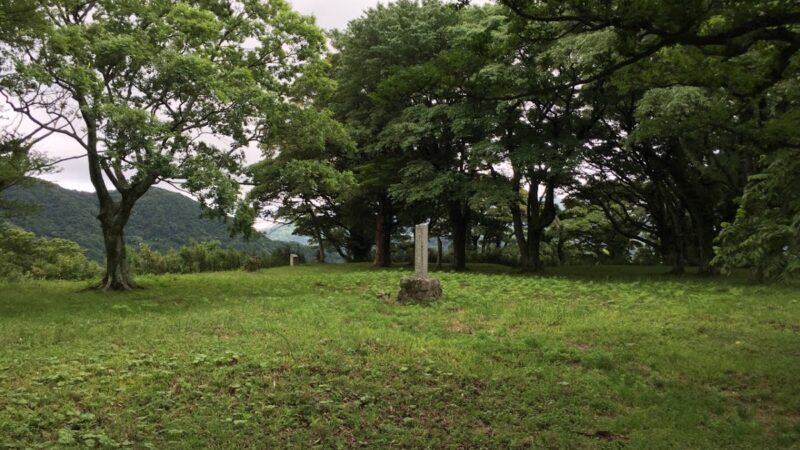
The remains of Iwami Castle are centered around the main enclosure (honmaru), which was created by leveling the top of the rocky mountain. The main enclosure is relatively small, and traces of the bedrock being cut to create a flat surface can be seen.
The following defensive structures have been identified at the castle:
Earthworks Traces of earthworks remain around the main enclosure, showing ingenuity to enhance defensive capabilities. However, it is presumed that the construction of large-scale earthworks would have been difficult due to the rocky terrain.
Enclosures It is thought that several small enclosures were arranged around the main enclosure, but currently, only a limited number of clearly identifiable remains can be confirmed.
Cut Slopes Traces of cut slopes, created by artificially carving the mountainside to make it steep, can be seen in various places, indicating ingenuity to prevent enemy intrusion.
Utilization of Bedrock The bedrock of Mt. Ryugan itself functions as a natural stone wall, and this can be considered the most important defensive structure of Iwami Castle.
Characteristics of the Castle Layout
Iwami Castle’s layout is a typical example of a practical mountain castle that makes maximum use of the natural terrain. Artificial structures are kept to a minimum, and the rocky terrain itself serves as the main defensive structure of the castle.
This type of structure is excellent in terms of ease of construction and maintenance in a short period of time, and can be considered a rational design for a practical castle during the Sengoku period. The steep slope with a relative height of 130m and the presence of bedrock allowed for effective defense even with a small number of defenders.
Highlights of Iwami Castle
Spectacular View from Mt. Ryugan
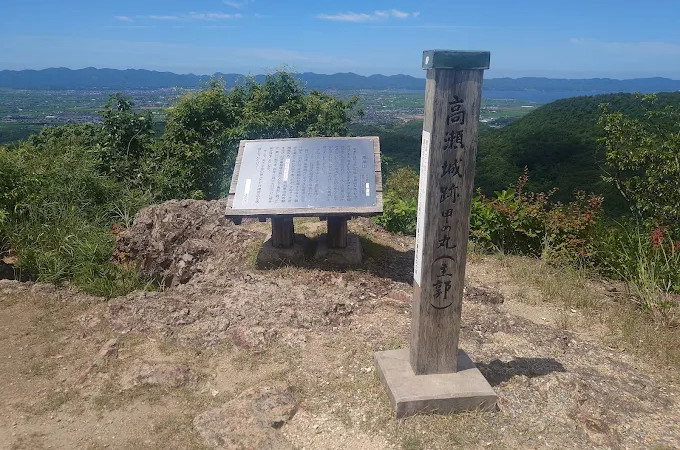
The greatest highlight of Iwami Castle is the view from the summit of Mt. Ryugan. On a clear day, you can see the Sea of Japan and the Niman Plain, as well as the mountains towards the Iwami Silver Mine. This view makes you truly understand why this castle was chosen as a base for monitoring the highway.
If you proceed from National Route 9 towards the Iwami Silver Mine on Prefectural Route 31, you will see the towering rocky mountain in front of you, and its impressive scenery will overwhelm visitors.
A Natural Fortress: A Castle on a Rocky Mountain
The bedrock of Mt. Ryugan itself is a highlight. The nearly vertical rock face speaks volumes about the difficulty of sieges during that era. Even today, climbing the castle requires considerable physical strength and caution, offering a tangible experience of a practical mountain castle from the Sengoku period.
As part of the Iwami Silver Mine Site
Iwami Castle is valuable not only as a standalone castle site but also as a component of the World Heritage Site “Iwami Silver Mine Site and its Cultural Landscape.” Along with other castles such as Yamabuki Castle, Yahazu Castle, and Yataki Castle, it played a vital role in the defense network protecting the silver mine.
Visiting these castles provides a comprehensive understanding of the military and economic aspects of the Sengoku period surrounding the Iwami Silver Mine.
Confirmation of Remains
Traces of earthworks and baileys remain at the castle site, making observation of these remains a pleasure for castle enthusiasts. However, some parts are difficult to recognize as clear remains due to vegetation and weathering, so studying a layout map beforehand will deepen your understanding.
Access to Iwami Castle
Access by Car
Nearest Interchange
- Approximately 15 minutes from the San’in Expressway “Oda Chuo/Iwami Ginzan IC”
- From National Route 9, turn onto Prefectural Road 31 (Iwami Ginzan Kaido) and proceed towards Iwami Ginzan.
Parking
There is no dedicated parking lot directly next to the castle ruins. It is common to use the parking lots around the Iwami Ginzan World Heritage Center and access the castle on foot from there.
Access by Public Transportation
Nearest Station
- JR San’in Main Line “Oda City Station”
- Approximately 30 minutes by bus from the station to the “Omori” bus stop
- From the bus stop, walk towards the castle ruins.
Public transportation is limited in the Iwami Ginzan area, so renting a car is recommended.
About Climbing the Castle
The climbing route to Iwami Castle is not fully maintained in some areas, and mountain climbing equipment and experience are necessary. Please note the following points.
- Clothing: Long-sleeved shirt, long pants, and trekking shoes recommended
- Equipment: Drinking water, map, insect repellent spray
- Season: Overgrown vegetation makes climbing difficult in summer. Autumn to spring is the best time.
- Time: Allow approximately 1 hour round trip for the climb.
- Safety: Avoid climbing alone; visiting in a group is recommended.
Nearby Tourist Attractions
Iwami Ginzan World Heritage Center
This is a comprehensive information center for the Iwami Ginzan Silver Mine site, featuring exhibits on the history and technology of the silver mine, as well as the castle complex including Iwami Castle. Visiting before visiting Iwami Castle will provide a deeper understanding.
Yamabuki Castle Ruins
One of the castles that make up the Iwami Ginzan Silver Mine site, it was a key castle closest to the center of the silver mine. Visiting it together with Iwami Castle will provide an understanding of the entire silver mine defense system.
Yahazu Castle Ruins and Yataki Castle Ruins
These are castles and fortifications that are also components of the Iwami Silver Mine ruins. Each was responsible for defense from different directions, allowing you to experience the network of castles and fortifications surrounding the Iwami Silver Mine.
Ryugenji Mine Shaft
This is a representative mine shaft ruin of the Iwami Silver Mine and is open to the public. Understanding the reality of the silver mine helps you understand why so many castles and fortifications were necessary.
Omori Townscape
The Omori district, which flourished as the center of the Iwami Silver Mine, retains samurai residences and merchant houses from the Edo period and has been designated as an Important Preservation District for Groups of Traditional Buildings.
Points to Note When Visiting Iwami Castle
Difficulty of Climbing
Iwami Castle is a full-fledged mountain castle, and climbing it requires appropriate physical strength and equipment. Unlike castle ruins that have been commercialized for tourism, the climbing routes and signposts may not be adequately maintained.
Seasons and Weather
- Spring (March-May): Sparse vegetation makes the ruins easy to see. Recommended season.
- Summer (June-August): Lush vegetation, many snakes and insects. Be careful of heatstroke.
- Autumn (September-November): Pleasant weather, enjoyable autumn foliage. Recommended season.
- Winter (December-February): Possibility of snow and ice. Check the weather before visiting.
The ground can be slippery and dangerous during and after rain. Choose a day with good weather for your visit.
Manners and Preservation
Iwami Castle Ruins are a nationally designated historic site and a component of a World Heritage Site. Please observe the following points.
- Do not damage the ruins.
- Always take your trash with you.
- Do not collect plants or capture animals.
- Use of fire is strictly prohibited.
- Do not trespass on private property.
Cultural Value of Iwami Castle
Component of a World Heritage Site
In 2007, the “Iwami Ginzan Silver Mine Site and its Cultural Landscape” was registered as a World Heritage Site. Iwami Castle is one of its components and is an internationally recognized cultural property.
Its value as a World Heritage Site lies not only in its value as a castle ruin, but also in its evaluation as part of a cultural landscape integrated with the operation of the silver mine. As a comprehensive group of ruins where the mine, castle, road, and settlement are integrated, it is a rare existence on a global scale.
National Historic Site
Iwami Castle ruins, along with Yamabuki Castle ruins, Yahazu Castle ruins, and Yataki Castle ruins, are designated as a national historic site as part of the “Iwami Ginzan Silver Mine Site.” Its historical and academic value is recognized as a mountain castle from the Sengoku period and as part of the defense system of the Iwami Silver Mine.
Materials for Mountain Castle Research
Iwami Castle holds an important position in castle research as a typical example of a practical mountain castle from the Sengoku period. Its features, such as its layout that maximizes the use of natural terrain and its minimal artificial structures, make it a valuable resource for understanding the castle-building techniques and tactics of the time.
Future Preservation and Utilization of Iwami Castle
Preservation Challenges
Iwami Castle ruins are located in the mountains, and preserving the remains is a challenge due to weathering and overgrown vegetation. Regular mowing and surveying are necessary, but due to budget and personnel constraints, sufficient preservation activities are not being carried out.
Potential for Utilization
As a component of a World Heritage site, Iwami Castle has high potential for tourism utilization. However, a careful utilization plan is necessary, based on the premise of preserving the remains and ensuring safety.
The following initiatives can be considered as future utilization measures:
- Improvement of safe access routes to the castle
- Enhancement of information boards and explanatory signs
- Implementation of guided tours
- Recreation of the castle’s appearance using VR and AR
- Establishment of sightseeing routes in cooperation with other castles
Collaboration with the local community
The understanding and cooperation of local residents are essential for the preservation and utilization of Iwami Castle. Community-based initiatives, such as preservation activities in collaboration with local history enthusiasts and castle fans, and its use in educational settings, are crucial.
Summary
Iwami Castle is an important mountain castle site that constitutes the Iwami Silver Mine Site, a World Heritage Site. Built on the natural fortification of Mt. Ryugan, it played a vital role in the 16th-century struggle for control of the Iwami Silver Mine.
Built on a rocky mountain with an elevation of 153m and a relative height of approximately 130m, the castle is a typical example of a practical mountain castle from the Sengoku period, making maximum use of the natural terrain. Traces of earthworks and baileys still remain today, allowing us to imagine its appearance in its heyday.
Visiting requires considerable preparation and physical stamina, but the views from the summit, the awe-inspiring rock formations, and its value as part of a World Heritage Site make it well worth the trip. When visiting Iwami Ginzan Silver Mine, be sure to also visit Iwami Castle to experience the appearance of a mountain castle that protected the mine.
By studying at the Iwami Ginzan World Heritage Center beforehand and visiting other castles such as Yamabuki Castle in conjunction with Iwami Ginzan, you can gain a more comprehensive understanding of the Sengoku period history surrounding Iwami Ginzan. Please enjoy the charm of Iwami Castle safely with appropriate equipment and preparation.