-.png)
Mikasa Castle (Unnan City, Shimane Prefecture) Complete Guide | History and Highlights of the Amago Ten Castles
What is Mikasa Castle?
Mikasa Castle is a Sengoku period mountain castle located in Minamimura, Daito-cho, Unnan City, Shimane Prefecture. Also known as Ushio Castle and Mikasayama Castle, it is known as an important branch castle of the Amago clan, who ruled the Izumo region.
Utilizing the steep terrain at an altitude of 302m and a relative height of approximately 180m, it is a formidable mountain castle and is counted as one of the “Amago Ten Castles” that supported the power of the Amago clan. The castle lords were the Ushio clan, senior retainers of the Amago clan, and it played an important role as a military stronghold for the Amago clan in Izumo Province.
Even today, remnants such as stone walls and baileys remain in the mountains, making it a valuable historical site that conveys the appearance of a Sengoku period mountain castle. As a cultural asset indispensable to the history of Unnan City, Shimane Prefecture, it attracts attention from local history enthusiasts and castle fans.
History of Mikasa Castle
The Ushio Clan and the Establishment of Mikasa Castle
Mikasa Castle was built as the residence of the Ushio clan, a senior retainer of the Amago clan, who ruled Izumo Province during the Sengoku period. The Ushio clan were powerful local lords serving the Amago clan and held an important position as a regional power controlling the area around Daito Town.
While there are no clear records of the castle’s construction date, it is believed to have been developed between the late 15th and early 16th centuries as the Amago clan expanded its power in Izumo Province. The Ushio clan used this castle as their base for generations, supporting the Amago clan’s military operations.
Role as one of the Amago Ten Flags
Mikasa Castle was one of the important branch castles of the Amago clan, known as the “Amago Ten Flags.” The Amago Ten Castles refer to the ten main branch castles strategically located to protect Gassan-Toda Castle (Yasugi City), the Amago clan’s base.
Mikasa Castle functioned as an important base for strengthening the defenses of southern Izumo Province and played a role in preparing for invasions from the Chugoku Mountains. The Ushio clan, as senior retainers of the Amago clan, played a crucial role not only militarily but also politically, and were particularly trusted vassals during the time of Amago Yoshihisa.
Battles in the Sengoku Period
In the mid-16th century, fierce conflicts raged between the Amago and Mori clans for hegemony in the Chugoku region. During the Eiroku era (1558-1570), the Mori clan intensified their invasion of Izumo Province, which was within the Amago clan’s sphere of influence.
In 1566 (Eiroku 9), the Mori clan besieged Gassan-Toda Castle and successively captured the other castles of the Amago Ten Castles. It is said that Mikasa Castle was also attacked by the Mori army, and a fierce battle ensued.
The castle lord, Ushio Yukikiyo, and his successor, Ushio Hisanobu, resisted the Mori army’s attacks by utilizing the rugged terrain. However, after Gassan Tomita Castle fell, Mikasa Castle also eventually fell into the hands of the Mori clan.
The Amago Restoration Campaign and the Aftermath of the Castle
After the fall of the Amago clan, a movement to restore the Amago clan was launched by Amago Katsuhisa and Yamanaka Shikanosuke. During this process, there were attempts to temporarily recapture former Amago castles within Izumo Province, but historical records regarding Mikasa Castle’s specific involvement are limited.
After the Mori clan unified the Chugoku region, Mikasa Castle lost its strategic importance and is believed to have eventually been abandoned. In the Edo period, this region came under the control of the Matsue Domain, and Mikasa Castle faded into history.
Structure and Layout of Mikasa Castle
Layout Utilizing the Topography
Mikasa Castle is a typical medieval mountain castle built on the summit of Mt. Mikasa, at an altitude of 302m. Its layout is characterized by its maximum utilization of the steep terrain, with a relative height of approximately 180m, making it a formidable stronghold difficult for attackers to ascend.
The main enclosure (honmaru) is located at the summit, surrounded by multiple enclosures arranged in a stepped fashion. Each enclosure is demarcated by steep slopes and trenches, demonstrating ingenuity in enhancing defensive capabilities.
Stone Walls and Remains
One of the highlights of Mikasa Castle is its stone walls that still remain today. The stone walls are relatively well-preserved for a mountain castle from the Sengoku period, making them valuable resources for understanding the castle-building techniques of the time.
The stone walls were built using a technique called nozurazumi, characterized by their simple construction using natural stones piled up as they are. Stone walls can be seen around the main enclosure and near the entrance (koguchi), indicating their strategic placement to protect important parts of the castle.
Other remains include flat areas of the enclosures, traces of earthworks, and trenches. Although many areas are covered with trees, careful observation reveals the structure of a Sengoku period mountain castle.
Ascent Routes and Defensive Structures
It is believed that multiple ascent routes from the foot of the mountain to the summit were established, utilizing ridges and valleys. Current hiking trails may also utilize parts of these former ascent routes.
Along the ascent routes, trenches and vertical moats were constructed to prevent enemy intrusion. These can still be seen today as changes in the terrain, demonstrating the defensive characteristics of a mountain castle.
Highlights of Mikasa Castle
View from the Main Enclosure (Honmaru)
The greatest attraction of Mikasa Castle is the 360-degree panoramic view from the main enclosure. From the 302m-high summit, you can enjoy panoramic views of Unnan City, the surrounding mountains, and even the Izumo Plain.
On clear days, you can even see the distant Chugoku Mountains, giving you a real sense of the important role this castle played in monitoring the surrounding area during the Sengoku period. The scenery is especially beautiful during the spring when the new leaves appear and in the autumn when the leaves change color.
Observing the Stone Walls
As mentioned above, Mikasa Castle retains stone walls from the Sengoku period. Unlike the intricate cut-and-fit stonework seen in later castles, these walls are characterized by a simple construction method that utilizes the natural shapes of the stones.
The height of the stone walls varies depending on the location, but the highest points are about 2-3m. While some sections have collapsed over the long years, it’s a valuable opportunity to observe the castle-building techniques and stonemasonry skills of the time up close.
Layout of Enclosures and Defensive Structures
The structure, with multiple enclosures arranged in a stepped pattern around the main enclosure at the mountaintop, is typical of medieval mountain castles. Steep slopes called “kirigishi” (cut cliffs) are provided between each enclosure, making enemy intrusion difficult.
Walking along the flat areas of the enclosures, imagining the buildings that once stood here and the daily lives of samurai is one of the pleasures of exploring castle ruins.
Moats and Vertical Moats
Moats, constructed to cut across the ridgeline, are important defensive structures that blocked enemy intrusion routes. Multiple moats can be found at Mikasa Castle, and their scale demonstrates the importance placed on the castle’s defense.
Vertical moats, dug along the slopes, also serve both rainwater drainage and defensive functions. Observing these remains allows one to appreciate the high level of castle-building technology during the Sengoku period.
Access Information
Location
Address: Minamimura, Daito-cho, Unnan City, Shimane Prefecture (Mikasayama)
Mikasa Castle is located on the summit of Mikasayama, southeast of the town center of Daito-cho, Unnan City.
Access by Car
Nearest Interchange: Approximately 15 minutes from the Matsue Expressway “Mitoya-Kitsugi IC”
- Exit the Mitoya-Kitsugi IC and head south on National Route 54
- Proceed towards the town center of Daito-cho and follow the signs to the castle entrance.
Parking: There are a few parking spaces near the castle entrance, but there is no proper parking lot. You will need to park in a wide area on the shoulder of the road, so please be careful not to obstruct the passage of other vehicles.
Access by Public Transportation
Nearest Station: Approximately 3km from JR Kitsugi Line “Izumo-Daito Station”
It takes about 40-50 minutes on foot from Izumo-Daito Station. If you take a taxi from the station, it will take about 10 minutes. However, since the number of taxis in Daito-cho is limited, it is recommended to make a reservation in advance.
Local Bus: Unnan City Bus operates, but the number of buses is limited, so it is important to check the timetable in advance.
About Visiting the Castle
From the Entrance to the Main Enclosure: Approximately 30-40 minutes on foot (this varies from person to person)
The path to the castle is a mountain trail and includes steep slopes. The following equipment and preparations are recommended:
- Trekking shoes or non-slip shoes
- Comfortable clothing
- Drinking water
- Towel
- Insect repellent spray (spring to autumn)
- Bear bell (for wildlife protection)
Precautions:
- Some parts of the climbing path are not well-maintained, so be careful of fallen trees and rocks.
- The ground can be slippery during and after rain.
- Avoid climbing alone; visiting with multiple people is recommended.
- Cell phone reception may be poor in some areas.
Visiting Hours and Fees
Free Admission: No entrance fee is required.
Visiting Hours: Visiting during daylight hours is recommended (approximately 9:00 AM to 4:00 PM).
During winter, sunset is early, so plan your visit with ample time.
Nearby Tourist Attractions
Fubeyama Mountain
Located north of Mikasa Castle, Fubeyama Mountain is also known as a historical site related to the Amago clan. The site of Fubeyama Castle is located here, and visiting it along with Mikasa Castle allows you to understand the castle network within the Amago clan’s sphere of influence.
Historical and Cultural Facilities in Unnan City
Kamo-Iwakura Ruins: A Yayoi period site where the largest number of bronze bells (dotaku) in Japan were unearthed, making it an important spot for understanding the history of ancient Izumo.
Iron History Museum: A facility where you can learn about “tatara ironmaking,” an ancient Japanese iron-making technique. You can learn about the industrial history of the Izumo region.
Suga Shrine: An ancient shrine considered to be the first shrine in Japan, and the setting for the myths surrounding Susanoo-no-Mikoto and Kushinada-hime.
Hot Spring Facilities
Kaishio Onsen: A hot spring resort located about 20 minutes by car from Mikasa Castle. Perfect for relaxing after visiting the castle.
Hiikawa Onsen: A hot spring located in Kisa Town, popular with locals.
Details of Mikasa Castle and the Ushio Clan
Ushio Yukikiyo
Ushio Yukikiyo was the head of the Ushio clan, who was active in the mid-Sengoku period, and a senior retainer of Amago Yoshihisa. As the lord of Mikasa Castle, one of the Amago’s ten castles, he was responsible for the defense of southern Izumo Province.
Yukikiyo was known as a warrior of exceptional bravery and actively participated in the Amago clan’s military actions. During the battles against the Mori clan, he continued to resist from Mikasa Castle, but as the Amago clan’s disadvantage became clear, he found himself in a difficult situation.
Ushio Hisanobu
Ushio Hisanobu was Yukikiyo’s son and succeeded his father as lord of Mikasa Castle. He served as lord of the castle during the final battle between the Amago and Mori clans, and strengthened the defenses of Mikasa Castle while Gassan-Toda Castle was under siege.
There are no clear records of what fate befell the Ushio clan after the fall of Gassan-Toda Castle in 1566. Some theories suggest they surrendered to the Mori clan and survived, while others say they perished along with the Amago clan.
About the Amago Ten Castles
The Amago Ten Castles refer to the major group of branch castles that constituted the Amago clan’s defense network centered around Gassan-Toda Castle. Specifically, the following castles are believed to be included:
- Mikasa Castle (Ushio Castle) – Ushio clan
- Mitoya Castle – Mitoya clan
- Shiraka Castle – Tachihara clan
- Mayama Castle – Mayama clan
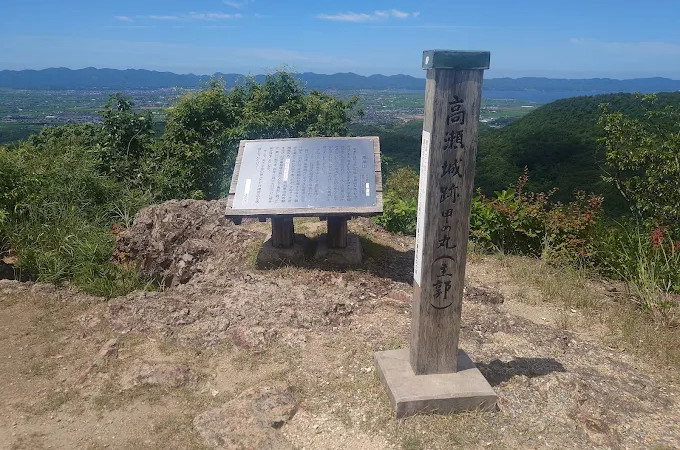
- Takase Castle – Takase clan
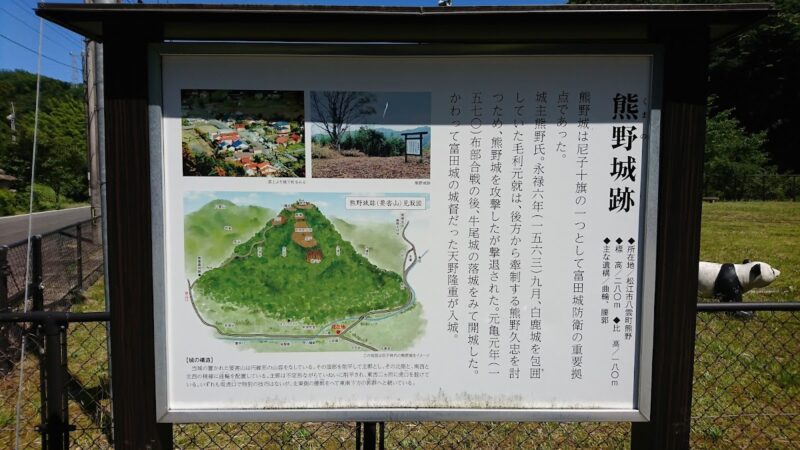
- Kumano Castle – Kumano clan
- Akana Castle – Akana clan
- Takao Castle – Yonehara clan
- Hirose Castle – Yamanaka clan
- Takaseyama Castle – Ushio clan
(There are various theories, and the castles included may differ depending on the document.)
These castles were strategically located around Gassan Tomita Castle, serving as key strongholds to prepare for invasions from various parts of Izumo Province. Mikasa Castle, in particular, was an important base for strengthening the southern defenses.
Best season to visit Mikasa Castle
Spring (March-May)
A beautiful season of fresh greenery, ideal for exploring mountain castles. However, insects begin to increase from late April to May, so insect repellent is necessary. The temperature is mild, and the climb to the castle is less physically demanding.
Autumn (October-November)
The autumn foliage is beautiful, making this the most popular season. The temperature is cool and comfortable, and the view from the mountaintop is magnificent due to the clear air. However, be careful as fallen leaves can make the ground slippery.
Summer (June-September)
The high temperatures and abundance of insects make this a challenging season for exploring mountain castles. If visiting in summer, choose the cool early morning hours, and be sure to stay well-hydrated and take insect repellent measures.
Winter (December-February)
Climbing the castle becomes difficult if there is snow. However, on a clear, snow-free day, you can enjoy a superb view with clear air and panoramic vistas. Be sure to dress warmly and plan your trip carefully, paying attention to sunset times.
Historical Background of Mikasa Castle and Unnan City
The Sengoku Period in Izumo Province
Izumo Province developed its own unique cultural sphere from ancient to medieval times. During the Sengoku period, the Amago clan rose to power, establishing Gassan-Toda Castle as their base and growing into one of the leading daimyo in the Chugoku region.
At its peak, the Amago clan expanded its influence to 11 provinces, including Izumo, Hoki, Oki, Iwami, Bizen, Bitchu, and Mimasaka, reigning as the “ruler of San’in.” However, conflicts with Mori Motonari, who rose to power from Aki Province (present-day Hiroshima Prefecture), gradually led to a decline in their strength.
Conflict between the Amago and Mori Clans
In the mid-16th century, a fierce power struggle unfolded between the Amago and Mori clans in the Chugoku region. Initially, the Amago clan held the advantage, but Mori Motonari’s skillful strategies reversed the situation.
During the Eiroku era, the Mori clan began their full-scale invasion of Izumo Province. The Amago clan’s ten castles were captured one after another, and finally, in November of Eiroku 9 (1566), Gassan-Toda Castle fell, and Amago Yoshihisa surrendered. This marked the end of the Amago clan as a Sengoku daimyo.
Medieval History of the Unnan City Area
In the medieval period, the area that is now Unnan City was divided among several local lords. Besides the Ushio clan, there were other powerful local lords such as the Mitoya and Akana clans who were loyal to the Amago clan, and they controlled the region from their respective castles.
These local lords participated in military actions as vassals of the Amago clan, while also managing their own territories. Mikasa Castle played an important role as a base for such medieval regional control.
Preservation and Research of Mikasa Castle
Designation as a Cultural Property
Mikasa Castle ruins are recognized as a cultural property of Unnan City and are protected as an important historical heritage site of the region. However, full-scale archaeological excavations have been limited, and many aspects remain unexplained.
Future Challenges
Due to its nature as a mountain castle, harmony with the natural environment is crucial for the preservation of the remains. There is a risk of stone walls collapsing due to tree growth, requiring proper management.
Furthermore, creating an environment where visitors can safely learn about history, such as improving the access routes and installing information boards, is a future challenge. Preservation activities by local residents and history enthusiasts will be key to protecting the future of Mikasa Castle.
Precautions When Visiting Mikasa Castle
Safety Precautions
- Avoid Solo Activities: Mountain castles are located in remote areas, making it difficult to seek help in the event of an accident.
- Check the Weather: The ground becomes extremely slippery during and after rain.
- Time Management: Plan your trip with ample time to descend before sunset.
- Wildlife: Be aware of wild boars and snakes, and carrying a bear bell is recommended.
- Mobile Phone: Be prepared for areas with poor cell phone reception.
Manners and Rules
- Take Your Trash Home: To protect the natural environment, always take your trash home.
- Do Not Damage the Remains: Be careful not to touch the remains such as stone walls.
- No Plant Collection: Refrain from collecting wild plants and other plants.
- No Open Fires: To prevent forest fires, the use of open fires is strictly prohibited.
- Consideration for Private Property: There is private land around the entrance to the castle. Please be considerate of local residents.
Summary
Mikasa Castle is a Sengoku period mountain castle remaining in Unnan City, Shimane Prefecture, and is a historical heritage site that played an important role as one of the Ten Banners of the Amago clan. As the residence of the Ushio clan, it was responsible for the defense of southern Izumo Province and was the stage for the conflict between the Amago and Mori clans.
The castle’s appeal lies in its solid layout utilizing the steep terrain at an altitude of 302m and a relative height of 180m, the remaining stone walls and baileys, and the magnificent view from the mountaintop. A walk through this mountain castle, surrounded by nature while reflecting on the history of the Sengoku period, will be an invaluable experience for history buffs.
Access may be somewhat difficult, but the sense of accomplishment and historical romance that only those who visit can experience is invaluable. When you visit Unnan City, be sure to visit the Mikasa Castle ruins and experience the history of Izumo during the Sengoku period.
Enjoy your historical exploration of Mikasa Castle, with appropriate equipment, planning, and safety precautions in mind.
--680x450.png)