Complete Guide to Fugenjo Castle (Mono-iwazu-jo) | History, Highlights, and Access Information for a Mountain Castle in Oda City, Shimane Prefecture
What is Fugenjo Castle?
Fugenjo Castle (Mono-iwazu-jo) is a mountain castle ruin from the Sengoku period located in Omori-cho, Oda City, Shimane Prefecture. Also known as “Mono-iwazu-jo” and “Fukumitsu-jo,” it holds a significant place in history as an important military base in Iwami Province.
Built on a mountaintop approximately 350 meters above sea level, this castle is known as the residence of Kikkawa Tsuneaki, a vassal of Mori Motonari and head of the Iwami Kikkawa clan. Currently, the remaining ruins of this mountain castle attract attention from castle enthusiasts and history buffs.
Origin of the Name Fugenjo Castle
There are several theories regarding the unusual name “Fugenjo” (meaning “silent castle”). The most plausible theory is that it originated from the fact that careless conversations within the castle were discouraged in order to protect military secrets. As a name that conveys the tension of the Sengoku period, it stimulates the imagination of visitors. The notation “Mono Fugen” (物不言) carries a similar meaning, indicating its strategic importance as a key location. The alternative name “Fukumitsu Castle” is thought to originate from the former name of the region, Fukumitsu Village.
History of Fugen Castle
Construction and Kikkawa Tsuneyasu
Fugen Castle is estimated to have been built in the mid-16th century, during the turbulent Sengoku period. The builder was Kikkawa Tsuneyasu, the head of the Iwami Kikkawa clan, a powerful vassal who served Mori Motonari.
Kikkawa Tsuneyasu played a crucial role in the Mori clan’s expansion of power in Iwami Province. The Omori-Ginzan region, home to the Iwami Silver Mine, was economically and strategically extremely important, and Fugen Castle functioned as a fortress protecting this area.
Iwami Kikkawa Clan and Mori Clan
The Iwami Kikkawa clan was a separate lineage from the Aki Kikkawa clan (known for Kikkawa Motoharu) and was a local lord with power in Iwami Province. During the rise of Mori Motonari as the ruler of the Chugoku region, the Iwami Kikkawa clan came under the Mori’s control and acted as their representative in Iwami Province.
Kikkawa Tsuneaki enjoyed Mori Motonari’s deep trust and was entrusted with the control of the Iwami Silver Mine and the administration of the surrounding areas. Fugen Castle served as a base for this, playing a crucial role both militarily and administratively.
Battles in the Sengoku Period
Iwami Province was a region fiercely contested during the Sengoku period by the Amago clan of Izumo and the Mori clan of Aki. The Iwami Silver Mine, in particular, was a source of immense wealth, and both forces vied for control of it.
Fugen Castle is believed to have played a vital role in the battles against the Amago clan as an important base protecting the Omori-Silver Mine area. Its sturdy structure built on a mountaintop was designed to defend against enemy attacks, reflecting the tense situation at the time.
Abandonment of Castles and Their Aftermath
In the Edo period, many mountain castles were abandoned due to policies such as the “One Castle Per Province” decree. It is also presumed that Fugenjo Castle was abandoned after its military role ended.
Currently, only the remains of the castle exist, but its historical value is being re-recognized as part of the Iwami Ginzan Silver Mine Site. Although it is not a component of the World Heritage Site “Iwami Ginzan Silver Mine Site and its Cultural Landscape,” it holds an important position as one of the castles that protected the silver mine.
Structure and Highlights of Fugenjo Castle
Layout and Castle Structure
Fugenjo Castle has the structure of a typical medieval mountain castle. It has a linear layout with multiple baileys (kuruwa) arranged around the main bailey (honmaru).
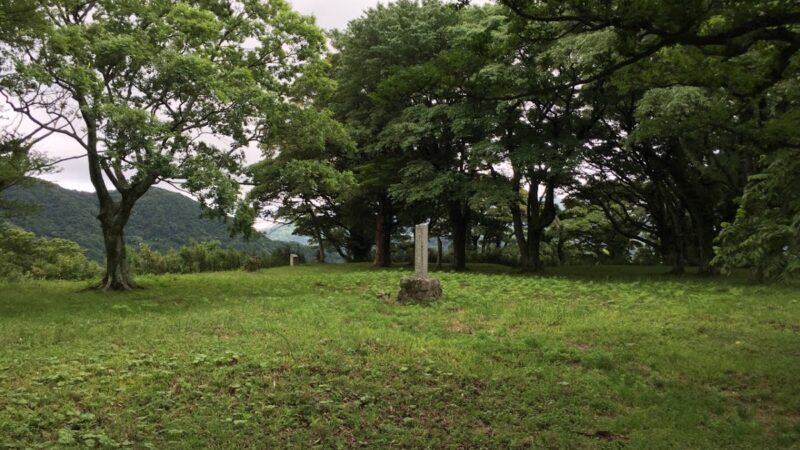
The main bailey at the mountaintop is approximately 30 meters east-west and 20 meters north-south, and is presumed to have housed the lord’s residence and command post. Traces of earthworks can be seen around the main bailey, indicating that it enhanced defensive capabilities.
Baileys and Defensive Facilities
Multiple baileys are arranged in a stepped pattern around the main bailey. These are thought to have been used as garrisons for soldiers and storage areas for supplies. A notable defensive feature of the castle is the artificial steep slope known as a “kirigishi” (cut cliff). While utilizing the natural terrain, the slope was excavated to create a steep incline, making enemy intrusion difficult. This technique is a common feature of mountain castles from the Sengoku period.
Moats and Vertical Moats
Moats, an important defensive feature of mountain castles, are constructed by cutting across the ridge. Moats served to block enemy intrusion routes and clearly define the defensive line.
Vertical moats dug along the slope can also be observed. These moats prevented enemies from climbing the slope and also served to efficiently drain rainwater.
Stone Walls and Earthworks
While no full-scale stone walls have been confirmed at Fugenjo Castle, traces of partially constructed stone walls can be seen. This demonstrates a characteristic of castle construction techniques in the Iwami region during the Sengoku period.
Earthen ramparts were built around the main enclosure and important baileys, and their elevation can still be seen today. The height of the ramparts varies depending on the location, but the highest remaining section is approximately 1.5 meters.
Ascent Path and Entrance
The current ascent path was constructed in later periods, but it allows us to estimate the location of the original entrance (koguchi). Since the entrance was a weak point in defense, it was designed with complex structures to make enemy intrusion difficult.
Fugenjo Castle Visiting Guide
Estimated Visiting Time
Visiting Fugenjo Castle requires approximately 20 to 30 minutes one way from the entrance to the main enclosure at the mountaintop, and about 40 minutes to 1 hour round trip. If you want to carefully observe the remains, it’s a good idea to allow an additional 30 minutes.
Overall, 1 to 1.5 hours should be sufficient for a leisurely visit. Including time for photography and breaks, 2 hours is ideal.
Difficulty and Precautions for Visiting the Castle
The path to Fugenjo Castle is a mountain trail, requiring a certain level of physical fitness. It is recommended to wear appropriate hiking boots and clothing. Particular caution is needed during and after rain, as the ground can be slippery.
The area near the summit is densely wooded, and insect repellent is important during the summer months. Also, cell phone reception is poor in some areas, so it is recommended to visit in a group rather than alone.
Best Time to Visit
The best time to visit Fugenjo Castle is spring (April to May) and autumn (October to November). The weather is mild during these times, and the climb is relatively easy. Autumn, in particular, offers beautiful autumn foliage, allowing visitors to enjoy the scenery while sightseeing.
During summer (June to August), the heat and insects are numerous, so early morning visits are recommended. During winter (December to March), there is a possibility of snow and ice, so be sure to check weather conditions before visiting.
Photography Spot
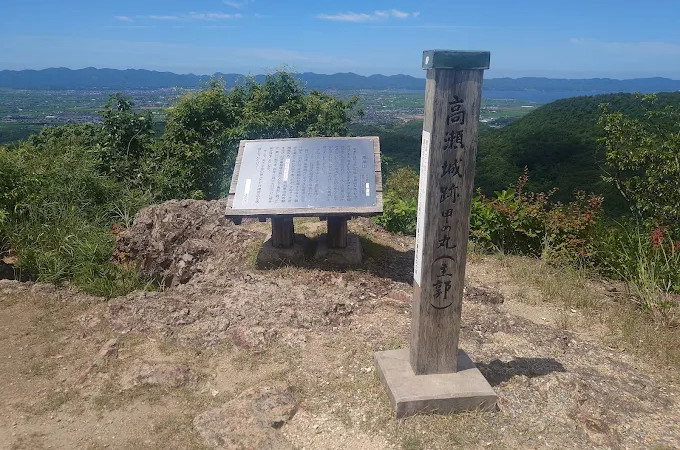
The view from the main enclosure is spectacular, offering a panoramic view of the town of Omori and the surrounding mountains. On clear days, you can even see the Sea of Japan, making it an ideal photography spot.
When photographing the ruins, it’s best to find an angle that clearly shows the layout of the moats, earthworks, and enclosures. The time of day when the light shines at an angle, especially in the morning, is particularly good, as the undulations of the terrain are emphasized by the shadows, making the ruins easier to photograph.
Access Information
Location
Fugenjo Castle is located in Omori-cho, Oda City, Shimane Prefecture. It is close to the Iwami Ginzan Silver Mine Site, a World Heritage Site, and is situated in the mountains away from the town of Omori.
There is no precise address, but aim for Omori-cho, Oda City, and use local signs and maps to find the entrance to the castle.
Access by Car
Access from the San’in Expressway
- Approximately 45 minutes from Izumo IC via National Route 9
- Approximately 20 minutes from Oda Chuo/Sanbe-san IC via Prefectural Road 31
Access from Hiroshima
- Approximately 2 hours and 30 minutes from Hiroshima city via National Route 54 and National Route 9
If visiting in combination with sightseeing at the Iwami Ginzan World Heritage Center or the townscape of Omori, you will use the parking lot in the Omori area. However, there is no dedicated parking lot for the castle ruins, so you will need to park your car in a nearby tourist parking lot and access the castle on foot.
Access by Public Transportation
If using JR
- Get off at JR San’in Main Line “Oda-shi Station”
- Approximately 30 minutes by Iwami Kotsu bus bound for “Omori” from Oda-shi Station
- Get off at the “Omori” bus stop and walk to the castle entrance
Since the number of buses is limited, it is recommended to check the timetable in advance. Especially on holidays and outside of the tourist season, there are fewer buses running, so careful planning is necessary. ### Access to the Castle Entrance
Access to the castle entrance from the town of Omori is on foot. The most common route is through the preserved town area and towards the mountain. While there may be signs at the entrance, if you have difficulty finding it, we recommend seeking information from the local tourist information center or the Iwami Ginzan World Heritage Center.
Parking Information
There are several parking lots in the Iwami Ginzan area.
Iwami Ginzan World Heritage Center Parking
- Regular cars: 400 yen
- Large buses: 1,000 yen
- Opening hours: 8:30~17:30
Omori Area Parking
- Multiple parking lots scattered throughout the area
- Fees vary depending on the location (free to approximately 500 yen)
During peak tourist seasons and weekends, parking lots can be crowded, so early arrival is recommended. Also, the roads in the Omori area are narrow, so please drive carefully.
Nearby Tourist Attractions
Iwami Ginzan Silver Mine Site
The Iwami Ginzan Silver Mine Site is the closest World Heritage Site to Fugenjo Castle. It was registered as a World Cultural Heritage Site in 2007 as “Iwami Ginzan Silver Mine Site and its Cultural Landscape.”
Ryugenji Mabu is a mine shaft open to the public, allowing visitors to see the mining process from the Edo period up close. The cool mine shaft remains refreshing even in summer, offering a place to truly feel history.
Omori Townscape
The Omori district, which flourished as a mining town for the Iwami Ginzan Silver Mine, is home to an Important Preservation District for Groups of Traditional Buildings, where townhouses from the Edo and Meiji periods stand side by side.
Samurai residences, merchant houses, temples, and shrines retain their original appearance, creating an atmosphere that feels like stepping back in time. Cafes and general stores housed in renovated old houses are scattered throughout, making for an enjoyable stroll.
Iwami Ginzan World Heritage Center
This facility allows visitors to learn about the history and culture of the Iwami Ginzan Silver Mine. The exhibits are comprehensive, offering detailed information on silver refining techniques, mining operations, and the lives of those who worked in the silver mine.
Visiting this museum before visiting Fugenjo Castle will deepen your understanding of the castle’s historical background.
Kumagai Family Residence
This is a representative merchant house in Omori, designated as a National Important Cultural Property. You can learn about the lifestyle of merchants who prospered in the Iwami Silver Mine.
The interior of the building is open to the public, and furnishings and business tools from that time are on display. The architectural style is magnificent, making it especially recommended for those interested in Japanese architecture.
Rakanji Temple’s Five Hundred Arhats
There are 500 Arhat statues created to commemorate those who died in the Iwami Silver Mine. Each statue has a different expression, captivating the viewer.
The Arhat statues enshrined in the caves exude a mystical atmosphere, making it a place where you can feel the weight of the history of the Iwami Silver Mine.
Mount Sanbe
Mount Sanbe is a natural symbol representing Oda City. The volcanic group centered around the main peak, Mt. Otokosanbe, at an elevation of 1,126 meters, offers opportunities for mountain climbing and hiking.
At the Sanbe Nature Museum Sahimel, you can learn about the nature and geology of Mt. Sanbe, and there is also a planetarium.
Yunotsu Onsen
Yunotsu Onsen, a component of the World Heritage Site, is a hot spring that gushes forth in a port town that used to ship silver from the Iwami Silver Mine.
With a history of over 1,300 years, this ancient hot spring town boasts a charming retro atmosphere. Day trips for bathing are possible, and it’s recommended to stop by after visiting Fugenjo Castle.
The Relationship Between Fugenjo Castle and the Iwami Silver Mine
Fortress for Silver Mine Defense
The primary reason for building Fugenjo Castle was the defense of the Iwami Silver Mine. In the 16th century, the Iwami Silver Mine was a massive mine, accounting for approximately one-third of the world’s silver production and generating immense wealth.
Due to its economic value, the Sengoku-era daimyo fiercely contested control of the silver mine. Fugen Castle, situated overlooking the Omori-Silver Mine region, played a crucial role in monitoring enemy movements and preventing incursions into the mine.
The Governance of Kikkawa Tsuneaki
After acquiring the Iwami Silver Mine, Mori Motonari needed to entrust its governance to a trustworthy retainer. Kikkawa Tsuneaki bore this heavy responsibility.
Tsuneaki managed not only military defense but also the operation of the silver mine and local administration. Fugen Castle is believed to have functioned as a base for this governance, playing both military and administrative roles.
Monitoring the Silver Mine Roads
Silver produced at the Iwami Silver Mine was transported via various routes. These roads, known as the “Silver Mine Roads,” were economically and militarily important transportation routes.
Fugen Castle offered a vantage point overlooking the main roads, presumably protecting the silver’s transport and monitoring enemy incursion routes.
Cultural Value of Fugenjo Castle
A Typical Example of a Medieval Mountain Castle
Fugenjo Castle preserves the structure of a typical mountain castle in the Iwami region during the Sengoku period, making it a valuable archaeological site for studying the castle-building techniques and strategies of the time.
Its characteristic as an earthen castle without stone walls demonstrates the unique castle-building techniques of the Iwami region. This indicates that there were differences in castle-building techniques even within western Japan.
Importance as an Iwami Silver Mine Related Site
Although not included as a component of the World Heritage Site “Iwami Silver Mine Site and its Cultural Landscape,” it holds historical importance as one of the castles that protected the silver mine.
Understanding the value of the silver mine requires the existence of military facilities that protected it. Fugenjo Castle, as a prime example, contributes to a comprehensive understanding of the Iwami Silver Mine.
Resource for Regional History Research
Studying Fugenjo Castle provides important clues to understanding the Iwami Yoshikawa and Mori clans’ management of Iwami. The actual state of control, which cannot be understood from documentary sources alone, can be gleaned from the ruins. Further excavations and research may reveal more detailed information, making this a site of high academic value.
Checklist of Items to Bring When Visiting
Here is a list of items that are useful to bring when visiting Fugenjo Castle.
Essential Items
- Hiking Boots or Trekking Shoes: Non-slip shoes are necessary for walking on mountain trails.
- Drinking Water: Bring plenty of water, especially in summer.
- Towel: Necessary for wiping away sweat.
- Hat: To protect your head from the sun and tree branches.
- Map or Smartphone: To avoid getting lost.
Useful Items
- Insect Repellent Spray: Essential, especially in summer.
- Work Gloves: Useful for placing your hands on steep slopes.
- Rain Gear: To prepare for sudden changes in weather.
- Camera: For photographing ruins and scenery.
- Binoculars: Useful for observing distant views.
- Snacks: Light snacks for energy replenishment.
- First Aid Kit: In case of injury.
- Plastic Bags: For taking trash home.
Additional Items by Season
Spring/Autumn
- Light jacket (for protection against morning and evening chills)
Summer
- Sunscreen
- Cooling towel
- Salt tablets
Winter
- Warm clothing
- Gloves
- Anti-slip grip (for freezing conditions)
Manners and Rules for Visiting Fugenjo Castle
For the Protection of the Ruins
Fugenjo Castle is a valuable cultural asset. Please observe the following points when visiting.
- Do not disturb the earthworks or trenches: Do not walk on the ruins or dig in the soil.
- Do not collect plants: To protect the natural environment.
- Always take your trash with you: To protect nature and the ruins.
- No open flames: To prevent forest fires.
For Safety
- Avoid traveling alone: Visit in groups whenever possible.
- Check the weather: Refrain from visiting in bad weather.
- Allow plenty of time: Descend before sunset.
- Manage your physical condition: Take care not to overexert yourself.
Consideration for Local Residents
- Do not trespass on private property: Do not enter areas other than the designated castle path.
- Do not make noise: Visit quietly.
- Do not park on the road: Use the designated parking area.
Iwami Castle Tour Including Fugenjo Castle
Many castle ruins remain in the Iwami region besides Fugenjo Castle. If you have time, we recommend a “Iwami Castle Tour” visiting multiple castles. ### Yamabuki Castle
Located in Omori-cho, Oda City, Yamabuki Castle is one of the important castles that defended the Iwami Silver Mine. Like Fugen Castle, it was a castle associated with the Kikkawa clan, and visiting both together provides a comprehensive understanding of the Iwami Silver Mine’s defense system.
Yataki Castle
This castle defended the north side of the Iwami Silver Mine and was positioned to monitor the silver mine road. It is relatively well-preserved, with clearly visible remains such as baileys and moats.
Iwami Castle
Located in Yunotsu-cho, Oda City, Iwami Castle was a coastal castle overlooking Yunotsu Port. It played a role in protecting the port from which silver was shipped.
Tsuwano Castle
A representative and famous castle of the Iwami region, it is designated as a national historic site. The stone walls are well-preserved, and its large scale as a mountain castle makes it well worth seeing.
Summary
Fugenjo Castle is a mountain castle ruin from the Sengoku period located in Oda City, Shimane Prefecture. It was an important military base protecting the Iwami Silver Mine. Built by Kikkawa Tsuneaki, the castle is a symbol of the Mori clan’s rule over Iwami and conveys the tense situation of the time.
Remains such as the main enclosure, baileys, moats, and earthworks remain, making it a valuable site for learning about Sengoku period castle construction techniques. The climb takes about an hour, but the view from the summit is magnificent, offering a truly historical and romantic experience.
Visiting Fugenjo Castle in conjunction with the Iwami Silver Mine World Heritage Site and the townscape of Omori will allow you to gain a deeper understanding of the history and culture of the Iwami region. When you visit Oda City, Shimane Prefecture, be sure to visit Fugenjo Castle. A valuable experience where you can feel the spirit of the Sengoku period awaits you.