Complete Guide to the History and Highlights of Manganji Castle (Matsue City, Shimane Prefecture) | A Thorough Explanation of a Sengoku Period Naval Base
What is Manganji Castle?
Manganji Castle is a Sengoku period mountain castle located in Nishihamasada-cho, Matsue City, Shimane Prefecture. Built on a hill overlooking Lake Shinji, the castle served as a natural stronghold during the Sengoku period, surrounded by water on three sides, with the Sada Lake stretching out to the north.
The castle ruins still retain their distinctive topographical features, and it was once the residence of the Yuhara clan, a historically important base that served as the front line in the power struggle between the Amago and Mori clans. As a strategic point controlling the sea lanes of Lake Shinji, it played a crucial role in the history of the Izumo region.
History and Background of Manganji Castle
Construction and the Era of the Yuhara Clan
Manganji Castle is believed to have been built around Daiei 1 (1521) by Yuhara Nobutsuna. The Yuhara clan were powerful local lords of Izumo Province, and initially served Amago Tsunehisa.
Yuhara Nobutsuna played an active role as a senior retainer of the Amago clan, solidifying his control over the area around Lake Shinji from Manganji Castle. During this period, the castle is thought to have functioned not only as a military base but also as a key point for transporting goods using water transport.
Mori Motonari’s Invasion of Izumo and the Surrender of the Yuhara Clan
In Eiroku 5 (1562), Mori Motonari, who had become the ruler of the Chugoku region, began a full-scale invasion of the Izumo region. At this time, the lord of Manganji Castle was Yuhara Harutsuna.
As the Amago clan’s power declined, Yuhara Harutsuna assessed the situation and decided to surrender to the Mori clan. This decision saved Manganji Castle from war, and the Yuhara clan gained a new role as part of the Mori navy. The Yuhara clan took on the crucial task of securing control of Lake Shinji, supporting the Mori clan’s rule of Izumo from the water.
The Amago Restoration Army’s Uprising and the Battle of Manganji Castle
In Eiroku 12 (1569), the Amago Restoration Army, composed of former retainers of the Amago clan, rose up. This movement became a major rebellion that engulfed the entire Izumo region, and Manganji Castle was caught in the middle of it.
Nasa Yamatonosuke, a remnant of the Amago clan, occupied Manganji Castle and used it as one of the bases for the Amago restoration army. During this period, Manganji Castle once again became the front line of the conflict between the Amago and Mori clans, and fierce battles were fought over control of Lake Shinji.
Capture and Abandonment by Kikkawa Motoharu
In 1573 (Tensho 1), Kikkawa Motoharu, the second son of Mori Motonari and a powerful general of the Mori clan, launched an attack on Manganji Castle. Through Kikkawa Motoharu’s skillful tactics, Manganji Castle fell back into the hands of the Mori clan, and the Amago restoration army lost its base.
Afterward, Manganji Castle came under the control of the Mori clan, but with the end of the Sengoku period, its role ended, and it is believed to have eventually been abandoned. During the Edo period, it became part of the Matsue Domain, and its function as a castle was completely lost. ## Structure and Layout of Manganji Castle
Location and Topographical Features
Manganji Castle is located on a hill edge overlooking Lake Shinji, built on a small hill approximately 50 meters above sea level. During the Sengoku period, the castle grounds were bordered by the Sada Waterway to the north, and valleys to the east and west, making it a natural stronghold protected on three sides by water and valleys.
Only the south side was connected to land, and defensive structures were strategically placed to prevent enemy incursions from this direction. Its location overlooking Lake Shinji provided ideal conditions for monitoring and controlling water traffic.
Characteristics of the Remains
Currently, the following remains have been confirmed at the Manganji Castle site:
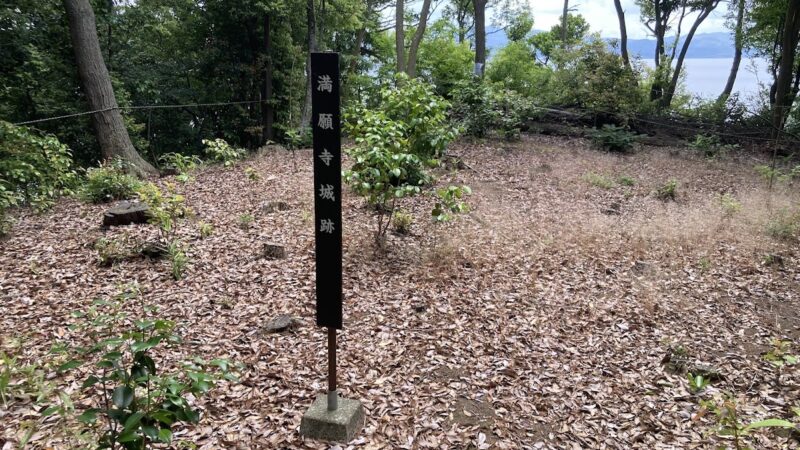
Kuruwa (Enclosures): Multiple enclosures are arranged around the main enclosure, and the terraced terrain remains clearly visible. The main enclosure is located at the highest point and is presumed to have housed the lord’s residence and command post.
Horizontal Moats: Multiple horizontal moats have been identified to prevent enemy lateral movement. Deep horizontal moats were particularly prominent along the southern defensive line.
Vertical Moats: Vertical moats cut into the slopes remain, demonstrating a strategy to make enemy approaches from the slopes difficult.
Earthworks: Traces of earthworks remain along the edges of the enclosures, giving a glimpse into the former defensive structures.
These remains indicate that Manganji Castle was not merely a fort, but a full-fledged mountain castle with meticulously planned defensive structures.
Function as a Naval Base
The most distinctive feature of Manganji Castle is its function as a naval base. Taking advantage of its location facing Lake Shinji, it is believed that it provided mooring areas for ships and loading/unloading areas for supplies.
After surrendering to the Mori clan, the Yuhara clan utilized the strategic advantages of this location to play a key role in the Mori navy, striving to secure control of Lake Shinji. Securing waterways was crucial for the transport of goods and information, and Manganji Castle functioned as a vital point in this regard.
Highlights of Manganji Castle
View from the Main Enclosure
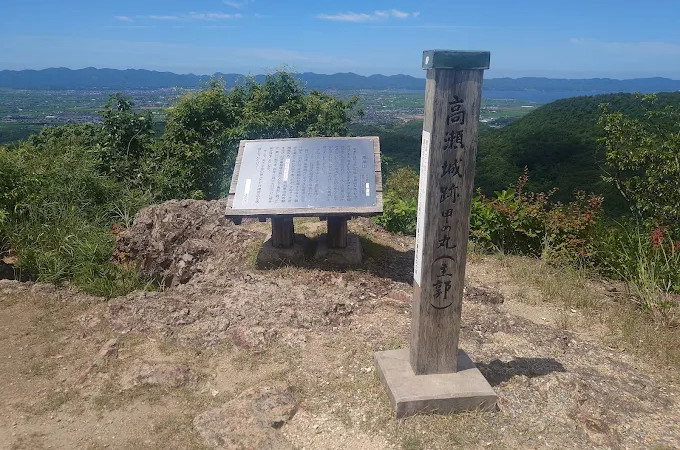
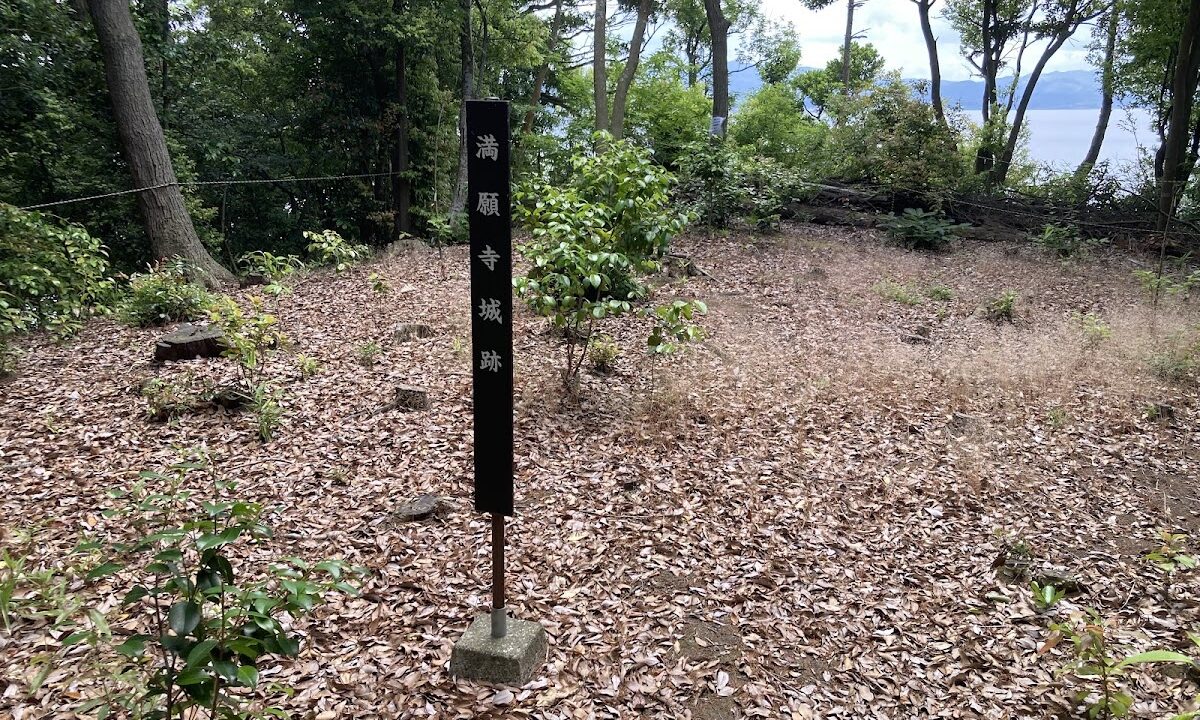
The greatest highlight of Manganji Castle is the view from the main enclosure. From here, you can enjoy a magnificent panoramic view of Lake Shinji, allowing you to imagine the castle lords of the Sengoku period monitoring the lake from this vantage point.
Especially on a clear day, you can see the mountains on the opposite shore, giving you a real sense of why this location was considered a strategic stronghold. At sunset, you can also enjoy the beautiful sunset over Lake Shinji, making it a spot where you can enjoy both historical exploration and natural beauty.
Clearly Remaining Moats and Enclosures
Walking through the castle ruins, you’ll notice the remarkably clear remains of the defensive structures from the Sengoku period. The moats, in particular, are deeply and sharply carved, demonstrating the high level of castle-building technology of the time.
You can also observe the arrangement of multiple enclosures in a stepped pattern, revealing the ingenuity of the layout that maximized the use of the limited terrain. For castle enthusiasts, the excellent state of preservation of the remains is a major attraction.
Experiencing the Stage of History
Manganji Castle was the stage of fierce conflict during the Sengoku period, a time when the two major powers of the Chugoku region, the Amago and Mori clans, clashed. Walking through the castle ruins, you can reflect on various human dramas: the struggles of the Yuhara clan, the tenacity of the Amago restoration army, and the strategies of the Mori clan.
Imagining the tense situation during the occupation by Nasa Nihonnosuke, and the battles fought by Kikkawa Motoharu, you truly feel that this quiet castle site was once the site of fierce battles.
Access and Visiting Information
Location
Address: Nishihamasada-cho, Matsue City, Shimane Prefecture
Manganji Castle Ruins are located northeast of Matsue city center, on the northern shore of Lake Shinji.
Access by Car
- From Matsue Station: Approximately 20 minutes (approximately 12 km)
- From Matsue-Nishi IC on the San’in Expressway: Approximately 25 minutes
- Parking: There is no dedicated parking lot for the castle ruins, but parking spaces at nearby public facilities and shrines may be available. Please be considerate of local residents when visiting.
Access by Public Transportation
- From JR Matsue Station: Take the Ichibata Bus bound for “Sada Shrine,” get off at the nearest bus stop, and walk for approximately 15-20 minutes.
- Since bus services are limited, it is recommended to check the timetable in advance.
Points to Note When Visiting
- Difficulty of Climbing the Castle: Intermediate. Since you will be walking on mountain paths, comfortable clothing and broken-in shoes are necessary.
- Estimated Time Required: Approximately 1 to 1.5 hours from climbing to sightseeing.
- Season: Spring to autumn is recommended. There is a possibility of snow in winter.
- Facilities: There are no toilets or rest facilities. Please prepare in advance.
- Information Boards: There are few detailed information boards on site, so it is advisable to prepare a map or materials in advance.
Nearby Tourist Attractions
Sada Shrine
Located close to Manganji Castle, Sada Shrine is an ancient shrine that has long been revered as the second-ranked shrine of Izumo Province. The main hall is designated as a National Important Cultural Property, and it is known as a shrine boasting a scale second only to Izumo Taisha.
Matsue Castle
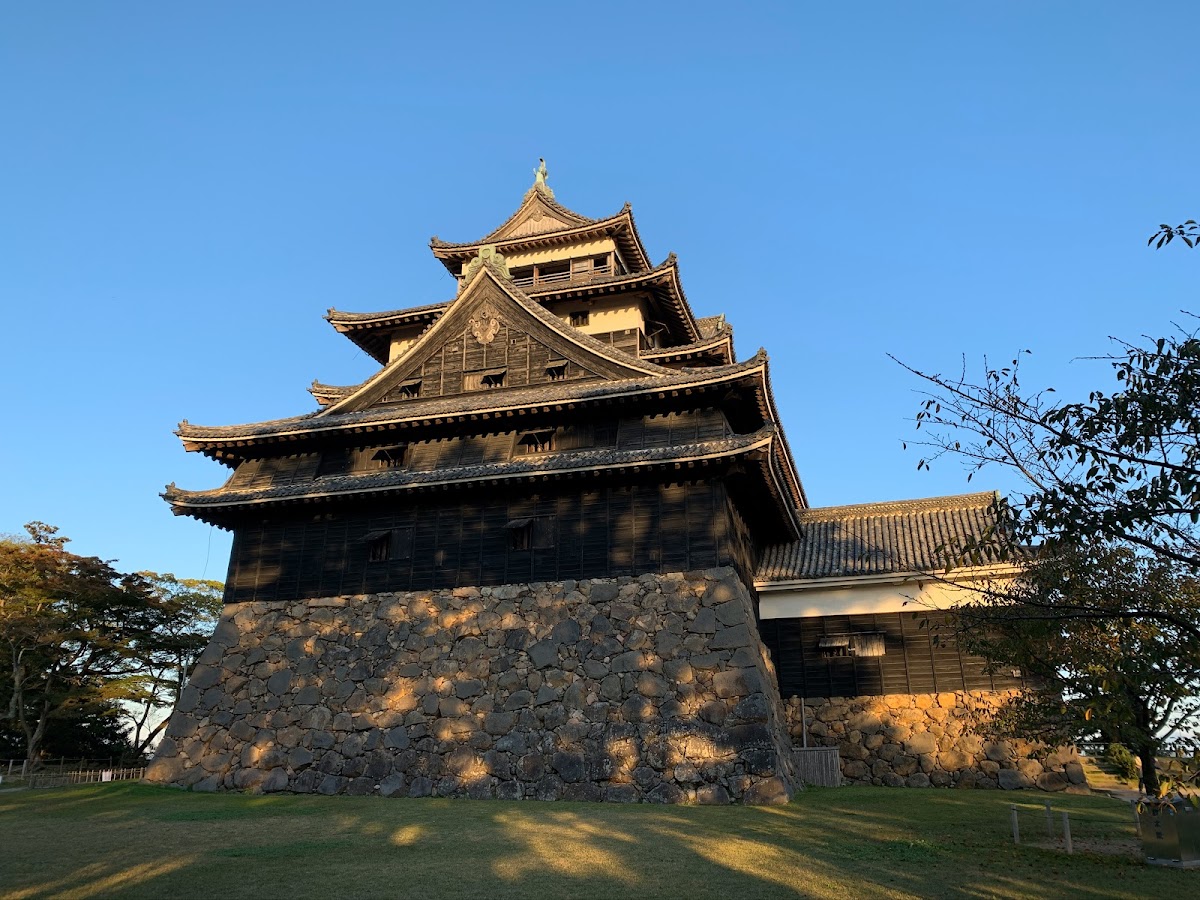
Matsue Castle, a national treasure and one of Shimane Prefecture’s most representative tourist attractions, is located about 30 minutes by car from Manganji Castle. It is one of the 12 existing castle keeps and a valuable fortress designated a national treasure in 2015. Visiting both Manganji Castle and Matsue Castle allows you to learn about the changes in castle architecture from the Sengoku period to the Edo period.
Lake Shinji
Lake Shinji, the seventh largest lake in Japan, is famous for its beautiful sunsets, which have been selected as one of Japan’s “Top 100 Sunset Views.” While the view of Lake Shinji from Manganji Castle is magnificent, be sure to enjoy the views from various spots along the lakeshore as well.
Shimane Prefectural Museum of Art
This modern museum, located on the shores of Lake Shinji, is a popular spot for viewing the sunset over the lake. It’s also an ideal place to relax after visiting Manganji Castle.
Points to Remember When Visiting Manganji Castle
Study the Historical Background Beforehand
To fully enjoy Manganji Castle, it is recommended to study the history of the Izumo region during the Sengoku period beforehand, including the conflict between the Amago and Mori clans, the actions of the Yuhara clan, and the uprising of the Amago restoration army. Knowing the historical background will greatly change how you view the castle ruins.
Carry a Map and Compass
There are few clear signs within the castle ruins, so make use of a map or the GPS function of your smartphone. Understanding the relative locations of the remains while sightseeing will lead to a deeper understanding.
Best Time for Photography
The view of Lake Shinji from the main enclosure is best enjoyed in the afternoon when the light is beautiful. Especially on clear days from autumn to winter, you can capture distant mountain ranges in vivid detail.
Multiple Castle Ruins Tour Plan
Besides Manganji Castle, there are many other castle ruins scattered throughout Shimane Prefecture. By visiting nearby castle ruins such as Gassan-Toda Castle (the Amago clan’s base), Mitoya Castle, and Shiraka Castle, you can gain a deeper understanding of the overall picture of the Izumo region during the Sengoku period.
Historical Significance of Manganji Castle
Battle for Control of Lake Shinji
The greatest historical significance of Manganji Castle lies in its role as a base for controlling Lake Shinji. During the Sengoku period, water transport was extremely important for the transportation of goods and military operations. Controlling Lake Shinji was so strategically important that it was said that whoever controlled it controlled eastern Izumo.
The fact that the Yuhara clan played an active role as part of the Mori navy indicates that Manganji Castle was not merely a land fortress, but a strategic base on both land and sea.
Survival Strategies of Local Lords
The actions of the Yuhara clan are an interesting case study for considering the survival strategies of local lords during the Sengoku period. The initial choice to pledge allegiance to the Amago clan, and later to the Mori clan, was a pragmatic decision made by a weaker force to survive among larger powers.
This flexible response reflects the harsh realities faced by local lords at the time, and Manganji Castle is a witness to that history.
The Stage of the Amago Restoration Movement
The occupation of Manganji Castle by the Amago restoration forces demonstrates the tenacity of samurai aiming to restore a fallen daimyo family. The activities of the Amago remnants, including Nasa Nihonnosuke, are still recounted today as a scene from the Sengoku period romance, woven from loyalty to their lord and longing for their homeland.
Summary
Manganji Castle is an important mountain castle from the Sengoku period, located in Nishihamasada-cho, Matsue City, Shimane Prefecture. Built around 1521 by Yuhara Nobutsuna as a stronghold on the shores of Lake Shinji, it became the stage for the subsequent conflict between the Amago and Mori clans.
In 1562, during Mori Motonari’s invasion of Izumo Province, the castle lord, Yuhara Harutsuna, surrendered, and the castle functioned as a base for the Mori navy. However, in 1569, during the uprising of the Amago restoration army, it was occupied by Nasa Nihonnosuke. Finally, in 1573, it was captured by Kikkawa Motoharu and once again came under the control of the Mori clan.
Even today, the remains of the castle, such as the horizontal and vertical moats and baileys, are well-preserved, and the main enclosure offers a beautiful panoramic view of Lake Shinji. As a valuable historical site where you can experience the history of the Izumo region during the Sengoku period, it is a place that castle enthusiasts and history lovers should visit.
A visit to Manganji Castle goes beyond simply sightseeing castle ruins; it leads to a multifaceted understanding of history, including the complex political situation of the Sengoku period, the importance of naval forces, and the survival strategies of local lords. When you visit Matsue City, be sure to stop by and experience the atmosphere of the Sengoku period from atop a hill overlooking Lake Shinji.