Misawa Castle (Nita District, Shimane Prefecture) Complete Guide | A Thorough Explanation of the Amago Ten Flagships and a Mountain Castle in Okuizumo
What is Misawa Castle?
Misawa Castle (Mizawa-jo) is a medieval mountain castle located in Misawa, Okuizumo-cho, Nita District, Shimane Prefecture. It is known as one of the “Amago Ten Flagships,” a group of fortresses defended by the retainers of the Sengoku daimyo Amago clan. Built on the 419-meter-high Yogaiyama (Kamokura-yama), this castle was a strategic stronghold overlooking Okuizumo and an important base in the San’in region during the medieval period.
Also known as Kamokura Castle (Kamokura-jo) and Kigaku Castle (Kigaku-jo), it is protected as a Shimane Prefecture designated historical site. Misawa Castle was not merely a military facility, but also a symbol of the economic and political power of the Misawa clan, who controlled the iron smelting industry in the Okuizumo region.
Basic Information on Misawa Castle
Location: Misawa, Okuizumo-cho, Nita-gun, Shimane Prefecture
Former Province: Izumo Province
Classification/Structure: Mountain Castle
Builder: Misawa Tamenaga (Tamenaka)
Year of Construction: Kagen 3 (1305)
Main Lords: Misawa Clan
Remains: Stone walls, baileys, moats, well remains
Designated Cultural Property: Shimane Prefecture Designated Historic Site
Elevation: 419 meters
Common Names/Alternate Names: Kamokura Castle, Kamegake Castle, Yogaiyama Castle
History
Origins of the Misawa Clan and Construction of the Castle
The history of Misawa Castle is closely related to the establishment of the Misawa clan. Several theories exist regarding the origins of the Misawa clan, but the most plausible is that they were descendants of the Shinano Minamoto clan. The Iijima clan, based in Iijima-go, Shinano Province (present-day Iijima-machi, Kamiina-gun, Nagano Prefecture), is said to have distinguished themselves in battle against the imperial court during the Jokyu War of 1221, and as a reward, were granted Misawa-sho in Izumo Province.
Another theory suggests they were descendants of Kiso Yoshinaka. Records indicate that Misawa Tamenaka was Kiso Yoshinaka’s grandson, and it is considered certain that they were a group of samurai who migrated from Shinano to this area.
In 1305, Misawa Castle was built on Mount Kamokura by Misawa Tamenaga (or possibly Tamenaka). This period coincided with the end of the Kamakura period, a time when local samurai groups began to establish their own power bases.
Development and Golden Age of the Misawa Clan
The Misawa clan, based at Misawa Castle, ruled the Okuizumo region for over 280 years across 14 generations. As the largest local lord in the San’in region during the medieval period, the Misawa clan expanded their power, gaining immense economic strength, particularly by controlling the tatara ironmaking industry in Okuizumo.
Iron production through tatara ironmaking was an extremely important industry in the economy of the time, and the Misawa clan strengthened their military power based on this vested interest. Iron was indispensable for weapon manufacturing, and it became the economic and military foundation of the Misawa clan.
Until Eisho 6 (1509), the Misawa clan used Misawa Castle as their residence for approximately 200 years, before moving their base to Yokota Fujigase Castle in the same Nita district. During this time, Misawa Castle continued to function as the center of control over Okuizumo.
Relationship with the Amago Clan
With the arrival of the Sengoku period, the Misawa clan deepened their relationship with the Amago clan, who became the dominant power in the San’in region. In Kyoroku 4 (1531), during the time of Misawa Tamekuni, the Misawa clan was defeated by the Amago clan, and thereafter served as a powerful vassal of the Amago clan.
Misawa Castle was one of the major branch castles of the Amago clan, known as the “Amago Ten Flags,” and played a crucial role as a defensive stronghold in eastern Izumo Province. The Amago Ten Flags refer to ten important strongholds established by the Amago clan to control Izumo, Hoki, and Oki, and Misawa Castle held particularly high strategic value among them.
Conflict with the Mori Clan
During the Eiroku era (1558-1570), the Mori clan of Aki Province expanded its power, leading to fierce conflict with the Amago clan. The Misawa clan, caught between the Amago and Mori clans, sought to ensure their own survival.
In 1566, when Gassan-Toda Castle, the Amago clan’s stronghold, was captured by the Mori clan, the Misawa clan also surrendered to the Mori. However, there were still movements aiming for the restoration of the Amago clan, and intermittent battles occurred around Misawa Castle.
During the Tensho era (1573-1593), the power of the Misawa clan gradually declined. As the Mori clan’s rule was established, Misawa Castle gradually lost its military importance and was eventually abandoned.
Structure
Topography and Layout
Misawa Castle is a typical medieval mountain castle built on the summit of Yogaiyama (Kamokurayama), a mountain 419 meters above sea level. Although it is a relatively low mountain, it rises steeply from the surrounding plains, and the Aigawa River flows to the west and south, forming a natural stronghold.
From the summit, one can see the vast basin of Okuizumo, and it boasts an excellent location overlooking the entire Nita district. This excellent view was a great advantage in detecting enemy movements early and governing the territory.
The castle’s layout is a concentric, stepped structure with multiple baileys arranged around the main bailey at the summit. Each enclosure is separated by a moat, enhancing its defensive capabilities.
Honmaru and Main Enclosures
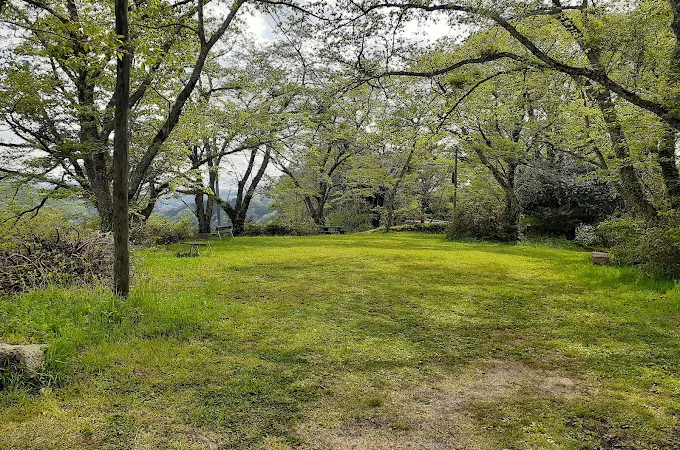
The Honmaru is located at the highest point of the mountaintop and forms the core of the castle. A well-preserved flat area remains, and a gazebo has been installed. This gazebo features explanatory panels about the successive heads of the Misawa clan, providing visitors with historical information.
Several enclosures are arranged around the Honmaru, each believed to have had a different function. The second and third enclosures, among others, have been identified and are presumed to have been used as living spaces, troop encampments, or storage facilities for supplies.
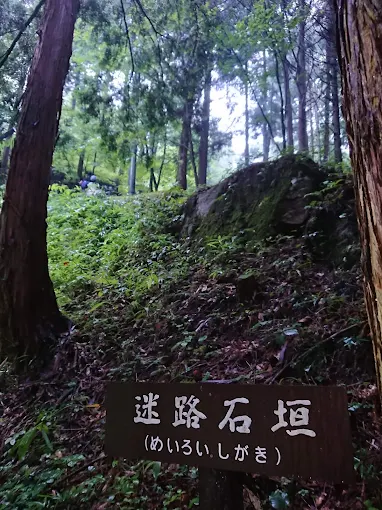
Remains of Stone Walls
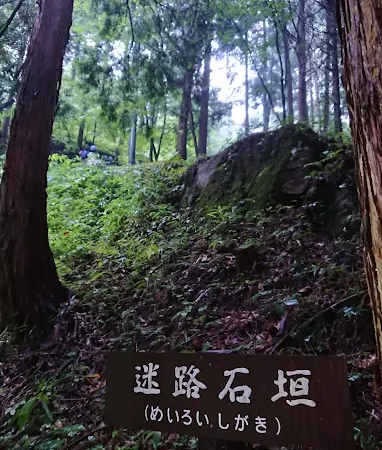
One of the most distinctive features of Misawa Castle is the use of stone walls, which is unusual for a medieval mountain castle. Stone walls built using the nozurazumi (rough-stone masonry) method remain, mainly around the Honmaru, demonstrating the high level of castle-building technology of the time.
These stone walls symbolize the economic and technical power of the Misawa clan, indicating their ability to construct not just earthen ramparts but also robust defensive structures using stone. The presence of stone walls indicates that Misawa Castle was not merely an emergency shelter, but a full-fledged castle intended for permanent use.
Defensive Structures
Misawa Castle exhibits numerous defensive structures typical of medieval mountain castles.
Moat: A defensive structure deeply excavated into the ridge to demarcate each enclosure and prevent enemy intrusion. Multiple moats have been identified at Misawa Castle, with a particularly large one located on the main approach (the front road leading to the castle).
Cliff: An artificial cliff created by steeply cutting away the perimeter of an enclosure. This made it difficult for enemies to climb, thus enhancing defensive capabilities.
Well Site: Multiple wells have been identified, presumably to secure a water source in preparation for a siege. Securing water was a matter of life and death for mountain castles, and the presence of wells indicates that the castle was capable of withstanding a long siege.
Ascent Route and Entrance
While it is believed that multiple routes existed to Misawa Castle, the main approach was a route from the south towards the mountaintop. This route was intentionally winding, a design intended to prevent direct enemy advances.
The entrance (koguchi) is a crucial defensive point controlling entry into the castle’s baileys. Misawa Castle’s entrance is positioned with a flanking fire strategy in mind, giving the defenders an advantage.
Highlights of Misawa Castle
Value as a Prefectural Historic Site
Misawa Castle ruins are protected as a Shimane Prefecture designated historic site, recognized for their high historical value as a representative medieval mountain castle of the San’in region. Among the medieval mountain castles remaining in the prefecture, its remains are well-preserved, making it a valuable site for understanding the castle’s structure at the time.
The castle ruins are maintained and managed by a local preservation society, and the ascent route is relatively easy to walk. Information boards are installed throughout, allowing even first-time visitors to understand the castle’s history and structure while exploring. ### The Magnificent View
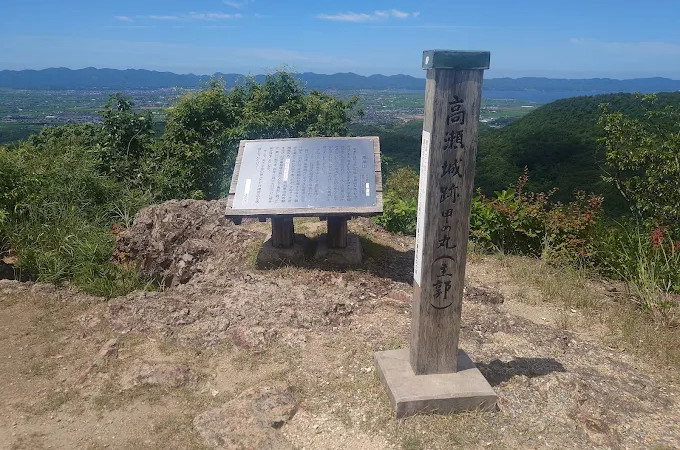
One of the greatest attractions of Misawa Castle is the view from the main keep. Despite being a relatively low mountain at an altitude of 419 meters, there are no obstructions in the surrounding area, allowing for a 360-degree panoramic view of the vast Okuizumo basin.
On a clear day, you can see not only the entire Nita district but also the distant mountain range of the Chugoku Mountains, allowing you to imagine the scene of the former castle lords surveying their territory from this spot. This view was one of the reasons why the Misawa clan ruled this area for 280 years.
Stone Walls and Remains
As mentioned above, Misawa Castle has stone walls, which are rare for a medieval mountain castle. The stone walls around the main keep were built using a technique called “nozurazumi,” where natural stones are stacked as they are, giving a simple yet powerful impression.
Besides the stone walls, various remains such as flat areas of the baileys, moats, cliffs, and well remains are well preserved, making it an important site from the perspective of castle archaeology. By actually walking around and observing these ruins, you can experience firsthand how medieval mountain castles functioned.
Surrounding Historical Environment
Around Misawa Castle, there are numerous historical sites related to the Misawa clan and facilities that convey the history of Okuizumo.
Misawa Clan’s Family Temple: At the foot of the castle is a temple associated with the Misawa clan, which tells the history of the Misawa clan.
Tatara Ironmaking Site: Numerous sites of tatara ironmaking, which formed the economic base of the Misawa clan, remain in the Okuizumo region. Facilities such as the Iron History Museum allow you to learn about the technology and history of tatara ironmaking.
Yokota Fujigase Castle Ruins: This castle was where the Misawa clan moved their base after Eisho 6 (1509). Visiting it together with Misawa Castle will allow you to gain a deeper understanding of the Misawa clan’s history.
Access and Visiting Information
Transportation Access
By Car:
- Approximately 40 minutes from the Matsue Expressway “Unnan Yoshida IC” via National Route 314
- Approximately 60 minutes from the Chugoku Expressway “Miyoshi IC” via National Routes 54 and 314
- Parking: Several parking spaces available near the trailhead
By Public Transportation:
- Approximately 15 minutes by car from the JR Kisuki Line “Izumo-Mitsunari Station”
- Access by public transportation is inconvenient; renting a car is recommended.
Precautions for Visiting the Castle
Misawa Castle is a mountain castle, so a certain level of physical fitness and preparation is required for visiting.
Clothing and Equipment:
- Comfortable walking shoes (trekking shoes recommended)
- Long-sleeved shirt and long pants (for protection against plants and insects)
- Drinking water
- Insect repellent spray in summer
Estimated Time Required:
- Approximately 30-40 minutes on foot from the entrance to the main keep
- Allow approximately 2-3 hours round trip, including sightseeing time
Visiting Season:
- Open year-round, but be aware of snow in winter
- Spring to autumn is the best season for visiting
- Avoid early mornings and twilight; visit during daylight hours
Misawa Castle and the Amago Ten Flags
An essential concept when discussing Misawa Castle is the “Amago Ten Flags.” The Amago Ten Flags refer to the ten important branch castles established by the Amago clan, a powerful daimyo family during the Sengoku period, to control the three provinces of Izumo, Hoki, and Oki.
The castles counted among the Amago Ten Castles were arranged radially from Gassan-Toda Castle, the Amago clan’s base, and each functioned as a regional defensive stronghold. Misawa Castle, in particular, was positioned as a strategic point in eastern Izumo Province, especially in the Okuizumo region.
Other castles known as the Amago Ten Castles include Shiraka Castle, Mitoya Castle, Akana Castle, and Mayama Castle. These castles were each the residences of powerful local lords, and the Amago clan achieved widespread control by organizing these lords as their vassal group.
The period when Misawa Castle functioned as one of the Amago Ten Castles offered the Misawa clan security by being under the umbrella of the powerful Amago clan, but it also meant a loss of independence. However, it is believed that during this time, Misawa Castle’s military function was strengthened, and defensive facilities such as stone walls were constructed.
The Rise and Fall of the Misawa Clan and the History of Okuizumo
The 280-year history of the Misawa clan is essentially the history of medieval Okuizumo itself. A family that migrated from Shinano Province at the end of the Kamakura period expanded their power by controlling the local resource of tatara ironmaking, growing into the largest local lord in the San’in region during the medieval period.
However, in the turbulent Sengoku period, the Misawa clan was caught between the powerful Amago and Mori clans. Maintaining their position as independent lords became difficult, and they were ultimately incorporated under the control of the Mori clan.
The rise and fall of the Misawa clan illustrates the typical fate of local samurai groups during the transition from the medieval to the early modern period. Despite having a locally rooted economic base, they found it difficult to maintain their independence in the face of the new power structure of the Sengoku daimyo.
The legacy of the Misawa clan remains strongly present in present-day Okuizumo Town. The ruins of Misawa Castle, the place name Misawa, temples and shrines associated with the Misawa clan, and above all, the tradition of tatara ironmaking, all convey the history of the Misawa clan to the present day.
Misawa Castle and Medieval Mountain Castle Research
Misawa Castle is an important historical site from the perspective of medieval mountain castle research. As a medieval mountain castle with stone walls, Misawa Castle provides valuable information for understanding the development of castle construction techniques.
Medieval mountain castles were generally built primarily using civil engineering techniques such as earthworks and moats, but as the Sengoku period progressed, castles using stone walls increased. The stone walls of Misawa Castle are attracting attention from castle researchers as they demonstrate this transitional technology.
Furthermore, the layout (castle design) of Misawa Castle possesses many typical characteristics of medieval mountain castles, making it an excellent example for studying mountain castle structure. The castle cleverly utilizes the mountainous terrain, effectively arranging multiple baileys to maximize defensive capabilities.
In recent years, archaeological excavations and surveys have been conducted at Misawa Castle, accumulating new knowledge. These research findings are making a significant contribution to elucidating the history of medieval castles in the San’in region.
Summary
Misawa Castle is a medieval mountain castle located in Okuizumo-cho, Nita-gun, Shimane Prefecture. It flourished as the residence of the Misawa clan, who ruled Okuizumo for over 280 years across 14 generations. Built in 1305, it served as the Misawa clan’s base until 1509, before becoming one of the ten castles of the Amago clan, leaving its mark on the history of the Sengoku period.
Built on Mt. Yogaiyama at an altitude of 419 meters, Misawa Castle boasted an excellent location overlooking Okuizumo and was a formidable mountain castle utilizing the Aigawa River as a natural fortification. The remains, including stone walls, baileys, moats, and well sites, are well-preserved, making it a valuable historical site for understanding the structure of medieval mountain castles.
Currently protected as a Shimane Prefecture designated historical site, and with well-maintained access routes, it has become a popular spot for history enthusiasts and castle fans. The view from the main keep is magnificent, allowing you to experience the same scenery that the former lords must have seen overlooking their territory.
Visiting Misawa Castle is not just about seeing the castle ruins; it’s a valuable opportunity to learn about the history of the San’in region in the Middle Ages, the culture of iron smelting, and the stories of the local samurai who survived the Sengoku period. Nestled amidst the rich nature and history of Okuizumo, Misawa Castle is a magnificent castle that offers visitors profound inspiration and a sense of historical romance.